

For more than sixty years, the international physics community has been captivated by a persistent anomaly involving a subatomic particle known as the muon. This discrepancy, which appeared to show the muon behaving in a way that defied the established laws of physics, led many to believe that we were on the precipice of discovering a "fifth force" of nature or previously unknown elementary particles. However, a landmark study led by researchers at Penn State and published in the journal Nature has provided a resolution to this mystery. Through what is being described as one of the most complex and precise calculations in the history of particle physics, the team has demonstrated that the perceived gap between theory and reality was not an invitation to a new realm of physics, but rather a reflection of the limitations in previous theoretical models.
The study, led by Zoltan Fodor, a distinguished professor of physics at Penn State, utilized advanced supercomputing and a sophisticated mathematical framework to recalculate the muon’s magnetic properties. The results bring the theoretical predictions of the Standard Model—the reigning "rulebook" of particle physics—into near-perfect alignment with experimental data. While the discovery reaffirms the staggering accuracy of modern physics, it also brings a sense of "scientific melancholy" to a field that had been hoping for a revolutionary breakthrough that would transcend our current understanding of the universe.
The Muon: A Heavyweight Messenger of the Subatomic World
To understand the significance of this resolution, one must first understand the subject of the investigation: the muon. Often described as the "fat cousin" of the electron, the muon is an elementary particle that carries a negative electric charge and a spin of 1/2. While it shares many characteristics with the electron, it is approximately 200 times more massive. This increased mass is critical because it makes the muon far more sensitive to the "quantum foam" of the vacuum—the fleeting appearance and disappearance of virtual particles that influence the behavior of real particles.
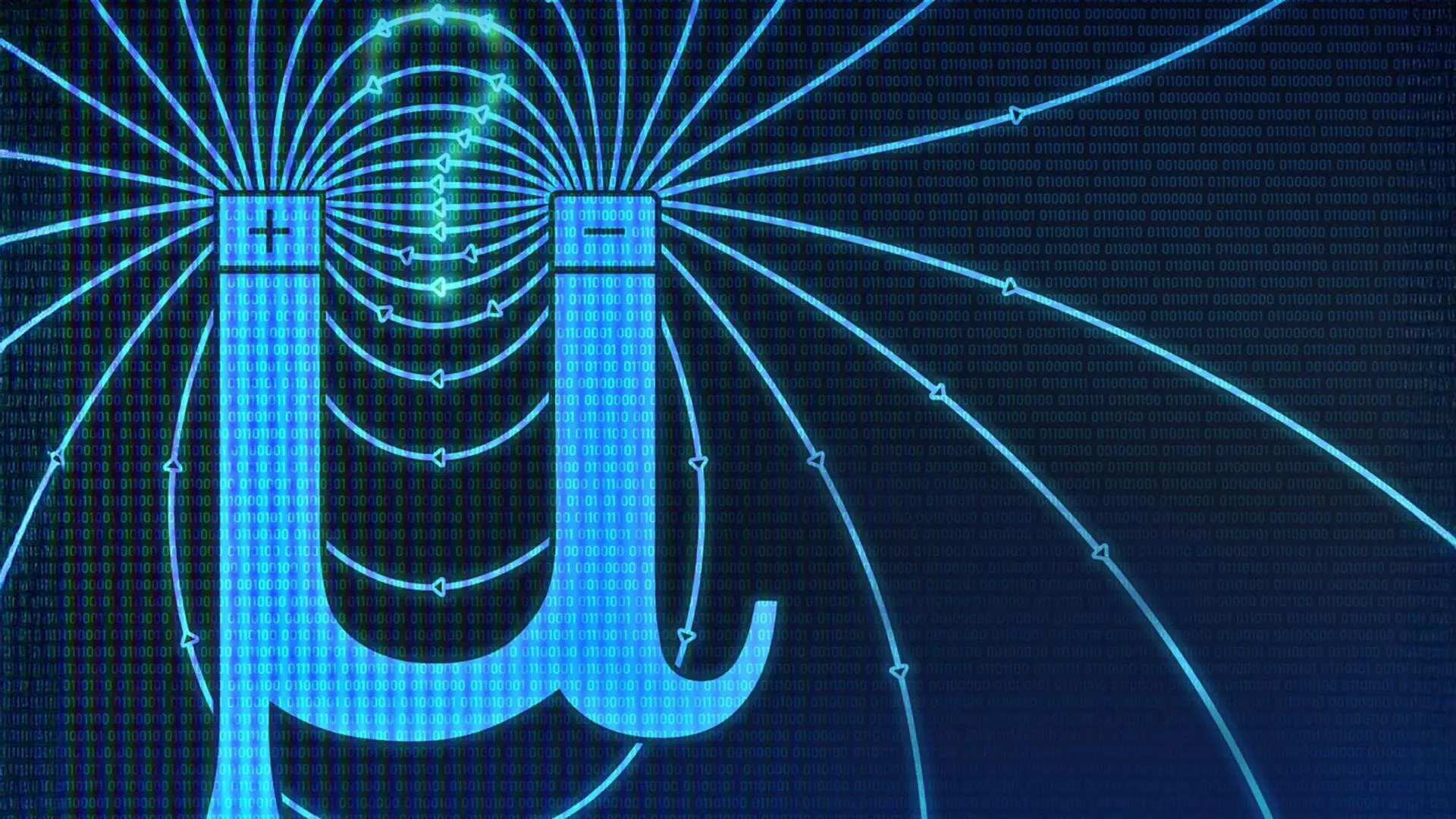
One of the most vital properties of the muon is its magnetic moment, which determines how the particle wobbles, or precesses, when placed in an external magnetic field. According to the Dirac equation, a fundamental pillar of quantum mechanics developed in the 1920s, the "g-factor" (a dimensionless quantity characterizing the magnetic moment) of a point-like particle like the muon should be exactly 2.
However, quantum field theory dictates that the vacuum is never truly empty. Instead, it is a roiling sea of virtual particles that "clothe" the muon, subtly altering its magnetic strength. This shift is known as the "anomalous magnetic moment," or g-2. For decades, physicists have attempted to calculate this value with extreme precision to see if it matches the results of high-energy experiments. Any deviation between the calculated value and the experimental value would serve as a "smoking gun" for new physics—evidence that some unknown force or particle was tugging on the muon in a way the Standard Model could not explain.
A Chronology of the g-2 Discrepancy
The quest to measure the muon’s magnetic moment has spanned over half a century and involved several of the world’s most advanced laboratories. The timeline of this investigation highlights the growing tension that eventually led to the recent Penn State-led breakthrough.
- 1960s – 1970s (CERN): Initial experiments at the European Organization for Nuclear Research (CERN) in Geneva provided the first high-precision measurements of the muon g-2. While these results generally aligned with early theory, they set the stage for more rigorous testing as quantum chromodynamics (QCD) was developed.
- 1990s – early 2000s (Brookhaven National Laboratory): The E821 experiment at Brookhaven in New York achieved a precision that began to show a statistically significant gap between the Standard Model and experimental results. By 2001, the "muon mystery" was officially born, as the discrepancy reached a level that hinted at the presence of "New Physics."
- 2021 – 2023 (Fermilab): The Muon g-2 experiment at the Fermi National Accelerator Laboratory in Illinois sought to settle the matter. Using a massive 50-foot-wide superconducting magnetic storage ring transported from Brookhaven, Fermilab researchers confirmed the earlier discrepancy with even greater precision. The statistical significance of the gap grew to 4.2 sigma, and later approached the 5-sigma threshold, which is the gold standard for claiming a formal discovery in physics.
- 2024 (The Nature Publication): As the experimental community celebrated their precision, the theoretical community, led by Fodor’s team, worked to refine the "Standard Model prediction" side of the equation. Their publication in Nature marks the moment the theoretical value finally "caught up" to the experimental value, closing the gap.
The Challenge of the Strong Force
The primary reason it took decades to resolve this discrepancy lies in the complexity of the "strong force." The Standard Model describes four fundamental forces: gravity, electromagnetism, the weak nuclear force, and the strong nuclear force. While electromagnetism and the weak force are relatively easy to calculate at high precision, the strong force—which binds quarks together into protons and neutrons—is notoriously difficult to model.
The contribution of the strong force to the muon’s magnetic moment is known as Hadronic Vacuum Polarization (HVP). Unlike electromagnetism, where the force weakens with distance, the strong force behaves like a rubber band: the further you pull particles apart, the stronger the tension becomes. At the low energies relevant to the muon’s magnetic moment, the equations governing the strong force (Quantum Chromodynamics, or QCD) cannot be solved using traditional algebraic methods.
Historically, physicists bypassed this difficulty by using an "R-ratio" method, which relied on experimental data from other particle collisions (such as electron-positron annihilation) to estimate the hadronic contribution. However, these older estimates carried inherent uncertainties and potential systematic errors that skewed the final g-2 prediction.
Supercomputing and the Lattice QCD Breakthrough
To overcome the limitations of previous methods, Zoltan Fodor and his international team turned to "Lattice Quantum Chromodynamics." This approach does not rely on external experimental data but instead solves the fundamental equations of the Standard Model from first principles.
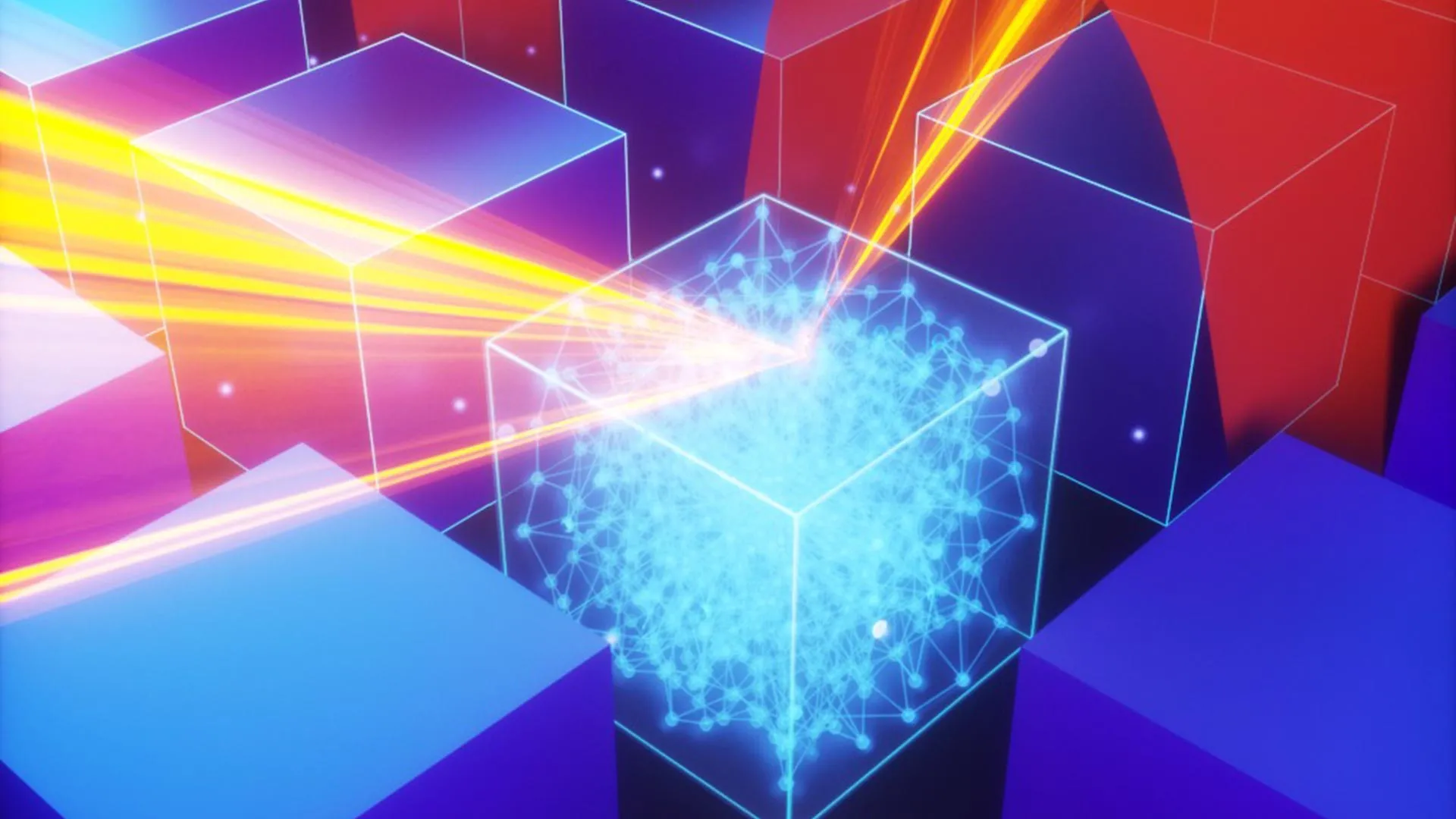
The team utilized some of the world’s most powerful supercomputers to simulate a four-dimensional grid, or "lattice," of space and time. By placing the quarks and gluons onto this digital grid, they were able to numerically calculate the interactions of the strong force with unprecedented detail.
"Our approach was completely different," Fodor explained. "We divided space-time into very small cells, a lattice, and then we solved the equations of the Standard Model on that. There was an awful lot of theory, mathematics, programming, computational knowledge, and computer architecture behind this calculation."
The team spent over ten years refining their algorithms. To ensure the highest level of accuracy, they employed a hybrid strategy: using lattice calculations for short and medium distances where the strong force is most complex, while integrating highly reliable experimental data for larger distances where the physics is better understood. By using finer lattices than any previous study, they were able to reduce the margin of error to parts per billion.
Analyzing the Data: A Match to 11 Decimal Places
The final result of the Penn State-led study is a theoretical value for the muon’s magnetic moment that aligns with the Fermilab and Brookhaven experimental results within less than half a standard deviation. Specifically, the new calculation confirms the Standard Model’s validity to 11 decimal places.
In the world of particle physics, this level of agreement is extraordinary. It suggests that the "anomalous" behavior observed in the muon for the last twenty years was not caused by a fifth force or dark matter particles, but by the extreme difficulty of calculating the hadronic effects of the strong force. By providing a more accurate theoretical benchmark, the researchers have effectively "moved the goalposts" back to where the experimental data was already standing.
Reactions and the "Sadness" of Success
While the study is a monumental achievement for theoretical physics, it has been met with a mixture of pride and disappointment. For decades, the muon g-2 discrepancy was viewed as the most promising "crack" in the Standard Model—a window through which physicists might glimpse a more profound theory of the universe that explains dark matter, the matter-antimatter asymmetry, and the nature of gravity.
Zoltan Fodor himself noted the bittersweet nature of the findings. "People ask me how it feels to make this discovery and, to be honest, I feel somewhat sad," he remarked. "When we started to calculate this quantity, we thought we were going to have a good and trustworthy calculation for a new fifth force. Instead, we found there is no fifth force."
This sentiment is echoed by many in the community who had hoped the muon would lead to a "New Physics" revolution similar to the transition from Newtonian mechanics to General Relativity. Instead, the Standard Model has once again proven itself to be an incredibly resilient and accurate description of the subatomic world.
Broader Impact and Future Implications
The implications of this study extend beyond the muon itself. By validating the Lattice QCD method at such a high level of precision, the research provides a powerful new tool for exploring other areas of physics. It also reaffirms the validity of Quantum Field Theory, the mathematical foundation upon which all modern particle physics is built.
However, the search for "New Physics" is far from over. While the muon g-2 mystery may be solved, other puzzles remain. For instance:
- Dark Matter: The Standard Model still lacks a particle that accounts for the invisible mass that makes up roughly 85% of the universe’s matter.
- Neutrino Masses: The Standard Model originally predicted neutrinos should be massless, yet experiments have proven they possess a tiny amount of mass.
- The Hierarchy Problem: Physicists still struggle to explain why the weak force is 10^24 times stronger than gravity.
The resolution of the muon mystery means that physicists must look elsewhere for the answers to these questions. Future experiments at the High-Luminosity Large Hadron Collider (HL-LHC) and upcoming neutrino observatories like DUNE will continue the search for discrepancies that might signal a deeper reality.
In conclusion, the work led by Penn State has successfully closed a chapter in the history of particle physics. By deploying massive computational power and innovative mathematical techniques, the team has shown that the Standard Model remains our best guide to the universe. While the "fifth force" remains elusive for now, the precision of this work serves as a testament to human ingenuity and our ability to decode the most intricate details of the natural world. The muon is no longer a rebel; it is once again a law-abiding citizen of the subatomic realm.












Leave a Reply