

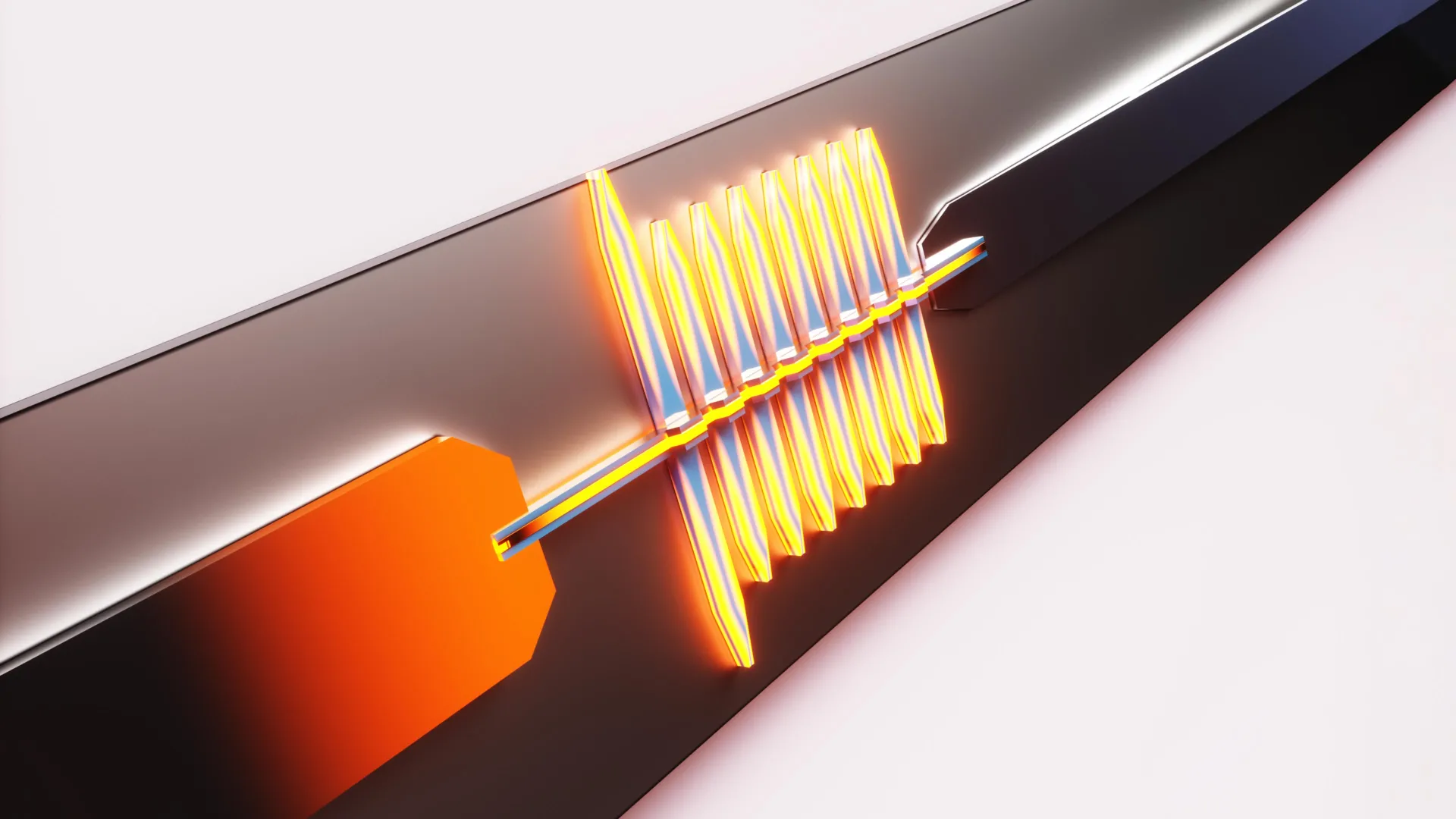
A collaborative research team in Finland has announced a landmark achievement in the field of quantum metrology, successfully detecting an electromagnetic pulse with an energy level of just 0.83 zeptojoules. This measurement, which represents less than a trillionth of a billionth of a joule, marks a significant leap in the sensitivity of calorimetric devices. Led by Academy Professor Mikko Möttönen of Aalto University, in partnership with the Technical Research Centre of Finland (VTT) and the quantum computing firm IQM, the team’s findings were recently published in the prestigious scientific journal Nature Electronics. This breakthrough is expected to have far-reaching consequences for the development of next-generation quantum computers, the search for elusive dark matter particles, and the eventual realization of single-photon counting in the microwave spectrum.
The Scale of the Achievement: Defining the Zeptojoule
To understand the magnitude of this breakthrough, one must consider the infinitesimal scale of the energy involved. A zeptojoule is defined as $10^-21$ joules. In practical terms, the research team detected a pulse of energy equivalent to roughly 0.83 zeptojoules. To provide a biological comparison, this is approximately the amount of work required to lift a single red blood cell a mere one nanometer—one billionth of a meter—against the pull of Earth’s gravity.
In the realm of physics, measuring such a minute quantity of energy requires overcoming the inherent "noise" of the universe. At the macroscopic level, energy transfers are massive and easily detectable. However, as scientists delve into the quantum realm, the signals become so faint that they are often drowned out by thermal fluctuations or the interference caused by the measurement tools themselves. Until now, reaching the sub-zeptojoule threshold using a calorimeter—a device that measures energy by sensing changes in temperature—was considered a daunting technical barrier.
Technical Innovation: The Hybrid Metal Calorimeter
The success of the Finnish team lies in the innovative design of their sensing apparatus. Traditional methods of detecting microwave radiation often rely on amplifiers that increase the signal’s voltage, but this process frequently introduces unwanted noise and heat, which can destabilize delicate quantum states. The researchers instead utilized a calorimeter, which measures the total energy of a pulse by converting it into a temperature change.
The core of the detector is a sensor fabricated from a combination of two distinct types of metals: superconductors and normal conductors. Superconductors are materials that, when cooled below a certain critical temperature, allow electricity to flow with zero resistance. Normal conductors, conversely, maintain a degree of electrical resistance even at ultra-low temperatures.
By integrating these two materials, the team created a system where the superconducting properties are highly "fragile." In this state, even a minuscule increase in the temperature of the normal conductor—caused by the absorption of a single microwave pulse—is sufficient to disrupt the superconducting state of the surrounding material. This disruption creates a measurable change in the electrical properties of the circuit, allowing the researchers to back-calculate the exact amount of energy that entered the system.
"That combination of metals makes superconductivity such a fragile phenomenon that it weakens immediately if the temperature in the ultracold conductor rises even a little bit," explained Professor Mikko Möttönen. "This makes it such a sensitive setup."
Chronology of Development and Experimental Process
The path to this discovery was paved by years of iterative research at Aalto University’s Quantum Computing and Devices (QCD) group. The team has long focused on bolometers—devices that measure the power of incident electromagnetic radiation—but the shift toward calorimetry represents a move toward measuring discrete "packets" of energy with high temporal resolution.
The experimental process was conducted at temperatures approaching absolute zero, specifically in the millikelvin range (thousandths of a degree above -273.15°C). At these temperatures, thermal noise is minimized, allowing the researchers to isolate the effects of the incoming microwave pulses.
The team first calibrated their sensor using known energy inputs to establish a baseline. They then directed a series of attenuated microwave pulses toward the hybrid metal junction. After passing through a series of sophisticated filters designed to eliminate external interference, the signals were recorded and analyzed. The data confirmed that the device could reliably distinguish pulses as small as 0.83 zeptojoules from the background vacuum fluctuations. This result was verified through rigorous statistical analysis, ensuring that the detected signals were indeed the result of the intended pulses and not random thermal spikes.
Revolutionizing Quantum Computing Architecture
One of the most immediate applications for this ultra-sensitive calorimeter is in the field of quantum computing. Modern quantum computers rely on qubits, the quantum equivalent of classical bits. However, reading the state of a qubit is a notoriously difficult task. Current readout methods typically involve large, power-hungry parametric amplifiers that operate at higher temperatures than the qubits themselves. This discrepancy requires complex cabling and creates a risk of "thermal back-action," where heat from the measurement hardware leaks back into the quantum processor and destroys the qubits’ coherence.
The new calorimeter offers a solution to this "scaling" bottleneck. Because the device operates at the same millikelvin temperatures as the qubits, it can be integrated directly onto the quantum chip. This proximity reduces the need for heavy amplification and minimizes the disturbance to the system.
"A calorimeter operates in the same millikelvin temperatures that qubits require," Möttönen noted. "This introduces less disturbance into the system as we don’t have to bring the device to a high temperature or amplify the qubit measurement signal to get a result. In the future, our device could be a component for reading out qubits in quantum computers."
By simplifying the readout chain, researchers hope to pave the way for quantum computers with thousands or even millions of qubits, a feat currently hindered by the physical bulk and heat load of traditional electronics.
Implications for Astrophysics and Dark Matter
Beyond the confines of the laboratory, the ability to detect sub-zeptojoule energy levels has profound implications for our understanding of the universe. A primary target for this technology is the detection of axions—hypothetical elementary particles that are leading candidates for dark matter.
Dark matter is believed to make up roughly 85% of the matter in the universe, yet it has never been directly observed because it does not emit or absorb light. However, theoretical models suggest that in the presence of a strong magnetic field, axions could convert into low-energy microwave photons. Detecting these faint "whispers" from the dark sector requires sensors with unprecedented sensitivity and the ability to detect signals that arrive at unpredictable times.
"We want to make this setup capable of measuring input that has an arbitrary time of arrival," Möttönen said. "This is important for things like detecting dark-matter axions in space when you have no idea when they might reach your system."
The Finnish team’s calorimeter is uniquely suited for this task. Unlike many current detectors that are "tuned" to specific frequencies or require a continuous wave, the calorimeter measures the total energy of a discrete event, making it an ideal "net" for catching the rare conversion of an axion into a photon.
Infrastructure and Collaborative Ecosystem
The success of this research is a testament to Finland’s robust quantum ecosystem. The experiments were carried out using OtaNano, the Finnish national research infrastructure for micro-, nano-, and quantum technologies. Located in Espoo, OtaNano provides state-of-the-art cleanroom facilities and low-temperature laboratories that are essential for high-level physics research.
The project also highlights the synergy between academia and industry. IQM, a co-collaborator on the study, is a "unicorn" startup (a company valued at over $1 billion) that emerged from Aalto University. Their involvement ensures that the basic research conducted by Möttönen’s team has a direct pipeline to commercial quantum computing hardware.
Funding for the research was provided by the Future Makers initiative, a joint venture between the Jane and Aatos Erkko Foundation and the Technology Industries of Finland Centennial Foundation. These organizations have been pivotal in positioning Finland as a global leader in quantum technology, providing the long-term capital necessary for high-risk, high-reward scientific endeavors.
Conclusion: Toward Single-Photon Counting
The detection of 0.83 zeptojoules is not the end of the journey, but rather a milestone on the road to a "holy grail" of quantum sensing: the ability to count individual microwave photons. While single-photon detectors for visible light have existed for years, microwave photons have much lower energy, making them significantly harder to isolate.
The research team is now focused on further refining the sensor’s materials and geometry to push the sensitivity even lower. If they can reach the level of a single microwave photon—which, depending on the frequency, can be even smaller than the pulses detected in this study—they will have unlocked a new way of seeing the quantum world.
As quantum technology continues to move from theoretical physics into practical engineering, the work of the Aalto-VTT-IQM collaboration serves as a foundational building block. Whether it is by enabling the next generation of supercomputers or by revealing the hidden particles that hold the galaxies together, the ability to measure the "unimaginably small" is proving to be a tool of immense power.

















Leave a Reply