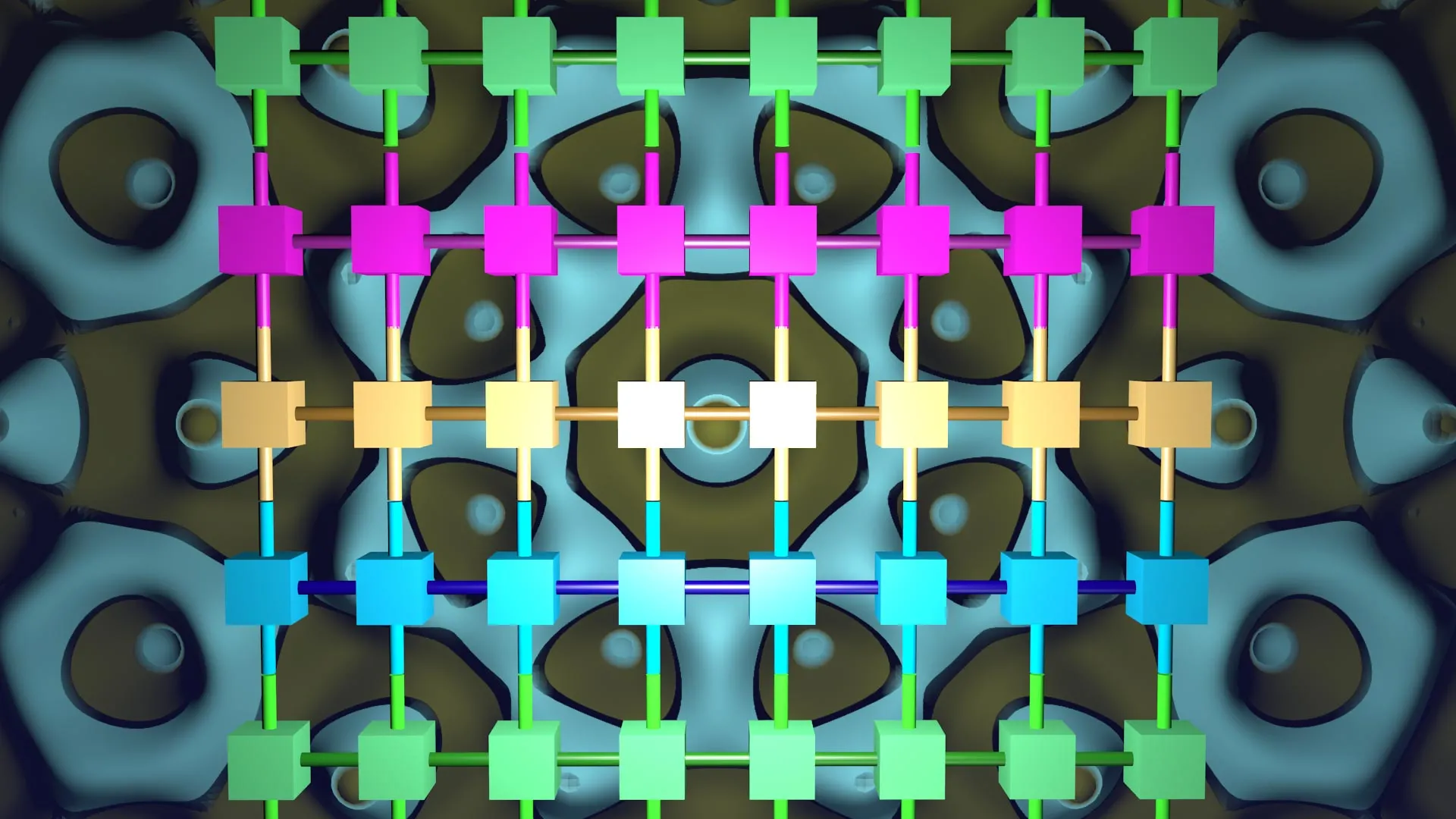
A research team at Aalto University’s Department of Applied Physics has announced the development of a groundbreaking quantum-inspired algorithm designed to simulate complex, non-periodic quantum materials with unprecedented speed and efficiency. This computational breakthrough addresses a long-standing bottleneck in materials science: the inability of classical supercomputers to model the behavior of "quasicrystals" and "super-moiré" structures due to their immense mathematical complexity. By reformulating these materials problems through the lens of quantum many-body systems, the researchers successfully simulated a quasicrystal with over 268 million sites—a feat that would traditionally require handling datasets involving more than a quadrillion numbers.
The implications of this discovery extend far beyond theoretical physics. The algorithm provides a blueprint for the design of next-generation quantum materials, which are essential for building more stable quantum computers and "dissipationless" electronics. As global energy consumption by AI-driven data centers continues to climb, the ability to engineer materials that conduct electricity without energy loss has become a critical priority for both the scientific community and the technology industry.
The Computational Challenge of Non-Periodic Materials
At the heart of modern condensed matter physics is the study of how the arrangement of atoms dictates a material’s properties. For decades, scientists have relied on the periodic nature of crystals—where atoms repeat in a predictable, lattice-like grid—to simplify their calculations. However, the frontier of quantum technology now lies in non-periodic structures, such as quasicrystals and super-moiré materials.
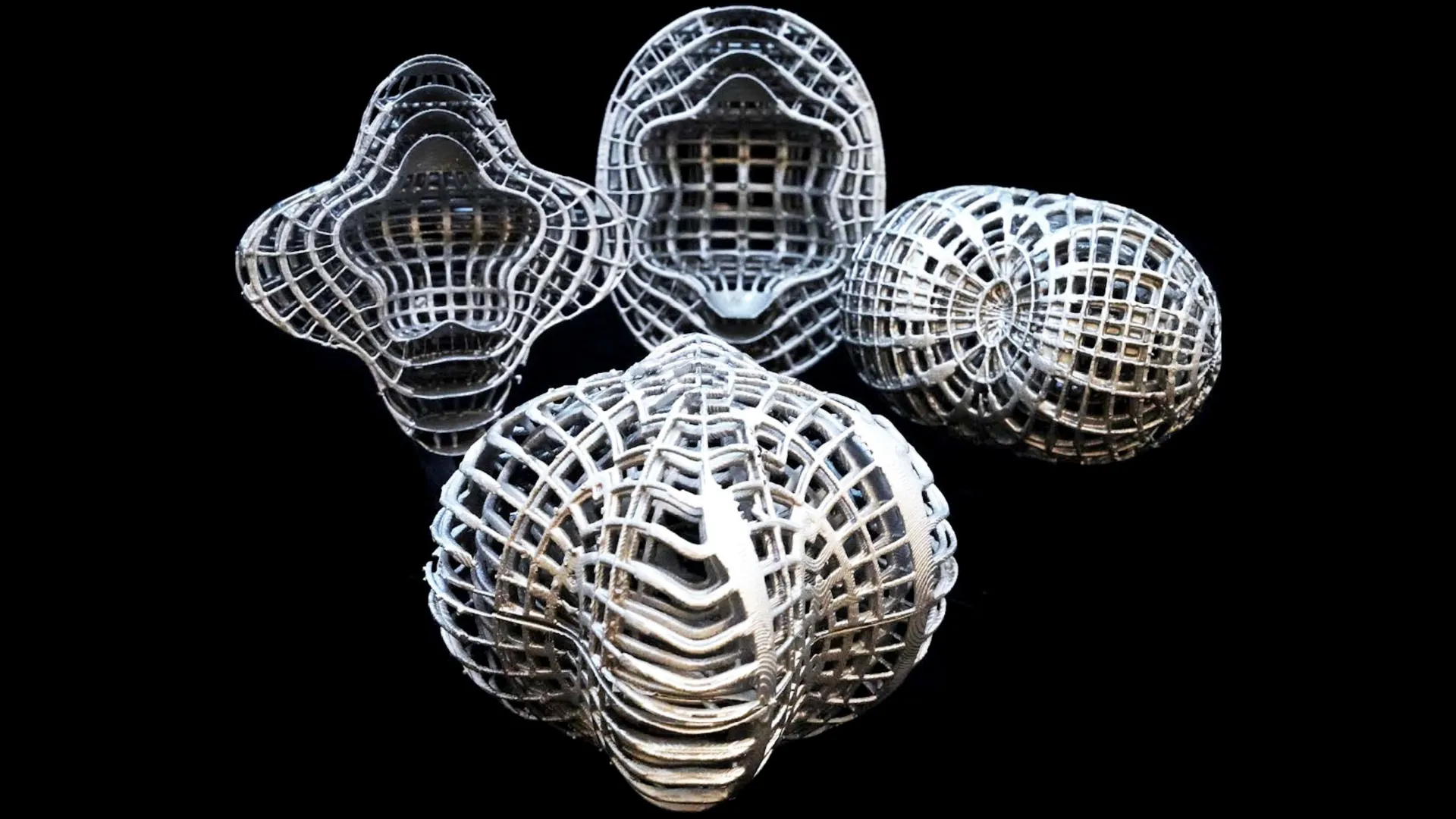
Quasicrystals are materials that possess an ordered structure but lack the translational symmetry of traditional crystals. While they are highly organized, their patterns never repeat exactly. This lack of periodicity makes them exceptionally difficult to model. In a standard crystal, a scientist can simulate a small "unit cell" and extrapolate the results. In a quasicrystal, every part of the material is unique, requiring the simulation of the entire system at once.
The complexity scales exponentially. To simulate a relatively small quantum system, a classical computer must track a massive number of variables. When dealing with topological quasicrystals—which are prized for their ability to host quantum excitations that are protected from environmental noise—the computational space becomes so vast that even the world’s most powerful supercomputers reach their limits. Simulations involving these materials can require the processing of a quadrillion numbers, a scale that renders traditional numerical methods obsolete.
A Quantum-Inspired Solution: The Tensor Network Approach
To overcome this "curse of dimensionality," the Aalto University team, led by Assistant Professor Jose Lado, turned to quantum-inspired algorithms. Specifically, they utilized a mathematical framework known as "tensor networks."
Tensor networks are a family of algorithms designed to compress the massive amounts of data found in quantum many-body systems. Instead of trying to calculate every possible interaction in a 268-million-site system individually, the algorithm identifies and focuses on the most relevant correlations within the quantum state. This effectively "encodes" the exponentially large computational space into a manageable format.
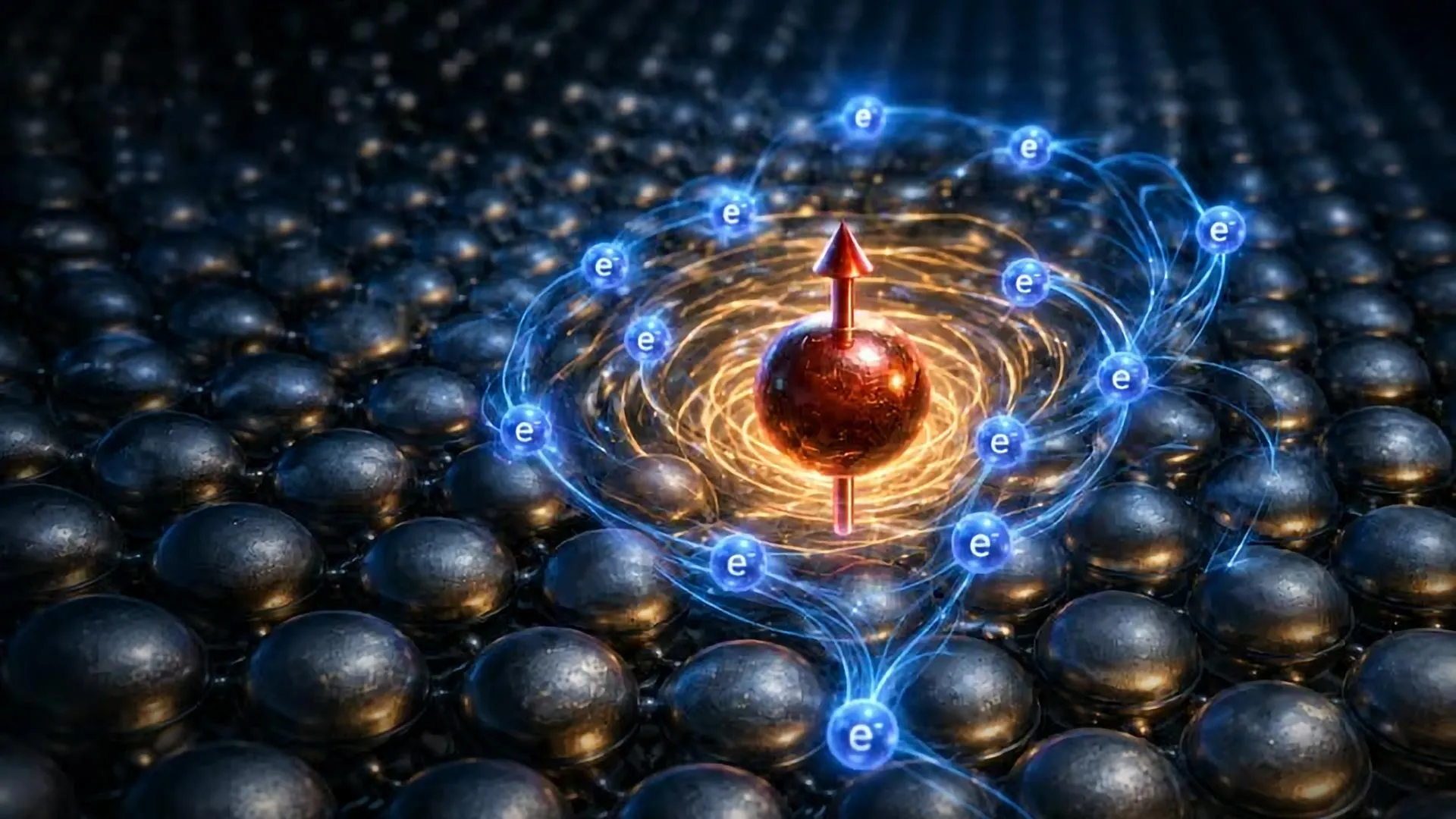
Tiago Antão, a doctoral researcher and the lead author of the study, explained that the team’s approach mimics the way a quantum computer would naturally process information. "Quantum computers work in exponentially large computational spaces," Antão noted. "Our algorithm shows how colossal problems in quantum materials can be directly solved with the exponential speed-up that comes from encoding the problem as a quantum many-body system."
By treating the material simulation as a quantum problem rather than a classical one, the researchers were able to achieve results almost instantly. This transition from months of supercomputing time to near-instantaneous results marks a paradigm shift in how exotic materials are designed and tested.
The Evolution of Moiré and Super-Moiré Materials
The research builds upon the recent revolution in "twistronics," a field that emerged following the 2018 discovery that stacking two layers of graphene and twisting them to a specific "magic angle" could induce superconductivity. This "moiré pattern"—an interference pattern created when two similar grids are overlaid at an angle—allows scientists to tune the electronic properties of a material simply by changing the twist.
The Aalto team has pushed this concept further into the realm of "super-moiré" materials. These are created by stacking multiple layers of 2D materials, such as graphene or transition metal dichalcogenides, in increasingly complex configurations. These structures can create topological quasicrystals, which host unconventional quantum excitations.
These excitations are of particular interest to the quantum computing industry. One of the greatest hurdles to practical quantum computing is "decoherence"—the tendency of quantum bits (qubits) to lose their information due to interference from heat or electromagnetic noise. Topological materials offer a potential solution because their quantum states are "protected" by the material’s overall geometry, much like a knot in a string remains a knot regardless of how the string is moved.
A Two-Way Feedback Loop for Quantum Technology
One of the most significant aspects of this research is what Professor Jose Lado describes as a "productive two-way feedback loop."
Currently, the development of quantum computers is hindered by a lack of stable materials to build them. Conversely, the development of new materials is hindered by the lack of powerful computers to simulate them. The Aalto team’s algorithm breaks this cycle. By using quantum-inspired logic on today’s classical hardware, they can design the materials necessary to build the quantum hardware of tomorrow.
"Crucially, these new quantum algorithms can enable the development of new quantum materials to build new paradigms of quantum computers," Lado said. Once these quantum computers reach a sufficient level of maturity—such as the Finnish AaltoQ20 system or the broader Finnish Quantum Computing Infrastructure—the algorithm can be adapted to run on actual quantum hardware, further accelerating the discovery of even more advanced materials.
Impact on Energy Efficiency and AI Data Centers
Beyond the realm of quantum computing, the ability to design super-moiré quasicrystals has profound implications for global energy sustainability. The research highlights the potential for "dissipationless electronics."
In traditional copper wiring or silicon chips, electrons collide with impurities and the atomic lattice as they move, creating resistance. This resistance converts electrical energy into heat, which is why laptops get hot and data centers require massive cooling systems. Dissipationless materials, such as those that exhibit the quantum Hall effect or high-temperature superconductivity, allow electrons to flow without resistance.
As Artificial Intelligence (AI) continues to expand, the energy demand of the data centers required to train and run these models is skyrocketing. Industry analysts estimate that data centers currently consume approximately 1% to 2% of global electricity, a figure expected to rise significantly by 2030. The development of electronic components based on topological quasicrystals could lead to a new generation of low-power, high-performance hardware, drastically reducing the carbon footprint of the digital economy.
Chronology and Institutional Support
The research, recently published in Physical Review Letters as an "Editor’s Suggestion"—a distinction reserved for papers of particular importance and interest—is the result of a multi-year collaborative effort within the Finnish quantum ecosystem.
The team included:
- Assistant Professor Jose Lado: Lead researcher and head of the Correlated Quantum Materials group at Aalto.
- Tiago Antão: Doctoral researcher and primary author, responsible for the algorithm’s development.
- Yitao Sun: QDOC doctoral researcher.
- Adolfo Fumega: Academy Research Fellow.
The project was supported by several high-profile initiatives, including the European Research Council (ERC) Consolidator grant "ULTRATWISTRONICS." This grant is specifically focused on designing topological qubits using van der Waals materials—ultra-thin layers of atoms held together by weak forces.
The work also falls under the umbrella of the Center of Excellence in Quantum Materials (QMAT). Finland has positioned itself as a global leader in quantum technology, home to companies like Bluefors (specializing in ultra-low temperature cooling) and IQM Quantum Computers. The Aalto team’s work bridges the gap between the university’s strengths in theoretical physics and the practical needs of the burgeoning quantum industry.
Analysis of Future Implications
While the current results are theoretical and based on simulations, the researchers emphasize that experimental verification is the next logical step. The "268 million sites" simulated by the algorithm represent a scale that can be physically manufactured in a laboratory using current nanofabrication techniques.
The success of the quantum-inspired algorithm suggests that we may be entering an era of "computational materials design," where new substances are engineered with specific quantum properties before a single atom is ever placed in a lab.
For the tech sector, the takeaway is clear: the path to sustainable AI and functional quantum computing runs through materials science. By solving the mathematical complexity of quasicrystals, the Aalto University team has removed a major barrier to the next generation of electronic and computational devices. The "two-way feedback loop" is now in motion, and the materials it produces could define the technological landscape of the mid-21st century.