The field of organometallic chemistry has reached a significant milestone as researchers at the Okinawa Institute of Science and Technology (OIST) successfully captured and characterized a rare, highly unstable intermediate structure in the formation of metallocenes. These "sandwich" molecules, which consist of a metal atom positioned between two planar carbon rings, have been a cornerstone of chemical research and industrial application since their accidental discovery in the mid-20th century. Despite their ubiquity in catalysts, sensors, and materials science, the precise mechanical pathways through which these molecules assemble have long remained elusive due to the fleeting nature of their intermediate states. The OIST team’s discovery, recently published in the Journal of the American Chemical Society (JACS), provides the first definitive structural evidence of a "doubly ring-slipped" intermediate, offering a transformative look at the kinetic behavior of these essential compounds.
The Historical Context: From Ferrocene to Modern Catalysis
To understand the weight of the OIST discovery, one must look back to 1951, when the discovery of ferrocene—an iron atom sandwiched between two cyclopentadienyl rings—revolutionized the understanding of chemical bonding. This discovery was so impactful that it earned Ernst Otto Fischer and Geoffrey Wilkinson the Nobel Prize in Chemistry in 1973. Ferrocene established the "18-electron rule," a guideline suggesting that transition metal complexes are most stable when the metal atom is surrounded by 18 valence electrons, mimicking the electron configuration of a noble gas.
Since then, metallocenes have become indispensable. In the industrial sector, they serve as highly efficient catalysts for the production of polymers like polyethylene and polypropylene. In the medical field, ferrocene derivatives are being investigated for their potential in anti-cancer treatments and drug delivery systems. However, the 18-electron rule, while a powerful predictive tool, also acts as a boundary. For decades, chemists have sought to create "non-conformist" molecules that exceed or fall short of this limit, as such species often exhibit unique reactivity and electronic properties.
The OIST Breakthrough: Pushing the 18-Electron Boundary
The Organometallic Chemistry Group at OIST, led by Dr. Satoshi Takebayashi, has spent years investigating the limits of metallocene stability. Their research trajectory shifted significantly last year when the group successfully synthesized ferrocene derivatives containing 20 electrons—an achievement that challenged traditional bonding theories. Building on this success, the team turned their attention to ruthenium, a transition metal located directly below iron in the periodic table.
Ruthenium is often used in place of iron when researchers require a metal with different oxidation states or greater stability in specific catalytic cycles. The researchers hypothesized that they could replicate their 20-electron success with ruthenium. However, the chemical reactions did not go as planned. Instead of yielding a stable 20-electron ruthenium complex, the reaction reverted to a standard 18-electron structure.
Crucially, the team did not view this "failure" as a setback. Instead, they focused on the mechanism of the reversion. By carefully controlling the reaction conditions, they were able to halt the process mid-way, isolating a previously theoretical but never-before-seen intermediate: a doubly ring-slipped ruthenocene derivative.
Analysis of the Doubly Ring-Slipped Intermediate
The term "ring-slippage" refers to a change in the hapticity of the ligands—the number of atoms in a ring that are directly bonded to the central metal. In a standard metallocene, the rings are "pentahapto" ($eta^5$), meaning all five carbon atoms in each ring are bonded to the metal. In the intermediate captured by the OIST team, both rings had "slipped" to a "monohapto" ($eta^1$) state, where only a single carbon atom from each ring remained attached to the ruthenium atom.
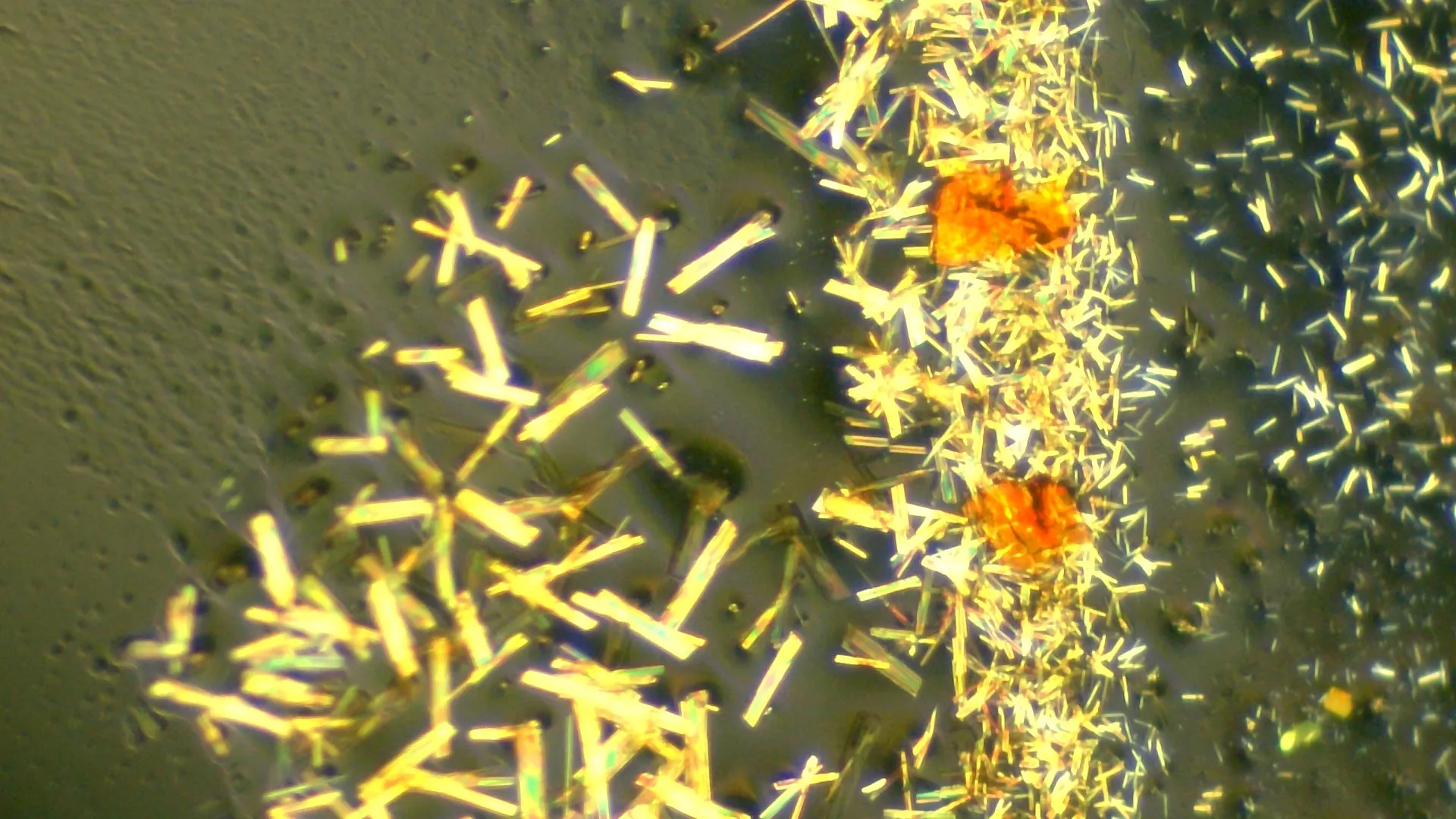
"We were able to isolate an intermediate structure from our ruthenium complex formation reaction and characterize this with single-crystal X-ray diffraction," Dr. Takebayashi explained. "Surprisingly, we found the structure to be doubly ring-slipped."
The isolation of this structure is a feat of molecular "slow-motion" photography. In typical reactions, these transitions occur in fractions of a second. By using single-crystal X-ray diffraction, the researchers were able to map the exact spatial coordinates of every atom in the intermediate, providing an empirical blueprint of a phase of matter that was previously only a computational prediction.
Chronology of the Discovery and Experimental Validation
The journey to this discovery followed a rigorous scientific timeline:
- Initial Hypothesis (Late 2022): Following the successful creation of 20-electron ferrocene, the OIST team theorized that ruthenium-based analogs could be stabilized using similar bulky ligands to prevent the molecule from collapsing into a standard 18-electron state.
- Synthesis and Observation (Early 2023): Upon attempting the synthesis, the researchers observed that the ruthenium complex was far more dynamic than the iron version. They noticed the formation of transient species during the cooling and crystallization phases.
- Isolation (Mid 2023): By utilizing specialized ligands designed to provide steric hindrance—essentially acting as a physical "cage" to slow down the molecule’s movement—the team successfully crystallized the intermediate.
- Multi-Modal Analysis (Late 2023): The team employed a suite of analytical tools to confirm their findings. Nuclear Magnetic Resonance (NMR) spectroscopy allowed them to observe the behavior of the atoms in solution, while mass spectrometry confirmed the molecular weight of the intermediate.
- Computational Modeling (Early 2024): To ensure the physical structure matched chemical theory, the team used Density Functional Theory (DFT) calculations. These models confirmed that the doubly ring-slipped state was a "local minimum" on the energy landscape, explaining why it could be isolated under specific conditions.
- Publication (2024): The findings were peer-reviewed and published in the Journal of the American Chemical Society, marking a major contribution to the field.
Supporting Data and Technical Significance
The data gathered by OIST reveals a "step-down" mechanism of metallocene assembly. Their analysis showed that the formation is not a single-step "sandwiching" event but a sequential process:
- Stage 1: The metal bonds to the rings in a $eta^1, eta^1$ (doubly slipped) configuration.
- Stage 2: One ring shifts to $eta^5$ while the other remains $eta^1$ (singly slipped).
- Stage 3: The final 18-electron stable metallocene forms with both rings at $eta^5$.
This granularity is vital for chemists. Understanding these steps allows for the "fine-tuning" of reactions. If a chemist knows exactly which intermediate state is responsible for a specific catalytic byproduct, they can alter the ligand design to bypass that state or, conversely, to stabilize it for a different use.
Implications for Future Materials and Technology
The implications of the OIST study extend far beyond the laboratory. By demonstrating how metallocenes can "deform" and "reform" their structures, the research paves the way for a new generation of "smart" or responsive materials.
Stimuli-Responsive Polymers
In the world of materials science, there is a growing demand for substances that change their physical properties in response to external triggers like heat, light, or pressure. A material incorporating these ring-slipped metallocenes could potentially change its conductivity, color, or mechanical strength when the rings "slip" or "re-attach" to the metal center.
Advanced Catalysis
The pharmaceutical and petrochemical industries rely on catalysts to lower the energy required for chemical reactions. The discovery of the doubly ring-slipped intermediate provides a new "handle" for catalyst design. By manipulating the hapticity of the rings, scientists can create more efficient catalysts that operate at lower temperatures or produce fewer waste products.
Drug Delivery and Sensing
Metallocenes are increasingly used in biosensors due to their predictable redox (electron exchange) properties. Understanding the intermediate stages of these molecules could lead to the development of sensors with higher sensitivity. Furthermore, in drug delivery, a metallocene "cage" could be designed to remain stable in the bloodstream but "un-sandwich" or slip its rings when it encounters the specific pH or chemical environment of a tumor, releasing a therapeutic payload.
Academic and Industry Reactions
While the OIST team has focused on the fundamental chemistry, the broader scientific community has noted the potential for industrial application. Dr. Takebayashi noted that there is a "recent renewed interest in incorporating metallocenes into materials to access different properties."
Independent observers in the field of organometallic chemistry suggest that this work fills a significant gap in the literature. For decades, the "ring-slip" was a "ghost" in the machine of chemical equations—something that had to exist for the math to work but had never been seen. By providing a physical crystal structure, OIST has turned a theoretical concept into a tangible tool for future engineering.
Conclusion: A New Chapter in Sandwich Chemistry
The discovery at the Okinawa Institute of Science and Technology serves as a reminder that even the most well-studied areas of science—such as the 70-year-old field of metallocenes—still hold profound mysteries. By capturing the doubly ring-slipped intermediate, Dr. Satoshi Takebayashi and his team have provided a new lens through which to view the assembly of complex molecules.
As the scientific community moves toward the development of more sustainable catalysts and responsive "smart" materials, the insights gained from this ruthenium-based discovery will likely serve as a foundational reference. The ability to understand, and eventually control, the "slippage" of these molecular rings marks the beginning of a more precise and creative era in organometallic design, where the boundaries of the 18-electron rule are no longer a limit, but a starting point for innovation.