The relentless ingenuity of illicit laboratories in synthesizing novel fentanyl variants is outpacing the capabilities of forensic analysis, creating a dangerous cat-and-mouse game that fuels the ongoing opioid crisis. However, a groundbreaking new methodology, detailed in a preprint study, offers a potential paradigm shift in drug detection. This innovative approach bypasses the need for traditional reference libraries of known compounds, instead utilizing computer-generated data and sophisticated analytical techniques to identify previously uncataloged fentanyl analogs. The research, published on bioRxiv.org on April 27, 2026, by a team from the Pacific Northwest National Laboratory, could equip law enforcement and public health officials with a crucial tool to stay ahead of drug traffickers.
The Escalating Threat of Novel Fentanyl Variants
Fentanyl, a synthetic opioid with an analgesic potency up to 100 times that of morphine, has become a leading driver of overdose deaths globally. In the United States alone, the Centers for Disease Control and Prevention (CDC) reported that synthetic opioids, predominantly fentanyl, were involved in an estimated 72,000 overdose deaths in 2023. This staggering figure underscores the profound public health emergency posed by these substances.
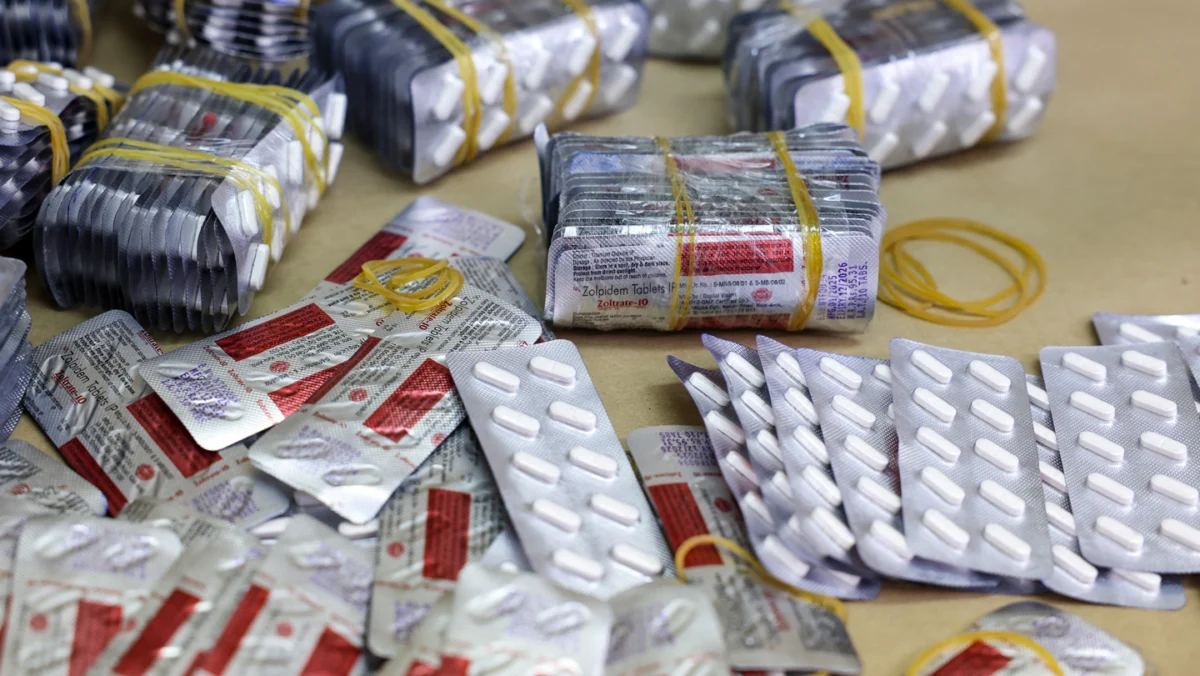
Unlike naturally derived opioids, fentanyl is entirely synthetic, meaning clandestine chemists can modify its molecular structure with relative ease. These modifications, often subtle, can result in entirely new compounds that possess similar, or even enhanced, psychoactive and lethal properties. The primary motivation for this continuous chemical innovation by underground labs is to circumvent legal restrictions and detection methods. By creating substances that have not yet been identified or cataloged by forensic science, traffickers can introduce them into the illicit drug supply with a reduced risk of immediate interdiction. This has led to a situation where pills sold on the street, often disguised as legitimate pharmaceuticals like oxycodone or Xanax, may contain potent fentanyl analogs that users are unaware of, drastically increasing their risk of a fatal overdose.
The traditional method for identifying unknown substances in forensic toxicology relies on comparing analytical data of a seized sample to a comprehensive library of known compounds. This library is built by meticulously analyzing pure chemical samples in a laboratory setting. However, the theoretical number of possible fentanyl structures is astronomical. Scientists estimate that there are billions of potential fentanyl permutations, yet only a fraction of these, around 60,000, have been characterized and added to official databases. This vast disparity creates significant blind spots for law enforcement and forensic laboratories, rendering them perpetually a step behind the evolving landscape of illicit drug synthesis.
"It’s become a whack-a-mole problem," commented David Wishart, a biochemist at the University of Alberta in Edmonton, Canada, who was not involved in the study. His sentiment reflects the frustration and urgency felt by many in the scientific and law enforcement communities grappling with this dynamic threat. The sheer volume of potential novel compounds means that by the time one variant is identified and added to a reference library, several new ones may have already emerged on the streets.
A New Paradigm: Reference-Free Identification
The research team, led by bioanalytical chemist Tom Metz of the Pacific Northwest National Laboratory, recognized the limitations of the traditional reference-based approach. "Pure forms are not going to get us where we need to be," Metz stated, emphasizing the need for a fundamentally different strategy. Their prior work focused on identifying common chemical features and analytical signatures shared by fentanyl compounds, as well as developing methods to differentiate them from other molecules with similar molecular masses.
Fentanyls, at their core, share a common chemical backbone. However, the peripheral chemical groups attached to this core can be varied extensively, much like decorating a Christmas tree with different ornaments. Metz likens this to a pine tree, which remains a pine tree regardless of the decorations added. The instruments employed by Metz and his team are designed to meticulously probe these variations, providing detailed insights into the elemental composition, structural arrangement, and even the three-dimensional shape molecules adopt during analysis. These detailed "fingerprints" can be used to characterize a compound without necessarily knowing its exact chemical identity beforehand.
Building upon this foundation, the researchers embarked on a novel endeavor to create a comprehensive digital library of hypothetical fentanyl variants. Their process involved computationally deconstructing approximately 60,000 known fentanyl and fentanyl-like molecules into smaller fragments. These fragments were then systematically recombined to generate billions of plausible molecular structures. To ensure the relevance and practicality of their digital creations, they rigorously filtered out molecules deemed nonsensical or unlikely to exhibit psychoactive effects, such as those incapable of crossing the blood-brain barrier.
The crucial step involved leveraging machine learning algorithms to predict the expected real-world chemical measurements – the analytical "fingerprints" – for these computationally generated structures. This vast dataset of predicted analytical signatures was then merged with the data from the 60,000 known structures. The result was an unprecedented digital library containing over one billion potential fentanyl analogs. This library serves as a predictive tool, outlining what newly synthesized compounds should look like analytically, even if they have never been synthesized or analyzed before.
Testing the Digital Library: A Mock Pill Success
To validate their approach, the researchers created a mock fentanyl pill. Since they could not ethically or legally test street drugs directly, they synthesized a controlled sample. This mock pill contained traces of 12 commercially available fentanyl varieties, mixed with a chemically similar non-opioid decoy and common adulterants found in illicit pills, such as caffeine.
The analytical measurements were then performed on this mock pill using the specialized instruments. The raw data was subsequently provided to an independent analytical chemist who had no prior knowledge of the pill’s contents or the researchers’ predictive library. The chemist was tasked with analyzing the data and identifying any fentanyl analogs present.
The results were highly promising. After several iterative cycles of data analysis and comparison against the digital library, the blinded chemist successfully identified six of the 12 fentanyl components with perfect accuracy. For another four compounds, the analysis narrowed the possibilities down to a few likely candidates each. The remaining two compounds could not be fully resolved or lacked the specific flagging signatures used in the analysis. Crucially, this identification and narrowing process was achieved without relying on a traditional library of pure, known compounds. The digital library, based on predicted chemical features, proved to be a powerful predictive and diagnostic tool.
Implications and Future Directions
The implications of this research are significant for combating the opioid epidemic. By enabling the identification of novel fentanyl variants that have yet to be cataloged, law enforcement agencies and forensic laboratories could potentially detect and interdict these dangerous substances much earlier in their lifecycle. This proactive approach could disrupt trafficking networks and prevent the introduction of unknown, highly potent drugs into communities.
However, experts caution that the system is not yet ready for immediate deployment in operational settings. A. Way Fountain III, a chemist at the University of South Carolina who was not involved in the study, highlighted a key challenge: the reliance on customized instruments that are not widely available in most forensic or national security laboratories. Widespread adoption will likely require significant investment in new analytical equipment or the development of more accessible versions of the technology.
Furthermore, Fountain suggested that the technique should be rigorously tested with other classes of drugs and molecules to assess its broader applicability and identify areas for improvement. The researchers are already pursuing this line of inquiry. Metz and his team are investigating common features within nitazenes, a class of potent synthetic opioids that have recently emerged as a significant concern in overdose cases. Their preliminary findings suggest that the reference-free identification approach may be adaptable to these emerging threats as well.
The broader scientific community has reacted with optimism and recognition of the study’s potential. David Wishart believes this work will be instrumental in modernizing the forensic community’s approach to identifying unknown compounds. "Relying on a reference library of pure compounds is still very 19th-century thinking," he asserted, advocating for a shift towards more advanced, predictive analytical methods.
Gary Miller, a molecular pharmacologist at Columbia University who was not involved in the research, echoed this sentiment, calling reference-free identification "revolutionary from a scientific standpoint." He added, "These data demonstrate that the approach can work," underscoring the empirical evidence presented by the study.
The development of this reference-free identification method represents a significant leap forward in the ongoing battle against synthetic opioids. While challenges remain in terms of accessibility and broad application, the potential to identify and understand novel fentanyl variants before they become widespread public health crises offers a much-needed glimmer of hope in a persistent and devastating epidemic. The ability to anticipate and detect the chemical creativity of illicit labs could fundamentally alter the dynamics of drug enforcement and public safety efforts worldwide.