

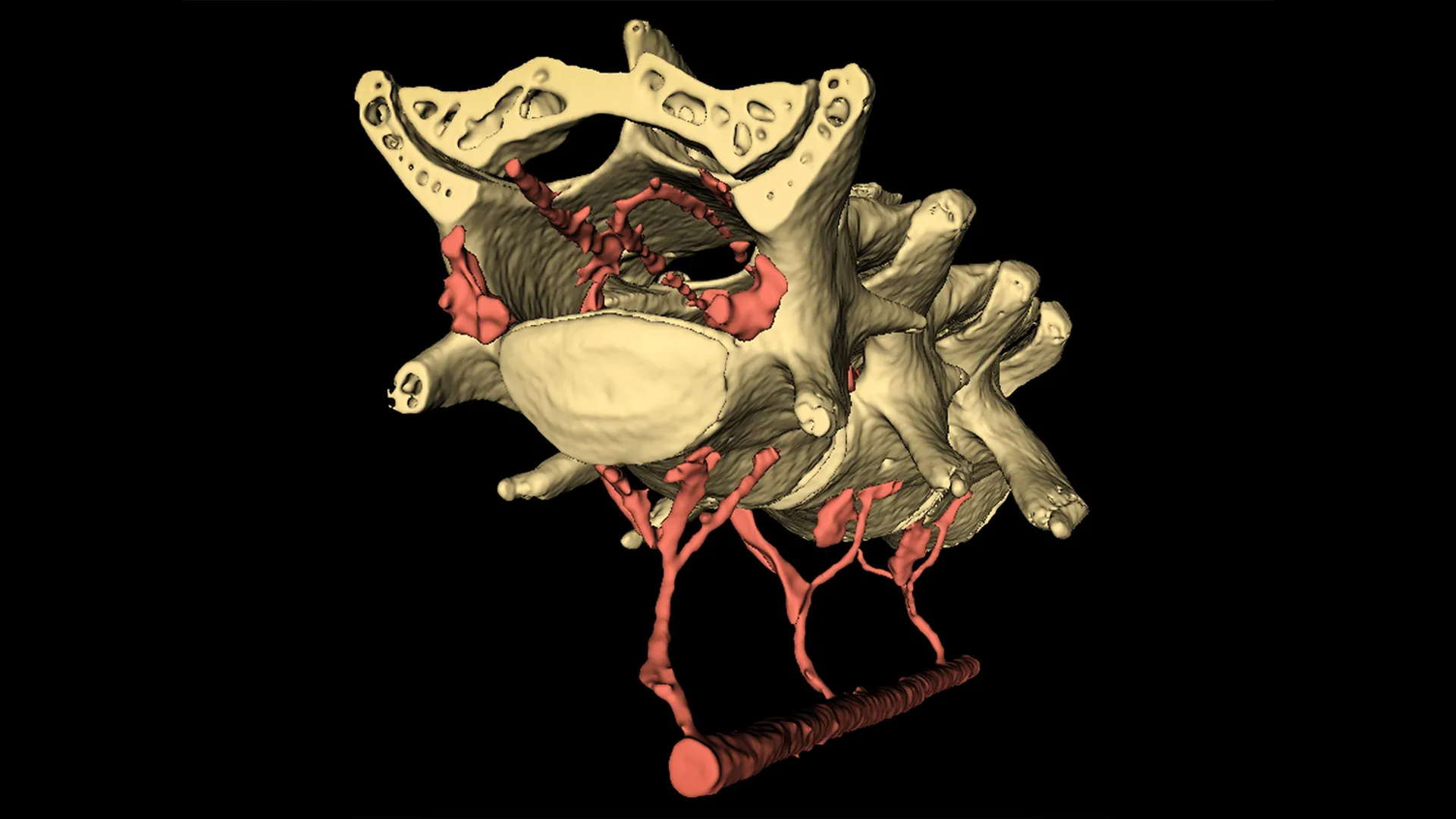
The human brain, long considered a delicate organ shielded from the rigors of the body’s physical exertion, is far more integrated into the mechanical movements of the torso than previously recognized by modern science. In a landmark study published on April 27 in the journal Nature Neuroscience, a multidisciplinary team of researchers at Pennsylvania State University revealed that the simple act of contracting abdominal muscles creates a hydraulic effect that physically shifts the brain and facilitates the circulation of cerebrospinal fluid (CSF). This discovery provides a critical mechanical explanation for why physical activity is consistently linked to improved cognitive health and a lower risk of neurodegenerative diseases. By utilizing a combination of high-resolution imaging in animal models and complex computer simulations, the researchers have mapped a previously unknown physiological pathway that connects the core of the body to the deep structures of the central nervous system.
The Mechanical Link Between Core Movement and Neural Longevity
For decades, the medical community has understood that exercise benefits the brain through increased blood flow and the release of neurotrophic factors. However, the specific mechanical influence of muscle contractions on the movement of fluids within the skull remained largely unexplored. The Penn State study, led by Patrick Drew, a professor of engineering science and mechanics, neurosurgery, biology, and biomedical engineering, posits that the body acts as a hydraulic pump. When the abdominal muscles tighten—whether through purposeful exercise or the simple act of bracing to stand up—they exert pressure on the internal organs and the surrounding vasculature.
This internal pressure is not contained within the abdomen. Instead, it is transmitted through the vertebral venous plexus, a sophisticated network of veins that runs along the spinal column and connects the abdominal cavity directly to the cranial space. As the abdominal muscles contract, they push blood from the abdomen into this venous network, which in turn increases the volume and pressure within the spinal cavity. This surge of pressure travels upward, causing the brain to move slightly within the protective confines of the skull. This motion, while subtle, is significant enough to act as a primary driver for the movement of cerebrospinal fluid.
Cerebrospinal fluid is the clear, colorless liquid that cushions the brain and spinal cord. Beyond its role as a shock absorber, CSF acts as the brain’s "waste disposal system," circulating through the tissue to pick up metabolic byproducts, such as beta-amyloid and tau proteins, which are associated with Alzheimer’s disease and other forms of dementia. The findings suggest that every step, every lift, and every engagement of the core helps "flush" the brain, maintaining the delicate chemical balance required for optimal neural function.
Methodology: Observing the Brain in Motion
To validate this hydraulic theory, the research team employed a rigorous experimental framework involving moving mice and advanced imaging technologies. Observing the real-time movement of a living brain requires specialized equipment capable of peering through the skull without interfering with natural physiological processes. The team utilized two-photon microscopy, which allows for high-resolution imaging of living tissue at depths that standard microscopes cannot reach, and microcomputed tomography (micro-CT), which provided detailed 3D visualizations of the vascular and skeletal structures involved.
The researchers observed a consistent pattern: just milliseconds before a mouse initiated a physical movement, its abdominal muscles would contract. Almost simultaneously, the brain would shift from its baseline position. This "pre-movement" shift confirmed that the brain’s motion was not merely a result of the head moving through space, but rather a direct consequence of the internal pressure generated by the torso.
To further isolate abdominal pressure as the causative agent, the team conducted controlled experiments on lightly anesthetized mice. By applying gentle, external pressure to the rodents’ abdomens—measuring less than the pressure used in a standard human blood pressure cuff—the researchers were able to induce the same brain displacement observed during voluntary movement. Crucially, the brain returned to its original position the moment the pressure was released. This rapid response underscored the high sensitivity of the cranial environment to changes in abdominal tension.
Computational Modeling: The Brain as a "Dirty Sponge"
While imaging confirmed that the brain moves, the researchers needed to understand how that movement translates into fluid flow. Because current imaging technology cannot yet capture the microscopic, high-speed movement of CSF throughout the entire brain, the team turned to computational fluid dynamics.
Francesco Costanzo, a professor of engineering science and mechanics and an expert in mathematical modeling, led the effort to simulate the brain’s internal environment. The team faced a significant challenge: the brain is a complex, porous structure with various membranes and fluid-filled compartments. To solve this, they adopted a "sponge" model. In this analogy, the brain is treated as a soft, porous skeleton through which fluid can flow when external forces are applied.
"Keeping with the idea of the brain as a sponge, we also thought of it as a dirty sponge," Costanzo explained during the research briefing. "How do you clean a dirty sponge? You run it under a tap and squeeze it out." The simulations demonstrated that the gentle shifting of the brain caused by abdominal contractions acts as the "squeeze," forcing CSF through the brain’s pores and channels. This process enhances the exchange of "clean" fluid for "dirty" fluid, effectively accelerating the clearance of toxins that could otherwise accumulate and lead to cellular damage.
Supporting Data and Technical Insights
The study’s data highlights the efficiency of the vertebral venous plexus as a pressure conduit. In biological terms, this system allows for a near-instantaneous transfer of force. The researchers noted that the level of pressure required to move the brain is remarkably low, suggesting that the mechanism is active not just during high-intensity exercise, but during virtually all forms of daily activity.
Supporting data from the simulations indicated that the velocity of CSF flow increases significantly during these pressure events. This is particularly relevant given that earlier research into the "glymphatic system"—the brain’s waste clearance pathway—suggested that most fluid movement occurs during deep sleep. The Penn State findings expand this window, suggesting that while sleep provides a consistent period of cleaning, physical activity provides "pulsatile" bursts of fluid movement that may be equally vital for long-term brain health.
Interdisciplinary Collaboration and Institutional Support
The success of the study relied on a diverse group of experts spanning several fields. The research team included postdoctoral researchers C. Spencer Garborg, Beatrice Ghitti, and Joseph M. Ricotta, as well as faculty members from Michigan State University and the University of Auckland. The collaborative effort bridged the gap between mechanical engineering and neurobiology, demonstrating how physical laws of pressure and fluid dynamics govern biological health.
The project received substantial backing from several major health organizations, reflecting the perceived importance of the research. Funding was provided by the National Institutes of Health (NIH), the Pennsylvania Department of Health, and the American Heart Association (AHA). Imaging was facilitated by the Penn State Center for Quantitative Imaging, a facility dedicated to high-level analysis of complex systems.
Broader Implications for Public Health and Disease Prevention
The implications of this study reach far beyond the laboratory. As global populations age, the prevalence of neurodegenerative disorders is expected to rise sharply. Current pharmaceutical interventions have had limited success in "cleaning" the brain once significant damage has occurred. These findings suggest that lifestyle-based preventative measures—specifically those that involve core engagement—could be a powerful tool in maintaining cognitive resilience.
For the medical community, this research may lead to new recommendations for sedentary individuals or those with mobility issues. If core contraction is a primary driver of brain waste clearance, then even seated exercises or "bracing" maneuvers could potentially offer neurological benefits to those unable to engage in traditional aerobic exercise.
Furthermore, the study opens new avenues for investigating the link between gut health, respiratory patterns, and brain function. Since breathing also involves the diaphragm and abdominal muscles, it is likely that deep breathing exercises contribute to this hydraulic cleaning process, providing a physiological basis for the cognitive benefits often associated with yoga and meditative practices.
Future Research Directions
While the mouse models provide a compelling proof of concept, Patrick Drew and his colleagues emphasize that human trials are the necessary next step. "This kind of motion is so small. It’s what’s generated when you walk or just contract your abdominal muscles," Drew noted. The team plans to investigate whether the strength or frequency of these contractions correlates with lower levels of amyloid buildup in human subjects over time.
Additionally, the researchers aim to explore how this mechanism changes with age. It is possible that as blood vessels stiffen or muscle tone decreases, the efficiency of this hydraulic pump wanes, potentially contributing to the onset of age-related cognitive decline. Understanding these changes could lead to targeted physical therapies designed to optimize the "brain-washing" effect of physical movement.
In conclusion, the Penn State study fundamentally alters our understanding of the brain-body connection. By identifying the abdominal muscles as a "pump" for the cranial cavity, the research underscores the necessity of physical movement not just for the heart and muscles, but for the very maintenance of the mind. The "dirty sponge" of the brain requires the constant, gentle squeeze of a body in motion to remain healthy, clear, and functional.



















Leave a Reply