Few areas of pharmaceutical manufacturing have attracted as much capital investment, strategic realignment, and engineering ingenuity in recent years as high-potency containment. Driven primarily by the relentless expansion of oncology pipelines and the meteoric rise of antibody-drug conjugates (ADCs), specialist contract development and manufacturing organizations (CDMOs) have rushed to install advanced isolators, closed-transfer systems, and hyper-controlled manufacturing environments. These state-of-the-art facilities are specifically designed to regulate occupational exposure at increasingly minute concentrations, safeguarding human operators from hazardous chemical agents.
The commercial justification for these multibillion-dollar investments appears compelling at first glance. According to comprehensive GlobalData analyses, worldwide sales of ADCs surged from $1.6bn in 2017 to $13.6bn by 2024. Market forecasters project this upward trajectory will continue, pushing total global revenues to an estimated $65.2bn by 2031. Furthermore, the active clinical pipeline for ADCs expanded dramatically, growing from 557 active programs in 2020 to 1,643 programs by 2025. Significantly, roughly 71% of these active development programs remain positioned within the early discovery or preclinical stages, signaling a sustained, long-term demand for specialized manufacturing infrastructure.
Amid this industrial boom, the alphanumeric code "OEB6" has begun appearing with increasing frequency in the marketing brochures, technical data sheets, and executive presentations of specialist CDMOs. Industry players use the term to denote ultra-high-containment capabilities. While formal, universally recognized definitions remain absent, leading CDMOs such as Indena classify an OEB6 capability as maintaining occupational exposure levels below 100ng/m³ for ADC payload and linker-payload manufacturing.
It is naturally tempting for market observers to draw a straight line between the proliferation of ADCs, the advent of ultra-potent payloads, and the rapid adoption of OEB6. Such linear thinking suggests that OEB6 is destined to become the baseline industry standard for all high-potency active pharmaceutical ingredient (HPAPI) manufacturing. However, a deeper examination of molecular pharmacology, historical clinical data, and toxicological thresholds reveals a far more nuanced reality. The fundamental question facing the sector is not whether containment technology is advancing, but whether the targeted molecules themselves are actually becoming progressively more potent across the board.
The Molecular Reality: ADC Growth Does Not Automatically Mean Potency Growth
To understand the intersection of high-potency manufacturing and oncology drug development, one must examine the unconjugated payload—arguably the single most hazardous component handled during ADC production. The synthesis of payloads and linker-payloads frequently involves highly potent cytotoxic small molecules with occupational exposure limits measured in nanograms per cubic meter. This technical reality establishes a direct link between the expanding ADC pipeline and the demand for advanced HPAPI containment facilities.
However, contemporary ADC innovation is not simply a linear march toward ever-more-potent cytotoxins. Historically, early ADC developers investigated exceptionally powerful DNA-damaging payloads, including pyrrolobenzodiazepines (PBDs), indolinobenzodiazepines, and other synthetic agents possessing extreme intrinsic cytotoxicity. Yet, researchers quickly learned that high intrinsic potency does not automatically translate into a superior, clinically effective medicine. Comprehensive clinical reviews of the field have repeatedly highlighted severe dose-limiting toxicities and remarkably narrow therapeutic windows. These pharmacological hurdles ultimately restricted or halted the clinical development of several ultra-potent payload classes.
A detailed retrospective analysis of DNA-interacting ADC payloads revealed that molecules spanning a broad middle tier—roughly double-digit picomolar to single-digit nanomolar activity—have achieved the highest clinical success rates when paired with contemporary conjugation technologies. Conversely, classes characterized by extreme potency were consistently correlated with heightened systemic clinical toxicity.
The widespread adoption and clinical success of topoisomerase-I payloads further illustrate this paradigm shift in drug design. Molecules such as deruxtecan and SN-38 are generally less intrinsically cytotoxic than classical ultra-potent tubulin-targeting warheads, calicheamicins, or PBD dimers. Instead, their clinical success relies on the sophisticated engineering of the entire ADC architecture: precise linker stability, optimized drug-to-antibody ratios (DAR), tailored membrane permeability, favorable bystander effects, and targeted tumor biology.
Published comparative studies demonstrate a wide spectrum of cellular potencies among successful commercial and clinical ADC payloads, ranging from ultra-sensitive picomolar activity for calicheamicin and maytansinoids down to low-nanomolar activity for deruxtecan. This broad distribution serves as an important reminder that the evolution of next-generation ADCs is not a frantic, unyielding race toward the lowest possible half-maximal inhibitory concentration ($IC_50$).
Crucially, industry toxicologists emphasize that $IC_50$ values are not synonymous with occupational exposure limits. While pharmacological potency provides foundational data for occupational toxicology, a compound-specific OEL reflects a comprehensive, multi-faceted risk assessment. This evaluation incorporates hazard identification, dose-response relationships, route of exposure, animal and human toxicology, pharmacokinetics, and recognized scientific uncertainty factors. Consequently, a superior, highly efficacious cancer therapeutic is not automatically accompanied by a lower occupational exposure limit.
Small-Molecule Oncology and the Diversity of Exposure Limits
A similarly nuanced landscape emerges when examining conventional small-molecule oncology therapies outside the ADC domain. A definitive 2026 analysis conducted by Genentech researchers evaluated the estimated occupational exposure limits for 83 distinct, FDA-approved small-molecule kinase inhibitors (SMKIs). The findings revealed a surprisingly wide distribution of exposure thresholds, spanning from 50ng/m³ up to 96,000ng/m³.
Significantly, the vast majority of these approved small-molecule drugs sat comfortably outside the ultra-low exposure brackets associated with extreme containment manufacturing. Approximately 82% of the evaluated kinase inhibitors exhibited estimated OELs exceeding 1,000ng/m³, while the remaining 18% fell into the moderate-to-high category between 50ng/m³ and 1,000ng/m³. Notably, exactly zero approved molecules within this extensive cohort featured an OEL falling below the 50ng/m³ mark.
In short, within this major category of approved oncology medications, the historical data reveals no broad, systemic migration toward exceptionally low occupational exposure limits.
While this comparative dataset has inherent limitations—kinase inhibitors represent only one subset of oncology small molecules, and retrospective OEL estimates for approved drugs do not necessarily mirror the bleeding edge of early-stage pipelines—the broader implications are clear. Rather than the entire oncology pipeline steadily marching toward hyper-potency, the pharmaceutical market is bifurcating. The vast majority of molecules continue to occupy established, traditional HPAPI containment ranges, while a specialized minority of ultra-potent compounds drives incremental, highly targeted demand for extreme containment capabilities.
The Terminology Deficit: Defining Exactly What Is OEB6
Before the pharmaceutical industry can definitively determine whether OEB6 will inevitably become the new universal standard, stakeholders must confront a fundamental, long-standing nomenclature problem: at present, there is no universally harmonized, globally accepted regulatory definition for OEB6.
Occupational exposure banding is fundamentally a structured risk-management strategy. A true occupational exposure limit is a precise, compound-specific airborne concentration derived through rigorous toxicology to protect human workers over a lifetime of exposure. Conversely, an occupational exposure band (OEB) groups chemical substances into broader, qualitative concentration ranges to facilitate rapid hazard communication and engineering control decisions, particularly during early discovery phases when definitive, substance-specific OELs are unavailable.
For context, the US National Institute for Occupational Safety and Health (NIOSH) employs a standardized five-tier occupational exposure banding framework, utilizing alphabetical designations from Band A through Band E, with Band E representing the lowest exposure range. Explicit guidance issued by NIOSH emphasizes that an OEB is designed to guide initial safety measures and is never intended to permanently replace a rigorously derived, substance-specific OEL.
Amid this regulatory void, individual pharmaceutical enterprises and CDMOs have developed proprietary internal banding systems. For instance, a widely cited pharmaceutical industry framework establishes OEB5 as a concentration range spanning from $0.1mu g/m^3$ to $<1mu g/m^3$, while deliberately creating an "OEB5 Special Case" classification for substances falling below $0.1mu g/m^3$ (equivalent to $<100ng/m^3$). Within this specific framework, ADC payload and linker-payload components are frequently assigned to this special case because the inherent toxicity of the warhead dominates the overall hazard assessment.
Meanwhile, major global corporations like Roche and Genentech operate under alternative internal structures. Their aforementioned 2026 kinase-inhibitor evaluation utilized a maximum category ceiling designated as OEB4, formally defined as $le 0.05mu g/m^3$ (or $50ng/m^3$).

Conversely, CDMO Indena defines its internal categories differently, placing OEB5 at $0.1mu g/m^3$ to $1mu g/m^3$ ($100ng/m^3$ to $1,000ng/m^3$) and establishing OEB6 as any concentration strictly below $0.1mu g/m^3$ ($<100ng/m^3$), a classification confirmed internally by corporate leadership. Because these boundaries are established by individual corporate policy rather than an international standards organization, other contract manufacturers utilize entirely different numerical thresholds.
The practical consequences of this fragmentation are striking. A single experimental compound with a toxicologically derived OEL of $20ng/m^3$ could theoretically be categorized into the highest operational containment tier of multiple distinct corporate systems—landing variously as an OEB4, an OEB5 Special Case, or an OEB6—depending entirely on which organization is performing the evaluation.
This linguistic fragmentation does not render the terminology meaningless. However, it proves conclusively that the phrase "OEB6 capable" possesses far less standardization than its frequent deployment in commercial marketing might imply.
Marketing Label Versus Real Manufacturing Engineering
The increasing prominence of OEB6 within the pharmaceutical lexicon carries an undeniable commercial dimension. For a CDMO, invoking the term serves as an efficient shorthand to communicate to prospective pharmaceutical sponsors that the organization possesses the technical confidence and infrastructure to operate at the absolute fringe of high-potency manufacturing.
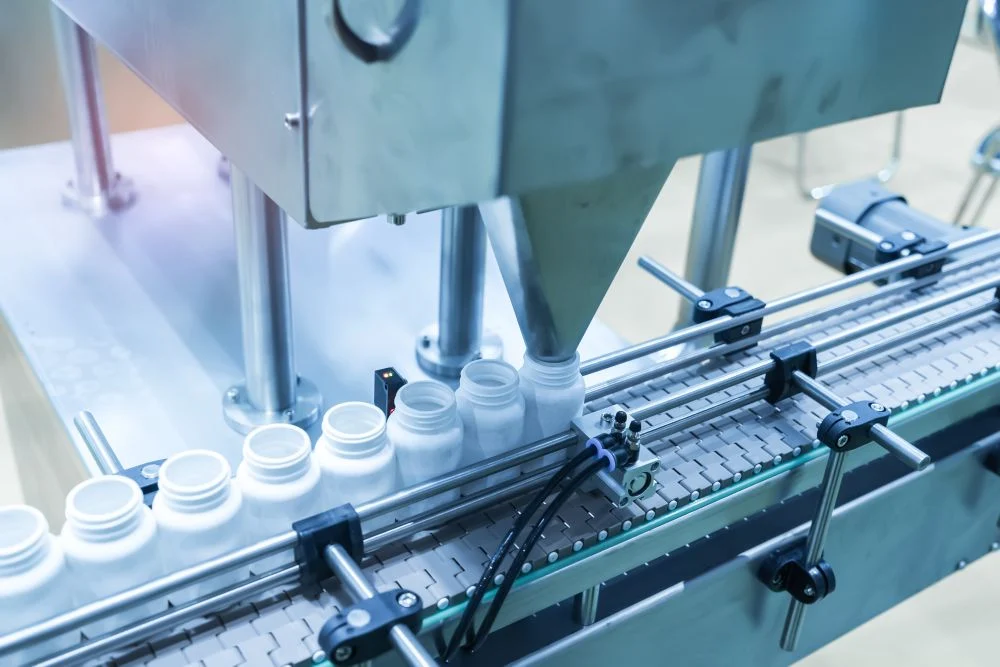
Yet, dismissing OEB6 as a mere marketing buzzword would be fundamentally inaccurate. Behind the varied terminology lie substantial, capital-intensive engineering investments. True ultra-high-containment manufacturing requires infinitely more sophisticated infrastructure than a standard high-specification glovebox integrated into a cleanroom.
To achieve and maintain ultra-low exposure limits, an entire production process must maintain absolute containment integrity across every phase of operation: solid charging, closed-loop liquid transfer, chemical reaction, in-process sampling, filtration, vacuum drying, particle milling, product discharge, equipment cleaning, solid and liquid waste handling, and routine engineering maintenance. Furthermore, the actual containment performance demonstrated by any facility depends heavily on variable operational parameters, including active batch sizes, the frequency of human operator interventions, the physical state of the compound, and the intrinsic dustiness of the active material.
This complex reality is formally recognized in updated industry guidelines, most notably the third edition of the International Society for Pharmaceutical Engineering (ISPE) SMEPAC guidance. Released to provide rigorous, standardized methodologies for evaluating airborne particle emissions and surface deposition from pharmaceutical containment systems, the modern guidelines explicitly expand the evaluation scope. Rather than treating containment as the isolated performance metric of a single piece of standalone equipment, contemporary standards evaluate integrated, multi-step equipment systems under strictly defined operational conditions.
Consequently, pharmaceutical executives emphasize that the most valuable question a sponsor can ask a potential manufacturing partner is not a simple, binary inquiry such as, "Is your facility OEB6?" Instead, the operational dialogue must focus on empirical verification: "What specific containment performance data can you demonstrate for the exact chemical process and scale I need to run?"
Strategic Risk Mitigation: Why Ultra-High Containment Matters
Even if the broader pharmaceutical landscape never reaches a consensus where OEB6 becomes the majority baseline, maintaining physical capacity at the extreme end of containment offers profound strategic advantages for both CDMOs and drug developers.
During the earliest phases of clinical development, toxicological datasets are frequently incomplete. Provisional exposure bands and preliminary OELs are inherently dynamic; they invariably evolve, tighten, or shift as long-term pharmacology and toxicology studies yield additional empirical data. Consequently, a pharmaceutical sponsor may initiate early-stage process development under one set of containment assumptions, only to discover later in the pre-clinical or Phase I lifecycle that the candidate molecule requires substantially more rigorous environmental controls.
If the chosen manufacturing partner lacks the physical infrastructure or operational flexibility to accommodate these tightened exposure requirements, the sponsor faces a difficult dilemma. They are forced to execute a complex technology transfer to a new facility precisely when program timelines, regulatory comparability, and uninterrupted supply chain continuity are at their most critical stages.
Viewed through this lens, the primary business case for investing in ultra-high containment is not rooted in the assumption that every future oncology molecule will ultimately require OEB6 controls. Rather, it centers on risk mitigation. A broader, highly versatile operating envelope allows a manufacturing partner to absorb shifting toxicological understandings without disrupting development timelines.
Industry leaders have actively positioned themselves to capture this operational flexibility. Indena’s technical documentation notes that incoming substances are assigned compound-specific OELs and systematically routed to dedicated manufacturing lines capable of handling compounds with OELs as low as $1ng/m^3$. Supported by decades of specialized experience in small-molecule HPAPI manufacturing—spanning clinical through commercial scales, alongside advanced competencies in maytansinoids and camptothecin-derived payload chemistry—such positioning offers deep credibility. This adaptive operational posture remains commercially viable regardless of how nomenclature evolves across the sector.
OEB6: The Next Standard or a Specialized Niche?
Current empirical evidence does not support the assertion that OEB6 is on an inevitable trajectory to replace OEB5 as the universal standard for high-potency pharmaceutical manufacturing.
While the global ADC market continues its rapid expansion—creating an ever-growing pool of development projects that demand advanced containment—the underlying molecular science tells a more complex story than a simple narrative of increasing potency. History demonstrates that clinical toxicity limitations have frequently curtailed the utility of the most intrinsically powerful warheads, while recent breakthroughs in topoisomerase-I payloads prove that therapeutic efficacy is often achieved through sophisticated structural engineering rather than sheer maximization of warhead cytotoxicity. Furthermore, data drawn from conventional small-molecule oncology pipelines, such as kinase inhibitors, show no evidence of a wholesale industry migration toward ultra-low nanogram-per-cubic-meter exposure limits.
Simultaneously, the lack of a harmonized, global definition for OEB6 means that qualitative banding terminology remains fractured across different corporate ecosystems. What one organization categorizes under OEB6 may be classified elsewhere as an OEB5 Special Case, or managed under entirely distinct numerical numbering systems.
Ultimately, rather than an "OEB6 market" entirely supplanting the established OEB5 landscape, the pharmaceutical industry is cultivating a specialized, commercially vital ultra-potent tier at the absolute edge of a continuously expanding HPAPI sector.
For specialist CDMOs, this dynamic environment rewards operational adaptability. Manufacturers capable of demonstrating empirical containment performance at the lowest possible exposure thresholds are uniquely positioned to support a wider array of challenging molecules, gracefully absorb evolving toxicological data during early clinical phases, and eliminate the costly risks associated with mid-program technology transfers.
Whether the global pharmaceutical industry ultimately formalizes these extreme capabilities under the banner of OEB5+, OEB6, or an entirely new classification system is fundamentally secondary. The true hallmark of leadership in the next era of HPAPI manufacturing will not be found in a new marketing number, but in a facility’s proven ability to transparently demonstrate—through rigorous testing and verifiable engineering controls—precisely how safely and reliably any high-potency molecule can be brought to market.