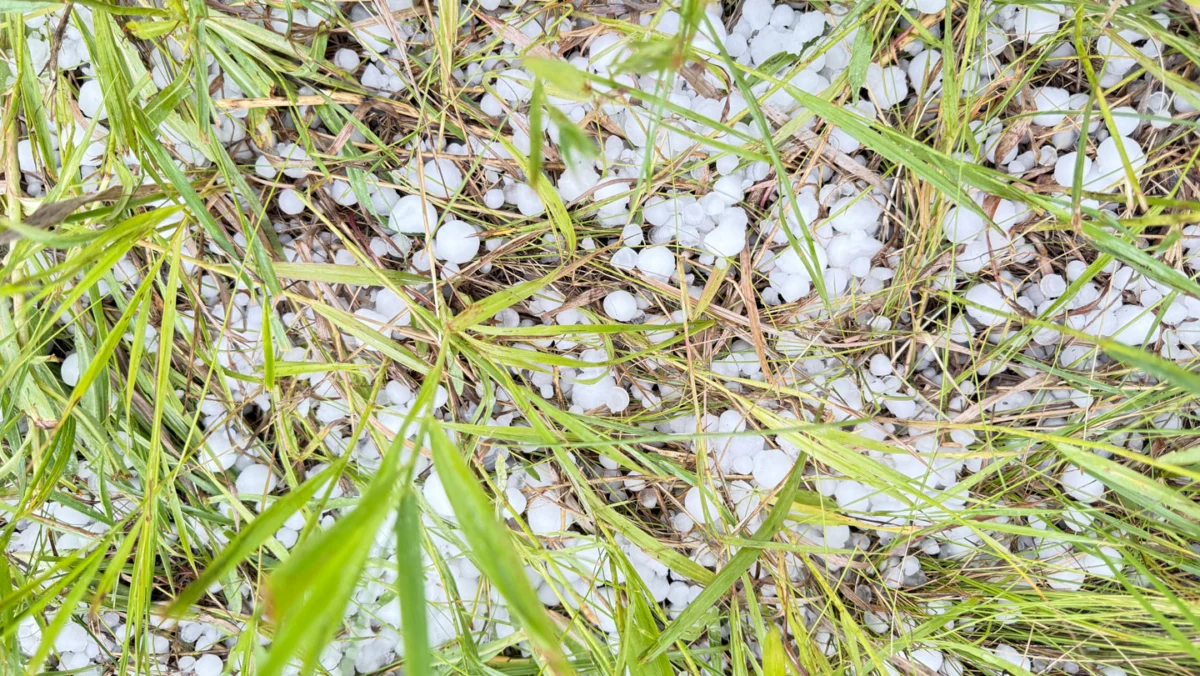
On April 28, a fierce hailstorm battered Springfield, Mo., unleashing stones the size of golf balls and causing an estimated $30 million in damage, primarily to vehicles and property. This event, while locally devastating, is part of a broader, evolving picture of hailstorm activity influenced by a changing climate. New research published in the journal Nature Climate Change suggests that while some areas may see a decrease in severe hail events, others, particularly in the mid-latitudes, could experience an increase in the frequency and intensity of damaging hailstorms. This complex shift has significant implications for infrastructure, agriculture, and public safety across the globe.
The Shifting Landscape of Hailstorms
For decades, scientists have been working to untangle the intricate relationship between climate change and severe weather phenomena. Hail, formed within powerful thunderstorms, is particularly sensitive to atmospheric conditions. These icy projectiles can range from pea-sized pellets to grapefruit-sized behemoths, capable of causing catastrophic damage. The traditional understanding of hail formation involves strong updrafts within cumulonimbus clouds, lifting water droplets to altitudes where they freeze. These frozen particles then grow by accreting supercooled water as they fall and are repeatedly carried upward by updrafts. The size and intensity of hail are largely determined by the strength of these updrafts, the amount of available moisture, and the atmospheric instability.
The new study, led by atmospheric scientists at Peking University, utilized advanced climate models to project future hail activity under various greenhouse gas emission scenarios. The research indicates a nuanced geographical distribution of these changes. Regions that are currently prone to severe hail, such as parts of the United States, Canada, and China, are projected to see a significant increase in the frequency of large hail events by the end of the century. Conversely, some tropical and subtropical regions might experience a decline in hail frequency.
Data and Projections: A Closer Look
The researchers analyzed projected changes in atmospheric variables crucial for hail formation, including convective available potential energy (CAPE) and storm-relative helicity. CAPE is a measure of atmospheric instability, indicating the potential for strong updrafts. Storm-relative helicity is a measure of the storm’s rotation, which is important for the development of supercells, the most prolific hail-producing thunderstorms.
The models suggest that in many mid-latitude regions, particularly in the Great Plains of the United States, there will be an increase in CAPE, leading to stronger updrafts. This intensification of updrafts can suspend larger ice particles for longer periods, allowing them to grow to greater sizes before falling to the ground. The study predicts a potential increase in the number of days with hail larger than 2 centimeters in diameter in these vulnerable areas. For instance, projections indicate that the number of such days could double in certain parts of the Great Plains by 2070 under a high-emission scenario.
However, the study also highlights a decrease in hail frequency in some areas. In tropical regions, while atmospheric instability might increase, other factors such as wind shear, which is crucial for sustained storm organization and hail growth, may decrease. This can lead to less frequent but potentially still severe hail events in those specific locations. The research acknowledges that the precise mechanisms are complex and involve a delicate balance of atmospheric forces.
Chronology of Understanding: From Observation to Prediction
The scientific understanding of hail and its connection to climate has evolved over time. Early meteorological studies relied heavily on observational data and statistical analysis of historical storm records. The development of Doppler radar in the latter half of the 20th century provided unprecedented insights into storm structure and dynamics, allowing scientists to observe hail-producing updrafts and rotation in real-time.
The advent of sophisticated climate models in recent decades has enabled researchers to move beyond historical analysis to predictive modeling. These models, which simulate the Earth’s climate system, allow scientists to test hypotheses about how changes in greenhouse gas concentrations will impact weather patterns. The current study represents a significant step forward by integrating these advanced modeling capabilities with a focus on the specific atmospheric ingredients required for hail formation.
The National Science Foundation’s In Situ Collaborative Experiment for the Collection of Hailstones in the Plains (ICE-CHAP) campaign, which captured images of significant hail in North Dakota in June 2025, exemplifies the ongoing efforts to gather crucial ground-truth data. Such field campaigns provide valuable observations that help validate and refine climate models, ensuring that the projections are as accurate as possible. The hailstones pictured in the North Dakota storm, a result of a powerful June 27, 2025, event, serve as a stark reminder of the destructive potential of these phenomena.
Implications for Vulnerable Regions
The projected increase in severe hail events in mid-latitude regions carries substantial economic and societal implications. Agriculture is particularly at risk. Crops, especially tender young plants, can be completely destroyed by large hailstones, leading to significant financial losses for farmers and potential disruptions to food supply chains. Insurance companies are already grappling with the rising costs of weather-related disasters, and an increase in hail damage claims could further strain their resources and potentially lead to higher premiums for homeowners and businesses.
Infrastructure, including buildings, vehicles, and power lines, is also vulnerable. The recurring damage from large hail can necessitate costly repairs and replacements, impacting local economies and requiring significant investment in resilient infrastructure design. For instance, the $30 million in estimated damage from the April 28 Springfield, Mo., storm underscores the immediate economic impact of even isolated severe hail events.
Public safety is another critical concern. While hail is rarely directly fatal, large hailstones can cause serious injuries. Effective warning systems and public preparedness are therefore paramount. Understanding which regions are most at risk allows for targeted efforts to improve early warning systems and educate communities on how to seek shelter during severe thunderstorms.
Official Responses and Preparedness Efforts
While specific official responses to this particular study are still emerging, meteorological agencies and disaster management organizations worldwide are continuously monitoring climate trends and updating their preparedness strategies. The National Weather Service in the United States, for example, uses advanced radar technology and numerical weather prediction models to issue severe thunderstorm and tornado warnings, which often include hail advisories.
“Understanding how climate change is altering the frequency and intensity of severe weather events like hailstorms is crucial for our mission to protect life and property,” stated a spokesperson for a leading meteorological research institute, speaking on condition of anonymity pending official comment. “This kind of research provides essential data for refining our forecast models and enhancing our ability to warn the public effectively.”
Agricultural ministries in countries projected to be at higher risk are likely to review and adapt crop insurance policies and potentially promote more resilient farming practices. Similarly, urban planners and construction industries may need to consider the increased threat of hail when designing new buildings and infrastructure, incorporating materials and designs that can better withstand severe weather.
Broader Climate Context and Future Research
This study on hail is part of a larger body of scientific work examining the multifaceted impacts of climate change on weather patterns. The Intergovernmental Panel on Climate Change (IPCC) has consistently reported on the observed and projected changes in extreme weather events, including heatwaves, heavy precipitation, droughts, and tropical cyclones. The increasing frequency and intensity of such events are a direct consequence of rising global temperatures caused by increased greenhouse gas emissions.
Future research will likely focus on further refining regional climate projections for hail, incorporating more detailed atmospheric physics and exploring the interplay between different climate drivers. Understanding the specific microphysical processes within thunderstorms that contribute to hail growth under changing atmospheric conditions will be key. Additionally, research into the economic and social impacts of increased hail frequency, including adaptation strategies and mitigation measures, will be essential for communities facing these evolving risks. The Springfield, Mo., hailstorm, though a single event, serves as a potent reminder of the destructive power of nature and the critical need for continued scientific inquiry and proactive adaptation in the face of a changing climate. The subtle shifts in hail patterns predicted by this new research highlight the complex and sometimes counterintuitive ways our planet is responding to global warming, demanding a vigilant and informed approach to risk management.