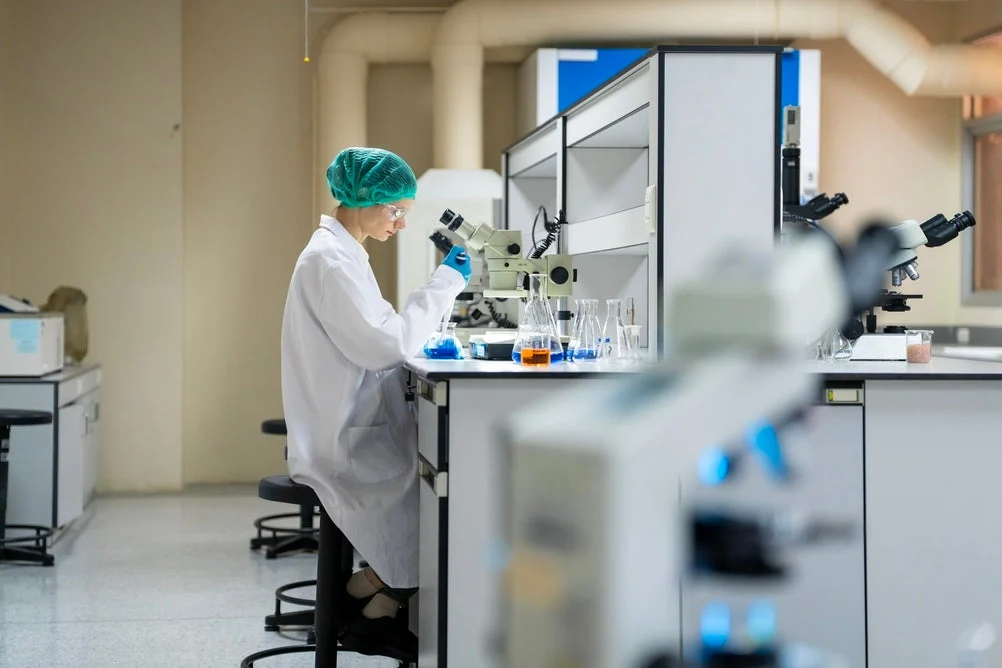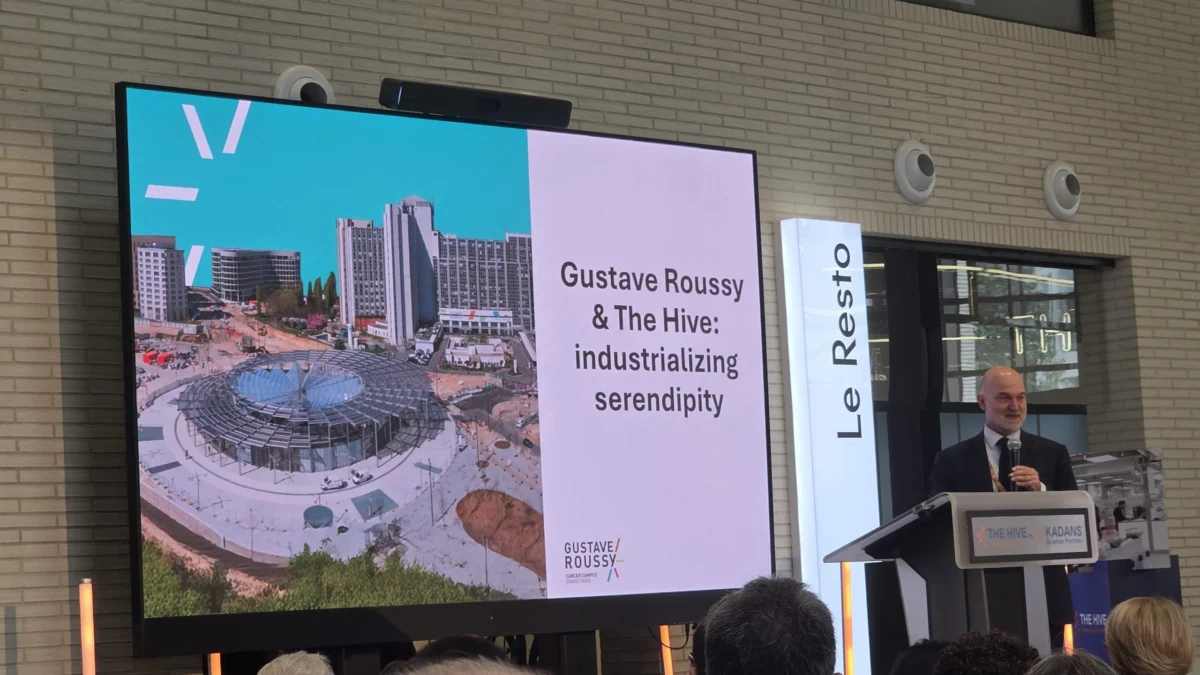
The recent inauguration of THE HIVE at Campus Grand Parc in Paris marks a significant inflection point for Europe’s oncology and life sciences sector. More than just the unveiling of a state-of-the-art laboratory facility, this event signifies a unified ambition to bolster European competitiveness in cancer research and therapeutic development. Developed by Kadans Science Partner, THE HIVE stands as one of Europe’s largest dedicated oncology and life sciences hubs, strategically positioned adjacent to the renowned Gustave Roussy cancer centre. Its design fosters an integrated environment, bringing together a diverse ecosystem of researchers, burgeoning biotech firms, seasoned clinicians, and crucial investors, all aimed at accelerating the translation of groundbreaking laboratory discoveries into tangible clinical applications for patients.
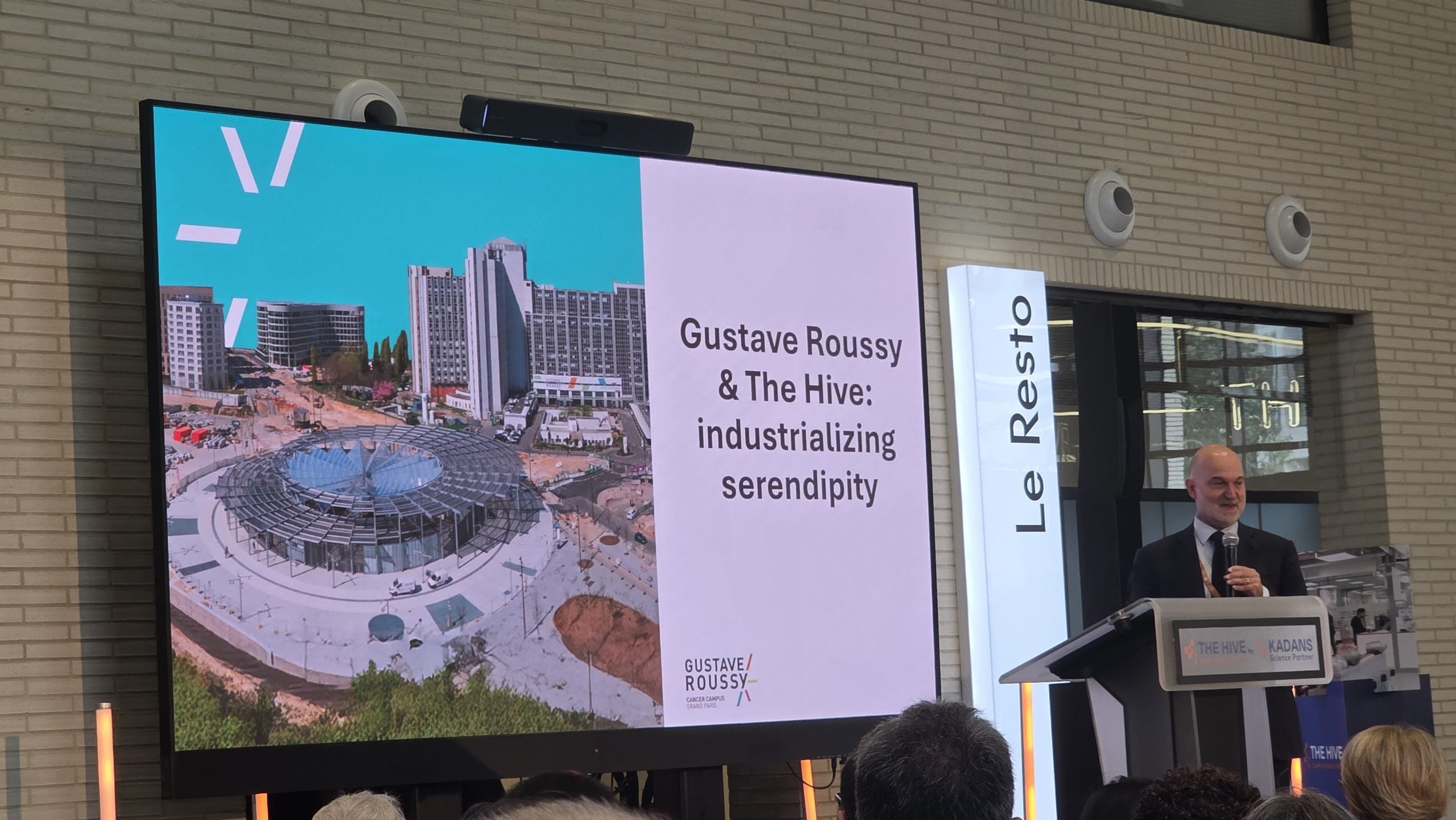
The opening ceremony on June 4th also served as the venue for the inaugural Kadans Oncology Summit, a high-profile gathering that underscored a pivotal argument: Europe’s future success in cancer research hinges as much on the strategic design of its innovation ecosystems as it does on sheer scientific prowess. This sentiment was echoed by Professor Fabrice Barlesi, CEO of Gustave Roussy, who articulated an vision extending far beyond mere physical infrastructure. He posited that the critical challenge lies in "industrializing serendipity"—the art of systematically creating environments where spontaneous, fruitful interactions between scientists, entrepreneurs, clinicians, and investors become the norm, not the exception.
"What we want with this campus is to industrialize serendipity," Professor Barlesi stated during the summit. "Ultimately, our goal is to create connections between people." This objective is not merely aspirational; Gustave Roussy has set an ambitious clinical target: to elevate cancer cure rates to 80% by the year 2040. Achieving this monumental goal, Barlesi contended, necessitates not only sustained scientific breakthroughs but also a robust capacity to efficiently convert these discoveries into commercially viable therapies that can be scaled and delivered to patients globally.
This ambitious undertaking requires the confluence of three indispensable elements: world-class scientific talent, visionary entrepreneurs capable of building companies around nascent breakthroughs, and substantial capital coupled with the expertise to mature these nascent ventures into established biotechnology powerhouses. Professor Barlesi’s remarks resonated with a broader concern voiced throughout the summit – Europe’s historical strength in fundamental research has not always translated into global industrial leadership within the biopharmaceutical sector. This gap is becoming increasingly consequential as Europe finds itself positioned between the formidable innovation ecosystems of the United States and China, both of which are making substantial investments in biotechnology and advanced healthcare manufacturing. Barlesi cautioned that without a greater capacity to develop and produce its own medicines, Europe risks an escalating dependence on external powers for its future therapeutic needs.
"I believe that Europe and France are caught in the middle of two giants," he articulated. "If we cannot develop at least some of the drugs we will need in the future, we risk becoming dependent on these two powers. We need to protect ourselves." Projects like THE HIVE at Campus Grand Parc are presented as integral components of this strategic response. By consolidating research institutions, promising start-ups, established pharmaceutical companies, and influential investors within a single, dynamic ecosystem, the aim is to cultivate an environment where discoveries can be retained, scaled, and commercialized domestically, rather than being exported. The underlying message is clear: scientific excellence alone is no longer a sufficient guarantee of success. The next era in oncology will be defined by the creation of integrated ecosystems that seamlessly connect discovery with entrepreneurship, capital, and robust manufacturing capabilities. For France, and increasingly for the broader European continent, the pertinent question has shifted from the existence of scientific talent to the capacity of the surrounding ecosystem to transform that talent into globally competitive healthcare industries.
The BOOST Grant Programme: Fueling Early-Stage Oncology Innovation
In a concrete step towards fostering this growth, the Paris-Saclay Cancer Cluster (PSCC) has announced the selection of ten start-ups for the pilot phase of its BOOST Grant programme. This initiative is designed to provide crucial early-stage funding, ranging from €120,000 to €250,000 per project, to help oncology companies achieve key scientific, regulatory, and commercial milestones. Launched in early 2026 under the EU de minimis framework, the BOOST Grant programme directly addresses a persistent funding gap that often hinders healthcare innovations at critical junctures of development. The ten selected companies poised to benefit from this program are Abbelight, Letsee Imaging, LiveRNA, MSInsight, One Biosciences, PEP-Therapy, Recobia Therapeutics, Skymab Biotherapeutics, Spice Bio, and TheraSonic.
Following the Money: Global Investor Perspectives
From an investor standpoint, the consensus emerging from the summit was that the biotechnology landscape is increasingly globalized. Success, therefore, is contingent upon engagement across multiple ecosystems rather than a singular reliance on any one geographical region. Daniel Sieiro, Senior Associate at Sofinnova Partners, emphasized the critical need for a comprehensive understanding of global developments, stating, "If you’re building a company without understanding what’s happening in China, that’s already a problem." He highlighted that much of the vital work in this sector remains unpublished, making the cultivation of on-the-ground relationships paramount. Sieiro advocated for a strategic combination of the agility characteristic of Chinese partners with the rigorous scientific standards prevalent in Western nations, a synergy he believes is essential to meet the expectations of investors in Europe and the United States.
Sohaib Mir, Investment Director at the venture firm LifeArc, articulated a patient-centric and commercially driven investment philosophy. He stressed that the ultimate priority should be patient impact and commercial viability, irrespective of a company’s geographical origin. "It’s about finding ways to collaborate," Mir stated, underscoring the need for a collective focus on whether a treatment is effective and reaches patients. He also pointed to the importance of learning from more efficient regulatory systems and addressing fragmentation across Europe.
Phil Masterson, Associate Director of Ventures at Cancer Research Horizons, identified funding dynamics as a primary driver of company relocation. He noted that particularly beyond the Series A funding stage, companies continue to be drawn towards larger capital pools, often found in established markets. While Europe is increasingly determined to retain its biopharmaceutical talent and innovation, Masterson also observed a broader shift in global power towards the Asia-Pacific region. This shift, he explained, is fostering new opportunities for cross-border deals and diversifying sources of capital from both the US and Asia.
Masterson further underscored the strategic importance of geography and industry clustering in shaping competitive advantage. He argued that centres of excellence exert a powerful "gravitational pull," and that the development of vibrant biotechnology ecosystems can now be a deliberate, strategic undertaking rather than a purely organic process. This concept of "industrialised serendipity," he posited, is achievable through intentional ecosystem design, building upon established hubs like the UK’s Golden Triangle and nurturing emerging regional clusters. In his view, location has become a critical strategic decision for companies; those situated outside major hubs risk diminished access to essential infrastructure, specialized expertise, cutting-edge equipment, and crucial incentives. "You’ve basically got two options," Masterson concluded. "Stay where you are and give up that advantage, or move and gain full access."
Building the Infrastructure Behind Science: Kadans’ Strategic Approach
Kadans’ role in shaping France’s burgeoning oncology ecosystem exemplifies a significant evolution in the definition and provision of specialized real estate within the life sciences sector. The company positions itself not merely as a landlord but as a long-term strategic partner in the development of critical scientific infrastructure. Kadans’ European strategy is characterized by a deliberate focus on concentration rather than dispersion, targeting specific countries and cities where a sufficient density of activity can foster sustained innovation. Their benchmark for a viable location is a minimum of 30,000 square meters of dedicated laboratory and research space within a single site, based on the principle that scale is essential for fostering meaningful collaboration between companies and research institutions.
Paris serves as a prime example of this philosophy in action. THE HIVE at Campus Grand Parc is slated to be complemented by a second development in Saclay, further solidifying Kadans’ regional footprint. The underlying logic, as articulated by Kadans CEO Steijn Ribbens, is that innovation is most likely to flourish in environments where density facilitates repeated, valuable interactions between researchers, entrepreneurs, and established corporations, a stark contrast to the limitations of fragmented sites.
This philosophy extends to the very design of their facilities. Kadans develops what it terms "specialized science assets," incorporating advanced digital connectivity and resilient power systems. Laboratories are engineered for maximum flexibility, anticipating the increasing adoption of automation, robotics, and data-driven research methodologies. "Previously, labs were designed at six-meter widths; we design at 7.2 meters to support safer, more flexible working environments and deeper equipment layouts," explained Ribbens. "As labs become increasingly automated, with more machines driven by AI, power and infrastructure demands are rising. Our approach is designed to be future-proof, adapting mainly to the specific requirements of different scientific specialisms."
Following the Science – and the Policy
Kadans’ investment decisions, according to Ribbens, are fundamentally driven by scientific potential rather than solely by traditional property fundamentals. The company actively seeks out regions that exhibit strong research institutions, significant corporate R&D investment, and robust public sector support, often manifested through "triple helix" collaborations between academia, industry, and government. In Spain, for instance, Kadans is aligning its strategy with national efforts to expand capabilities in semiconductors, microelectronics, and artificial intelligence, including government-backed initiatives in Malaga. While oncology and life sciences remain core to its European strategy, the company is broadening its scope as AI continues to reshape research and industrial landscapes.
This strategic alignment also reflects a wider policy shift towards technological sovereignty. European nations are increasingly prioritizing the retention of intellectual property, talent, and manufacturing capabilities, aiming to prevent the premature export of early-stage innovation overseas. Ribbens emphasizes that Kadans’ contribution extends beyond the provision of physical infrastructure. Their campuses are managed by multidisciplinary teams comprising property managers, laboratory specialists, community managers, and business developers with strong scientific backgrounds. These teams play a dual role: operational management and active curation of the innovation community. They facilitate crucial introductions, connect start-ups with venture capital firms, and assist tenants in accessing public funding opportunities. Ribbens asserts that proximity alone is insufficient; true value is derived from active network-building and sustained, meaningful interaction. This proactive approach, he argues, is what distinguishes Kadans’ model from traditional real estate offerings. Long-term performance, he contends, is as dependent on the vitality of the innovation community as it is on the quality of the physical buildings themselves.
Despite the formidable global competition, Kadans leadership remains broadly optimistic about Europe’s position in the life sciences sector. The continent continues to benefit from world-renowned universities, a growing base of venture capital focused on biotechnology, and an increasing number of executives with the experience necessary to scale companies without requiring relocation to the United States. For many years, Europe’s primary challenge lay not in its scientific capabilities but in its commercialization infrastructure. Increasingly, the development of more integrated ecosystems—spanning research, development, manufacturing, and finance—is helping to bridge this gap. As these interconnected systems mature, the forces that historically compelled talent and companies to seek opportunities elsewhere are gradually diminishing. "The innovation has always been here," concluded Ribbens. "The opportunity now is to build the ecosystem around it."