Piramal Pharma Solutions (PPS), a globally recognized contract development and manufacturing organization (CDMO), is preparing to exhibit its comprehensive suite of end-to-end drug lifecycle services at CPHI Milan 2026. Set against a backdrop of increasing complexity, rising costs, and heightened regulatory scrutiny within international biopharmaceutical supply chains, the company’s presence at the exhibition underscores its strategic positioning as a full-service partner for pharmaceutical and biotechnology enterprises worldwide. The three-day industry showcase, taking place from October 6 to 8, 2026, at the Fiera Milano exhibition center in Italy, is projected to draw tens of thousands of pharmaceutical professionals, regulators, technology providers, and innovators from more than 160 countries.
For PPS, the event serves as a high-profile platform to demonstrate how its global network of development and manufacturing facilities mitigates supply chain vulnerabilities. As drug developers increasingly seek integrated partners capable of handling projects from early-stage discovery through to large-scale commercial manufacturing, PPS continues to align its infrastructure, technological capabilities, and capacity expansions with evolving market demands.
Comprehensive Capabilities Across Diverse Pharmaceutical Modalities
The modern pharmaceutical landscape has shifted dramatically away from a reliance on simple small-molecule compounds toward a diverse ecosystem of complex therapeutics. PPS has responded to this structural evolution by expanding its technical capabilities across a broad spectrum of pharmaceutical modalities. At CPHI Milan 2026, the company will highlight its extensive portfolio, which encompasses small molecules, biologics, antibody-drug conjugates (ADCs), highly potent active pharmaceutical ingredients (HPAPIs), sterile fill/finish operations, peptide manufacturing, clinical trial supplies, and commercial drug product manufacturing.
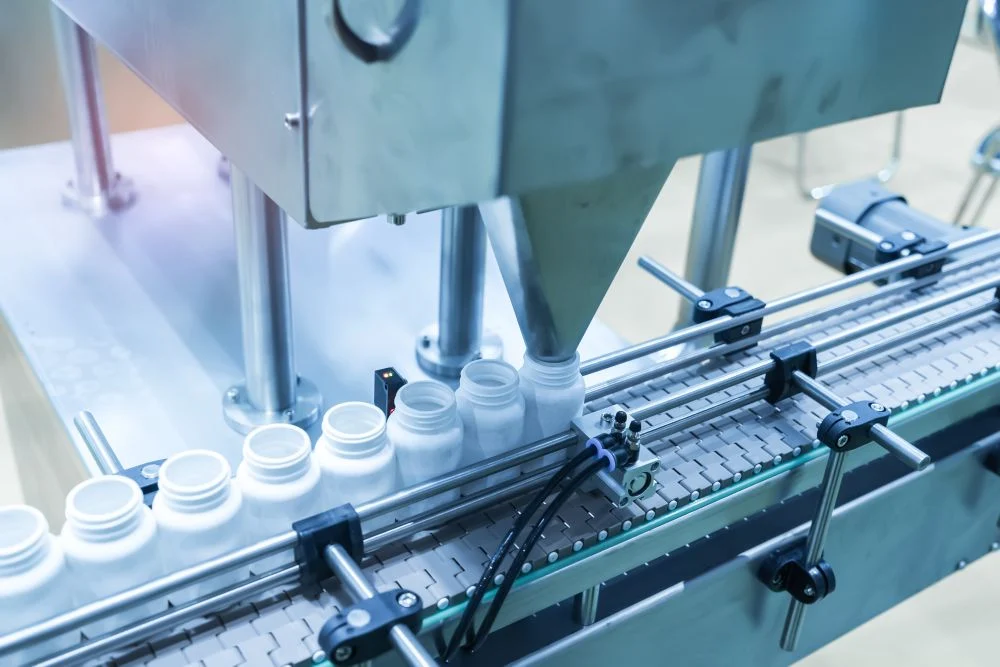
Managing the development and manufacturing of ADCs and HPAPIs requires specialized containment infrastructure, highly trained personnel, and rigorous safety protocols to protect workers and prevent cross-contamination. PPS has made substantial investments in containment technologies and high-containment facilities across its global footprint to address these needs. Similarly, the company’s sterile fill/finish services address the critical bottleneck in biopharmaceutical manufacturing, ensuring that sensitive injectable and biologic products meet the stringent sterility and quality standards mandated by global health authorities such as the US Food and Drug Administration (FDA) and the European Medicines Agency (EMA).
By offering a seamless bridge from laboratory-scale synthesis to multi-ton commercial production, PPS allows pharmaceutical sponsors to minimize the technical risks and communication delays traditionally associated with transferring projects between multiple vendors. This integrated operational model has become a key competitive advantage in an industry where time-to-market often dictates commercial success.
Strategic Infrastructure Investments: The Lexington Facility Expansion
A central focus of the PPS exhibition at CPHI Milan will be the significant recent expansion of its sterile fill/finish manufacturing facility in Lexington, Kentucky, United States. Backed by an $85 million capital investment, the multi-phase upgrade substantially enhances the site’s manufacturing capacity and technological sophistication.
The strategic rationale behind the Lexington expansion lies in the escalating global demand for sterile injectable capacity, a sector that experienced severe strains during and after the global health crises of the early 2020s. The upgrade introduces commercial-scale manufacturing lines capable of handling large-volume production runs, alongside a newly constructed, state-of-the-art microbiology laboratory that accelerates in-house testing timelines. Furthermore, extensive infrastructure modernization has fortified the facility’s utility systems, automation platforms, and environmental monitoring capabilities.
Industry analysts note that regionalizing manufacturing capabilities—particularly within North America and Europe—has become a top priority for pharmaceutical executives seeking to insulate their supply chains from geopolitical friction, trade disputes, and logistical bottlenecks. By scaling up its Kentucky operations, PPS provides its clients with robust domestic manufacturing options in the US market, complementing its extensive European and Asian operational networks.
The Evolution and Significance of CPHI Milan 2026

The setting for these announcements, CPHI Milan 2026, represents a pivotal annual gathering for the global pharmaceutical sector. With a history spanning more than three decades, CPHI has evolved from a regional European trade exhibition into the premier international meeting place for the pharmaceutical supply chain.
The event’s longevity mirrors the transformation of the pharmaceutical industry itself. Over the past thirty years, the sector has transitioned from a largely vertically integrated model—where major pharmaceutical companies executed most research, development, and manufacturing in-house—to a heavily outsourced, highly specialized ecosystem driven by external CDMOs, specialized biotech startups, and contract research organizations (CROs). CPHI has served as the commercial and scientific nexus for this structural migration, facilitating billions of dollars in business partnerships, licensing agreements, and service contracts.
The 2026 iteration of the event arrives at a time of profound technological and regulatory transition. Alongside traditional exhibition booths, this year’s CPHI introduces specialized programming and zones dedicated to some of the fastest-moving priorities in healthcare. Artificial intelligence (AI) and machine learning are increasingly permeating drug discovery, predictive manufacturing, and supply chain optimization. Concurrently, the industry is grappling with stringent new standards in cold chain logistics for temperature-sensitive biologics and cell-and-gene therapies, advanced contamination control methodologies, and evolving requirements for pharmaceutical labelling and serialization.
Conference sessions and keynote panels at CPHI Milan 2026 will dissect these trends, offering attendees deep dives into biomanufacturing productivity, navigating complex regulatory changes across international jurisdictions, and embedding environmental sustainability into corporate operations. For CDMOs like PPS, participating in these dialogues is essential for anticipating client needs and aligning corporate strategy with future regulatory and technological standards.
Market Dynamics and the Broader CDMO Landscape
The broader economic environment for contract development and manufacturing is characterized by both robust long-term demand drivers and near-term macroeconomic adjustments. The global CDMO market, valued at over $150 billion, continues to expand at a healthy compound annual growth rate, propelled by the proliferation of complex pipelines in biotech, the rising prevalence of chronic and oncology diseases requiring targeted therapies, and the ongoing trend toward strategic outsourcing by major pharmaceutical corporations seeking to optimize their capital expenditures.
However, the operating environment is not without challenges. Biotechnology funding cycles have experienced periods of volatility, prompting emerging pharma companies to exercise heightened financial prudence when selecting development partners. Consequently, CDMOs are under increasing pressure to demonstrate not only technical excellence and regulatory compliance but also financial stability, operational flexibility, and transparent project management.
In this competitive climate, integrated CDMOs that can offer end-to-end solutions are capturing a disproportionate share of market growth. Pharmaceutical sponsors increasingly favor partners who can shepherd a molecule from initial pre-clinical candidate selection through phase-appropriate clinical supply manufacturing and seamlessly into commercial scale. This reduces the friction of technology transfers, lowers administrative overhead, and compresses development timelines—a critical factor given that every day a drug’s patent life is consumed prior to commercial launch represents millions of dollars in potential lost revenue.
Industry Implications and Future Outlook
The participation of Piramal Pharma Solutions at CPHI Milan 2026 reflects the broader maturation of the CDMO sector as a foundational pillar of modern healthcare infrastructure. As drug development becomes increasingly sophisticated—moving into personalized medicine, multi-specific antibodies, and advanced gene-editing platforms—the reliance on specialized external manufacturing partners will only intensify.
The strategic implications of investments such as the Lexington expansion, coupled with a diverse technological portfolio spanning small molecules to complex biologics, point toward a future where flexibility and geographical diversification are paramount. Pharmaceutical companies can no longer afford rigid, single-node supply chains. Instead, they require agile partners with interconnected global networks capable of pivoting rapidly in response to market shifts, regulatory updates, or unexpected logistical disruptions.
For attendees at CPHI Milan 2026, visiting the Piramal Pharma Solutions exhibition space—located at stand 10F57—offers a direct window into how established CDMOs are addressing these complex industry dynamics. By engaging with technical experts and executive leadership on-site, pharmaceutical professionals can explore tailored outsourcing strategies designed to de-risk development pipelines and accelerate the delivery of life-saving therapeutics to patients worldwide. As the pharmaceutical industry charts its course through the remainder of the decade, events like CPHI Milan will continue to serve as the crucible where future partnerships are forged and the technological roadmap of global healthcare is defined.