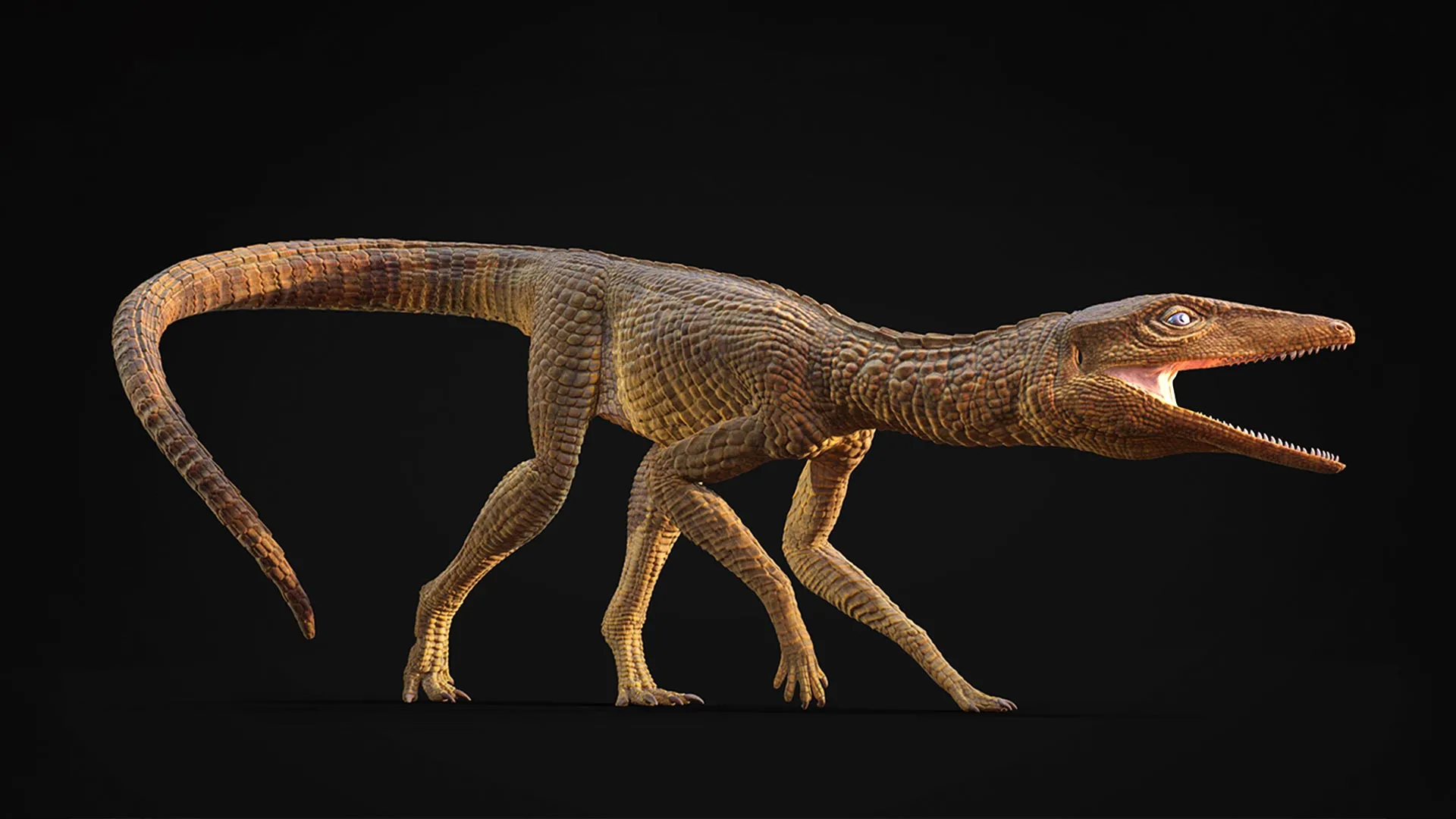
Scientists have unearthed a remarkable new species of ancient crocodile relative, unearthed from the fossil-rich deposits of Gloucester, United Kingdom. Dating back approximately 215 million years to the Late Triassic period, this newly identified crocodylomorph offers a captivating glimpse into a lost world, one where reptilian predators stalked the land on long, agile legs, a stark contrast to their semi-aquatic descendants. This discovery not only expands our understanding of early reptilian evolution but also sheds crucial light on the diverse ecosystems that thrived just prior to the devastating Triassic-Jurassic mass extinction event.
The creature, formally described in the prestigious journal The Anatomical Record, has been christened Gartharaptor rhysjonesi. The name itself is a fascinating blend of paleontology and personal tribute. The genus name, Gartharaptor, is derived from "Garth," a reference to Arthurian legend, specifically evoking the noble and upright character of Sir Galahad, a fitting parallel to the animal’s posture. This is complemented by "-raptor," meaning "seizer" or "plunderer," hinting at its predatory nature. The species name, rhysjonesi, is a heartfelt dedication to David Rhys Jones, a former physics teacher at Ysgol Uwchradd Aberteifi in Cardigan, Wales. It was Mr. Jones’s inspiring teaching that profoundly influenced Ewan Bodenham, a PhD student at the Natural History Museum London and UCL, and the lead author of the groundbreaking study.
"We named it after my secondary school physics teacher," Ewan Bodenham shared, reflecting on the personal significance of the discovery. "Mr. Jones was just such a good teacher, not only in being able to explain things well, but you could tell that he was genuinely interested in the sciences. I think that really inspired me." Bodenham further elaborated on Mr. Jones’s impact, stating, "He also didn’t let me settle. He was very good at challenging people and helping students be the best they can be. Above all, he’s a very funny, genuine, nice guy." This personal connection underscores the profound impact educators can have, even on students destined for careers in distant scientific fields.
A Predator Built for Speed on the Triassic Plains
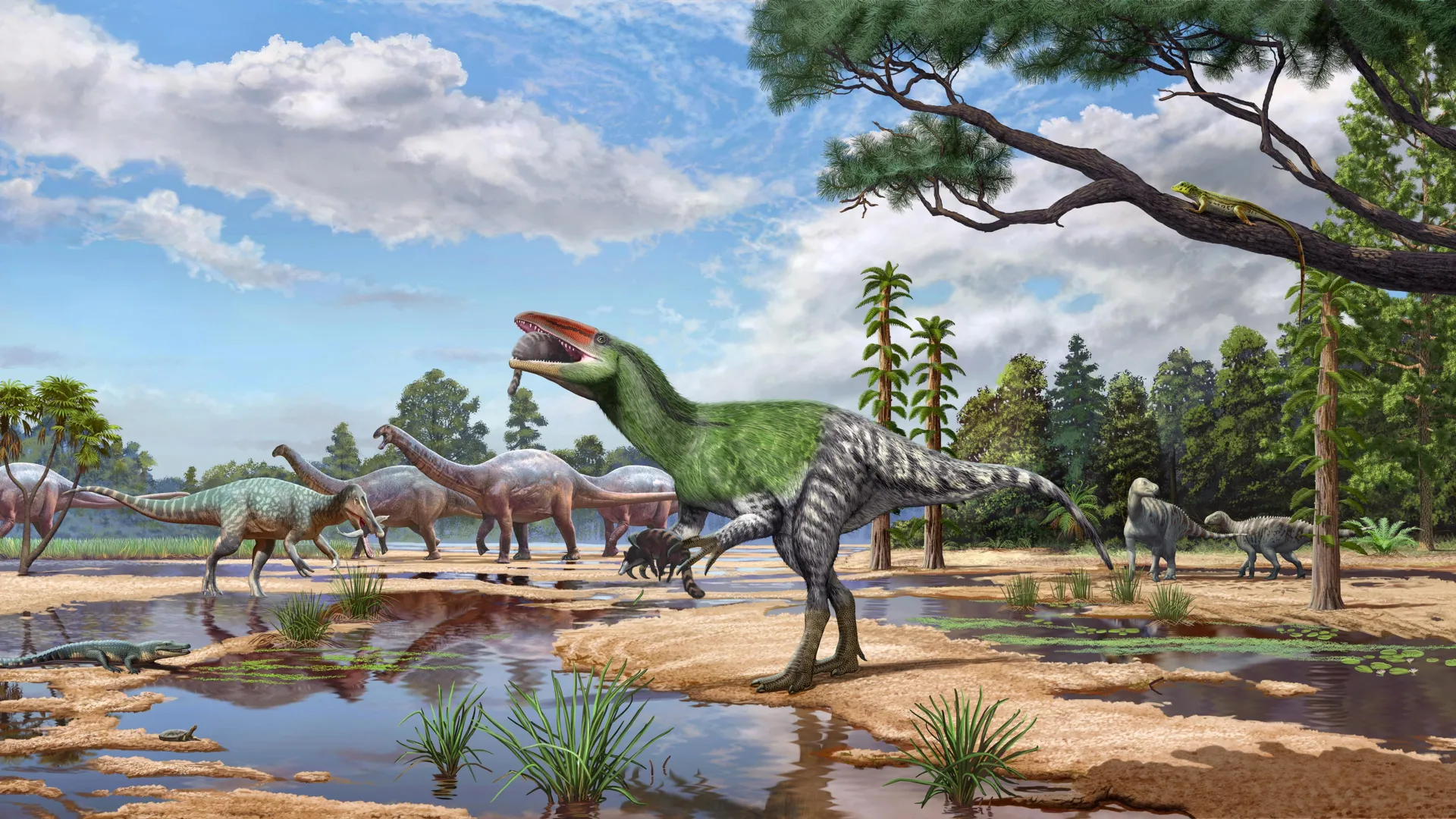
Unlike the formidable, water-loving crocodiles of today, Gartharaptor rhysjonesi was a creature supremely adapted for a terrestrial existence. Its skeletal structure reveals long, slender limbs and a comparatively lightweight frame, adaptations that would have enabled it to move with remarkable speed across the ancient landscape. Paleontological reconstructions suggest it was an active hunter, likely preying on smaller terrestrial vertebrates such as early mammals, lizards, and amphibians that shared its environment. The region where its fossils were discovered, during the Late Triassic, was characterized by an elevated terrain interspersed with vast, arid plains, creating a challenging yet diverse habitat for its fauna.
The physical attributes of Gartharaptor rhysjonesi place it firmly within the Crocodylomorpha, a group that diverged from other archosaurs early in the Triassic period. This ancient lineage eventually gave rise to the diverse array of crocodilians we know today. However, Gartharaptor represents an early offshoot, one that explored a distinctly different ecological niche. Its discovery alongside other terrestrial crocodylomorphs, such as Terrestrisuchus also found in similar fissure deposits, highlights the evolutionary experimentation occurring within this group during the Triassic.
Unearthing the Past: Fossil Discoveries in Ancient Cave Deposits
The remarkable fossil remains of Gartharaptor rhysjonesi were not found in open-air rock formations but rather within fissure deposits. These unique geological formations are found on both sides of the Bristol Channel, encompassing areas of southern Wales and southwest England. Their origin is attributed to natural processes where animals that perished on the surface were washed into underground cavities. Over millions of years, these carcasses were entombed by accumulating sediment, preserving them in a remarkably intact state.
These fissure deposits have proven to be exceptionally valuable for paleontologists, acting as time capsules that preserve the fauna of specific ancient environments. The discovery of Terrestrisuchus, another land-dwelling crocodylomorph, within these same deposits further strengthens the evidence for a diverse terrestrial predatory fauna in this region during the Late Triassic. The shared characteristics of long, slender legs and a fully terrestrial lifestyle between Terrestrisuchus and the newly identified Gartharaptor rhysjonesi underscore a distinct evolutionary trajectory within the early crocodylomorph lineage.
The Scientific Process: Identifying a New Species
The journey from fossil fragment to the formal description of a new species is a meticulous and rigorous process. Ewan Bodenham’s PhD project specifically focuses on unraveling the evolutionary relationships among these early crocodile relatives. This involved a detailed anatomical examination of the newly discovered specimen.
"My PhD project is looking at the evolutionary relationships of these early crocodiles," Ewan explained. "So we conducted a detailed anatomical description of this specimen, making comparisons to other early crocodiles to determine if it was another specimen of Terrestrisuchus or if it was something new."
The researchers employed advanced comparative anatomy techniques, scrutinizing every discernible feature of the fossil. This included the morphology of the skull, the structure of the limbs, the vertebral column, and other skeletal elements. By meticulously comparing these features with those of known species, particularly Terrestrisuchus, the team sought to identify unique characteristics that would distinguish it as a separate taxon.
The analysis revealed 13 distinct anatomical differences between the new specimen and Terrestrisuchus. These variations, ranging from subtle nuances in bone shape to significant differences in proportions, were substantial enough to confidently declare the specimen as representing a completely new species, thus justifying the formal scientific description of Gartharaptor rhysjonesi. This painstaking work is crucial for accurately mapping the tree of life and understanding evolutionary diversification.
Pre-Extinction Ecosystems: Insights into a World on the Brink
The discovery of Gartharaptor rhysjonesi holds significant implications for our understanding of the ecosystems that existed in the Late Triassic, a period characterized by burgeoning life and geological upheaval. This period immediately preceded the Triassic-Jurassic mass extinction, a cataclysmic event that reshaped the biosphere. The prevailing scientific consensus links this extinction event to widespread volcanic activity, particularly the eruption of the Central Atlantic Magmatic Province (CAMP), which led to drastic climate change, including global warming and ocean acidification.
By documenting the diversity of species that inhabited the Earth just before this mass extinction, paleontologists can reconstruct the resilience and vulnerability of ancient life. The presence of a specialized terrestrial predator like Gartharaptor adds another layer of complexity to our understanding of these pre-extinction food webs. It suggests a dynamic and evolving landscape with varied ecological niches being exploited by different reptilian lineages.
Studying the fauna from this critical juncture allows researchers to draw parallels with modern-day environmental challenges. Understanding how ancient species adapted to, or succumbed to, periods of major environmental upheaval provides invaluable insights into the principles of ecological resilience and the mechanisms of extinction and diversification. The discovery of Gartharaptor rhysjonesi contributes to this broader scientific endeavor, painting a more vivid picture of a world on the cusp of profound transformation.
Publication and Future Research
The formal scientific description of Gartharaptor rhysjonesi is a testament to the collaborative efforts of the research team and the rigorous standards of scientific publication. The paper, titled ‘A second species of non-crocodyliform crocodylomorph from the Late Triassic fissure deposits of southwestern UK: implications for locomotory ecological diversity in Saltoposuchidae’, has been published in the esteemed journal The Anatomical Record. This publication makes the findings accessible to the global scientific community, allowing for further scrutiny, research, and integration into the broader field of paleontology.
The discovery of Gartharaptor rhysjonesi opens new avenues for future research. Further exploration of the fissure deposits in the Bristol Channel region may yield additional specimens, providing more detailed anatomical information and potentially revealing more about the life history and behavior of this ancient predator. Comparative studies with other terrestrial crocodylomorphs from different regions and time periods will continue to refine our understanding of their evolutionary trajectory and ecological roles. As technology advances, techniques such as CT scanning and advanced imaging may unlock further secrets hidden within the fossilized bones, offering unprecedented insights into the biomechanics and physiology of these extinct creatures. The story of Gartharaptor rhysjonesi is a compelling reminder that the Earth’s past continues to yield extraordinary discoveries, enriching our knowledge of life’s long and complex history.