

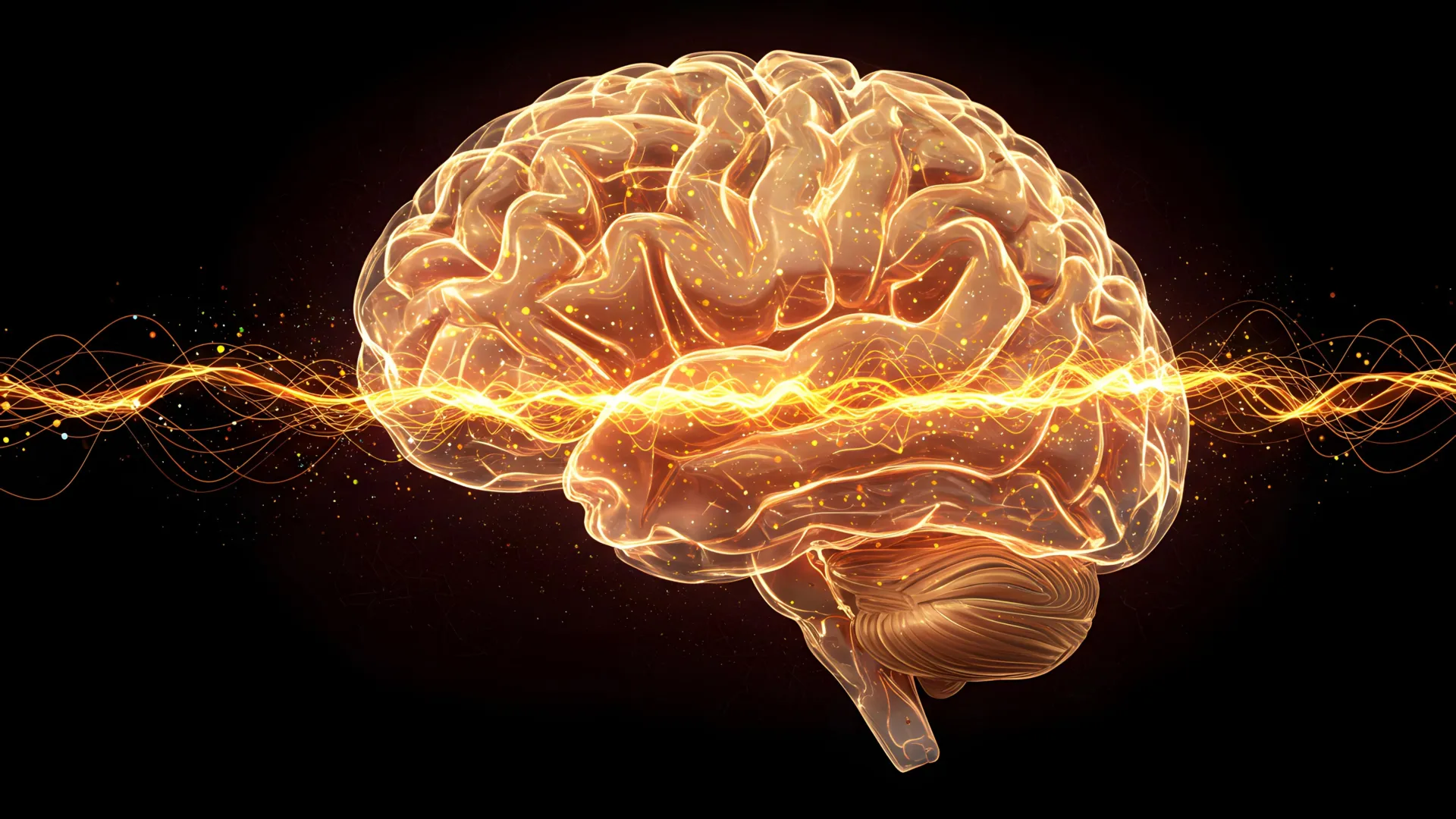
A breakthrough study led by researchers at the University of Colorado Boulder has identified a specific neural pathway that appears to act as a "gatekeeper" for the transition of temporary, acute pain into debilitating chronic conditions. The research, published in the Journal of Neuroscience, pinpoints a little-known circuit within the brain that dictates whether a pain signal resolves after an injury heals or persists indefinitely as a phantom alarm. By isolating this circuit, known as the caudal granular insular cortex (CGIC), scientists have demonstrated that it is possible to not only prevent the onset of chronic pain but also to effectively "turn off" long-term pain that has already become established.
The findings come at a critical juncture for global healthcare. Chronic pain affects approximately 20% of the global population, and in the United States alone, the Centers for Disease Control and Prevention (CDC) estimates that one in four adults suffers from some form of persistent pain. For nearly 10% of these individuals, the pain is severe enough to interfere with basic daily activities, contributing to a massive economic burden estimated at over $600 billion annually in medical costs and lost productivity. Perhaps more significantly, the reliance on opioid-based medications to manage these conditions has fueled a public health crisis, making the discovery of non-addictive, circuit-based interventions a top priority for the scientific community.
The Biological "Decision Maker" Behind Persistent Pain
At the heart of the CU Boulder study is the caudal granular insular cortex (CGIC). This small, deep-seated region of the brain, roughly the size of a sugar cube in humans, is part of the insula—a complex structure involved in emotional processing and the interpretation of internal bodily sensations. While previous research had hinted at the insula’s involvement in pain perception, the specific role of the CGIC as a command center for chronicity remained elusive until now.
Senior author Linda Watkins, a distinguished professor of behavioral neuroscience in the College of Arts and Sciences, describes the CGIC as the brain’s "decision maker" regarding pain duration. According to Watkins, the circuit essentially evaluates the signals coming from the body and "instructs" the rest of the nervous system on whether to continue responding to those signals.
"Our paper used a variety of state-of-the-art methods to define the specific brain circuit crucial for deciding for pain to become chronic and telling the spinal cord to carry out this instruction," Watkins said. "If this crucial decision maker is silenced, chronic pain does not occur. If it is already ongoing, chronic pain melts away."
The study differentiates between acute pain—a vital survival mechanism that alerts the body to injury—and chronic pain, which Watkins describes as a "false alarm." When a person stubs their toe or suffers a cut, the nervous system sends an immediate signal to the brain to ensure the injury is protected. Once the tissue heals, those signals should ideally cease. However, in cases of chronic pain, the CGIC keeps the "alarm" active, creating a feedback loop that maintains a state of high sensitivity long after the physical damage has been repaired.
The "Gold Rush" of Modern Neuroscience
The discovery was made possible by what first author Jayson Ball calls a "gold rush of neuroscience." Ball, who recently earned his doctorate in Watkins’ lab and now works for the neurotechnology startup Neuralink, notes that the field is undergoing a paradigm shift driven by tools that allow for the manipulation of specific cell populations with unprecedented precision.
Historically, studying a region like the CGIC was difficult because traditional methods—such as surgical removal or broad electrical stimulation—were too blunt to provide clear insights without causing significant collateral damage to other brain functions. In this study, the team employed a sophisticated combination of fluorescent proteins and "chemogenetics."
By using fluorescent markers, the researchers were able to visually track which specific nerve cells became active in rats following a sciatic nerve injury. Once the active cells were identified, they used chemogenetic techniques—introducing "designer" receptors that respond only to specific, otherwise inert molecules—to selectively turn those neurons on or off. This level of granularity allowed the team to confirm that the CGIC is not necessary for the perception of immediate, short-term pain, but is the primary driver of the transition to long-term suffering.
The Mechanism: From the Insula to the Spinal Cord
The researchers’ analysis revealed a complex communication chain that starts in the brain and moves down to the spinal cord. When the CGIC is activated by an injury signal, it does not keep the pain to itself; instead, it sends instructions to the somatosensory cortex, the area of the brain responsible for processing the physical sensations of touch and pressure.
This communication then travels further down the neural hierarchy to the spinal cord. In a healthy state, the spinal cord filters signals so that light touch is perceived as harmless. However, when the CGIC-driven circuit is active, it effectively "re-tunes" the spinal cord. This results in allodynia, a condition where non-painful stimuli—such as the brush of clothing against the skin or a light breeze—are interpreted by the brain as intense pain.
"We found that activating this pathway excites the part of the spinal cord that relays touch and pain to the brain, causing touch to now be perceived as pain as well," Ball explained.
The most striking finding of the study was the reversibility of this process. When the researchers disabled the CGIC circuit in animals that had already developed chronic pain symptoms, the "allodynia" vanished. The animals’ sensitivity returned to normal levels, suggesting that the brain had been "reset" to a pre-chronic state.
A Chronology of Discovery
The CU Boulder study is the culmination of over a decade of research into the insular cortex. In 2011, Watkins’ lab published preliminary work suggesting that the CGIC played a role in pain sensitivity. That earlier work established that the region was overactive in human patients suffering from chronic pain conditions, but the technology of the time did not allow for the causal testing required to prove that the CGIC was the source of the problem.
Between 2011 and 2024, the field of neuroscience saw the rise of optogenetics and chemogenetics, which provided the CU Boulder team with the "scalpel" they needed. The current study, funded in part by the National Institutes of Health, marks the first time that this specific pathway has been mapped from the high-level brain centers all the way down to the spinal level with such specificity.
Implications for Future Treatments and the Opioid Crisis
The potential clinical applications of this research are vast, particularly regarding the ongoing opioid epidemic. Currently, most pharmacological treatments for chronic pain, such as oxycodone or hydrocodone, work by flooding the entire nervous system with chemicals that dampen pain signals but also affect the brain’s reward centers, leading to high rates of addiction and respiratory depression.
By targeting a specific circuit rather than the whole body, future therapies could theoretically provide pain relief without the side effects of traditional narcotics. Ball envisions several potential paths for human application:
- Targeted Infusions: Using localized injections to deliver medications directly to the CGIC or its associated pathways, minimizing systemic exposure.
- Brain-Machine Interfaces (BMIs): Using implanted or external devices to modulate the electrical activity of the CGIC. This is a particularly relevant area of interest given Ball’s current role at Neuralink, which is developing high-bandwidth brain-computer interfaces.
- Deep Brain Stimulation (DBS): Refining existing DBS techniques, currently used for Parkinson’s disease, to target the CGIC for patients with treatment-resistant chronic pain.
Analysis of Challenges and the Path Forward
While the results are groundbreaking, the researchers caution that translating animal models to human patients is a long-term process. Human brains are significantly more complex than those of rats, and the CGIC in humans may have additional connections that were not present in the study’s models.
Furthermore, the "trigger" that causes the CGIC to switch from its normal state to a chronic "on" state remains unknown. Scientists still need to determine why some individuals experience a normal healing process while others—roughly 20% of the population—have a CGIC that fails to shut off the pain signal.
Medical analysts suggest that if these findings hold true in human clinical trials, it could represent one of the most significant shifts in pain management in the last century. Instead of managing symptoms with pills, doctors may one day be able to "reset" the brain’s pain architecture, effectively curing chronic pain rather than just masking it.
"Now that we have access to tools that allow you to manipulate the brain, not based just on a general region but on specific sub-populations of cells, the quest for new treatments is moving much faster," Ball said.
As the scientific community continues to digest these findings, the focus will likely shift to longitudinal studies and the development of non-invasive ways to monitor and modulate the CGIC in humans. For the millions of people living with the "false alarm" of chronic pain, this research offers a glimmer of hope that a solution may lie not in a bottle of pills, but in the precision-tuning of the brain’s own circuitry.














Leave a Reply