

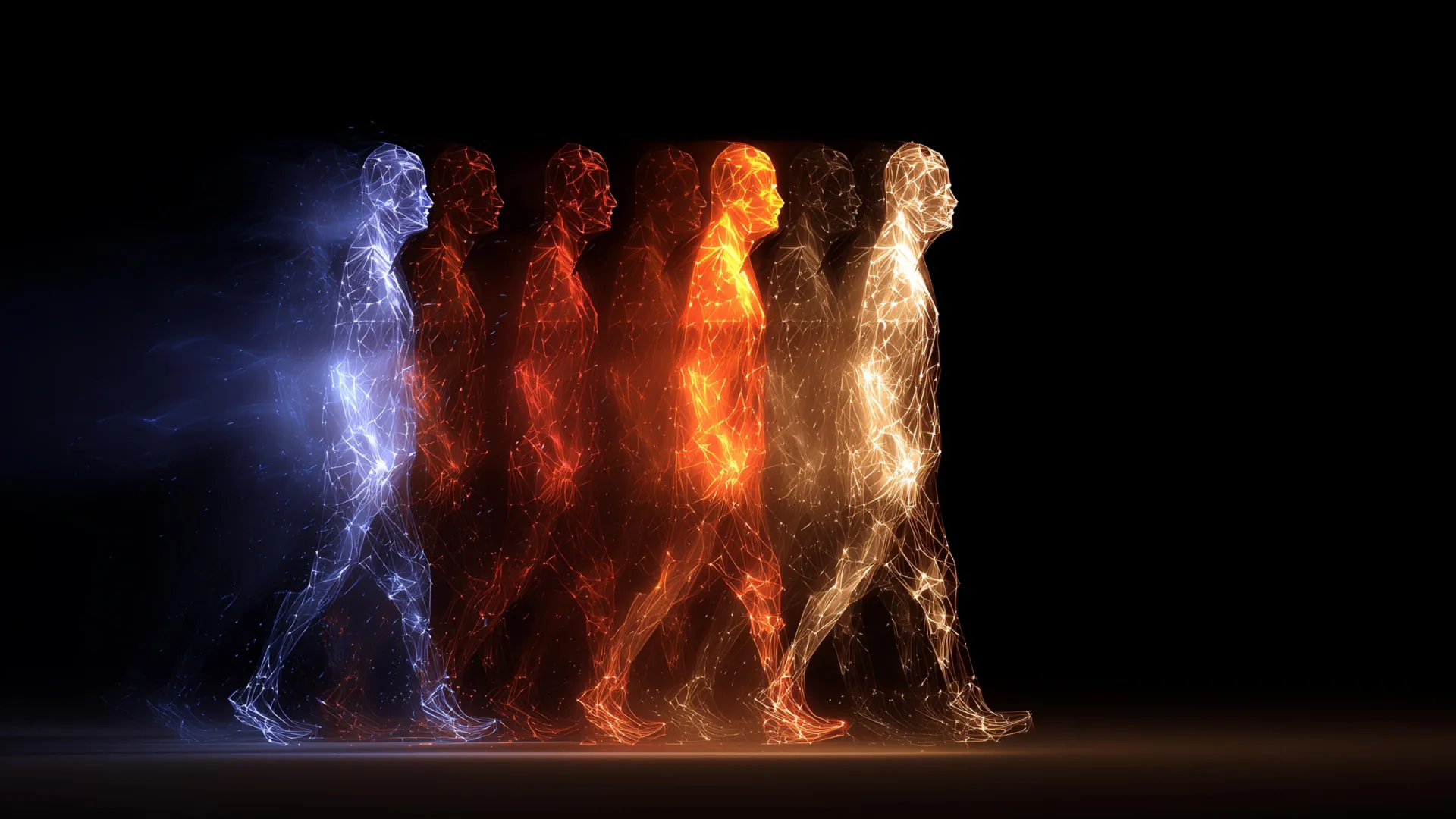
A groundbreaking genetic analysis published in 2023 has significantly reshaped our understanding of human origins, moving away from the long-held, simplified narrative of a single ancestral population in Africa. Instead, this extensive research paints a more complex and nuanced picture, suggesting that early Homo sapiens populations were dispersed across the African continent, engaging in prolonged periods of intermingling. This continuous gene flow, the study posits, predates the divergence that ultimately led to the distinct genetic signatures observed in modern human populations. The findings challenge the traditional "out of Africa" model, which often implies a more singular point of origin and subsequent migration, by highlighting the deep interconnectedness and gradual differentiation of early human groups.
The Shifting Landscape of Human Evolution Research
For decades, the scientific consensus has firmly placed the origin of Homo sapiens in Africa. However, the precise mechanisms of how early human groups separated, migrated, reconnected, and influenced each other across this vast continent have remained a subject of intense debate and ongoing investigation. This complexity stems from inherent challenges in the scientific record: the fossil record, while invaluable, is fragmented and incomplete, and ancient DNA, crucial for genetic analyses, is scarce and difficult to extract from ancient remains. These limitations have often led to discrepancies between predictions derived from modern DNA data and the evidence gleaned from fossils.
Dr. Brenna Henn, a professor of anthropology and a leading researcher at the UC Davis Genome Center and a corresponding author of the 2023 study, articulated the core challenge: "This uncertainty is due to limited fossil and ancient genomic data, and to the fact that the fossil record does not always align with expectations from models built using modern DNA. This new research changes the origin of species." This sentiment underscores the dynamic nature of paleoanthropology, where new data consistently prompts revisions of established theories.
The seminal 2023 research, co-led by Dr. Henn and Dr. Simon Gravel of McGill University, systematically tested several competing hypotheses about human evolution and migration patterns within Africa. Their ambitious analysis integrated genomic data from diverse populations across southern, eastern, and western Africa, aiming to reconcile genetic patterns with existing paleoanthropological models.
The Nama Genomes: A Crucial Piece of the Puzzle
A pivotal element of this transformative study was the inclusion of 44 newly sequenced genomes from contemporary Nama individuals residing in southern Africa. The Nama people are recognized within scientific communities for their exceptionally high levels of genetic diversity, a trait that makes them invaluable for understanding the deep history of human populations.
Between 2012 and 2015, researchers meticulously collected saliva samples from Nama individuals in their communities, gathering genetic material while participants engaged in their daily lives. This approach allowed for the examination of whether the origins of humanity aligned with a simple single-source model or, as the researchers suspected, a more expansive and interconnected ancestral network.
The analytical results strongly favored a model suggesting that the earliest discernible population split among early humans, detectable in today’s genetic makeup, occurred approximately 120,000 to 135,000 years ago. Crucially, this divergence did not occur in isolation. Prior to this split, two or more weakly differentiated Homo populations had been engaged in ongoing gene exchange for hundreds of thousands of years. This extended period of interaction meant that their genetic profiles were not sharply distinct, but rather blended.
A Network of Ancestry, Not a Single Branch
Even after this initial divergence, the movement and interbreeding between these nascent human groups persisted. The researchers characterized this ancestral structure as a "weakly structured stem." This metaphor implies that the roots of modern humanity were not confined to a single, isolated population but rather comprised a loosely connected collection of groups with continuous gene flow. This ongoing genetic exchange smoothed out sharp differences that might otherwise have arisen.
This network-like model offers a more compelling explanation for the observed patterns of human genetic diversity than older, more linear models. Instead of relying on the assumption of significant genetic contributions from an unknown, archaic hominin population in Africa, this new framework demonstrates how the intricate genetic variations seen in modern DNA can emerge from the inherent structure and interactions within ancestral human populations themselves.
"We are presenting something that people had never even tested before," Dr. Henn stated, emphasizing the novelty and significance of their approach. "This moves anthropological science significantly forward."
Dr. Tim Weaver, a professor of anthropology at UC Davis specializing in early human fossils and a co-author of the study, highlighted the paradigm shift this research represents. "Previous more complicated models proposed contributions from archaic hominins, but this model indicates otherwise," he noted. Dr. Weaver’s expertise in interpreting the physical characteristics of early human fossils provided a crucial link, helping to align the genetic models with the tangible evidence from the fossil record.
Implications for Interpreting the Fossil Record
The findings of the 2023 study carry significant implications for how scientists interpret the fossil record. According to the authors, only a small fraction, estimated between 1% and 4%, of the genetic differentiation observed among living human populations can be attributed to variations between these distinct ancestral stem populations.
The continuous mixing of these early branches suggests that they likely exhibited similar physical appearances. Consequently, fossils displaying markedly different physical traits, such as those attributed to Homo naledi, are less likely to represent lineages that directly contributed to the evolutionary trajectory of Homo sapiens. This interpretation suggests that while early human ancestry was geographically and genetically widespread, it was not necessarily characterized by the emergence of sharply divergent physical forms that persisted into modern lineages. The deeper narrative, therefore, is one of constant movement, interaction, and repeated interbreeding across the African continent.
Continued Research Reinforces African Diversity
The scientific exploration into human origins continues to build upon these foundational discoveries, further emphasizing the critical role of African genomic diversity. Research published subsequent to the 2023 study has reinforced this central message.
A notable study in Nature Ecology & Evolution in 2024 reported evidence of 9,000 years of genetic continuity in the southernmost regions of Africa. This finding underscores the region’s remarkably long and deep human population history, suggesting sustained habitation and intergenerational genetic exchange over millennia.
Further deepening this understanding, another Nature study published in early 2025 analyzed genomes from 28 ancient southern African individuals, with samples dated between 10,200 and 150 years before the present. This research revealed that ancient southern Africans possessed genetic variations that fall outside the range observed in living populations today. The study also identified specific Homo sapiens variants that could provide crucial insights into adaptation and evolutionary processes within Africa itself.
Collectively, these ongoing research efforts strengthen a powerful and unifying message: the story of human origins is not one of a singular, sudden spark in a single location. Instead, it is a rich tapestry woven from the contributions of multiple populations, the profound genetic diversity inherent across the African continent, and the enduring connections and interactions that shaped humanity over vast stretches of time. The research teams involved in these groundbreaking studies include notable scientists such as Aaron Ragsdale from the University of Wisconsin-Madison, Elizabeth Atkinson from Baylor College of Medicine, and Eileen Hoal and Marlo Müller from Stellenbosch University in South Africa, all of whom have contributed significantly to this evolving understanding of our shared past.














Leave a Reply