

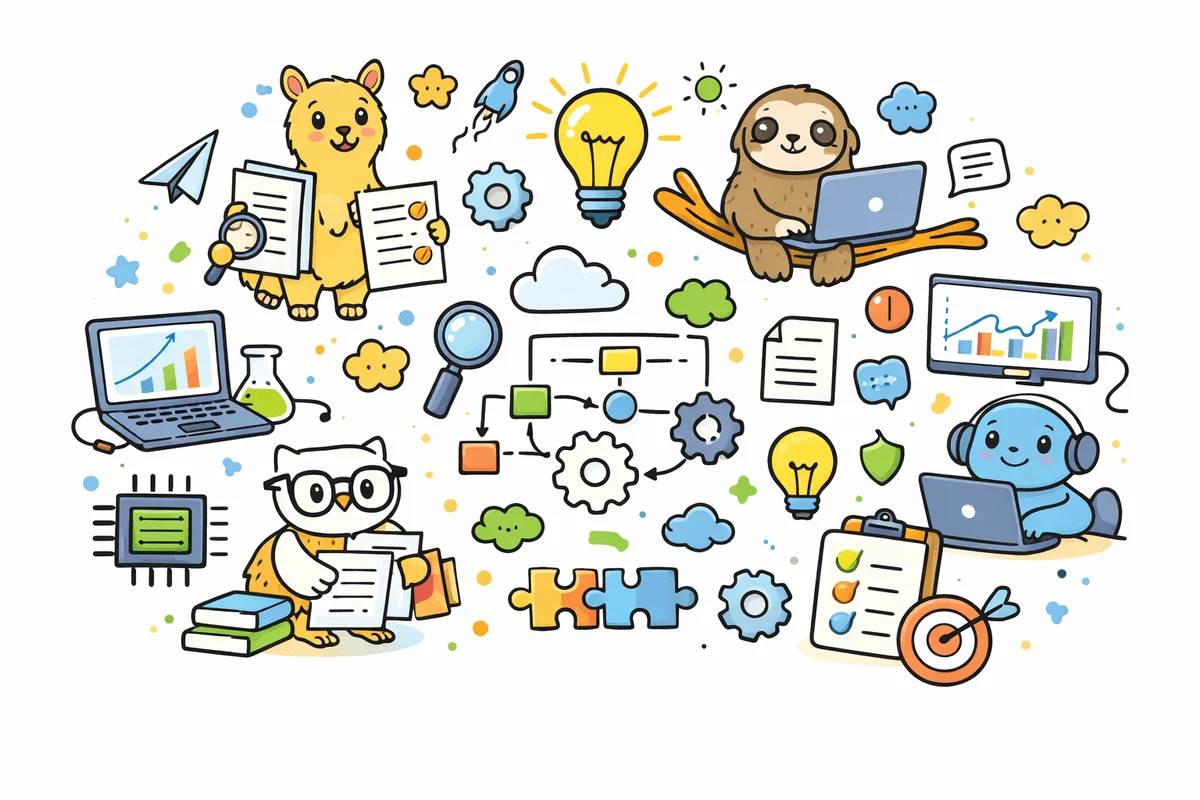
The rapid evolution of Large Language Models (LLMs) has fundamentally transformed the landscape of software development, moving beyond experimental research into practical, production-ready applications. While consumer-facing platforms like ChatGPT and Claude Code offer intuitive interfaces for end-users, the construction of bespoke LLM systems demands a far greater degree of control and sophistication from developers. This necessitates a robust toolkit, predominantly within the Python ecosystem, to manage the intricate processes of model loading, data integration, performance optimization, agent orchestration, and rigorous evaluation. This article delves into ten pivotal Python libraries that are empowering developers to navigate the complexities of LLM application development, enabling them to build reliable, scalable, and intelligent systems with confidence.
The journey from conceptualizing an LLM-powered solution to deploying it often involves a multi-faceted approach. Developers are tasked with tasks ranging from selecting and integrating open-source models, designing sophisticated Retrieval-Augmented Generation (RAG) pipelines to anchor responses in specific data, optimizing models for efficient serving via APIs, fine-tuning them on proprietary datasets, crafting intricate multi-agent workflows, and rigorously evaluating overall system performance. The inherent complexity lies in the fact that LLM application development extends significantly beyond mere prompt engineering; it involves orchestrating numerous interconnected components into a cohesive and dependable system. The libraries highlighted below address these diverse needs, streamlining development whether for local experimentation, enterprise-grade production pipelines, or advanced multi-agent architectures.
The Foundation of LLM Development: Model Management and Access
At the core of any LLM application lies the model itself. The ability to efficiently load, manipulate, and interact with these large neural networks is paramount. Two libraries stand out as fundamental for this initial stage: Hugging Face’s Transformers and the OpenAI Python SDK.
Transformers: The Backbone of Open-Source LLMs
Transformers, developed by Hugging Face, has cemented its position as the de facto standard for working with open-source LLMs. It provides a unified, high-level API for accessing, loading, and interacting with thousands of pre-trained models across various modalities, including text, vision, and audio. Its significance cannot be overstated; it democratized access to state-of-the-art models, allowing researchers and developers worldwide to leverage complex architectures without needing to build them from scratch.
The library offers a consistent interface for common tasks such as model loading, tokenization (the process of converting text into numerical tokens for the model), inference (generating outputs from the model), and fine-tuning. Models like GLM, Minimax, and Qwen, alongside popular families such as Llama, Mistral, and Falcon, are routinely integrated and managed through the Transformers library. This consistency is a critical factor in its widespread adoption, as it abstracts away the low-level complexities of different model architectures and frameworks (like PyTorch and TensorFlow), enabling faster experimentation and smoother transitions from development to production. Industry data indicates that the Hugging Face ecosystem, centered around Transformers, boasts millions of downloads monthly and a vibrant community of contributors, underscoring its pivotal role in the open-source AI landscape. Its impact extends to fostering interoperability, with many other tools in the LLM stack explicitly designed to integrate seamlessly with Transformers.
OpenAI Python SDK: Streamlined Access to Hosted Models
In contrast to the open-source focus of Transformers, the OpenAI Python SDK serves as the primary gateway for developers wishing to leverage OpenAI’s powerful suite of proprietary LLMs, including GPT-3.5, GPT-4, DALL-E, and Whisper. This SDK offers a straightforward and efficient method to integrate advanced AI capabilities into applications without the overhead of managing model hosting, scaling inference, or handling complex infrastructure.
The SDK’s appeal lies in its simplicity and the cutting-edge performance of OpenAI’s models. Developers can rapidly implement features such as conversational AI, sophisticated reasoning engines, code generation, and multimodal experiences (e.g., combining text with image generation or analysis). For many businesses and developers, the SDK represents the fastest path to market for LLM-powered applications, allowing them to concentrate entirely on product logic rather than the underlying AI infrastructure. The commercial success of OpenAI’s API, fueled by widespread adoption across startups and large enterprises, underscores the demand for reliable, high-performance hosted LLM services, a demand directly facilitated by its intuitive Python SDK.
Orchestration and Data Integration: Building Intelligent Workflows
Beyond simply interacting with models, real-world LLM applications often require intricate workflows that combine model calls with external data sources, tools, and multi-step logic. This is where orchestration frameworks and data integration libraries become indispensable.
LangChain: Orchestrating Complex LLM Applications
When LLM applications evolve beyond single-prompt interactions, LangChain emerges as a leading framework for structuring and managing complex workflows. It provides a modular architecture that enables developers to chain together various components crucial for sophisticated LLM applications. These components include different LLM models, prompt templates, output parsers, data retrievers, external tools (like search engines or calculators), and API integrations.
LangChain’s strength lies in its ability to bring structure to what can otherwise be a chaotic stack of interactions. It simplifies the creation of multi-step reasoning, agentic behaviors, and complex data flows. For instance, it is widely utilized in building advanced chatbots, sophisticated RAG systems, and autonomous agent applications that can perform tasks requiring multiple steps and interactions with external systems. Its popularity, evidenced by its significant GitHub stars and active developer community, stems from its comprehensive approach to managing the entire lifecycle of an LLM application, connecting disparate pieces into a coherent, manageable system that can perform tasks far beyond simple text generation.
LlamaIndex: Grounding LLMs in External Knowledge
While LangChain focuses on orchestrating the application’s logic, LlamaIndex specializes in connecting LLM applications to external data sources, a critical function for achieving "grounded" and up-to-date responses. It is particularly invaluable for Retrieval-Augmented Generation (RAG) systems, where the LLM needs to retrieve relevant information from a vast knowledge base—such as documents, PDFs, databases, or proprietary enterprise data—before formulating an answer.
The core challenge LlamaIndex addresses is enabling LLMs to overcome their inherent knowledge cutoff and potential for hallucination by providing them with real-time, accurate information. It achieves this through robust data connectors, indexing strategies (e.g., creating vector embeddings of documents), and sophisticated query engines. By grounding LLM responses in verifiable data, LlamaIndex significantly enhances the relevance, accuracy, and trustworthiness of applications, making it an essential tool for building internal knowledge assistants, intelligent document processing systems, and data-intensive workflows within enterprises. Its "data-first" approach ensures that LLMs serve as powerful reasoning engines atop an organization’s most valuable asset: its information.
LangGraph: Fine-Grained Control for Stateful Agent Workflows
For developers requiring even finer-grained control over the execution flow of LLM applications, especially for advanced agent systems, LangGraph offers a powerful solution. Building on the concepts introduced by LangChain, LangGraph allows for the definition of stateful, cyclical workflows using a graph-based approach. This means developers can design complex sequences of operations, including conditional branching, loops, and memory management, which are essential for long-running, autonomous agent tasks.
LangGraph’s utility becomes apparent when building AI agents that need to adapt their behavior based on intermediate results, revisit previous steps, or maintain conversational context over extended interactions. Unlike simple linear chains, its graph structure enables the creation of highly sophisticated decision-making processes, making it a strong fit for scenarios where agents need to plan, execute, and refine their actions dynamically. This increased structural control is vital for developing robust and intelligent agents that can handle complex, multi-stage problems with greater autonomy and reliability.
Efficiency and Performance: Optimizing LLM Deployment and Customization
The sheer size of LLMs presents significant challenges in terms of computational resources for both inference (generating responses) and fine-tuning. Libraries focused on efficiency are crucial for making LLM technology practical and accessible.
vLLM: High-Throughput LLM Inference Serving
Deploying LLMs in a production environment demands high performance, low latency, and efficient resource utilization. vLLM has rapidly emerged as one of the most popular libraries for serving open-source LLMs efficiently. It is engineered for fast inference and superior GPU memory utilization, making it an ideal choice for transitioning LLM models from experimental phases to practical, scalable deployments.
vLLM achieves its impressive performance through innovative techniques such as PagedAttention, which effectively manages key-value caches to maximize throughput, and continuous batching, which processes requests as soon as model capacity is available. These optimizations significantly reduce latency and increase the number of requests a single GPU can handle, thereby lowering the operational costs of deploying LLMs at scale. Its adoption by numerous teams for production deployments highlights its critical role in making powerful open-source models economically viable and responsive enough for real-world applications.
Unsloth: Democratizing Efficient Fine-Tuning
Customizing powerful LLMs to specific tasks or datasets typically involves a process called fine-tuning, which can be computationally intensive. Unsloth has gained significant traction by making this process much more accessible, particularly for individual developers and smaller teams with limited hardware resources. It specializes in efficient low-rank adaptation (LoRA) and quantized LoRA (QLoRA) workflows.
LoRA and QLoRA are techniques that allow for the adaptation of large models by training only a small number of additional parameters, dramatically reducing the computational and memory requirements compared to full fine-tuning. Unsloth further optimizes these methods, enabling developers to fine-tune models significantly faster and with substantially less VRAM. This innovation lowers the barrier to entry for customizing powerful models, empowering a broader range of developers to adapt state-of-the-art LLMs to their unique data and use cases without requiring massive, specialized hardware infrastructure. Its focus on resource efficiency has made it a go-to choice for cost-effective and rapid model adaptation.
Agentic Systems and Automation: The Future of AI Interaction
The concept of AI agents – systems that can plan, reason, and act autonomously to achieve complex goals – represents a significant leap forward in LLM application development. Several libraries are dedicated to building and managing these sophisticated agentic workflows.
CrewAI: Structuring Collaborative Multi-Agent Systems
As LLM applications become more sophisticated, the paradigm shifts from a single model interaction to a coordinated "crew" of agents, each with defined roles, goals, and tasks. CrewAI is a prominent framework designed specifically for building such multi-agent applications. It facilitates the creation of collaborative AI systems where different agents can delegate tasks, share information, and work together through structured workflows.
CrewAI provides the tools to define agent personalities, capabilities, and communication protocols, enabling developers to design systems that mimic human teams. This approach is particularly effective for tasks that benefit from planning, delegation, and the division of labor among specialists. For instance, a CrewAI application could involve a "Researcher Agent" gathering information, a "Writer Agent" drafting content, and an "Editor Agent" refining it, all collaborating towards a common objective. This framework helps developers build cleaner, more manageable agent-based workflows, signaling a move towards more intelligent and autonomous systems.
AutoGPT: Pioneering Autonomous Agent Experiments
AutoGPT holds a significant place in the history of AI agent development, having captivated the developer community by demonstrating the potential of autonomous AI systems. It introduced many to the idea of AI agents that could define sub-tasks, execute steps, and interact with the environment with minimal human intervention, pursuing a high-level goal. While early versions faced challenges in consistent performance and cost, AutoGPT served as a powerful proof-of-concept for goal-driven, multi-step task execution.
Its key contribution was popularizing the concept of an AI system that could plan a series of actions, manage intermediate steps, and iterate towards a complex objective more autonomously than traditional prompt-response models. AutoGPT sparked widespread discussion and experimentation around the feasibility and implications of autonomous AI, laying foundational groundwork for subsequent agentic frameworks. It remains a notable example in conversations about the evolution of agent development, illustrating the early vision for AI systems that could self-manage longer-running tasks.
Quality Assurance and Evaluation: Ensuring Reliability
Building powerful LLM applications is only half the battle; ensuring their reliability, accuracy, and ethical behavior is equally crucial. Dedicated evaluation frameworks are essential for moving from experimental prototypes to trustworthy production systems.
DeepEval: Comprehensive LLM Application Testing
The evaluation of LLM applications extends far beyond simple accuracy metrics. Developers need to assess nuanced qualities like answer relevance, factual consistency, absence of hallucination, faithfulness to source material, and overall task success. DeepEval is a Python framework specifically engineered for rigorous testing and evaluation of LLM applications, providing a structured approach to measure these critical aspects.
DeepEval allows developers to define evaluation criteria programmatically and integrate them into their continuous integration/continuous deployment (CI/CD) pipelines. It helps quantify the quality of responses from prompts, RAG pipelines, and agent workflows, moving LLM development closer to traditional software engineering best practices. By systematically testing and measuring performance against defined benchmarks, DeepEval plays a vital role in enhancing the reliability and trustworthiness of LLM applications before and after they are deployed to production, ensuring that systems people rely on are robust and perform as expected.
The Broader Impact and Implications
The collective emergence and rapid evolution of these Python libraries signify a profound shift in how artificial intelligence is developed and deployed. They represent a maturation of the LLM ecosystem, moving from theoretical models to practical, engineering-focused solutions.
Democratization of AI Development: Libraries like Unsloth and the comprehensive Hugging Face ecosystem, centered around Transformers, are significantly lowering the barrier to entry for AI development. Smaller teams and individual developers can now access, customize, and deploy powerful LLMs without requiring immense computational resources or deep expertise in low-level AI engineering. This democratization is fostering innovation across a wider spectrum of industries and use cases.
Accelerated Innovation and Time-to-Market: Tools like the OpenAI SDK and frameworks like LangChain enable developers to integrate sophisticated AI capabilities into applications at an unprecedented pace. This speed allows businesses to experiment rapidly, iterate on products, and bring new AI-powered services to market much faster, driving competitive advantage and fostering a dynamic innovation landscape.
Enhanced Reliability and Trust: The increasing focus on evaluation, exemplified by DeepEval, reflects a growing industry recognition of the need for robust, trustworthy AI systems. As LLMs are integrated into critical business processes and consumer-facing applications, ensuring their accuracy, safety, and ethical alignment becomes paramount. These evaluation tools are instrumental in building confidence in AI deployments.
The Rise of Agentic AI: Libraries such as CrewAI, AutoGPT, and LangGraph are at the forefront of the agentic AI paradigm, where AI systems can perform complex, multi-step tasks autonomously. This shift promises to revolutionize automation across various sectors, from customer service and data analysis to scientific research and creative endeavors, by enabling AI to act as proactive problem-solvers rather than mere response generators.
Challenges and Future Outlook: Despite these advancements, challenges remain. Managing the costs associated with LLM inference, ensuring data privacy and security in RAG systems, mitigating model drift over time, and addressing the ethical implications of autonomous agents are ongoing concerns. The future of LLM development will likely see continued innovation in efficiency, further integration of multimodal capabilities, and increasingly sophisticated agent orchestration. The Python ecosystem, with its rich collection of specialized libraries, is unequivocally positioned to remain at the forefront of this transformative journey.
In conclusion, the sophisticated landscape of LLM application development is made navigable by this suite of powerful Python libraries. From the foundational model access provided by Transformers and the OpenAI SDK, through the complex orchestration capabilities of LangChain, LlamaIndex, and LangGraph, to the performance optimizations of vLLM and Unsloth, and the cutting-edge agent frameworks like CrewAI and AutoGPT, culminating in the critical evaluation tools like DeepEval, each library plays a distinct yet interconnected role. Together, they form the essential toolkit empowering developers to build the next generation of intelligent, reliable, and impactful AI applications, fundamentally reshaping how we interact with technology and solve complex problems.











Leave a Reply