For nearly a century, the scientific understanding of magnetism was anchored by a binary classification system: materials were either ferromagnets or antiferromagnets. This duality defined the development of modern electronics, from the magnetic storage tapes of the mid-20th century to the high-density hard drives of today. However, a groundbreaking theoretical proposal from physicists at the University at Buffalo (UB) is now propelling a third, recently discovered category—altermagnets—into the spotlight. By utilizing a sophisticated quantum sensing approach involving microscopic defects in diamonds, researchers believe they have found a way to definitively identify and harness these elusive materials, potentially sparking a revolution in high-speed, low-power computing.
The research, published in the prestigious journal Physical Review Letters, outlines a method to detect the unique magnetic signatures of altermagnets without disrupting their delicate internal states. Led by Jamir Marino, PhD, an assistant professor in the UB Department of Physics, the study represents a critical bridge between abstract quantum theory and practical technological application. As the global demand for data processing grows and traditional silicon-based electronics approach their physical limits, the ability to exploit altermagnetism could provide the necessary leap forward in electronic efficiency.
The Evolution of Magnetic Classification
To appreciate the significance of the UB proposal, one must first understand the historical landscape of magnetic materials. Ferromagnetism is the most familiar form; it occurs when the electron spins of atoms within a material align in the same direction. This alignment creates a macroscopic magnetic field, allowing ferromagnets to stick to refrigerators and function as the primary medium for magnetic data storage. While ferromagnets are easy to manipulate with external magnetic fields, they are limited by their relatively slow switching speeds and the "stray fields" they produce, which can interfere with neighboring components in miniaturized circuits.
In contrast, antiferromagnets feature electron spins that point in alternating, opposite directions. Because these spins cancel each other out, antiferromagnets produce no external magnetic field. While this makes them "invisible" to traditional magnetic sensors, it also allows them to switch states at terahertz frequencies—orders of magnitude faster than ferromagnets. Furthermore, the absence of stray fields means antiferromagnetic components can be packed more tightly together. However, their lack of a net magnetic signature has historically made them incredibly difficult to read and control for practical information processing.
Altermagnets, first conceptualized in 2019, represent a "best of both worlds" scenario. On a macroscopic level, they behave like antiferromagnets, possessing zero net magnetization. Yet, due to the specific geometric arrangement of atoms in their crystal lattice, their internal electronic structure exhibits "spin-splitting," a characteristic usually reserved for ferromagnets. This allows altermagnets to maintain the rapid switching and high-density potential of antiferromagnets while offering the electronic controllability of ferromagnets.
The Discovery of the Third Class: A Chronology
The journey toward identifying altermagnetism began at the Johannes Gutenberg University of Mainz. In 2019, researchers Libor Šmejkal and Jairo Sinova—who are co-authors on the new UB study—noticed anomalies in the behavior of ruthenium dioxide ($RuO_2$). While the material was classified as an antiferromagnet, it exhibited electronic properties that contradicted that classification when subjected to electrical currents.
Between 2020 and 2022, theoretical frameworks were refined, leading to the formal proposal of "altermagnetism" as a distinct magnetic phase. By 2023, several experimental groups began reporting the first "fingerprints" of altermagnetism using high-energy techniques such as Angle-Resolved Photoemission Spectroscopy (ARPES). While ARPES is powerful, it requires large, expensive synchrotron facilities and can be invasive to the material being studied.
The University at Buffalo’s 2024 proposal introduces a more accessible and precise tool: the Nitrogen-Vacancy (NV) center in diamond. This method shifts the focus from high-energy bombardment to non-invasive quantum sensing, providing a path for lab-scale identification of altermagnetic candidates.
Harnessing Quantum Defects as Sensors
The core of the UB proposal involves the use of synthetic diamonds containing specific microscopic flaws. A Nitrogen-Vacancy center occurs when a nitrogen atom replaces a carbon atom in the diamond’s crystal lattice, leaving an adjacent spot vacant. This defect behaves like a single isolated atom trapped in a solid, and it is exceptionally sensitive to local magnetic fields.
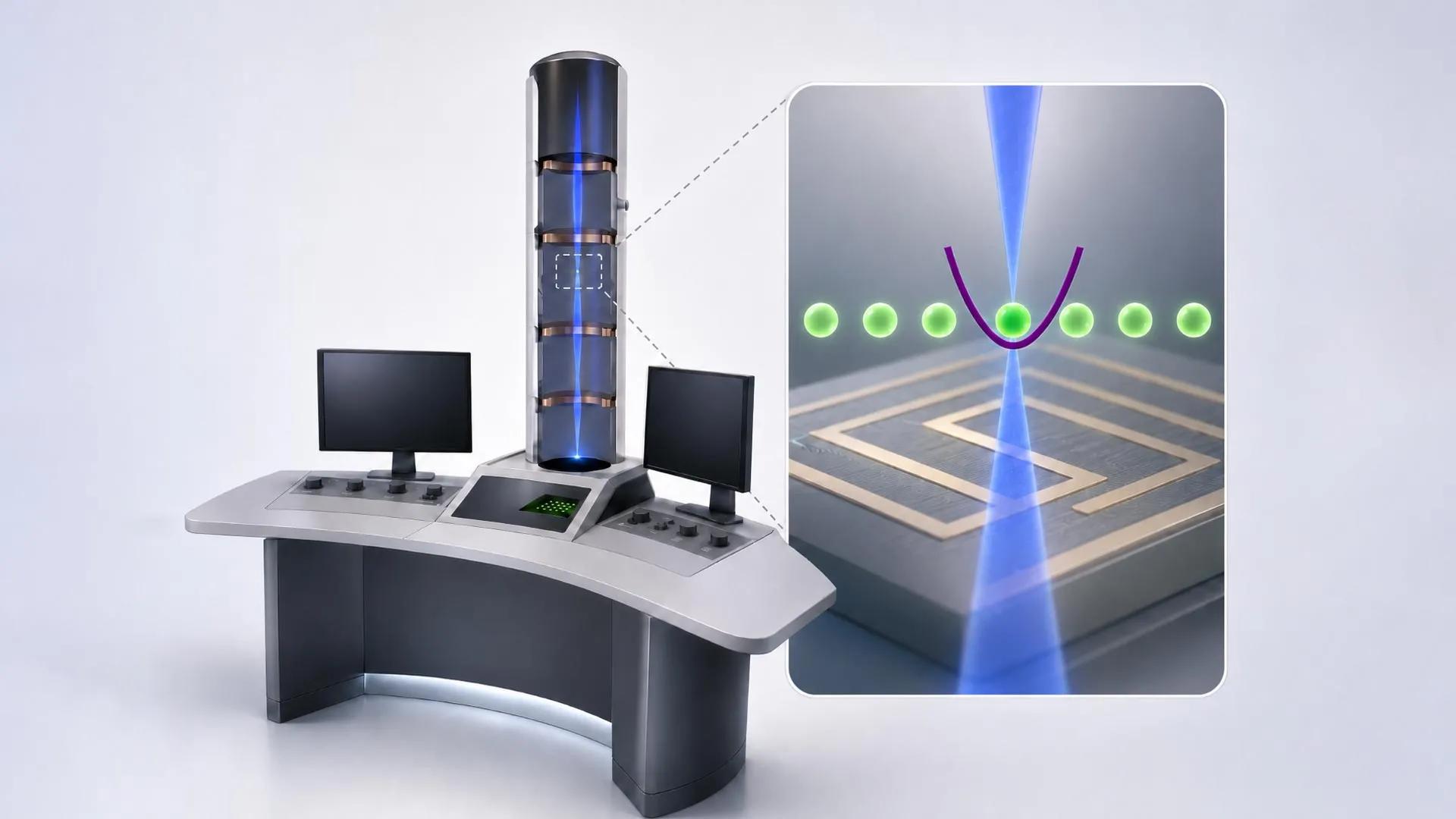
In the proposed experiment, a diamond sensor would be placed in close proximity to a candidate altermagnetic material. The researchers would then use lasers and microwave pulses to manipulate the spin of the NV center. By observing the "relaxation rate"—how quickly the NV center’s spin loses its orientation—scientists can infer the magnetic environment of the material beneath it.
"The beauty of this technique lies in its directional sensitivity," explains Jamir Marino. "Altermagnets have a very specific symmetry in how their spins are arranged. If you rotate the diamond sensor or the orientation of the NV center’s spin, the relaxation rate will change in a predictable, fluctuating pattern that is unique to altermagnets. It’s like a magnetic fingerprint that tells us exactly what’s happening inside the material without us having to break it open or disturb its natural state."
Supporting Data and Potential Candidates
The scale of the opportunity presented by altermagnets is vast. While there are approximately 100 known ferromagnetic materials used in various industrial applications, theoretical models suggest that altermagnets are far more common.
According to data cited by the research team:
- Candidate Volume: Over 200 materials have been identified as potential altermagnets through high-throughput computational screening.
- Material Diversity: Candidates include insulators, semiconductors, metals, and even superconductors, suggesting that altermagnetism could be integrated into almost any type of electronic architecture.
- Performance Metrics: Theoretical switching speeds for altermagnetic devices are estimated to be in the picosecond range, which is 1,000 times faster than current commercial memory technologies.
The UB study provides the mathematical modeling necessary to distinguish these 200+ candidates from traditional antiferromagnets. By calculating the "noise spectrum" generated by the spin fluctuations in an altermagnet, the team demonstrated that the NV center would detect a distinct anisotropy—a directional dependence—that does not exist in standard magnets.
Global Collaboration and Expert Reactions
The research is the result of a robust international collaboration, highlighting the global interest in spintronics (spin-based electronics). Alongside Marino at UB, the team included Libor Šmejkal and Jairo Sinova from the University of Mainz, as well as researchers from the Max Planck Institute and the University of Strasbourg.
Jairo Sinova, a pioneer in the field, noted that the UB sensing technique could become a standard diagnostic tool. "It offers advantages over conventional experimental techniques by detecting subtle directional magnetic patterns across different regions of a material without significantly disturbing it," Sinova stated. This non-invasive quality is vital for developing "spintronic" chips where the magnetic state must be read and written millions of times per second without degrading the material.
Independent observers in the physics community have reacted with cautious optimism. While the proposal is currently theoretical, the use of NV centers in diamonds is a well-established technology in other fields, such as biological imaging and quantum computing. This existing infrastructure means that experimental validation could occur relatively quickly, as many labs are already equipped with the necessary quantum sensing hardware.
Broader Implications: The Future of Green Computing
The long-term implications of identifying and utilizing altermagnets extend far beyond the laboratory. The tech industry currently faces a looming "energy crisis" driven by the massive power requirements of data centers and Artificial Intelligence (AI) processing. Traditional electronics generate significant heat because they rely on moving electrical charges, which encounter resistance.
Altermagnets facilitate "spintronics," where information is carried by the "spin" of an electron rather than its charge. Because spin can be manipulated with much less energy than charge, altermagnetic devices could potentially:
- Reduce Heat Generation: Lowering the cooling requirements for massive server farms.
- Increase Battery Life: Extending the operational time of mobile devices and wearables.
- Enable Non-Volatile Memory: Creating computers that turn on instantly without needing to boot up, as the data is stored in the magnetic state of the material even when power is off.
"Efficiently identifying altermagnetic materials is a crucial step toward one day actually using them in electronics," Marino says. "Altermagnets would make transport of information radically more efficient. That could allow technology to scale down and be less power-consuming."
Conclusion and Next Steps
The proposal by the University at Buffalo physicists marks a turning point in the study of condensed matter. By providing a clear, experimental roadmap for the detection of altermagnetism, the team has moved the field from the realm of "elegant theory" into the realm of "applied science."
The next phase of the research will involve physical experiments to validate the theoretical models. Collaborations are already being discussed with experimental laboratories that specialize in diamond-based quantum sensing. If successful, the method will not only confirm the existence of altermagnetism in a wide array of materials but also provide the diagnostic tools necessary for engineers to begin designing the next generation of quantum-ready, energy-efficient electronic devices. As the boundary between magnetism and quantum sensing continues to blur, the altermagnet stands as a testament to the untapped potential still hidden within the atomic structure of the world around us.