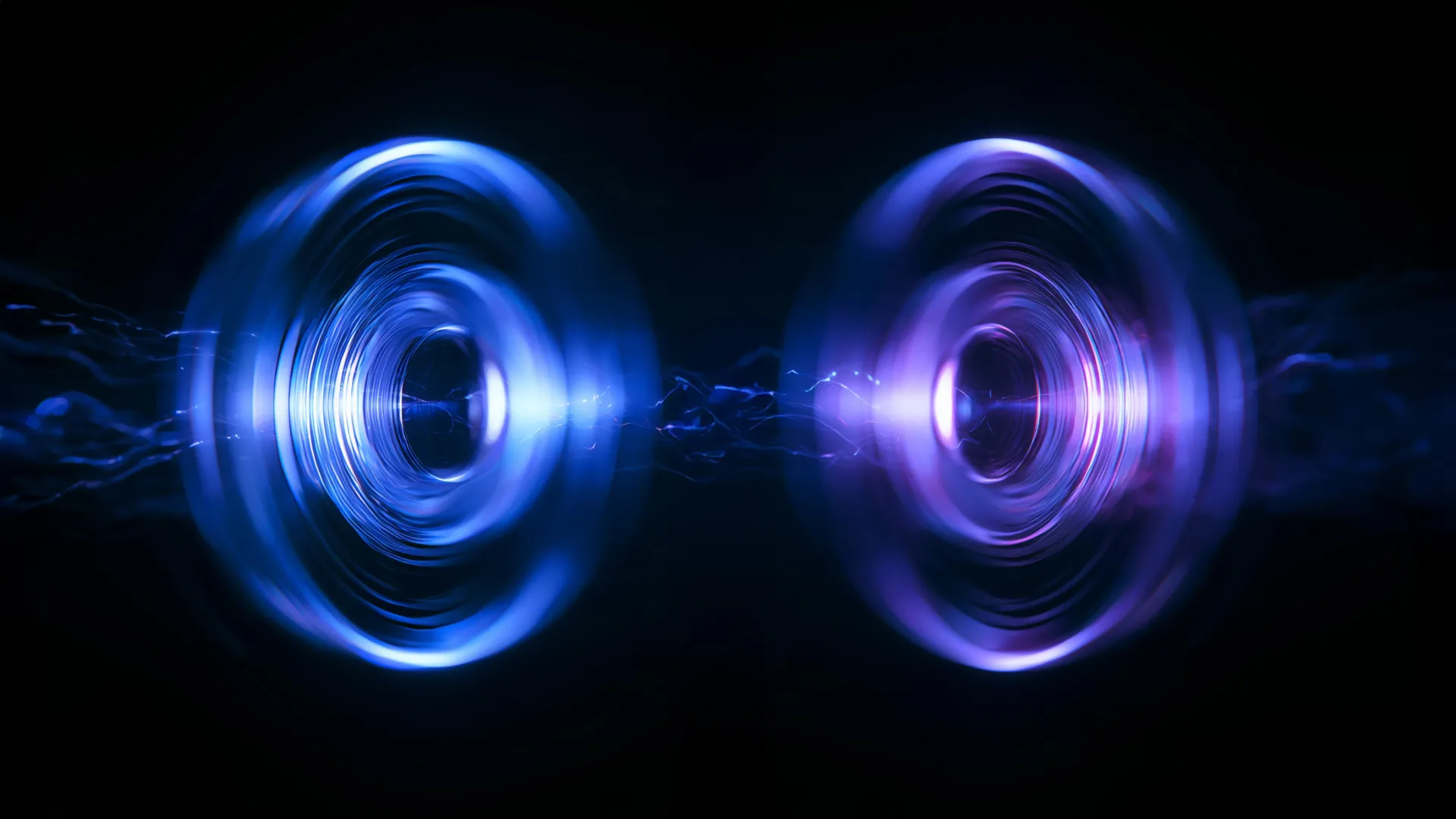
The pursuit of reliable quantum technologies has long been hindered by the delicate nature of quantum states, which are notoriously susceptible to environmental interference and minute manufacturing errors. In a significant theoretical breakthrough, a team of physicists at the RIKEN Center for Quantum Computing (RQC) has proposed a novel method for achieving the one-way quantum synchronization of phonons—the quantized particles of sound. This research, led by Franco Nori, Adam Miranowicz, and Deng-Gao Lai, introduces a framework that remains effective under the types of real-world conditions that typically degrade or destroy quantum resources. By enabling phonons to synchronize in a nonreciprocal manner, the team has laid the groundwork for a new generation of robust quantum processors and highly efficient signal-processing devices.
The Evolution of Nonreciprocity in Modern Physics
To understand the importance of the RIKEN team’s work, one must first look at the concept of nonreciprocity. In classical physics, most systems are reciprocal; if a signal can travel from Point A to Point B, it can generally travel from Point B to Point A with the same ease. However, modern technology frequently requires "one-way streets" for signals. In microwave and optical engineering, nonreciprocal components such as isolators and circulators are essential. They allow engineers to direct signals along specific paths while preventing back-reflection, which can damage sensitive equipment or cause signal interference.
As Franco Nori of the RQC explains, these components act as the gatekeepers of modern communication. "Nonreciprocal components enable signals to travel along desired paths, whereas they are strongly attenuated in the opposite direction," Nori noted. He further emphasized that this capability is not merely about signal routing but extends to advanced applications such as signal processing and even the development of "invisible" cloaking technologies, where waves are guided around an object rather than reflecting off it.
The transition of this concept into the quantum realm, however, has proven to be an immense challenge. While photons (light particles) have been successfully manipulated in nonreciprocal systems for years, applying these principles to phonons (sound particles) and achieving quantum synchronization has remained an elusive goal for theoretical and experimental physicists alike.
Understanding Quantum Synchronization and Phonons
Synchronization is a phenomenon where two or more independent oscillating systems adjust their rhythms to match one another. This was first observed by the Dutch scientist Christiaan Huygens in 1665, who noticed that two pendulum clocks hanging from the same wooden beam eventually swung in perfect unison. In the quantum world, synchronization refers to the alignment of the quantum phases and frequencies of two separate systems.
Phonons represent the collective excitations of atoms in a crystal lattice, essentially acting as the "particles" of sound. In quantum acoustics, phonons are increasingly viewed as a viable alternative to photons for carrying information. Because phonons travel much slower than photons, they can be more easily manipulated and stored within small-scale architectures, making them ideal candidates for quantum memory and local signal processing within a quantum computer.
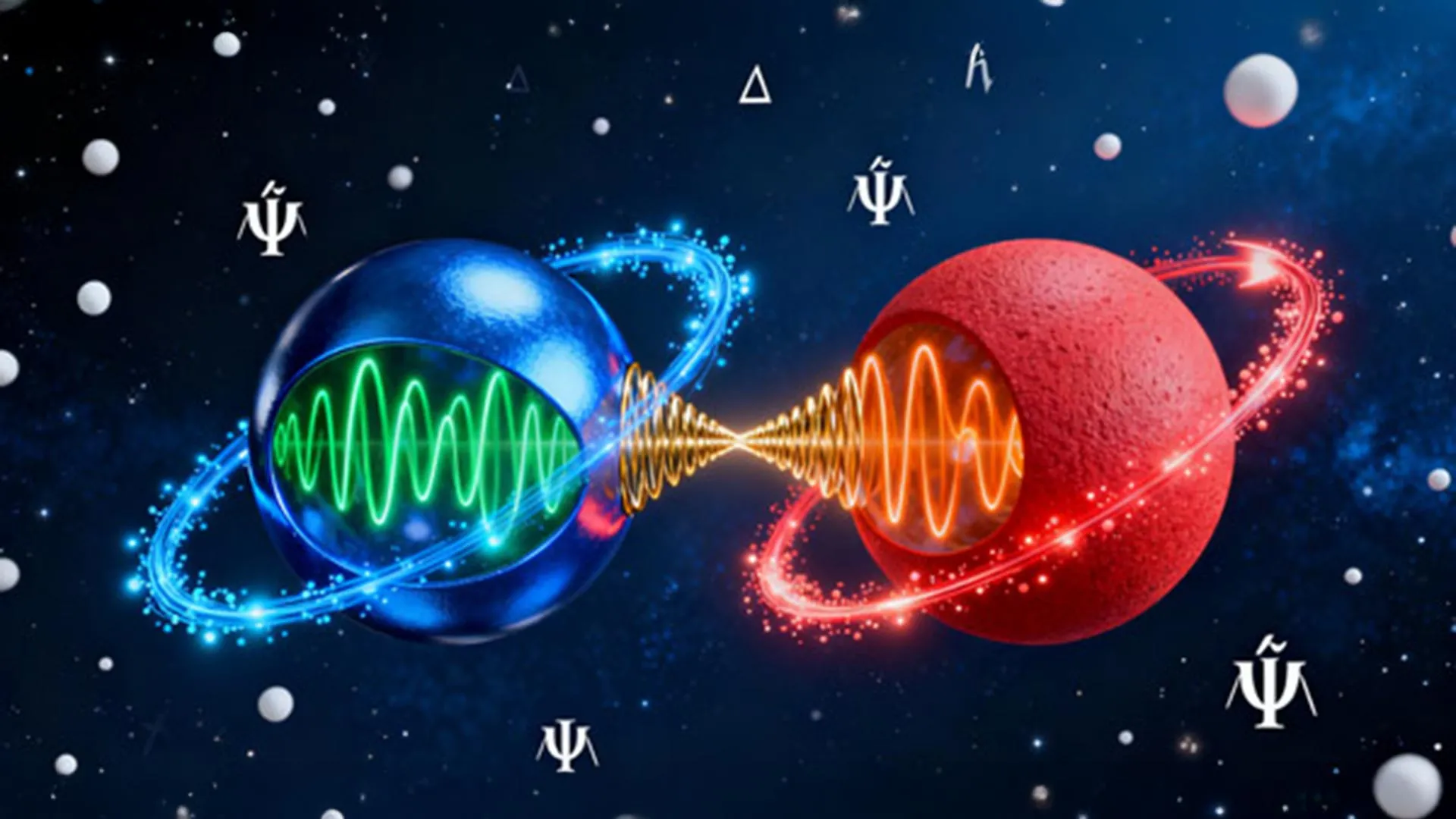
The RIKEN study focuses on "nonreciprocal quantum synchronization." In this scenario, System A influences System B to match its frequency, but System B has no reciprocal effect on System A. This one-way relationship is vital for building complex quantum networks where information must flow in a controlled, unidirectional sequence without the risk of feedback loops or retro-active interference.
Overcoming the "Fragility Gap" in Quantum Engineering
The primary obstacle to achieving nonreciprocal quantum synchronization has been the "fragility" of quantum states. In theoretical models, researchers can often find ways to synchronize systems under perfect conditions. However, the transition from theory to the laboratory often fails because of two major factors: fabrication imperfections and environmental noise.
Adam Miranowicz, a key researcher on the RQC team, highlighted these hurdles. "Practical quantum technologies face critical challenges from random fabrication imperfections and environmental noise," Miranowicz said. "These factors profoundly suppress—or even completely destroy—quantum resources in conventional approaches."
In nanofabrication, even a variation of a few atoms in the thickness of a resonator or a slight misalignment in a circuit can alter the resonance frequency of a device. In traditional quantum synchronization schemes, such a mismatch would prevent the systems from ever achieving unison. Furthermore, thermal noise from the surrounding environment—even at temperatures near absolute zero—can introduce "jitter" that decoheres the quantum state, rendering the synchronization useless for information processing.
The RIKEN Strategy: A Hybrid Approach to Robustness
The RIKEN team’s proposal, published in a recent theoretical study, bypasses these limitations by combining two distinct quantum effects into a single, unified framework. By integrating specific dissipative processes with external drives, such as light or magnetic fields, the researchers created a system that is inherently biased toward one-way interaction.
Under their model, when a magnetic field or a laser is applied from a specific direction, the phonons in the system enter a synchronized state. If the same influence is applied from the opposite direction, the systems remain independent. The breakthrough lies in the "robustness" of this effect. The mathematical models developed by Nori, Miranowicz, and Lai suggest that the synchronization persists even when the components are not perfectly matched and when the environment is noisy.
Deng-Gao Lai expressed the team’s excitement at these findings. "We were thrilled to discover that quantum synchronization persists even in the presence of substantial imperfections and noise," Lai said. "Previously, this was thought to be impossible without employing complex protection schemes."
Instead of needing "active" protection—which requires additional hardware and energy to correct errors—the RIKEN method relies on "passive" or "intrinsic" robustness. This means the physical laws governing the system’s design naturally steer it toward synchronization, making it a "self-correcting" mechanism for quantum sound particles.
Chronology of the Research and Scientific Context
The journey toward this discovery is part of a broader timeline in the field of quantum acoustics and nonreciprocity:
- 2010–2015: Initial theories regarding phonon-based quantum computing emerge, identifying phonons as potential "quantum buses" for connecting different parts of a quantum processor.
- 2017–2019: Experimentalists demonstrate basic nonreciprocal transport of phonons using "topological insulators" for sound, but these systems remain classical or semi-classical in nature.
- 2020–2022: Researchers attempt to achieve quantum synchronization in optomechanical systems (systems using both light and mechanical motion), but find that the synchronization is highly sensitive to thermal decoherence.
- 2023: The RIKEN team begins developing a framework that treats noise not as an enemy to be excluded, but as a parameter to be managed within the dissipative quantum dynamics of the system.
- 2024: The RQC team publishes their findings, proving that one-way synchronization can be made "fragile-to-robust," transitioning from a delicate theoretical possibility to a practical engineering blueprint.
Implications for the Future of Quantum Computing and Networking
The implications of this research extend far beyond the laboratory. If phonons can be synchronized reliably in one direction, several "holy grail" technologies in quantum information science become significantly more attainable.
1. Error-Resilient Quantum Processors
Current quantum computers, such as those using superconducting qubits, are plagued by high error rates. A robust synchronization mechanism for phonons could be used to create "clocks" within a quantum chip that keep different processing units in sync, even if some of the components are slightly defective. This would increase the yield of functional quantum chips during the manufacturing process.
2. Quantum Networking and Communication
For a "Quantum Internet" to function, quantum states must be transmitted over long distances. One-way synchronization is essential for repeaters and routers that direct quantum information through a network. The RIKEN method provides a way to ensure that information moves forward toward its destination without being reflected back or lost to noise.
3. Advanced Signal Processing
The ability to control sound at the quantum level allows for the creation of ultra-sensitive sensors and transducers. These devices could convert quantum information from one form (such as microwave signals) to another (such as optical signals) using phonons as an intermediary, all while maintaining the integrity of the data.
4. Thermal Management at the Nanoscale
Since heat is essentially the vibration of atoms (random phonons), the ability to enforce one-way phonon flow could lead to "thermal diodes." These would allow heat to move out of a sensitive quantum component but prevent it from flowing back in, providing a new way to cool quantum devices more efficiently.
Analysis: A New Foundation for Quantum Resources
The RIKEN study represents a shift in philosophy for quantum physics. For decades, the goal has been to isolate quantum systems from the environment as much as possible. The approach taken by Nori, Miranowicz, and Lai suggests that by cleverly designing the interactions within a system, physicists can create "protected" states that thrive despite the environment.
Franco Nori summarizes the impact of this shift: "This development establishes a new foundation for generating fragile-to-robust nonreciprocal quantum resources with future practical applicability."
The team’s next steps involve collaborating with experimental physicists to implement this theoretical framework in physical hardware. Potential platforms include trapped ions, superconducting circuits, or nanomechanical resonators. As the world moves closer to the realization of a practical quantum computer, the ability to synchronize the "sounds" of the quantum world may prove to be the key to making these machines reliable enough for everyday use.
"We’re now planning to explore applications in quantum networking and error-resilient quantum information processing," Lai concluded. With this roadmap, the RIKEN Center for Quantum Computing continues to cement its position at the forefront of the second quantum revolution, turning the "impossible" into the "robust."