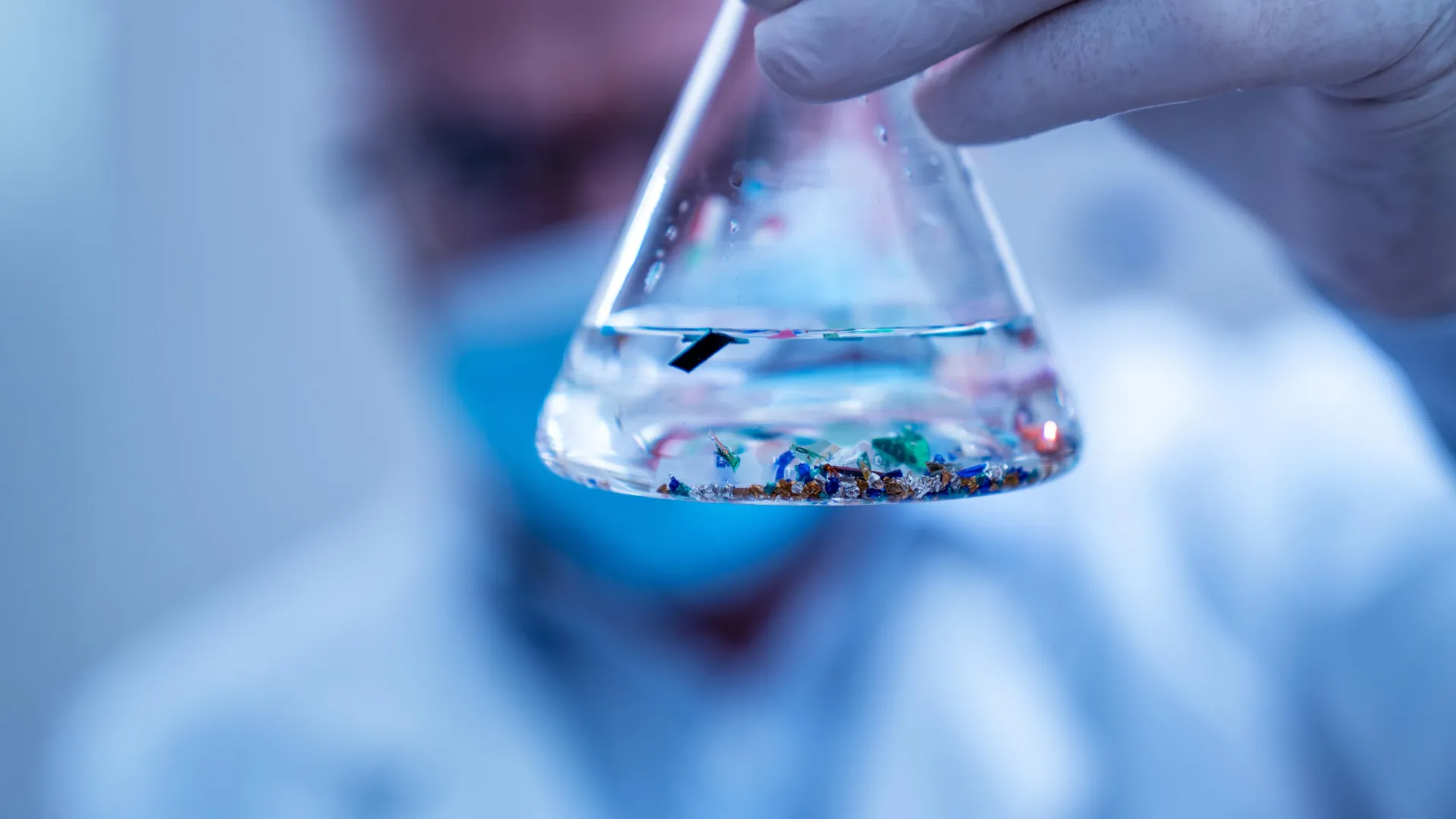
A collaborative research effort involving the CSIR-Central Salt and Marine Chemicals Research Institute (CSMCRI), the Indian Institute of Technology Gandhinagar (IITGN), Nanyang Technological University (NTU) in Singapore, and the S N Bose National Centre for Basic Sciences has resulted in the development of a groundbreaking filtration technology known as "POMbranes." This innovation, recently detailed in the Journal of the American Chemical Society, introduces a new class of crystalline membranes engineered at the molecular level to provide ultra-precise filtration, potentially transforming how global industries manage energy consumption and water resources. By utilizing nature-inspired designs to create pores exactly one nanometer in diameter, the team has addressed a long-standing bottleneck in industrial manufacturing: the high energy cost and low efficiency of traditional separation processes.
The Global Imperative for Efficient Industrial Separation
Industrial separation processes—the methods used to isolate specific chemicals, purify drugs, or treat wastewater—are the invisible backbone of modern civilization. From the production of life-saving antibiotics to the creation of synthetic fabrics, these processes are essential. However, they come with a staggering environmental price tag. Current estimates suggest that separation operations account for approximately 40% to 50% of the total energy consumed by the global industrial sector. The majority of this energy is spent on thermal-based methods, such as distillation and evaporation, which rely on heat to change the state of matter to separate components.
While effective, these traditional methods are inherently carbon-intensive. As the global community moves toward net-zero emissions targets, the reliance on heat-based separation has become increasingly unsustainable. Membrane-based filtration has long been viewed as the most promising alternative because it relies on physical sieving rather than phase changes, theoretically requiring a fraction of the energy. However, conventional polymer membranes have historically struggled with consistency. These membranes often feature irregular pore sizes that can expand, contract, or degrade when exposed to the harsh chemicals and fluctuating pressures of an industrial environment. The development of POMbranes represents a strategic shift toward "precision engineering" in membrane science, offering a level of stability and selectivity previously thought unattainable.
Nature-Inspired Architecture: The Science of POMbranes
The conceptual foundation of the POMbrane lies in biomimicry. The research team looked to biological systems, specifically aquaporins—proteins embedded in cell membranes that act as highly selective "water channels." Aquaporins allow water molecules to pass through while blocking ions and other solutes with near-perfect efficiency, thanks to their precisely sized and shaped internal structures. To replicate this efficiency in a synthetic material, the researchers utilized polyoxometalate (POM) clusters.
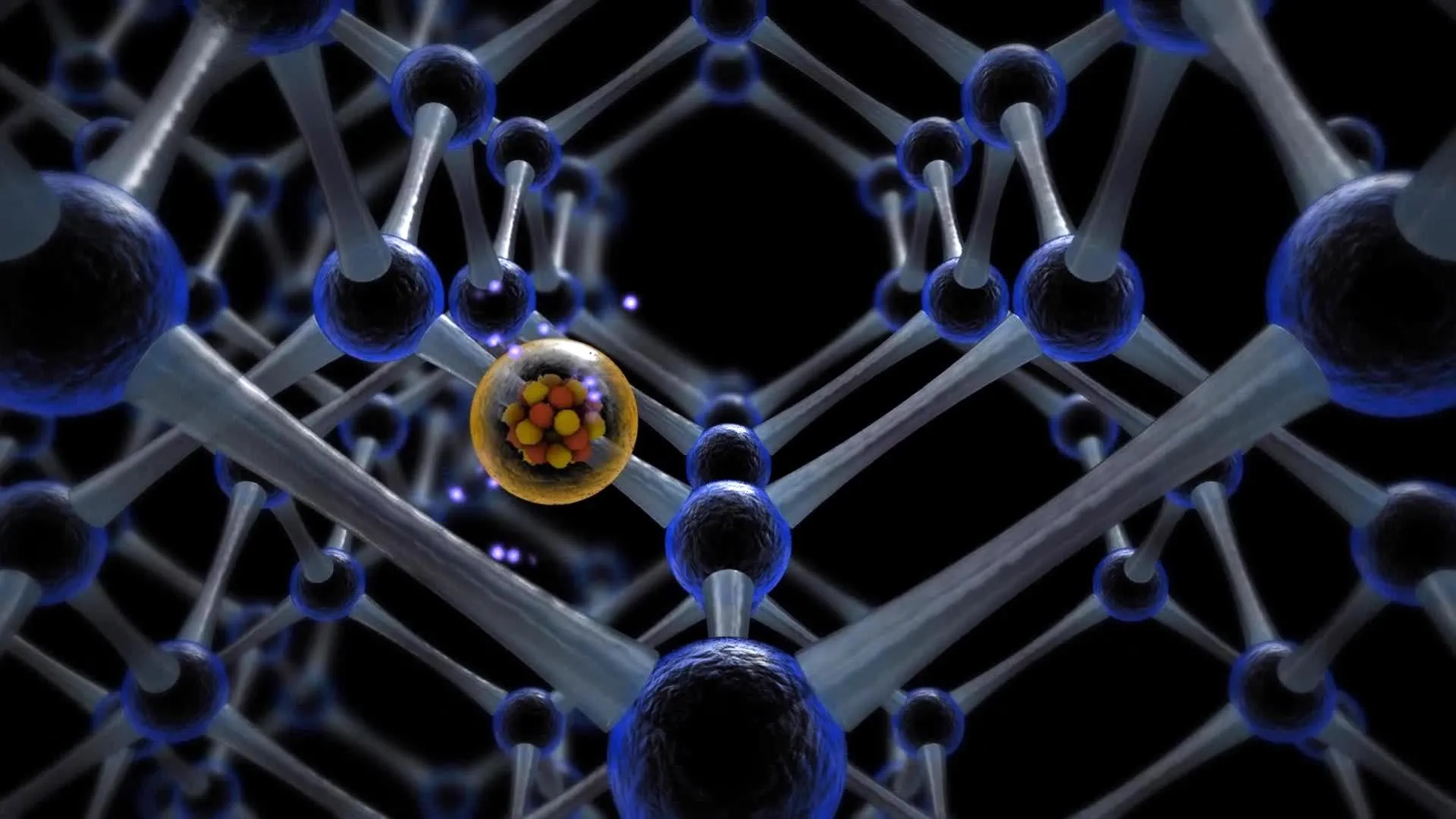
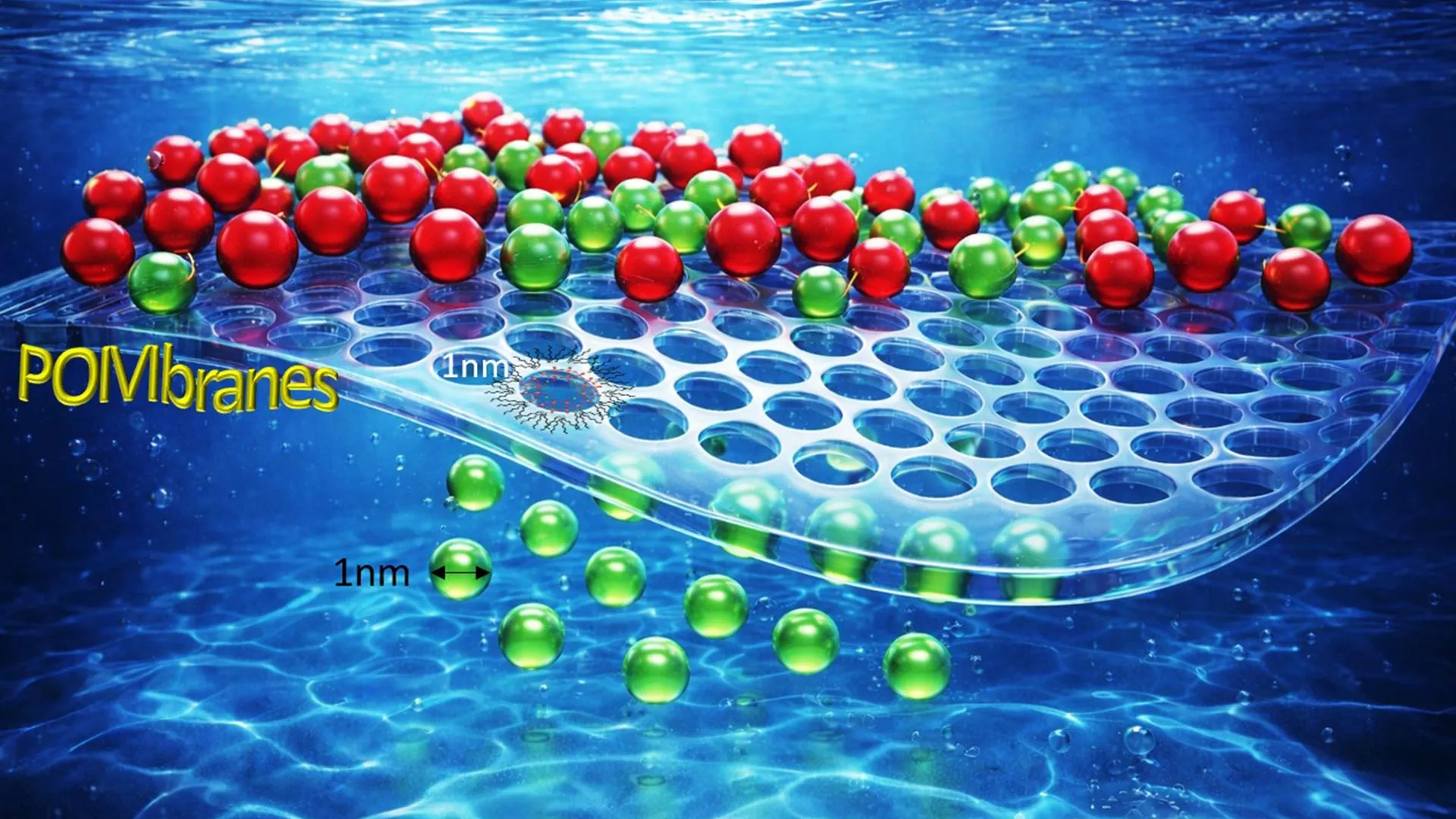
POMs are inorganic, crown-shaped metal clusters that possess a unique characteristic: a permanent, naturally occurring hole in their center. Unlike the pores in plastic or polymer filters, which are formed during the manufacturing process and are subject to variation, the holes in POM clusters are defined by their atomic structure. According to Ms. Priyanka Dobariya, a research scholar at CSMCRI and co-first author of the study, these clusters provide a "perfect hole" that remains stable regardless of environmental stressors. Each of these openings is exactly one nanometer wide—roughly 100,000 times smaller than the diameter of a human hair.
To transform these microscopic clusters into a functional industrial tool, the researchers had to solve a complex assembly puzzle: how to arrange billions of these ring-like structures into a single, continuous, and defect-free film. The solution involved attaching flexible chemical chains to the POM clusters. When these modified clusters were introduced to the surface of water, they self-organized into an ultrathin layer. By adjusting the length of the chemical chains, the team could control the "packing density" of the clusters, ensuring that the only way for a molecule to pass through the membrane was through the one-nanometer holes in the center of the POM rings.
Technical Validation and Performance Metrics
The performance of the POMbranes was validated through a combination of physical testing and advanced molecular simulations. Dr. Raghavan Ranganathan, an Associate Professor at IIT Gandhinagar, and Mr. Vinay Thakur, a PhD scholar at IITGN, spearheaded the computational modeling aspect of the research. Their simulations provided a molecular-level view of how different substances interact with the POM clusters, confirming that the membrane acts as a high-tech sieve that permits only specific molecules to pass based on their size and chemical properties.
The empirical results were significant. Testing demonstrated that the POMbranes could distinguish between molecules that differed in mass by as little as 100 to 200 Daltons. In the world of molecular separation, this level of precision is an order of magnitude higher than what is typically achievable with standard industrial membranes. Dr. Ketan Patel, Principal Scientist at CSMCRI, noted that the new membranes demonstrate nearly ten times better separation performance than existing technologies. Furthermore, the membranes maintained their integrity across a wide range of acidity levels (pH ranges) and remained flexible enough to be manufactured in large, scalable sheets—a prerequisite for any technology intended for widespread industrial adoption.
Economic and Industrial Implications for India
The timing of this breakthrough is particularly relevant for India’s industrial landscape. The country’s textile and apparel sector is a primary pillar of the national economy, contributing more than 2.3% to the total GDP and accounting for 13% of industrial production. Currently valued between $160 billion and $225 billion, the sector is projected to reach a valuation of $350 billion by 2030. However, this growth comes with significant environmental challenges, particularly regarding water usage and chemical discharge.
Textile finishing and dyeing are among the most water-intensive industrial processes. They generate vast quantities of wastewater contaminated with complex dye molecules that are difficult to remove using conventional treatment methods. The implementation of POMbrane technology could allow textile manufacturers to selectively filter out dye molecules, enabling the immediate reuse of water within the production cycle. This would not only reduce the demand for freshwater—a critical concern in water-stressed regions of India—but also significantly lower the volume of chemical waste discharged into local ecosystems.
Similarly, the pharmaceutical industry stands to benefit from this technology. Pharmaceutical manufacturing requires the highest levels of purity, often involving the separation of closely related molecular compounds during drug purification and solvent recovery. Because these processes are both energy-intensive and sensitive to quality fluctuations, the high selectivity of POMbranes offers a way to maintain stringent purity standards while reducing the carbon footprint of production.
Chronology of Development and Future Outlook
The development of POMbranes followed a rigorous multi-year research timeline that began with the fundamental synthesis of POM clusters and progressed through various stages of material science and engineering:
- Conceptualization and Synthesis: The team identified specific polyoxometalate clusters with desirable geometric properties and synthesized them in the lab.
- Chemical Modification: Researchers experimented with various chemical "tails" to allow the clusters to self-assemble into a thin film.
- Membrane Fabrication: Using Langmuir-Blodgett-inspired techniques, the team successfully created large-area, defect-free POMbrane sheets.
- Computational Modeling: IIT Gandhinagar conducted molecular dynamics simulations to predict and verify the transport mechanisms of molecules through the 1nm pores.
- Performance Testing: The membranes were subjected to rigorous testing against various solutes, pH levels, and pressure conditions to compare them against industrial standards.
- Publication and Peer Review: The findings were peer-reviewed and published in the Journal of the American Chemical Society, marking the technology’s formal introduction to the scientific community.
As the researchers look toward the future, the focus is shifting from laboratory-scale success to industrial-scale implementation. The "platform" nature of POMbrane technology means it can be customized for different tasks. By altering the size of the POM clusters or the chemistry of the attached chains, the membranes can be "tuned" to target specific pollutants or valuable chemicals.
The broader implications of this research extend beyond immediate industrial applications. As global industries face increasing pressure from both regulators and consumers to adopt "green" manufacturing practices, technologies like POMbranes provide a viable pathway toward decoupling industrial growth from environmental degradation. By reducing the energy required for separation and facilitating the circular use of water, this nature-inspired technology represents a significant step toward a more sustainable and resource-efficient industrial future. The collaborative nature of the project—spanning across premier Indian institutions and international partners in Singapore—also underscores the importance of cross-border scientific cooperation in solving global challenges related to climate change and resource scarcity.