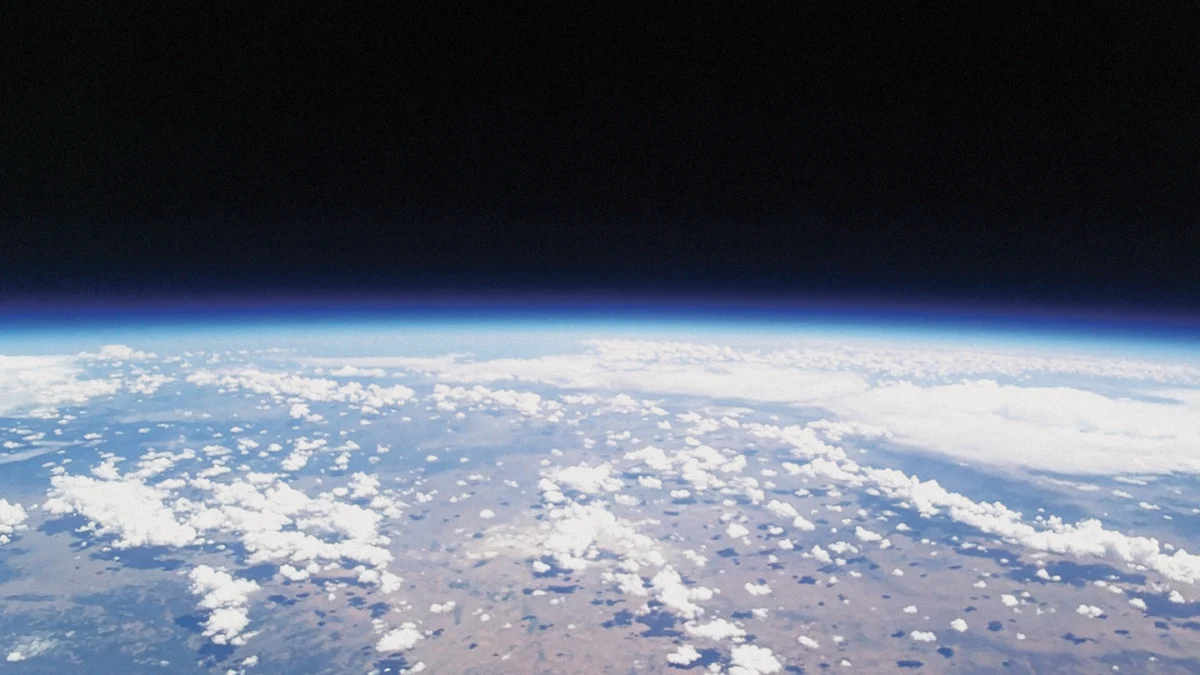
The Earth’s stratosphere, a stark and seemingly inhospitable layer of the atmosphere, is increasingly revealing itself as a temporary haven for hardy terrestrial life. Organisms typically found on the planet’s surface are now understood to engage in a remarkable dual existence, hitchhiking on atmospheric currents to reach altitudes of up to 30 kilometers. This phenomenon, once thought impossible, is reshaping our understanding of extremophiles and the potential for life to persist in environments previously considered devoid of it.
The Stratospheric Frontier: An Unlikely Habitat
The image of the stratosphere, often depicted as a serene, gray zone between the familiar troposphere and the vacuum of space, belies its extreme conditions. At an altitude of 30 kilometers, the air pressure is a mere one percent of that experienced at sea level. This near-vacuum environment presents significant challenges for life as we know it, including extreme cold, low humidity, and a scarcity of readily available nutrients. Compounding these difficulties is the intense ultraviolet (UV) radiation that bombards this region, a consequence of its position above the protective ozone layer. This radiation is highly damaging to biological molecules, including DNA, and is a potent sterilizing agent.
Despite these formidable barriers, scientific expeditions utilizing high-altitude balloons have consistently detected the presence of various microorganisms, including bacteria, fungal spores, and even certain types of algae, in the stratosphere. These findings suggest that these organisms possess remarkable resilience and a suite of adaptations that allow them to survive, and perhaps even briefly thrive, in this alien realm. The discovery challenges long-held assumptions about the ecological boundaries of life on Earth and opens new avenues of inquiry into astrobiology and the potential for life on other planets.
A History of Discovery: Unveiling Stratospheric Life
The initial exploration of the stratosphere for biological entities began in earnest during the mid-20th century. Early experiments, often conducted in conjunction with meteorological research, aimed to assess the viability of life at high altitudes. These pioneering efforts, though limited by the technology of the time, provided the first hints that life might not be confined to the terrestrial surface.
One of the most significant early studies was conducted by the U.S. military in the 1950s and 1960s as part of Project Excelsior and other high-altitude research programs. Balloons carrying scientific instruments, and occasionally small payloads designed to sample the atmosphere, inadvertently collected evidence of microbial life. These findings were often met with skepticism, as the prevailing scientific consensus was that such extreme conditions would be insurmountable for most organisms.
The development of more sophisticated sampling techniques and analytical methods in subsequent decades allowed for more rigorous investigation. Researchers began deploying specialized balloons equipped with sterile collection devices that could capture atmospheric particles without contamination from the ground. These missions, often conducted over remote locations like the deserts of New Mexico, provided irrefutable evidence of a diverse microbial community inhabiting the stratosphere.
In the early 2000s, significant advancements in molecular biology and genomics revolutionized the study of these airborne microbes. By analyzing the DNA of collected samples, scientists could identify the specific species present and begin to understand their genetic makeup. This era of research revealed that many of the detected microbes were common soil and air dwellers, suggesting that they were being lofted into the stratosphere by natural processes.
Mechanisms of Survival: Adapting to the Extreme
The question of how these organisms survive the harsh stratospheric environment is a central focus of ongoing research. Several key adaptations are believed to play a crucial role:
- Spore Formation: Many bacteria and fungi can form resilient spores, dormant structures that are highly resistant to environmental stresses such as desiccation, heat, and radiation. These spores can remain viable for extended periods, awaiting more favorable conditions.
- DNA Repair Mechanisms: Microbes found in the stratosphere often possess robust DNA repair mechanisms. These systems can effectively mend the damage caused by intense UV radiation, preventing mutations and ensuring the integrity of their genetic code.
- Pigmentation: Some airborne microbes produce pigments, such as carotenoids, which can act as natural sunscreens, absorbing UV radiation and protecting cellular components from damage.
- Low Water Content: The extremely dry conditions of the stratosphere might be tolerated by organisms that can survive with very low intracellular water content, a state that can also confer some resistance to radiation.
- Association with Aerosols: Microbes are often found attached to or encapsulated within atmospheric aerosols, such as dust particles or sulfate droplets. These particles can provide a degree of protection from UV radiation and potentially offer some limited nutrient availability.
Supporting Data and Chronology
The evidence for stratospheric life is accumulating through a series of key research initiatives:
- 1960s-1970s: Early atmospheric sampling experiments, primarily conducted by the U.S. military and various meteorological agencies, begin to detect bacterial and fungal spores at high altitudes, though conclusive identification and interpretation remain challenging.
- 1990s: Advances in sterile sampling techniques and laboratory analysis allow for more reliable collection and identification of airborne microorganisms. Studies confirm the presence of diverse microbial communities in the upper troposphere and lower stratosphere.
- 2000s: The deployment of specialized stratospheric balloons, such as those used by the Japan Aerospace Exploration Agency (JAXA) and various university research groups, provides high-resolution samples. Genetic analysis of these samples reveals previously unknown bacterial species and confirms the survival of common terrestrial microbes. For example, studies have identified species of Bacillus, Deinococcus, and various fungal genera like Aspergillus and Penicillium.
- 2010s-Present: Ongoing research focuses on understanding the physiological adaptations of these microbes and their dispersal mechanisms. Studies explore the role of atmospheric circulation patterns in transporting organisms from the surface to the stratosphere and back. The discovery of organisms like Deinococcus radiodurans, known for its extreme radiation resistance, in stratospheric samples further fuels interest in their survival strategies. Research also begins to explore the potential for in situ replication or metabolic activity in the stratosphere, though this remains a more complex area of investigation.
Broader Implications and Future Research
The implications of life thriving in the stratosphere are far-reaching:
- Astrobiology: The existence of terrestrial life in such extreme atmospheric conditions strengthens the argument for the potential of life on other planets with similar atmospheric layers, such as Mars. If life can survive the harshness of Earth’s stratosphere, it may be able to endure analogous environments elsewhere in the solar system.
- Biotechnology: Understanding the unique survival mechanisms of these extremophiles could lead to the development of novel biotechnological applications. For instance, their radiation-resistant enzymes or DNA repair systems could be valuable in industrial processes or medical treatments.
- Atmospheric Science: The presence of microbes in the stratosphere may influence atmospheric chemistry and cloud formation. Further research is needed to quantify their impact on these processes.
- Planetary Protection: As humanity increasingly explores space, understanding how life might be transported between celestial bodies becomes crucial. The study of stratospheric microbes provides a terrestrial analog for potential interplanetary contamination scenarios.
Future research will likely focus on several key areas: quantifying the population dynamics of stratospheric microbes, elucidating the precise biochemical and genetic mechanisms behind their resilience, investigating their potential for reproduction and metabolic activity in the stratosphere, and exploring their role in atmospheric processes. The ongoing exploration of Earth’s upper atmosphere continues to reveal the remarkable adaptability and tenacity of life, pushing the boundaries of our scientific understanding and inspiring new perspectives on the possibility of life beyond our planet. The stratosphere, once viewed as an empty expanse, is now recognized as a dynamic and surprisingly inhabited frontier, a testament to life’s enduring capacity to find a way.