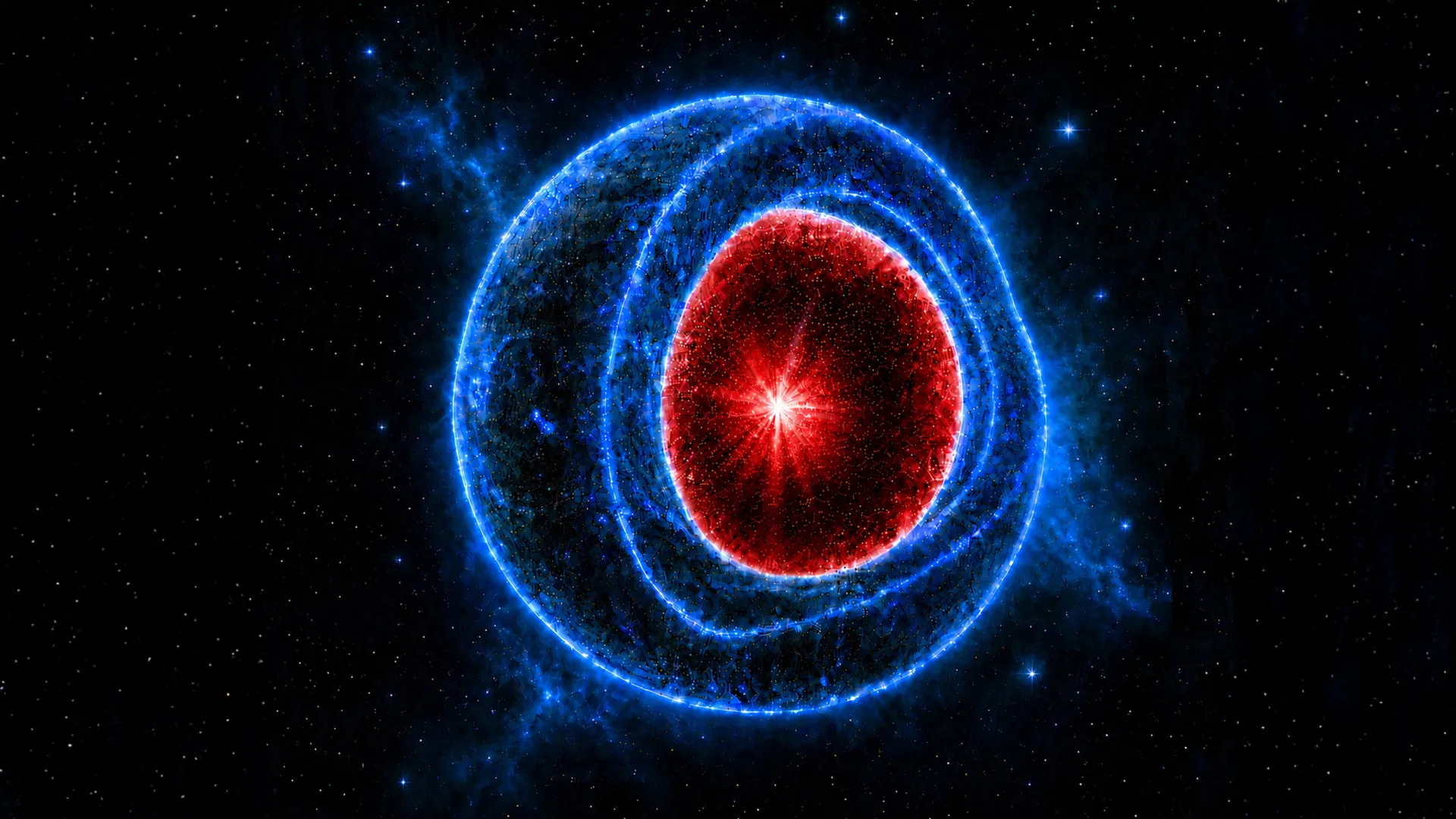
The traditional understanding of the life cycle of massive stars—culminating in the inevitable formation of a black hole—is being challenged by a groundbreaking theoretical model that suggests a more complex and exotic outcome. Researchers Daniel Jampolski and Professor Luciano Rezzolla from Goethe University Frankfurt have presented a new dynamic solution to Albert Einstein’s equations of general relativity, proposing that the gravitational collapse of a star could lead to the creation of a "gravastar." Unlike a black hole, which centers on an infinitely dense singularity, this proposed object would house a miniature expanding universe fueled by dark energy. This discovery provides a potential answer to a quarter-century-old mystery regarding the formation of ultra-compact objects and offers a mathematical bridge between the physics of the very large and the very small.
The Limits of Singularities and the Black Hole Paradox
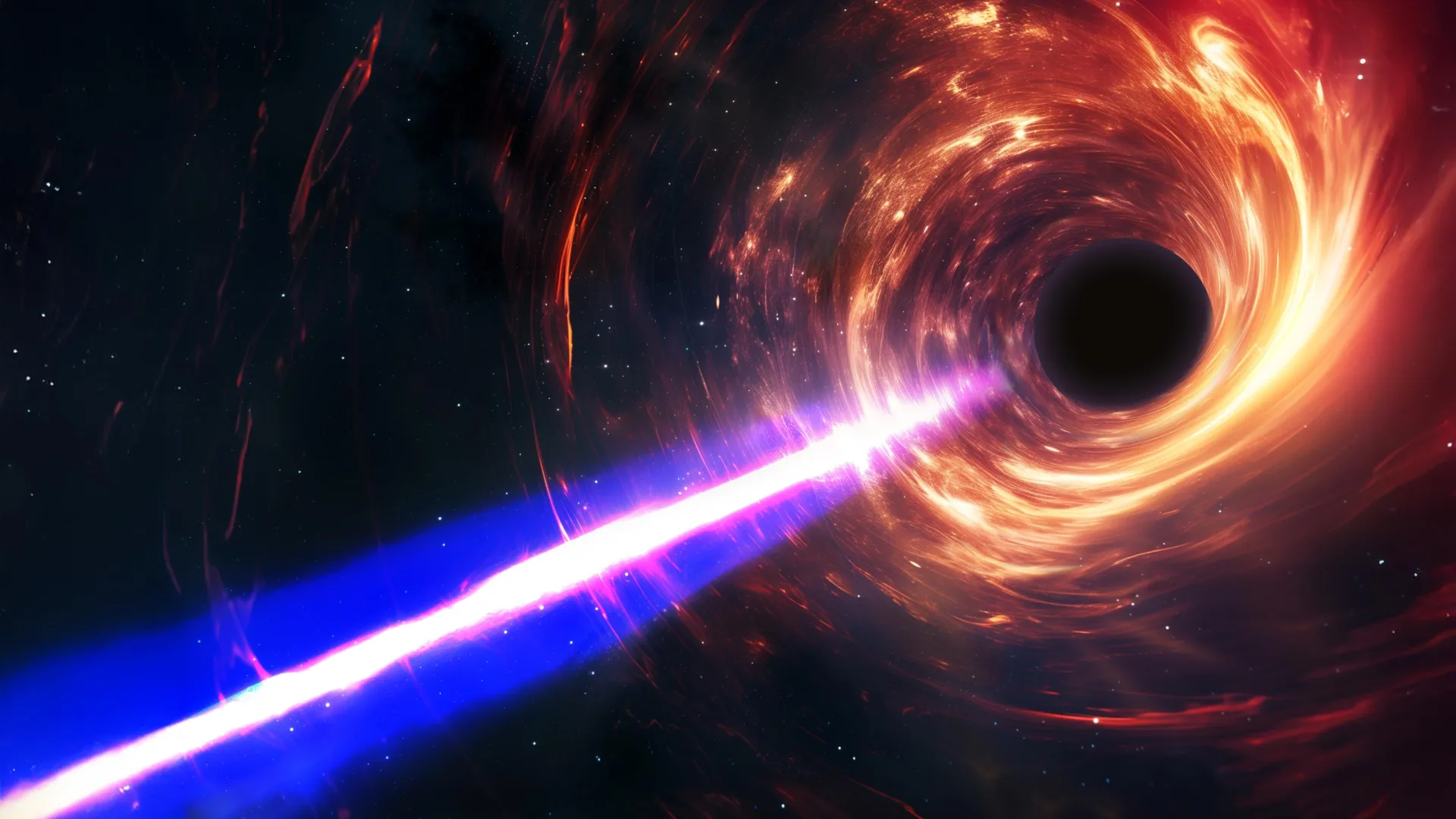
For decades, the black hole has reigned as the standard model for the final state of massive stars. When a star at least twenty times the mass of our Sun exhausts its nuclear fuel, it can no longer generate the outward radiation pressure necessary to withstand its own immense gravity. According to the classical interpretation of general relativity, the star undergoes an irreversible collapse. This process is thought to continue until all the star’s mass is concentrated into a singularity—a point of zero volume and infinite density where the known laws of physics, including time and space, cease to function.
While black holes are supported by significant observational evidence, including the first-ever image of the M87* black hole captured by the Event Horizon Telescope in 2019, they present profound conceptual difficulties. The existence of a singularity implies a "breakdown" in the mathematical framework of the universe. Furthermore, the "event horizon"—the boundary from which nothing, not even light, can escape—creates the "information loss paradox." If information about the matter that formed the black hole is permanently deleted from the observable universe, it contradicts the principles of quantum mechanics, which state that information must be preserved.
These unresolved issues have led a segment of the theoretical physics community to search for "black hole mimics"—objects that look and act like black holes from the outside but lack the problematic singularity and event horizon.
The Gravastar Alternative: A History of Theoretical Defiance
In 2001, physicists Pawel Mazur and Emil Mottola proposed the concept of a "Gravitational Vacuum Star," or gravastar. In their model, the interior of the collapsing star does not reach a singularity. Instead, the matter undergoes a phase transition at a specific distance from the center. The interior is filled with "dark energy" or vacuum energy, which exerts a powerful outward pressure (negative pressure). This pressure perfectly balances the inward pull of gravity, resulting in a stable, ultra-compact shell of matter.
From a distance, a gravastar would be indistinguishable from a black hole. It would possess an enormous mass and exert a gravitational pull strong enough to bend light and influence nearby stars. However, a gravastar would lack an event horizon; theoretically, a physical surface would exist, though it would be nearly impossible to see due to extreme gravitational redshift.
Despite the elegance of the gravastar model, it faced a significant hurdle: no one could explain how such an object could actually form from a regular star. The transition from ordinary matter to a dark-energy-filled vacuum seemed mathematically elusive in a dynamic, collapsing system. The work of Jampolski and Rezzolla aims to provide that missing link.
The New Solution: A Universe Within a Star
The breakthrough proposed by Jampolski and Rezzolla, published in a recent study, offers the first dynamic solution to Einstein’s field equations that describes the transition of a collapsing star into a gravastar. Their model suggests that as the star collapses to a critical density—just before the point where an event horizon would form—a "mini Big Bang" occurs within the core.
This internal explosion is driven by the emergence of dark energy. Much like the Big Bang that initiated our own universe, this localized expansion creates a "mini-universe" that pushes outward against the collapsing stellar layers. This creates a state of equilibrium. The result is a nested structure: an outer shell of ordinary matter "trapped" by gravity, and an inner core of expanding space-time that prevents the shell from collapsing further.
"The Big Bang of the emerging universe can unfold once the star has already collapsed almost to the point of becoming a black hole," explains Daniel Jampolski, who developed the mathematical framework during his master’s thesis. This timing is crucial, as it allows the star to reach the extreme densities necessary for "new physics" to take over, potentially involving quantum gravitational effects that are not yet fully understood.
Chronology of Gravitational Theory and the Gravastar Evolution
The journey toward understanding these ultra-compact objects spans over a century of scientific inquiry:
- 1916: Karl Schwarzschild derives the first exact solution to Einstein’s field equations, describing what we now call a black hole, including the concept of the Schwarzschild radius.
- 1939: Robert Oppenheimer and Hartland Snyder publish a landmark paper describing the gravitational collapse of a star, providing the theoretical basis for black hole formation.
- 1960s-1970s: The "Golden Age" of general relativity, where Roger Penrose and Stephen Hawking prove the singularity theorems, suggesting that singularities are inevitable under certain conditions.
- 2001: Mazur and Mottola propose the gravastar as a singularity-free alternative to black holes.
- 2015: LIGO detects gravitational waves from merging black holes, confirming the existence of ultra-compact objects but leaving their internal structure a mystery.
- 2019: The Event Horizon Telescope produces the first image of a black hole "shadow," confirming the presence of a light-trapping region.
- 2024: Jampolski and Rezzolla present the "nestar" or dynamic gravastar solution, providing a formation mechanism involving an internal mini-universe.
Scientific Analysis: Implications for Modern Astrophysics
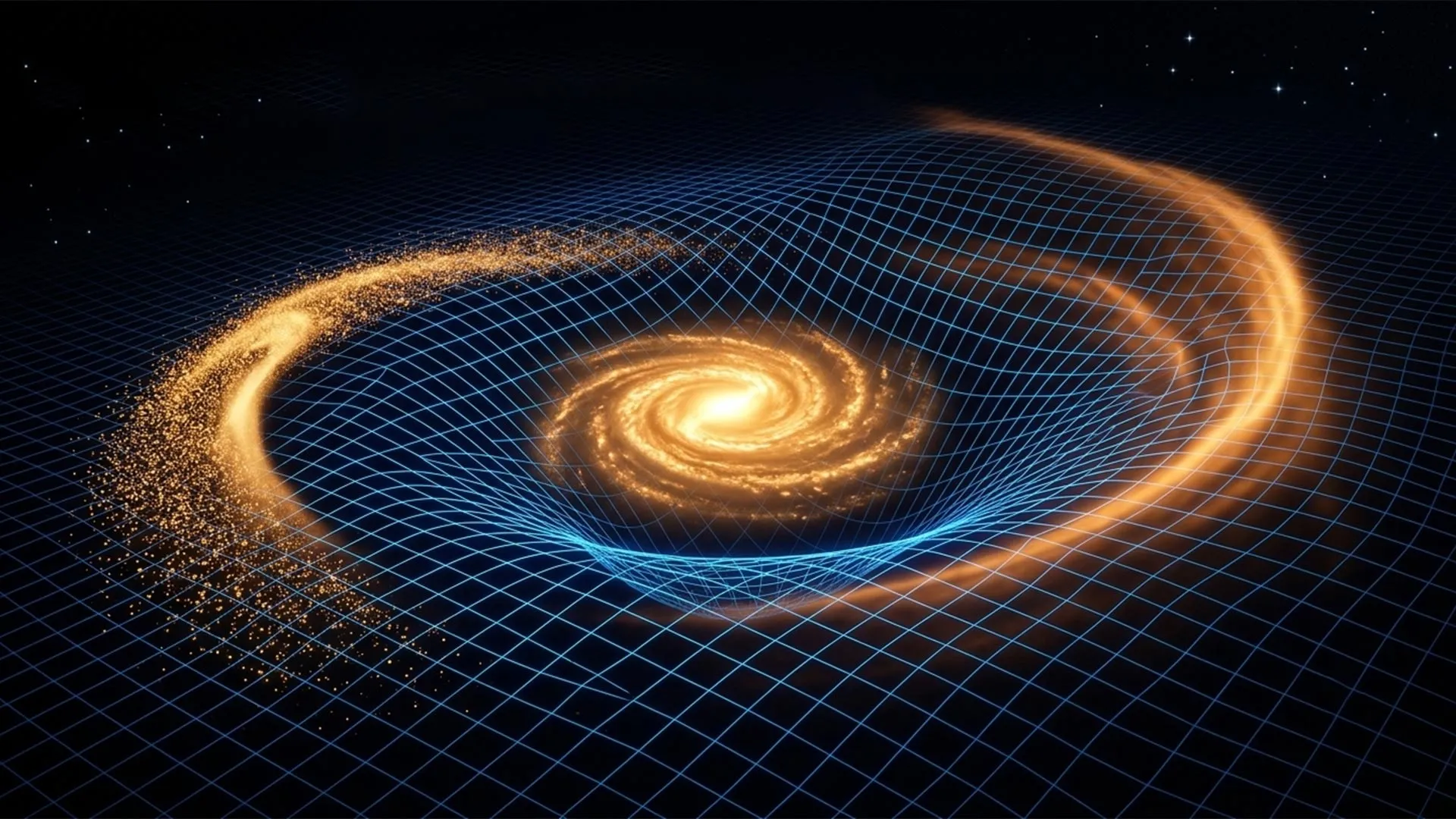
The implications of this new model are twofold. First, it provides a rigorous mathematical defense for the existence of gravastars. If these objects can form dynamically, they must be considered a legitimate possibility in astrophysical observations. Second, it suggests that the "dark energy" that drives the expansion of our own universe might also play a role in the structural stability of the densest objects in the cosmos.
One of the most intriguing aspects of the Jampolski-Rezzolla model is the possibility of "nested" gravastars, which the researchers have dubbed "nestars." In this scenario, the formation process could repeat, creating a series of shells within shells, each containing its own internal universe-like expansion. This adds a layer of complexity to the internal architecture of compact objects that was previously unimagined.
However, the researchers are careful to note that their work does not disprove the existence of black holes. Professor Luciano Rezzolla, a leading expert in theoretical astrophysics, emphasizes the importance of maintaining an open scientific mind. "Looking for alternatives to black holes should not suggest a skepticism towards black holes, which still represent the most natural and simplest solution," Rezzolla stated. He noted that while black holes remain the "accepted wisdom," the history of science is filled with "exotic interpretations" eventually becoming the standard model.
Observational Challenges and Future Prospects
The primary challenge facing the gravastar theory is observational verification. Because gravastars are designed to mimic black holes, their external gravitational signatures are nearly identical. To distinguish between the two, astronomers would need to look for subtle differences in the "gravitational wave ringdown"—the vibrations emitted after two compact objects merge.
A gravastar, having a physical (albeit extreme) surface rather than an event horizon, might produce "echoes" in gravitational wave signals. These echoes would result from waves reflecting off the gravastar’s surface and trapped within its gravitational potential well. Future gravitational wave observatories, such as the Laser Interferometer Space Antenna (LISA) or the Einstein Telescope, may possess the sensitivity required to detect these faint signals.
Furthermore, the "shadow" of a gravastar observed by telescopes like the Event Horizon Telescope might differ slightly in size or brightness distribution compared to a Schwarzschild black hole. Precise measurements of the photon ring—the bright circle of light around the dark center—could eventually provide the data needed to confirm or rule out the existence of gravastars.
Conclusion: Expanding the Frontiers of the Unknown
The proposal by Jampolski and Rezzolla marks a significant milestone in theoretical physics. By demonstrating that Einstein’s equations allow for the birth of a mini-universe inside a collapsing star, they have provided a plausible life cycle for one of the most exotic theoretical objects in the universe.
This research highlights the ongoing tension between general relativity and quantum mechanics. By removing the singularity, gravastars offer a more "physically palatable" end-state for stars, one that does not involve the infinite quantities that usually signal a theory has reached its limit. Whether the universe actually produces gravastars remains to be seen, but the mathematical possibility alone forces scientists to reconsider the nature of space, time, and the ultimate fate of matter under the most extreme conditions imaginable. As the hunt for gravitational "echoes" continues, the distinction between a dark abyss and a hidden universe remains one of the most compelling frontiers in modern science.