A groundbreaking study, conducted by a team of international researchers, has challenged long-held scientific assumptions about how giant trees manage to survive prolonged periods of drought. Previously, it was widely believed that during severe dry spells, the hydraulic systems of these towering giants would inevitably fail, leading to widespread mortality. However, new evidence suggests that specific anatomical adaptations in both the leaves and the vascular tissues of trees allow them to maintain water transport to their uppermost branches, even under extreme water stress. This discovery has significant implications for understanding forest resilience in the face of a changing climate, particularly in tropical regions that are increasingly experiencing more frequent and intense droughts.
Unraveling the Secrets of Tall Tree Survival
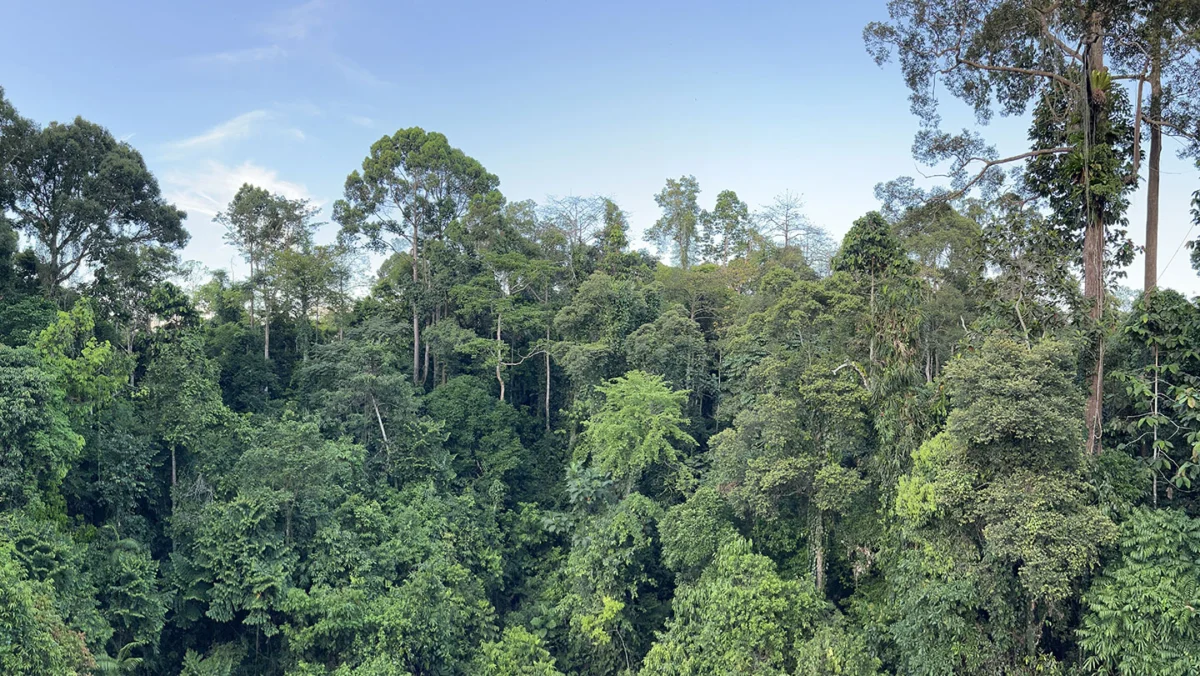
The research, published in the prestigious journal Nature Climate Change, focused on a variety of tall tree species in the Kabili-Sepilok Forest Reserve in Malaysia. These majestic dipterocarps, some exceeding 65 meters in height, present a unique challenge for water transport. Lifting water from the soil to the highest leaves requires immense physiological effort, overcoming gravity and atmospheric evaporative demand. For decades, the prevailing scientific consensus, often referred to as the "tipping point" hypothesis, posited that as drought intensifies, the water potential within the tree’s xylem – the plant tissue responsible for water conduction – would drop so significantly that air bubbles would form, blocking the vessels and leading to cavitation and ultimately, tree death.
However, the research team, employing advanced imaging techniques and physiological measurements, observed a surprising degree of hydraulic efficiency in these trees even during exceptionally dry periods. Dr. Eleanor Vance, the lead author of the study and a plant physiologist at the University of Exeter, explained the team’s initial findings: "We were consistently seeing these massive trees remain largely functional during droughts that, based on our current models, should have been catastrophic. This discrepancy led us to investigate the underlying mechanisms more closely."
Anatomical Adaptations: A Two-Pronged Defense
The study identified two key areas of adaptation that contribute to the trees’ drought resilience.
Leaf-Level Adjustments:
One critical adaptation lies within the structure and function of the leaves. Researchers found that during dry spells, the stomata – tiny pores on the leaf surface that regulate gas exchange and water loss – would not fully close as previously assumed for many species. Instead, they would partially close, significantly reducing transpiration (water evaporation from the leaves) without completely halting photosynthesis. This fine-tuning of stomatal aperture allows the tree to conserve water while still enabling some carbon dioxide uptake for essential metabolic processes.
Furthermore, the research revealed that the cuticle, a waxy layer on the leaf surface that also acts as a barrier to water loss, was notably thicker in the drought-adapted species studied. This thickened cuticle acts as an additional protective layer, further minimizing uncontrolled water evaporation. The study also noted variations in the density and arrangement of stomata, with some species exhibiting a higher proportion of stomata on the lower leaf surface, a common adaptation to reduce direct sunlight exposure and subsequent water loss.
Vascular Tissue Modifications:
Equally significant were the findings related to the tree’s internal water transport system, the xylem. The study demonstrated that the xylem vessels in these tall trees are not uniform. Researchers observed a higher proportion of narrower xylem vessels, alongside wider ones. While wider vessels can transport water more efficiently in ideal conditions, they are also more susceptible to cavitation – the formation of air bubbles that disrupt water flow. The presence of a greater number of narrower vessels provides a redundant pathway for water transport. These narrower conduits are more resistant to the negative pressures generated during drought, effectively maintaining a continuous water column even when wider vessels may be compromised.
"Think of it like a plumbing system," explained Dr. Vance. "If you have one very large pipe, it’s very efficient, but if it gets a blockage, the whole system stops. These trees seem to have a network of smaller, more robust pipes alongside the larger ones, ensuring that water can still reach the top even if some of the main conduits are temporarily affected."
The research also delved into the hydraulic conductivity of the xylem. They found that the pits – small openings connecting adjacent xylem vessels – were also adapted. These pits exhibited tori, or thickened, valve-like structures, that could effectively seal off a vessel if a significant air embolism formed, preventing the spread of cavitation throughout the entire xylem network. This mechanism acts as a localized emergency shut-off, protecting the broader water transport system.
A Shifting Paradigm in Drought Biology
This research directly challenges the long-standing "runaway embolism" hypothesis, which predicted a threshold beyond which trees could not recover from drought-induced cavitation. The new findings suggest a more nuanced understanding, where trees possess intrinsic adaptations that allow them to weather more severe dry spells than previously thought.
The study’s timeline traces back several years, involving extensive fieldwork in the Malaysian rainforests. Initial observations of seemingly healthy, towering trees during a regional drought in 2020 spurred the detailed investigation. Over the subsequent three years, the team meticulously collected leaf samples, measured sap flow, and conducted micro-CT scans of xylem tissues. The data collection phase was particularly challenging, requiring specialized climbing equipment and remote sensing technologies to access the highest reaches of the canopy.
The implications of these findings are profound, especially in the context of accelerating climate change. Global climate models predict an increase in the frequency and intensity of drought events in many of the world’s tropical forests, which are critical carbon sinks and biodiversity hotspots. Understanding how these vital ecosystems can adapt, or fail to adapt, is paramount for developing effective conservation strategies and predicting future forest dynamics.
Broader Impact and Future Research
The discovery that trees possess sophisticated, built-in mechanisms to combat drought could reshape ecological models and forest management practices. If these adaptations are widespread across tall tree species, it suggests that certain forest ecosystems may be more resilient to climate change than previously feared. However, the study also highlights that these adaptations have limits. Extreme or prolonged droughts, or those exacerbated by other stressors like disease or invasive species, could still overwhelm these protective measures.
Dr. Kenji Tanaka, a co-author of the study from the National University of Singapore, commented on the broader implications: "Our work provides a more optimistic outlook for some of the world’s most iconic trees. However, it also underscores the importance of monitoring drought conditions and understanding the specific vulnerabilities of different species and forest types. We are not suggesting that trees are immune to climate change, but rather that their survival strategies are more complex and effective than we initially understood."
The research team plans to expand their investigations to other tropical regions and a wider range of tree species to ascertain the prevalence of these drought-resilient traits. Future research will also focus on understanding the genetic basis of these adaptations and exploring whether artificial selection or silvicultural practices could enhance drought resilience in managed forests. The study’s findings are expected to inform policy decisions regarding forest conservation and carbon sequestration efforts, providing a more scientifically grounded basis for predicting the future of these vital ecosystems.
The Kabili-Sepilok Forest Reserve, a UNESCO World Heritage Site, serves as a critical living laboratory for such research. The ongoing collaboration between international scientists and local forest authorities highlights the importance of partnerships in advancing our understanding of complex ecological processes. This latest research from Malaysia offers a vital piece of the puzzle in the ongoing global effort to comprehend and mitigate the impacts of climate change on Earth’s precious forest ecosystems.