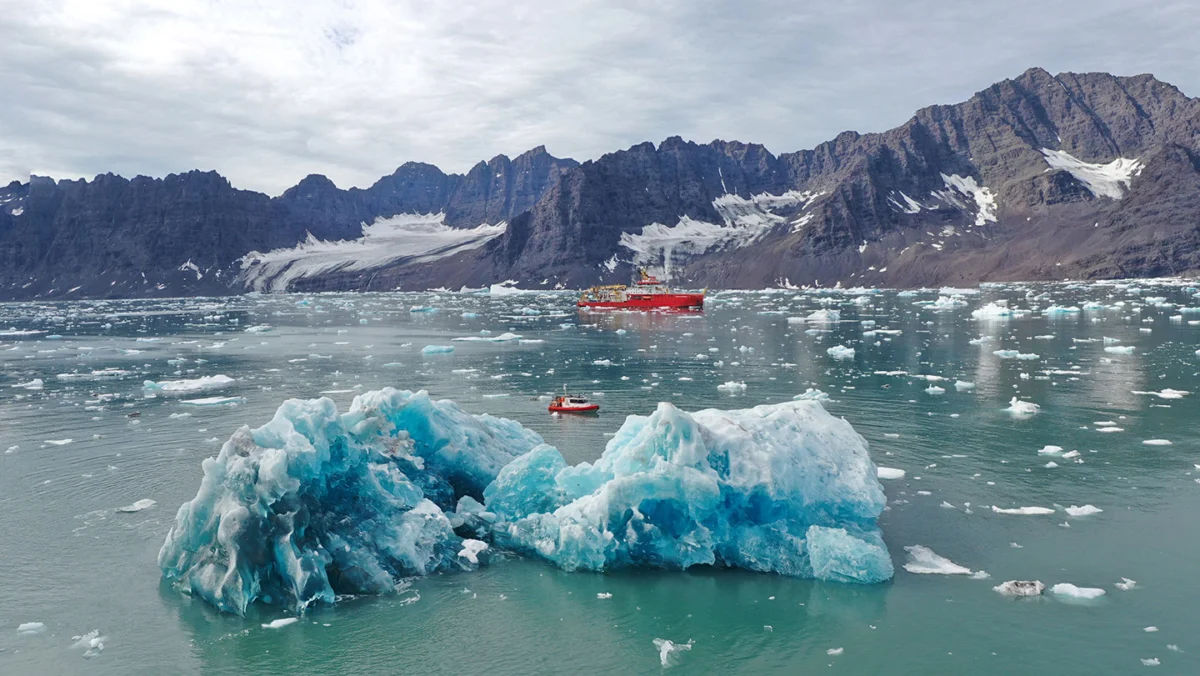
This summer, a sophisticated arsenal of high-tech gadgets and autonomous robots will be deployed to the remote and treacherous frontiers where Greenland’s glaciers meet the sea. This ambitious mission, codenamed GIANT (Greenland Ice sheet to AtlaNtic Tipping points from ice loss), aims to study glacial melt processes with a level of detail previously unimaginable. The data gathered will be crucial for refining climate models and developing an early warning system for potentially catastrophic shifts in global ocean currents.
The expedition, set to launch on July 16, is a direct response to a significant gap in scientific understanding. "This addresses a foundational data deficit in one of the most consequential parts of the climate system," stated Hari Vishnu, a sea ice acoustics expert at the National University of Singapore, who is not involved in the project. "We cannot model what we cannot observe." This sentiment underscores the urgency of the mission, as the intricate dynamics at the ice-ocean interface are poorly understood, yet critical for predicting future climate scenarios.
The challenges inherent in studying these dynamic environments are immense. Where Greenland’s colossal glaciers meet the turbulent ocean, ice cliffs can tower between 30 and 100 meters high. These giants are in constant flux, fracturing and collapsing without warning, sending house-sized icebergs into the fjords. Beneath the surface, chaotic plumes and eddies complicate any attempt to gather data. Oceanographer Jonathan Nash of Oregon State University, a key member of the GIANT project, explained the difficulty: "It’s difficult and dangerous for scientists to get instruments close enough to the key area of interest: the centimeters-thin boundary layer where ice meets ocean."
Previously, the inherent dangers, logistical complexities, and the sheer scale of data collection required from above, on, and below the ice meant that research projects could only focus on isolated aspects of the problem. This fragmented approach limited the ability to understand the interconnected processes driving glacial melt.
"We always wanted to create a project that could simultaneously observe and model all parts of this process," said Paul Holland, an ice scientist at the British Antarctic Survey in Cambridge, England. The opportunity to pursue such a comprehensive endeavor arose when Holland and his colleagues responded to a grant proposal call from the U.K. government’s Advanced Research and Invention Agency (ARIA). ARIA is known for backing high-risk, high-reward projects, making it an ideal funding source for this groundbreaking mission.
Icefall: On His Majesty’s Research Service
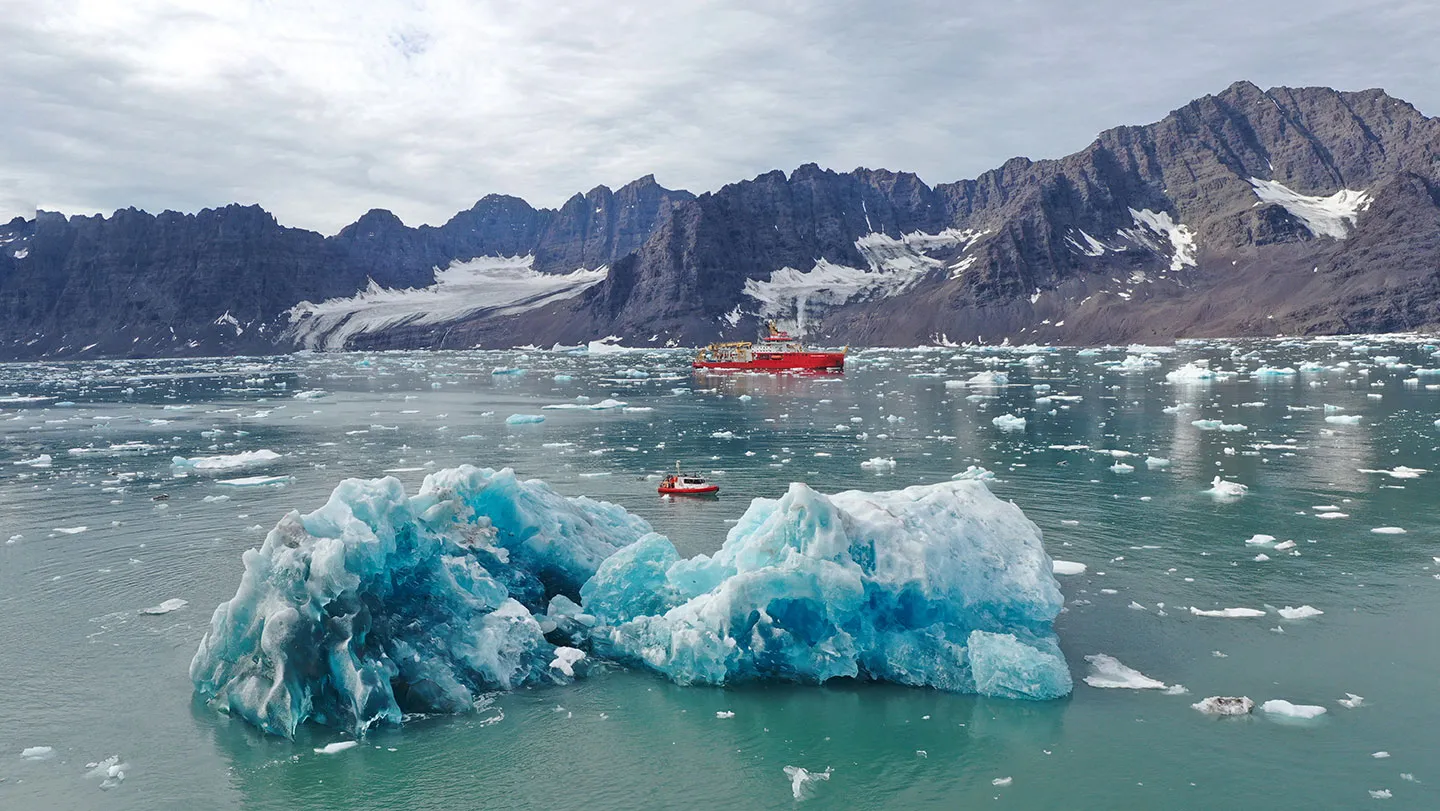
Operating from the Royal Research Ship Sir David Attenborough, the GIANT mission will unleash a coordinated squadron of drones, sensors, and submersibles. This "uncrewed armada" is designed to brave the natural hazards of the Greenlandic coast, including the perilous mix of sea ice and icebergs at the surface and the turbulent waters below. Among the autonomous vehicles participating is the famously named submersible Boaty McBoatface, adding a touch of public engagement to this critical scientific undertaking.
The £20 million (approximately $26 million) investment highlights the increasing sophistication of uncrewed technologies. These advancements now allow for close-range observation of ice dynamics without endangering human researchers, traversing hazardous waters and unstable ice formations. "We’re in a moment where our tools have finally caught up with our questions," remarked marine geophysicist Kelly Hogan of the British Antarctic Survey. "We can explore glacier-ocean interactions in ways that were unimaginable just a few years ago."
Climate Models Under Scrutiny: The Intricacies of Ice Melt
As global temperatures continue to rise, Greenland is experiencing unprecedented ice loss. Recent studies indicate that the rate of melting has accelerated significantly in recent decades, contributing substantially to global sea-level rise. The potential consequences of this freshwater influx into the ocean are profound, particularly concerning the stability of major ocean currents.
The Atlantic Meridional Overturning Circulation (AMOC), a vital system that transports warm tropical waters northward before cooling, sinking, and returning southward, is of particular concern. Scientists warn that a significant disruption or shutdown of the AMOC could lead to dramatic climate shifts, including colder temperatures and drier conditions in Europe, and substantial alterations to tropical monsoons, impacting global agriculture and food security.
Kristin Poinar, an earth scientist at the University at Buffalo who is not affiliated with the expedition, used a vivid analogy to describe the potential impact: "If the AMOC is a pot of warm, salty soup that’s flavored just right, then it’s like adding cold tap water to the pot. The Greenland icebergs ruin the soup. The AMOC relies on dense, salty ocean water to sink, and too much freshwater from icebergs will slow or stop that process."
Multiple lines of scientific evidence already suggest that the AMOC is weakening. While a complete shutdown is a complex process that could unfold over decades or centuries, the uncertainty surrounding its exact timing and impact remains a significant concern for climate scientists.
A primary reason for this uncertainty lies in the limitations of current climate models. Historically, these models have treated glacial melt as a relatively straightforward process of heat transfer. They have struggled to incorporate the complex physical interactions occurring at the glacier-ocean boundary, where phenomena like the release of ancient air bubbles trapped within the ice can play a significant, yet poorly understood, role.
As ice melts, these ancient air bubbles are released and rise along the ice face. While individually small, their collective effect could intensify the mixing of the ice-ocean layer, potentially driving more heat transfer. This process, unobservable until now, could have considerable implications for sea-level rise projections when extrapolated across hundreds of glaciers.
Furthermore, these bubbles may contribute to iceberg calving events – the dramatic breaking off of ice chunks from glaciers. The variability in the number of icebergs calved each year is a phenomenon that the GIANT mission’s data is expected to help elucidate. Nash noted that the mission’s planned millimeter-scale observations of such micro-phenomena will be "like watching a crack form in a windshield before it shatters."
The comprehensive data collected by the GIANT expedition will be integrated into the U.K. Earth System Model, a leading climate model. "It is already a very good climate model, and it’s about to get even better," Poinar commented. "The voyage will give it an immediate upgrade, driven by brand new data from some of the most data-scarce places on Earth."
A Flotilla of Robots to Fill the Data Void
The core of the GIANT mission involves the deployment of a diverse fleet of robotic systems. Operating from the Royal Research Ship Sir David Attenborough, these autonomous and semi-autonomous tools will work in concert to gather data from multiple dimensions. The ship will spend a significant portion of July and August stationed near the steep fjord glaciers of Kangerlussuaq in southeast Greenland. In the following summer, research will extend to the Petermann Glacier in Greenland’s northwest.
While the mission is portrayed with a touch of James Bond-esque flair, Holland cautioned that the reality is more experimental. "Many of the robots are being tested in the field and tweaked on an ongoing basis to make them work as hoped, so ‘reality is perhaps more experimental than you would see in [James Bond] films’," he noted.
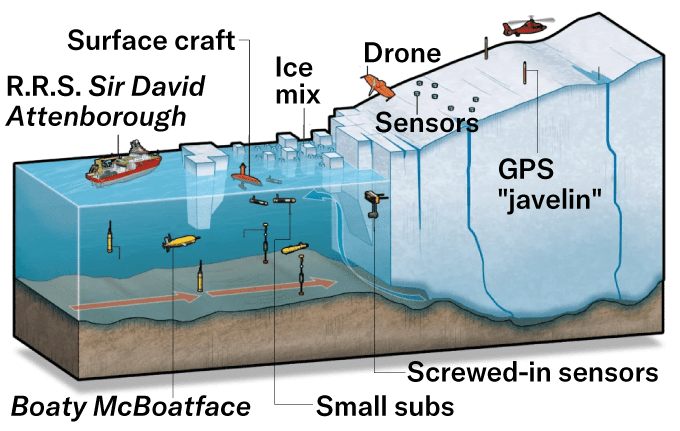
Rugged flying drones will be deployed to capture high-resolution imagery and data from above the ice, offering a more detailed perspective than satellite observations. These drones are engineered to withstand challenging weather conditions and maintain operation even when ground access becomes unstable.
To monitor surface changes on glaciers, the expedition will utilize small sensors deployed via helicopter. These sensors, essentially GPS devices encased in a javelin-like structure, will embed into the ice. Their antennas will remain above the surface, transmitting data on ice movement and melt rates as the glacier dynamically changes.
A specialized robotic boat, designed to navigate the hazardous ice-strewn waters, will employ sonar to continuously track melt-rate variations at the glacier face. This data will be augmented by two types of smaller seafaring robots, approximately one to five meters in length. These submersibles will dive to depths of hundreds of meters to map submerged glacial melt processes.
The iconic Boaty McBoatface submersible will undertake crucial missions beneath semi-melted ice, mapping its geometry and its influence on glacial behavior. In addition, a uniquely designed underwater vehicle, only 23 centimeters in diameter, will be deployed through boreholes drilled into the ice. This slim vehicle will navigate the sub-ice environment to observe conditions and melting plumes directly beneath floating ice shelves.
Further enhancing the mission’s observational capabilities, one of the tiny subs will carry specialized sensors designed to screw into the ice cliff at depths of 50 to 100 meters below sea level. These instruments will provide real-time measurements of temperature, turbulence, and melt rates. Crucially, they will periodically adjust their depth to maintain contact with the receding ice face, allowing for detailed study of how phenomena like air bubbles influence heat transfer between the warming ocean and the melting ice.
The strategic deployment of these sophisticated instruments will be guided by artificial intelligence algorithms. AI will fuse existing data to create detailed maps of variables such as temperature and snowfall, identifying areas of high uncertainty. "Uncertainty in these maps helps us to find our blind spots," explained Nash.
The ultimate goal of the GIANT mission is to generate more accurate and comprehensive data. This will enable the development of climate models that can predict, with greater confidence, the mechanisms and timing of ice melt. As Nash concluded, "This could drive the decision-relevant predictions that societies navigating a rising ocean will urgently need." While the fictional villains James Bond confronts are the stuff of fantasy, the specter of climate change is a stark and urgent reality that this pioneering expedition aims to better understand and mitigate.