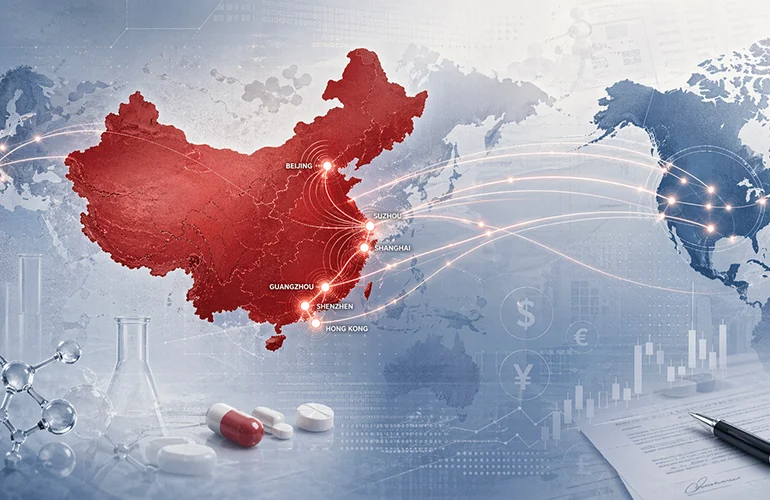
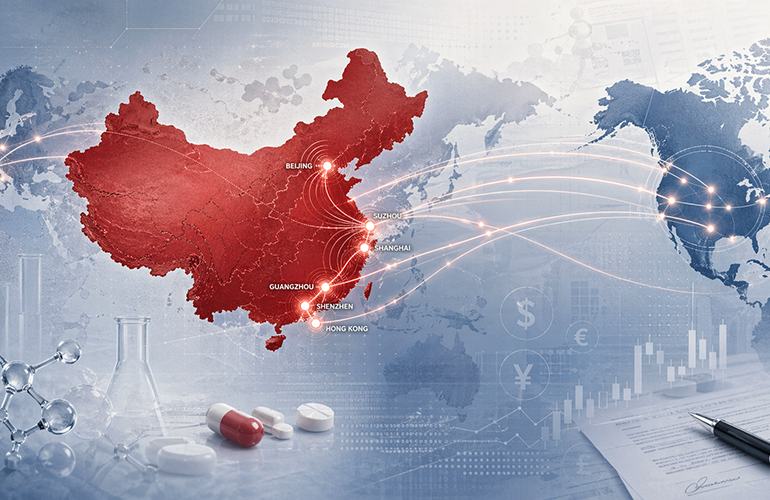
Over the past 16 months, Chinese-domiciled biopharmaceutical companies have emerged as significant players in the global drug development landscape, participating in a remarkable six out of 26 major licensing and acquisition deals. These transactions collectively represent an astounding nearly one-third of the total headline value of these 26 deals, underscoring China’s rapidly ascending influence in an industry traditionally dominated by Western giants. The aggregated value of these six deals alone reached approximately $53 billion, signaling a profound shift in global biopharma innovation and collaboration dynamics.
The landscape of these pivotal partnerships reveals a diverse web of collaborations. Roughly half of the deals involving Chinese biotechs featured firms of U.S. origin, primarily structured as mergers and acquisitions (M&A). Concurrently, just under 30% were pure licensing agreements with Chinese-headquartered companies, while the remaining portion comprised mixed deals involving European firms, illustrating the broad international appeal of Chinese innovation. This surge is not merely a quantitative increase but signifies a qualitative evolution, as Chinese biotechs transition from being primarily contract research or manufacturing organizations to becoming sources of novel, high-value intellectual property and groundbreaking drug candidates.
A New Era in Biopharma Collaborations: China’s Ascendance
For decades, China’s role in the global pharmaceutical industry was largely characterized by its capacity as a manufacturing powerhouse for active pharmaceutical ingredients (APIs) and generics, alongside its immense domestic market potential for Western-developed drugs. However, this paradigm has undergone a dramatic transformation, particularly in the last five to seven years. A confluence of strategic governmental policies, significant capital investment, a burgeoning talent pool, and a maturing domestic regulatory environment has propelled China into the forefront of biopharmaceutical innovation.
The Chinese government’s strategic focus on fostering an indigenous innovation ecosystem has been a critical catalyst. Initiatives like the "Made in China 2025" plan and the "14th Five-Year Plan for Bioeconomy" have prioritized the biopharmaceutical sector, offering substantial R&D subsidies, tax incentives, and streamlined regulatory pathways for innovative drugs. This top-down support has created fertile ground for the establishment and rapid growth of thousands of biotech startups, many founded by Chinese scientists returning from advanced studies and work experiences abroad. These "sea turtles," as they are often called, bring with them cutting-edge scientific expertise and a deep understanding of global best practices, contributing significantly to the sector’s rapid maturation.
Moreover, the development of major biotech clusters in cities like Shanghai, Suzhou, and Beijing has created vibrant ecosystems, fostering collaboration between academia, industry, and venture capital. These hubs are equipped with world-class research infrastructure and attract substantial private equity and venture capital funding, enabling Chinese biotechs to pursue ambitious drug discovery and development programs. The sheer scale of clinical trial patient recruitment in China also offers a significant advantage, allowing for faster and often more cost-effective clinical development compared to Western counterparts, a point frequently cited by industry analysts.
The Chronology of Strategic Partnerships: A Timeline of Innovation
The robust activity observed over the past 16 months provides a clear timeline of this evolving landscape, with major global pharmaceutical companies increasingly turning to China for pipeline enrichment.
Late 2024: Merck’s Initial Forays
The trend gained significant momentum in December 2024 when U.S.-based pharmaceutical giant Merck inked a crucial deal with Jiangsu Province, China-headquartered Hansoh Pharma. The agreement granted Merck an exclusive global license for Hansoh Pharma’s oral obesity candidate, HS-10535, in a deal valued at up to $2 billion. This transaction underscored the intense global race to develop effective and convenient treatments for obesity, a rapidly growing health crisis worldwide. Hansoh Pharma’s expertise in developing novel small molecules, particularly in metabolic disorders, positioned HS-10535 as a highly attractive asset for Merck’s pipeline.
Early 2025: Expanding Therapeutic Horizons
Merck’s confidence in Chinese innovation was reaffirmed just three months later. In March 2025, the company returned to China, securing another major asset by licensing Hengrui Pharma’s heart drug, HRS-5346. This separate deal was also valued at up to $2 billion. HRS-5346, an investigational oral lipoprotein(a) inhibitor, targets a significant unmet need in cardiovascular disease, a leading cause of mortality globally. These back-to-back deals from a top-tier pharmaceutical company like Merck signaled a strong endorsement of the quality and potential of Chinese-developed drug candidates across diverse therapeutic areas.
Mid-2025: Oncology and AI-Driven Innovation Take Center Stage
The pattern of high-value collaborations continued unabated into the summer of 2025. In July, Pfizer, another U.S. pharmaceutical titan, licensed 3SBio’s cancer candidate SSGJ-707. This agreement included a substantial $1.25 billion upfront payment, with potential milestone payments reaching up to $4.8 billion, complemented by a planned $100 million equity investment. Oncology remains a cornerstone of pharmaceutical R&D, and 3SBio’s innovative approach to cancer therapy captured Pfizer’s strategic interest, offering a promising addition to its robust oncology portfolio.
Just a month prior, in June, British-Swedish multinational AstraZeneca signed an AI-led chronic-disease research pact with Hebei Province, China-based CSPC Pharmaceutical Group. This groundbreaking collaboration was valued at up to $5.3 billion, highlighting the increasing integration of artificial intelligence in accelerating drug discovery and development. The partnership aimed to leverage AI algorithms and vast data sets to identify novel drug targets and optimize lead compounds for a range of chronic conditions, demonstrating a forward-thinking approach to R&D.
Early 2026: Broadening Therapeutic Modalities and Deepening Partnerships
The momentum from 2025 carried strongly into the new year. In January 2026, AbbVie announced a significant licensing agreement for RemeGen’s RC148, a novel bispecific antibody for advanced solid tumors. This deal, valued at up to $5.6 billion, showcased the growing sophistication of Chinese biotechs in developing complex biologic therapies. Bispecific antibodies represent a cutting-edge modality in oncology, designed to target two different antigens simultaneously, offering enhanced therapeutic efficacy.
Weeks later, AstraZeneca further solidified its commitment to Chinese innovation by returning to CSPC Pharmaceutical Group. This second, even larger deal, focused on obesity and weight-related drug candidates, was valued at an impressive up to $18.5 billion, including a substantial $1.2 billion upfront payment. This follow-up collaboration underscored the immense commercial potential seen in the metabolic disease space and AstraZeneca’s deep trust in CSPC’s R&D capabilities, potentially leveraging AI from their previous pact.
Early March 2026 saw French pharmaceutical giant Sanofi license rovadicitinib from Sino Biopharm’s Chia Tai Tianqing unit for up to $1.53 billion. Rovadicitinib, a JAK inhibitor, targets blood cancers and represents another example of Chinese firms developing competitive assets in complex disease areas. By late March, Eli Lilly, yet another U.S. pharma heavyweight, expanded its existing work with Hong Kong-listed, yet Cambridge, Mass.-headquartered, Insilico Medicine. This expanded licensing and research pact, centered on AI-driven drug discovery, was valued at up to $2.75 billion, reinforcing the strategic importance of AI platforms and the hybrid global presence of some Chinese-rooted biotechs.
Underlying Drivers and Supporting Data: A Foundation of Innovation
The sheer volume and value of these deals are underpinned by significant advancements in China’s biopharmaceutical R&D capabilities. According to Citeline’s Pharmaprojects database, a pivotal milestone was reached in 2025: more new drugs made their market debut in China than anywhere else in the world. This marked the first time any country had surpassed the United States on this critical metric, a testament to China’s surging innovation. This achievement reflects not only a robust pipeline but also an increasingly efficient regulatory approval process for innovative medicines within China.
Analysts frequently point to several key drivers for this accelerated progress:
- R&D Productivity: China has rapidly scaled its R&D investment. In 2023, for example, the country’s total R&D expenditure reached over 3.3 trillion yuan (approximately $460 billion), with a significant portion allocated to life sciences. This investment has fueled a massive increase in the number of clinical trials initiated in China, providing crucial data for drug development. The volume of published scientific research in biomedicine from China has also seen exponential growth, indicating a strong foundation in basic science.
- Cost Efficiency: Fangning Zhang, a partner at McKinsey, succinctly captured this advantage, telling Citeline sister publication Scrip that China now “combines next-generation modality leadership and R&D velocity that runs faster and at lower cost than industry norms.” This cost-effectiveness stems from several factors, including lower labor costs for researchers and clinical staff, a large and accessible patient population for trials, and efficient, often vertically integrated, development processes.
- Innovation Quality: The shift from "me-too" (copycat) drugs to "first-in-class" or "best-in-class" assets is a critical indicator of maturity. Chinese biotechs are increasingly developing truly novel compounds and therapeutic modalities, particularly in areas like oncology, autoimmune diseases, metabolic disorders, and gene therapy. This focus on high-quality, differentiated assets makes them attractive partners for global pharmaceutical companies seeking to diversify and strengthen their pipelines.
- Global Market Access: For Chinese biotechs, these licensing deals provide invaluable access to global markets, leveraging the extensive commercialization infrastructure and regulatory expertise of multinational pharmaceutical companies. For Western partners, these collaborations offer access to innovative assets, reduce their internal R&D risks, and open doors to the vast and growing Chinese market.
Industry Reactions and Expert Outlook: Asia as Biopharma’s Epicenter
The industry’s reaction to China’s rise has been overwhelmingly positive, viewing it as a strategic imperative for global drug development. Fangning Zhang’s assertion that Asia is now "biopharma’s emerging epicenter" encapsulates this sentiment. Western pharmaceutical companies recognize that ignoring China’s innovation would mean missing out on significant opportunities for pipeline replenishment and market growth.
From the perspective of multinational corporations (MNCs), these partnerships represent a pragmatic approach to innovation. They allow MNCs to tap into a rapidly evolving ecosystem, acquire promising drug candidates that might not originate from their traditional R&D hubs, and share the substantial risks associated with late-stage clinical development. The upfront payments and potential milestone payments also provide crucial funding for Chinese biotechs, enabling them to further invest in their own R&D programs and expand their global footprint.
For Chinese biotechs, securing deals with global giants like Merck, Pfizer, AstraZeneca, AbbVie, Sanofi, and Eli Lilly is a powerful validation of their scientific capabilities and therapeutic pipelines. These collaborations not only inject capital but also enhance their global credibility, facilitate knowledge transfer, and provide pathways for their innovations to reach patients worldwide. The robust domestic regulatory reforms, particularly those that align with international standards and accelerate approvals for innovative drugs, have also played a crucial role in making China an attractive environment for both local and international biopharma players.
The optimistic outlook is further reinforced by financial analysts. Tom Barsha, head of Asia Pacific M&A at BofA Securities, predicts that the total value of China’s licensing-out deals will double again over the next 18 to 24 months. This forecast suggests that the current surge is not a transient phenomenon but rather the beginning of a sustained trend, with China firmly establishing itself as a consistent source of global biopharmaceutical innovation.
Broader Impact and Future Implications: Reshaping the Global Landscape
The implications of China’s ascendance in biopharmaceutical innovation are far-reaching, fundamentally reshaping the global industry landscape.
Reshaping Global R&D: China’s growing contribution to novel drug development is challenging the long-standing dominance of Western countries. This diversification of innovation sources fosters a more competitive and dynamic global R&D environment, potentially leading to faster development of new treatments for patients worldwide. The emphasis on "next-generation modalities" means that China is not just catching up but is actively contributing to the cutting edge of drug discovery, including cell and gene therapies, bispecific antibodies, and AI-driven drug design.
Economic Impact and Investment Trends: The significant financial value associated with these deals translates into substantial economic benefits for China, bolstering its innovation economy and attracting further domestic and international investment into its biotech sector. This sustained capital inflow is expected to fuel continued growth, talent acquisition, and infrastructure development, creating a virtuous cycle of innovation. Private equity and venture capital firms are increasingly looking to China for high-growth biotech opportunities, recognizing the potential for substantial returns.
Geopolitical Nuances: While the primary drivers are scientific and economic, the increasing biopharma collaboration between China and Western nations also navigates a complex geopolitical landscape. Despite broader trade and political tensions, the imperative for global health innovation often transcends national boundaries. The shared goal of developing life-saving and life-improving medicines creates a powerful incentive for collaboration, demonstrating that scientific and commercial interests can foster critical connections even amidst broader geopolitical shifts. However, intellectual property protection and data security will remain key considerations in these cross-border partnerships.
Challenges and Opportunities: While the trajectory is overwhelmingly positive, the path forward is not without potential challenges. Ensuring robust intellectual property protection, navigating diverse global regulatory requirements, and managing potential supply chain vulnerabilities will be ongoing considerations for both Chinese and Western partners. However, the opportunities presented by a rapidly innovating Chinese biopharma sector, combined with its vast market and patient population, far outweigh these challenges.
In conclusion, the past 16 months serve as a clear inflection point, solidifying China’s position as a critical hub for biopharmaceutical innovation. The substantial value and increasing frequency of major deals between Chinese biotechs and global pharmaceutical giants underscore a fundamental rebalancing of the industry. As China continues to invest in R&D, cultivate talent, and refine its regulatory framework, its role as a key driver of global drug discovery and development is poised for continued expansion, promising a future where innovative medicines emerge from an increasingly diverse and collaborative global ecosystem.