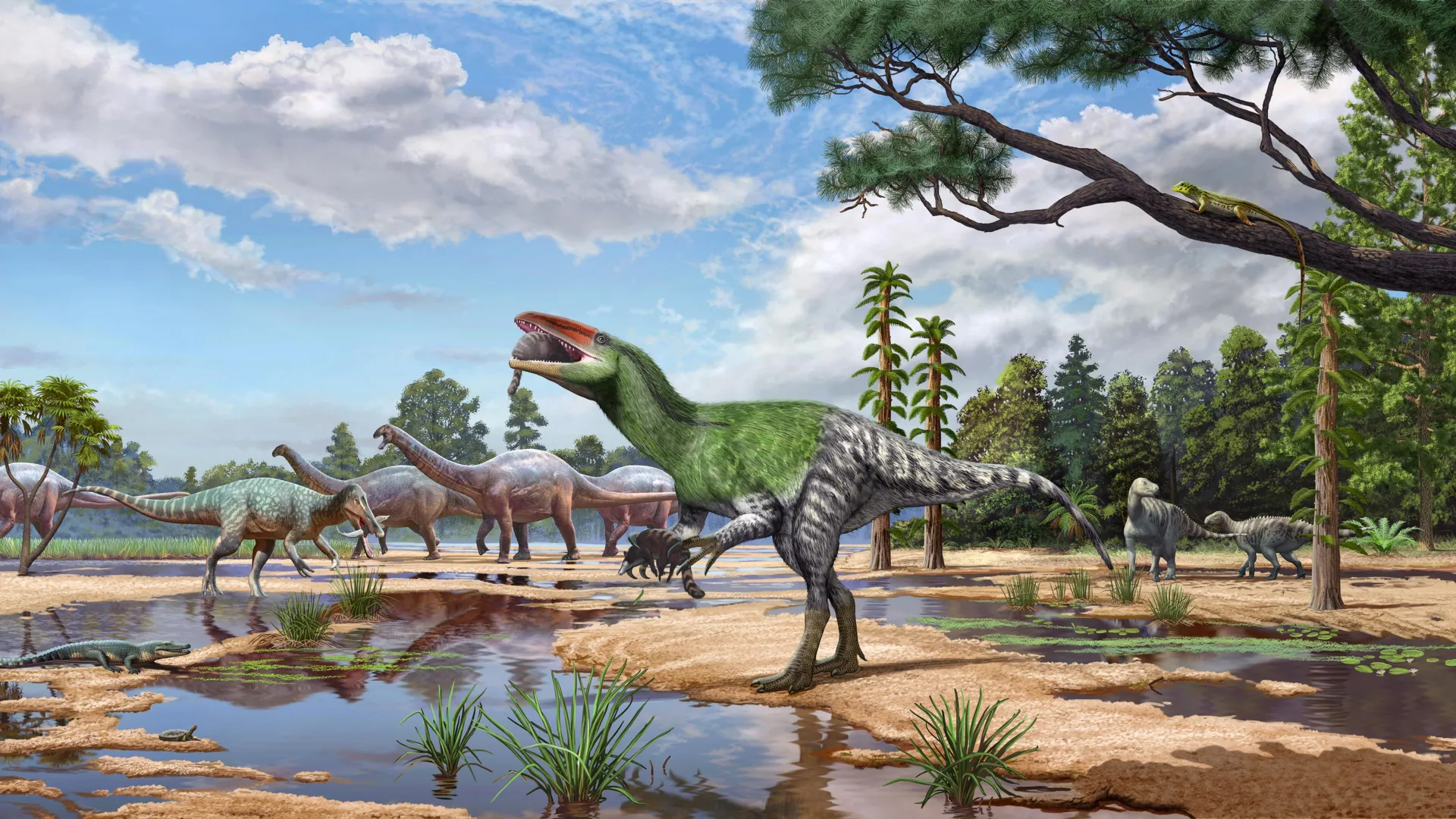
On the remote Indonesian island of Flores, a fascinating chapter in human evolution unfolded with the existence of Homo floresiensis, commonly dubbed "hobbits" due to their diminutive stature. For years, scientific understanding painted a picture of these ancient hominids as resourceful inhabitants, capable of hunting large prey and controlling fire. However, a groundbreaking new analysis of fossil evidence challenges these long-held assumptions, suggesting a more nuanced and perhaps less dominant role for Homo floresiensis in their island ecosystem. The findings, which examine the gnawed remains of megafauna found alongside hobbit fossils, indicate that these small hominids were likely scavengers rather than apex predators, and evidence for their use of fire remains elusive.
The Enigma of Homo floresiensis
The discovery of Homo floresiensis in the Liang Bua cave on Flores in 2003 sent ripples through the paleoanthropological community. Standing only about three and a half feet tall, with brains comparable in size to a chimpanzee’s, these hominids presented a stark contrast to other known human relatives. Their existence, dated to as recently as 50,000 years ago, raised profound questions about human diversity, island biogeography, and the evolutionary pressures that could lead to such extreme dwarfing.
Initial interpretations of the archaeological evidence from Liang Bua suggested that Homo floresiensis was a sophisticated tool-user and hunter. Stone tools were found in association with their skeletal remains, and the butchery marks on the bones of Stegodon (an extinct elephant-like creature) and giant marabou storks led many researchers to believe that the hobbits actively preyed upon these larger animals. The presence of burned bone fragments also fueled speculation about their mastery of fire, a hallmark of advanced hominin behavior.
Re-evaluating the Evidence: A New Perspective on Scavenging
The latest research, published in the journal Scientific Reports, meticulously re-examined the cut marks and fracture patterns on the bones of Stegodon florensis, found in layers dated between 60,000 and 50,000 years ago. The team, led by Dr. Thomas Higham from the University of Oxford, employed advanced imaging techniques, including microscopy, to distinguish between marks left by stone tools and those made by carnivore teeth.
The study’s most significant finding is the prevalence of tooth marks from Komodo dragons, the world’s largest living lizards, on the Stegodon bones. These marks, often described as deep gouges and punctures, are consistent with the feeding behavior of these formidable reptiles. Crucially, the researchers observed that many of these reptilian tooth marks preceded the cut marks attributed to stone tools. This suggests a distinct order of events: the Komodo dragons would have consumed the initial flesh from the carcasses, leaving their distinctive marks, and Homo floresiensis would have subsequently scavenged the remains.
"We found that the Komodo dragon tooth marks are on the bones in a way that indicates they were there first," explained Dr. Higham in a statement. "Then, the cut marks from the stone tools are found on the bones in between the tooth marks. This means the hobbits were not able to get to the carcasses first."
This observation directly contradicts the long-held hypothesis that Homo floresiensis were active hunters of Stegodon. Instead, the evidence points towards a scenario where the diminutive hominids were opportunists, relying on the leftovers of larger predators. This behavior, while still demonstrating a degree of intelligence and resourcefulness, places them in a different ecological niche than previously understood.
The Elusive Evidence of Fire Use
Furthermore, the new analysis casts doubt on the evidence for Homo floresiensis‘s use of fire. While burned bone fragments were initially interpreted as signs of controlled fire, the researchers argue that these could have resulted from natural fires, such as lightning strikes, which are common in tropical environments. The limited evidence for controlled burning, such as hearths or heat-altered sediments, has always been a point of contention, and this new study reinforces the skepticism.
"There is no direct evidence for the use of fire by Homo floresiensis," stated Dr. Kinez R. D. Setiawan, a co-author of the study from the Indonesian Institute of Sciences. "The burned bones could have been produced by natural fires, which are common on Flores. We need to be very cautious when interpreting burned bones in the archaeological record."
The absence of clear evidence for fire use has significant implications. Fire was a transformative technology for early humans, enabling cooking, warmth, protection from predators, and social cohesion. If Homo floresiensis did not master fire, it suggests a less advanced technological and behavioral repertoire than previously assumed, placing them on a different evolutionary trajectory compared to other hominin species of their time.
Chronology of Life on Flores
To understand the context of these findings, it is helpful to consider a broader timeline:
- Millions of years ago: The island of Flores, like many Indonesian islands, was formed by volcanic activity. Its isolation from the mainland shaped the evolution of its fauna.
- Early hominin migrations: While the exact timing of hominin arrival on Flores is debated, evidence suggests early human ancestors may have reached the island through natural sea crossings, possibly during periods of lower sea levels.
- Emergence of Homo floresiensis: The unique characteristics of Homo floresiensis are believed to have emerged through a process of insular dwarfism, where species isolated on islands evolve reduced body size, potentially due to limited resources and predator pressure. This process could have occurred over hundreds of thousands of years.
- Coexistence with megafauna: During the time Homo floresiensis inhabited Flores, the island was home to a diverse array of large animals, including Stegodon, giant tortoises, and large birds. Komodo dragons also populated the island, playing a significant role in the ecosystem.
- ~100,000 to 50,000 years ago: The period of most intense archaeological evidence for Homo floresiensis activity, including the stone tools and faunal remains from Liang Bua. This is the timeframe most critically re-examined by the new study.
- ~50,000 years ago: The end of the occupation of Liang Bua by Homo floresiensis, according to the latest dating of the fossil and archaeological layers. The reasons for their extinction remain a subject of ongoing research.
- Present Day: Flores remains a unique island ecosystem, home to the Komodo dragon and a testament to the extraordinary evolutionary experiments that can occur in isolation.
Supporting Data and Methodological Rigor
The scientific rigor behind this re-evaluation is crucial. The research team utilized several key methodologies:
- Microscopic Analysis of Bone Surfaces: High-resolution microscopy allowed for the detailed examination of marks on the Stegodon bones. This enabled researchers to differentiate between the smooth, parabolic striations characteristic of carnivore teeth and the sharper, more angular striations produced by stone tools.
- Comparative Anatomy of Tooth and Tool Marks: Extensive comparative studies of known Komodo dragon bite marks and marks left by early hominin stone tools were used as a benchmark. The fossilized marks were then matched to these established patterns.
- Stratigraphic Analysis: The careful excavation and dating of the archaeological layers within Liang Bua cave provided crucial temporal context for the observed marks. Understanding which marks were deposited first within the sediment layers was vital for establishing the sequence of events.
- Taphonomic Interpretation: The study’s authors applied principles of taphonomy, the study of the processes that affect organic remains after death, to reconstruct the depositional history of the Stegodon bones and understand how they were processed by both predators and scavengers.
Reactions and Implications
The findings have been met with considerable interest and some debate within the scientific community. Dr. Eleanor S. Smith, a paleoanthropologist not involved in the study, commented, "This research forces us to reconsider our narrative of Homo floresiensis. It highlights the importance of meticulous taphonomic analysis and the potential for misinterpretation of archaeological evidence, especially in complex island environments. It doesn’t diminish their significance, but it reframes their role in the ecosystem."
The implications of this study are far-reaching:
- Rethinking Hominin Behavior: The findings suggest that scavenging may have been a more prevalent survival strategy for early hominins than previously acknowledged, particularly in environments where larger predators were dominant. This could prompt a re-examination of other hominin sites for evidence of scavenging.
- Island Evolution Dynamics: The study reinforces the understanding of how isolation and predator-prey dynamics can shape the evolution of species, leading to unique adaptations like insular dwarfism and specialized feeding strategies.
- The Definition of "Advanced" Hominin Behavior: The lack of fire use, if confirmed, challenges the assumption that all hominins living in the Late Pleistocene were developing similar technological and cognitive capacities. It underscores the diversity of evolutionary paths taken by our ancient relatives.
- Future Research Directions: The study’s conclusions will likely spur further investigations into the behavioral ecology of Homo floresiensis, focusing on finding more definitive evidence for or against fire use and exploring other potential food sources and foraging strategies. It may also encourage new excavations and analyses at other sites on Flores and neighboring islands.
While this research provides a compelling new perspective, it is important to note that the study of human evolution is an ongoing process. Future discoveries and analytical techniques may continue to refine our understanding of these fascinating miniature hominids and their place in the grand tapestry of human history. For now, the hobbits of Flores appear to have been more adept at survival through opportunistic scavenging than through the formidable might of the hunt or the transformative power of fire.