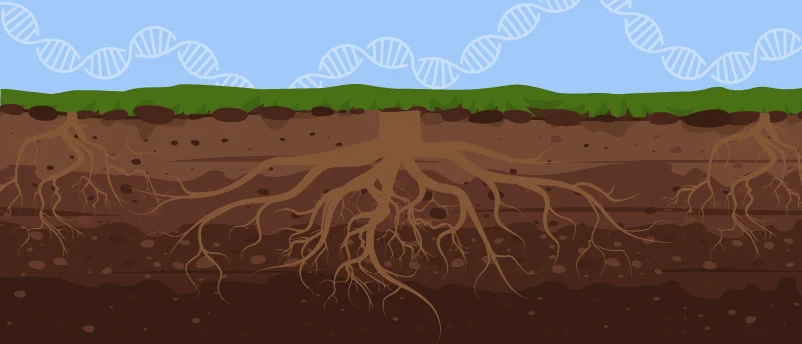
A groundbreaking droplet digital PCR (ddPCR) method, developed by researchers at Aarhus University in Denmark, is poised to revolutionize our understanding of subterranean plant life. Dubbed a "DNA test for soil," this innovative platform quantifies root DNA directly from soil samples, offering unprecedented insights into plant biomass, species profiling, and, crucially, the vital role roots play in global carbon sequestration. This development marks a significant leap forward for plant breeding, climate science, biodiversity research, and sustainable agriculture, providing a non-invasive, precise, and efficient alternative to traditional, laborious methods.
The discovery addresses a long-standing challenge in ecological and agricultural science: the inherent difficulty in studying plant roots, which, despite their critical importance, remain largely hidden beneath the surface. Roots are the anchors of all terrestrial plant life, responsible for absorbing water and nutrients, stabilizing soil, and forming intricate symbiotic relationships with microorganisms. Beyond these fundamental roles, roots are also a major conduit for carbon sequestration, drawing atmospheric carbon dioxide into plant biomass and subsequently transferring it into the soil, where it can be stored for centuries. This process is becoming increasingly vital in the global effort to mitigate climate change.
Globally, soil organic carbon represents the largest terrestrial carbon pool, holding more carbon than the atmosphere and all plant life combined. Estimates suggest that the top meter of soil contains approximately 1,500 to 2,400 gigatons of carbon, dwarfing the roughly 800 gigatons in the atmosphere. Plant roots contribute significantly to this reservoir by releasing organic compounds, shedding cells, and ultimately decomposing, enriching the soil with stable forms of carbon. Understanding the dynamics of root growth, biomass, and species composition is therefore paramount for enhancing natural carbon capture mechanisms and informing climate policies. Furthermore, diverse and robust root systems are essential for maintaining soil health, preventing erosion, and supporting resilient ecosystems, making their study critical for biodiversity conservation and agricultural productivity.
Historically, studying roots has been a cumbersome and destructive endeavor. Traditional methods for root species profiling and biomass quantification typically involve physically excavating plants, painstakingly separating roots from soil, and then cleaning, drying, and weighing them. Techniques like root washing, core sampling, and minirhizotrons (underground cameras) are time-consuming, labor-intensive, and often inaccurate due to the inherent challenges of distinguishing roots from different species, especially in dense, mixed communities. Stable isotope labeling, such as C13 labeling, can track carbon flow but requires specialized equipment, is expensive, and provides an indirect measure of biomass, often necessitating destructive sampling to quantify results. These limitations have severely hindered comprehensive research into root ecology and their full potential in climate solutions.
In recent years, DNA-based techniques have emerged as a promising alternative. Quantitative real-time PCR (qPCR) has been employed to identify species diversity in mixed soil samples by amplifying specific DNA sequences. While an improvement over purely physical methods, qPCR faces its own set of challenges. It can be highly sensitive to PCR inhibitors commonly found in soil, which can lead to underestimation of DNA quantities. Additionally, variations in primer efficiency across different species can compromise the accuracy of relative quantification, making absolute quantification of root biomass difficult. These issues highlighted the need for a more robust and precise DNA-based methodology that could overcome these inherent limitations and provide accurate, absolute quantification of root DNA directly from complex soil matrices.
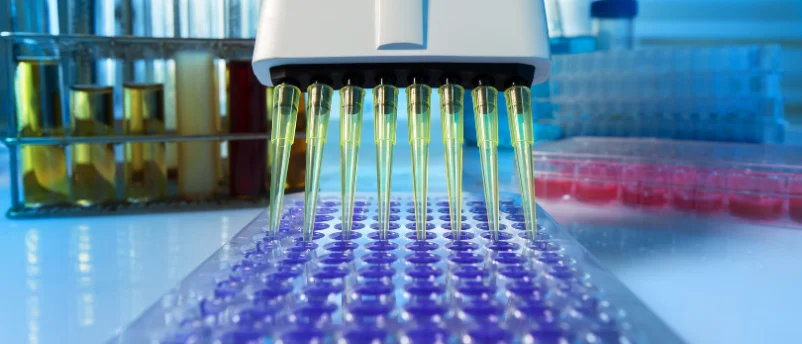
The breakthrough from Aarhus University scientists leverages droplet digital PCR (ddPCR), a third-generation PCR technology known for its superior sensitivity, precision, and ability to provide absolute quantification without the need for a standard curve. Unlike traditional qPCR, which relies on measuring fluorescence intensity as DNA amplification progresses in a single reaction, ddPCR works by partitioning a single sample into tens of thousands of individual, nanoliter-sized oil droplets. Within each droplet, a PCR reaction occurs. If the target DNA sequence is present in a droplet, it amplifies, and the droplet becomes fluorescent; if not, it remains non-fluorescent. After amplification, an automated reader counts the positive (fluorescent) and negative (non-fluorescent) droplets. Using Poisson statistics, the absolute number of target DNA molecules originally present in the sample can be calculated with remarkable accuracy, even in the presence of inhibitors that might affect amplification efficiency in some droplets. This "digital" nature of ddPCR makes it highly robust and less susceptible to the inhibitory effects often encountered in environmental samples like soil.
The specific ddPCR assay developed by the Aarhus team targets the Internal Transcribed Spacer (ITS2) genetic marker, a ubiquitous ribosomal DNA barcode. The ITS2 region is highly variable between different plant species but conserved within a species, making it an ideal target for species identification. The researchers designed universal primers to target this region in grasses, which are a dominant component of many ecosystems and agricultural landscapes. Additionally, modified primers were meticulously designed for legumes and forbs (non-woody flowering plants), expanding the method’s applicability to a wider range of plant communities. The process begins with the extraction of total DNA from soil samples. This extracted DNA is then partitioned into approximately 20,000 nanoliter droplets using a Bio-Rad QX200 Automated Droplet Generator (Bio-Rad, CA, USA). PCR amplification is subsequently performed in a Bio-Rad C1000 Touch Thermal Cycler, following a precise protocol: an initial 10-minute denaturation step at 95 °C, followed by 39 cycles, each consisting of 30 seconds of denaturation at 94 °C, annealing for 1 minute at 55 °C, and extension for 30 seconds at 72 °C. This meticulous protocol ensures optimal amplification and subsequent detection.
Following this amplification and droplet analysis, the researchers are able to identify individual plant species present in the soil samples. More importantly, they can accurately estimate the total DNA content for each species, which directly correlates with root biomass. As study author Henrik Brinch-Pedersen eloquently put it, "It’s a bit like giving the soil a DNA test. We can suddenly see the hidden distribution of species and biomass without digging up the whole field." This analogy perfectly encapsulates the transformative nature of the technology, offering a truly non-invasive window into the complex subterranean world.

The advantages of this ddPCR-based strategy over existing methods are manifold and significant. Foremost is its enhanced sensitivity, allowing for the detection and quantification of even trace amounts of root DNA, which is crucial for early detection or for studying sparse populations. Its capacity for absolute quantification of target DNA eliminates the need for calibration curves and external standards, leading to increased accuracy and reliability in biomass estimations. Furthermore, ddPCR’s inherent robustness makes it far less susceptible to the PCR inhibitors frequently found in soil, which often confound qPCR results. Crucially, the method allows for the quantification of roots directly from soil containing a mixture of different species, bypassing the time-consuming and often impossible task of physical separation. This direct quantification from complex samples represents a paradigm shift in root research.
The implications of this innovative approach span across several critical scientific and societal domains. In the realm of climate change mitigation, the ddPCR method offers a powerful new tool for developing "carbon-sequestering crops." By accurately and efficiently quantifying root biomass, plant breeders can accelerate the selection and development of crop varieties with deeper, more extensive, and more resilient root systems capable of storing greater amounts of carbon in the soil. This could transform agriculture into a more potent climate solution, contributing to global efforts to reduce atmospheric CO2. Furthermore, the method provides a robust way to monitor and verify the success of carbon sequestration initiatives, such as regenerative agriculture practices, afforestation projects, and other nature-based solutions. Accurate quantification of root carbon input is essential for establishing baselines, tracking progress, and potentially enabling carbon credit markets based on verifiable soil carbon increases.
For agriculture and food security, the benefits are equally profound. Understanding the precise distribution and biomass of roots allows farmers and agronomists to optimize crop management strategies. For example, knowing where roots are most active can inform precision irrigation and fertilization, reducing water waste and chemical runoff while enhancing nutrient uptake efficiency. This can lead to increased crop yields, improved resource use efficiency, and reduced environmental impact. The method could also aid in developing crops more resilient to drought, pests, and diseases by identifying root systems that are inherently more robust or resistant. Faster and more accurate screening of root traits during plant breeding programs will accelerate the development of future-proof crops.
In biodiversity research and conservation, the ddPCR method provides an unprecedented ability to map and monitor subterranean biodiversity without disturbing delicate ecosystems. Researchers can now gain a deeper understanding of complex plant communities, identify the presence of rare or endangered species through their root DNA, and even detect invasive species at an early stage before they become visually dominant. This non-invasive monitoring capability is invaluable for assessing ecosystem health, guiding restoration efforts, and understanding the intricate below-ground interactions that underpin ecosystem resilience. The ability to quantify different species in mixed samples also opens new avenues for studying competitive dynamics and resource partitioning among plants.
From a soil science perspective, this technology offers a deeper understanding of the rhizosphere – the narrow region of soil directly influenced by root secretions and associated microorganisms. By quantifying root biomass and species composition, scientists can better unravel the complex interactions between plants, soil microbes, and nutrient cycling, ultimately leading to a more holistic understanding of soil health and fertility. This information can be critical for developing sustainable land management practices that enhance soil structure, water retention, and nutrient availability.
Researchers involved in the project, like Henrik Brinch-Pedersen, express immense optimism about the future applications. "We see great potential in using this method to develop varieties that store more carbon in the soil. It could become an important tool in future agriculture," he stated. This sentiment is likely to be echoed by climate scientists, who recognize the urgent need for accurate and scalable methods to measure and verify carbon sequestration in natural systems. Agricultural experts are expected to welcome a tool that can accelerate crop improvement and enhance sustainable farming practices. Conservationists will find it invaluable for non-invasive ecological monitoring and restoration assessment.
Looking ahead, the Aarhus University team plans to broaden the scope of their "DNA test for soil." Their immediate next steps involve expanding their primer-probe sets to include a wider array of additional plant species. The long-term vision is to develop a comprehensive molecular toolkit capable of measuring an extensive range of plant species directly from soil samples, effectively creating a detailed "root atlas" for diverse ecosystems. This expansion will make the technology applicable to a broader range of agricultural systems, natural grasslands, forests, and wetlands, further enhancing its impact on global climate, food security, and biodiversity challenges. The potential for commercialization and widespread adoption across research institutions, agricultural industries, and environmental monitoring agencies is significant, positioning this method as a cornerstone technology for the next generation of environmental and agricultural science.
In conclusion, the ddPCR method for quantifying root DNA from soil represents a monumental step forward in our ability to understand and manage the hidden half of terrestrial ecosystems. By providing precise, non-invasive, and efficient insights into plant biomass and species composition, it offers powerful tools for developing climate-resilient agriculture, enhancing carbon sequestration, protecting biodiversity, and fostering sustainable land management practices. This "DNA test for soil" is not merely a scientific advancement; it is a critical enabler for addressing some of the most pressing global challenges of our time.