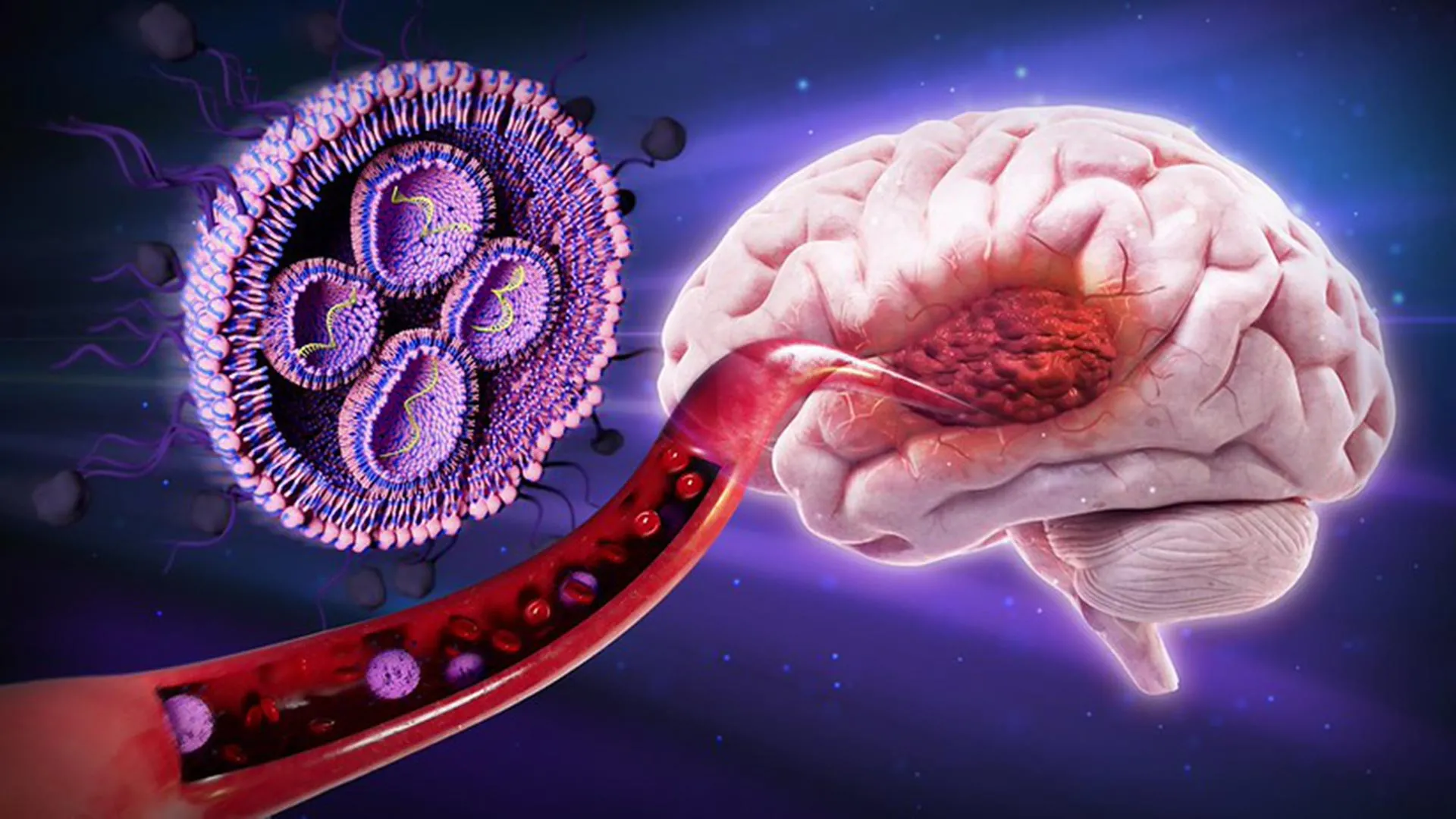
In a significant advancement for neuro-oncology, a research team at the Oregon State University College of Pharmacy has unveiled a novel experimental strategy designed to penetrate the blood-brain barrier and treat glioblastoma, the most aggressive and lethal form of primary brain cancer. This breakthrough, which utilizes sugar-coated lipid nanoparticles to deliver tumor-suppressing genetic material, offers a new glimmer of hope for a patient population that has seen little improvement in long-term survival rates over the last several decades. Currently, glioblastoma remains one of the most difficult-to-treat malignancies, with fewer than 30% of patients surviving for two years following their initial diagnosis and more than 95% of patients succumbing to the disease within five years.
The study, led by principal investigators Oleh Taratula, Olena Taratula, and Yoon Tae Goo, addresses the two primary obstacles that have historically thwarted effective glioblastoma treatment: the formidable physiological defense of the blood-brain barrier (BBB) and the inability of systemic treatments to distinguish between malignant cells and healthy neural tissue. By engineering a delivery vehicle that "tricks" the brain’s natural transport mechanisms, the Oregon State University (OSU) team has demonstrated a method to deliver therapeutic payloads directly into the heart of the tumor, resulting in a 50% increase in median survival time within mouse models.
The Formidable Challenge of the Blood-Brain Barrier
To understand the magnitude of this innovation, one must first consider the biological fortress that is the blood-brain barrier. The BBB is a highly selective semipermeable border of endothelial cells that prevents solutes in the circulating blood from non-selectively crossing into the extracellular fluid of the central nervous system. While this barrier is essential for protecting the brain from pathogens and toxins, it is also the primary reason why more than 98% of small-molecule drugs and nearly 100% of large-molecule therapies fail to reach brain tumors in therapeutic concentrations.
Glioblastoma, which affects approximately 3.19 people per 100,000 in the United States, typically requires a combination of surgical resection, radiation, and chemotherapy. However, because these tumors are highly infiltrative—meaning they send out microscopic "tentacles" into surrounding healthy tissue—surgeons can rarely remove the entire mass. Any remaining cells are often protected by the BBB, rendering standard chemotherapy largely ineffective and leading to near-inevitable recurrence.
The OSU research team recognized that to defeat glioblastoma, they needed a delivery system that could not only bypass this barrier but also home in on the tumor cells once inside the cranial cavity.
Innovation through Biomimicry: The Sugar-Coated "Trojan Horse"
The central innovation of the OSU study, published in the Journal of Controlled Release, involves the use of mannose, a sugar closely related to glucose. Glucose is the primary energy source for the brain, and because the brain has such high metabolic demands, it possesses specialized transporters to pull glucose across the blood-brain barrier. One of the most prominent of these is the glucose transporter 1 (GLUT1).
The researchers discovered that GLUT1 also has an affinity for mannose. By coating lipid nanoparticles (LNPs) with a dense layer of mannose, they created a "Trojan Horse" effect. These nanoparticles, which carry the therapeutic genetic material, are recognized by the GLUT1 transporters on the blood vessel walls and are actively pulled into the brain tissue.
"Blood contains relatively high concentrations of glucose, and that’s what the nanoparticles are competing against for GLUT1’s attention," explained Oleh Taratula. He noted that the team’s breakthrough involved a sophisticated chemical engineering process to ensure the nanoparticles were attractive enough to win this competition. "For the nanoparticles to get it, they need a densely coated sugar surface, and that’s our central innovation. By chemically connecting mannose to cholesterol, a major structural component of the nanoparticles, we improved surface coverage sixfold."
Delivering the Genetic Blueprint: The Role of PTEN mRNA
Once the nanoparticles successfully cross the blood-brain barrier, they face a second challenge: identifying and entering the tumor cells. Glioblastoma cells are notoriously "metabolically reprogrammed," meaning they consume far more energy than normal cells to fuel their rapid division. As a result, glioblastoma cells express GLUT1 at levels approximately three times higher than healthy brain tissue. This disparity allows the mannose-coated nanoparticles to preferentially accumulate within the tumor cells while largely bypassing healthy neurons.
The "payload" inside these nanoparticles is messenger RNA (mRNA) designed to produce a protein called PTEN (Phosphatase and tensin homolog). PTEN is a powerful tumor suppressor that acts as a "brake" on cell division. In many glioblastomas, the gene responsible for producing PTEN is either mutated, deleted, or silenced, allowing the cancer to grow unchecked.
By delivering PTEN mRNA directly into the tumor cells, the researchers essentially provide the cells with a manual on how to stop growing. Unlike traditional gene therapy, which attempts to permanently alter the cell’s DNA, mRNA therapy provides a temporary set of instructions. This is safer and more controlled, as the mRNA eventually breaks down, but not before the cell has produced enough PTEN protein to reinstate growth control.
To ensure the fragile mRNA reached its destination without being destroyed by the body’s immune system or enzymes, the team incorporated a positively charged cholesterol derivative. This derivative creates a secure internal environment for the genetic material, keeping it stable until it is released inside the target cancer cells.
Chronology of Development and Experimental Results
The development of this strategy followed a rigorous multi-year timeline of bioengineering and preclinical testing. The project began with the synthesis of the mannose-cholesterol conjugates and the optimization of the lipid nanoparticle formulation. Following successful in vitro (test tube) studies that confirmed the particles could enter glioblastoma cells and trigger PTEN production, the team moved to in vivo testing.
In the mouse model phase of the research, mice with implanted glioblastoma tumors were treated with the sugar-coated LNPs. The results were stark:
- Survival Rates: The median survival time of the treated mice increased by 50% compared to the control groups.
- Tumor Reduction: Repeated dosing led to measurable tumor shrinkage, a feat rarely achieved with systemic therapies in glioblastoma models.
- Safety Profile: Crucially, the researchers reported no measurable toxicity in major organs such as the liver, kidneys, or spleen. This suggests that the "targeting" mechanism was successful in preventing the nanoparticles from accumulating in healthy tissues where they might cause side effects.
"Restoring PTEN expression in tumor cells reinstates growth control," said Olena Taratula. "Across repeated dosing, tumor shrinkage occurred without any measurable organ toxicity."
Supporting Data and Demographics
The urgency of this research is underscored by the sobering statistics surrounding glioblastoma. According to data from the Central Brain Tumor Registry of the United States (CBTRUS), glioblastoma accounts for 48.3% of all malignant brain tumors. While it can occur at any age, it is most common in older adults, with a median age at diagnosis of 64. The disease is also approximately 1.6 times more common in males than in females.
Despite decades of research into immunotherapy, viral therapy, and new chemotherapeutic agents, the "Gold Standard" of care remains the "Stupp Protocol"—a combination of surgery, radiotherapy, and the drug Temozolomide. Even with this intensive regimen, the average survival time remains approximately 15 to 18 months. The OSU study’s 50% increase in survival in animal models, if translated to humans, could potentially extend life expectancy by several years, a monumental shift in the clinical landscape.
Broader Implications and the Future of mRNA Medicine
The success of this study carries implications far beyond glioblastoma. The use of mRNA as a therapeutic tool gained global recognition during the COVID-19 pandemic, but the OSU research demonstrates that its potential in oncology is equally profound. By changing the "instructions" delivered by the nanoparticles, this platform could theoretically be used to treat other types of brain diseases, such as Alzheimer’s or Parkinson’s, or other cancers that have metastasized to the brain.
Furthermore, the "sugar-coating" technique solves a universal problem in pharmacology: how to deliver drugs to the brain safely and efficiently. By leveraging the GLUT1 transporter, the OSU team has provided a blueprint for a wide range of "neuro-shuttle" delivery systems.
The research was a collaborative effort within the OSU College of Pharmacy, involving Vincent Cataldi, Vladislav Grigoriev, Neera Yadav, Tetiana Korzun, Chao Wang, and Adam Alani. The project received significant federal and international support, including funding from the National Cancer Institute (NCI) of the National Institutes of Health (NIH), the Eunice Kennedy Shriver National Institute of Child Health and Human Development, and the National Research Foundation of Korea.
Conclusion and Next Steps
While the results in mouse models are highly promising, the transition to human clinical trials will require further validation. The next phases of research will likely involve "scaling up" the production of the mannose-coated nanoparticles and conducting toxicology studies in larger animal models to ensure human safety.
If the OSU strategy continues to prove successful, it could represent a paradigm shift in how we treat the most "untreatable" cancers. By combining the precision of genetic medicine with the cleverness of metabolic targeting, the team at Oregon State University is moving closer to a future where a glioblastoma diagnosis is no longer an automatic death sentence. For the thousands of families affected by this disease each year, the "sugar-coated" nanoparticle represents more than just a scientific innovation—it represents a tangible path toward a cure.