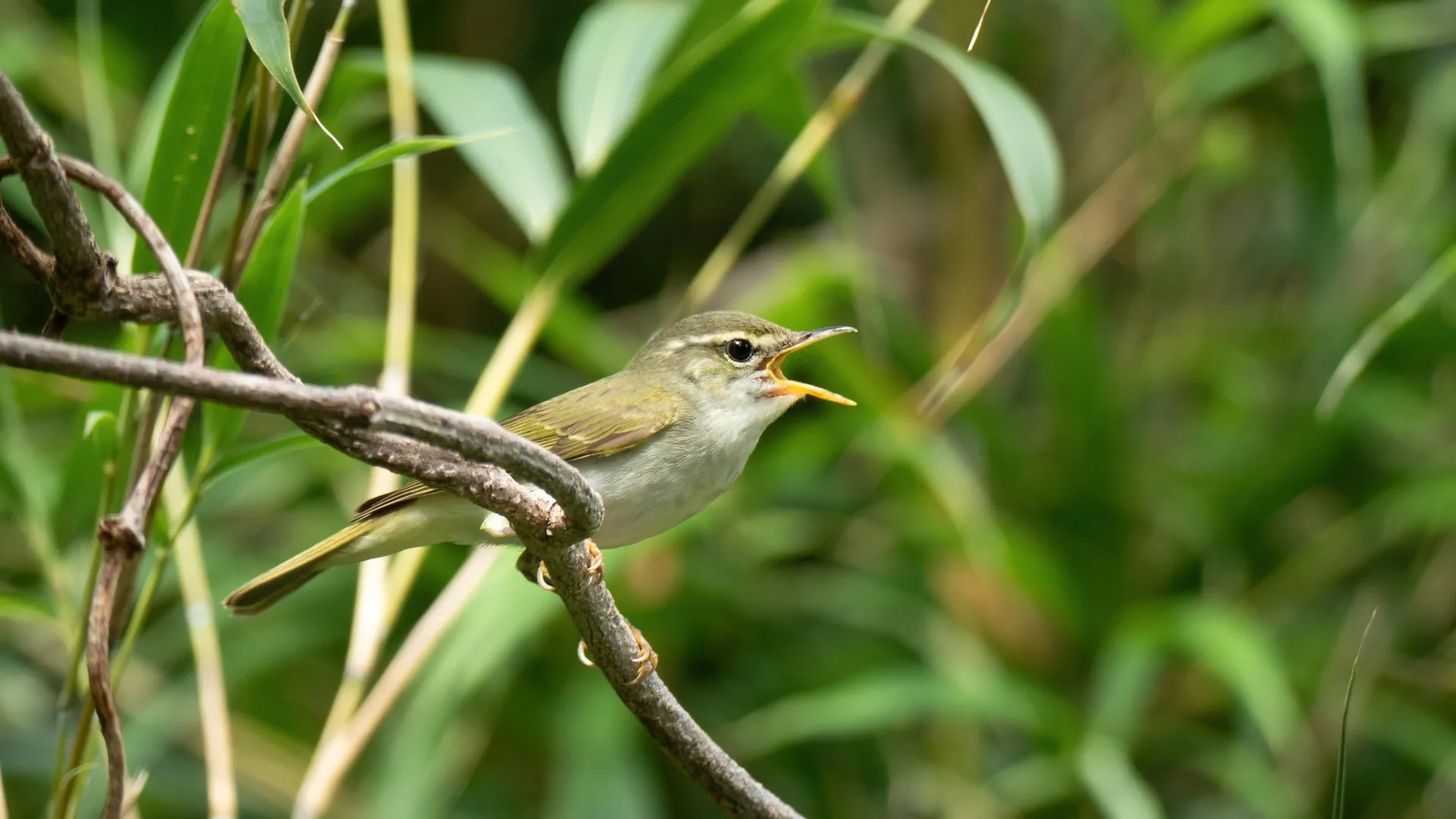
The discovery of a previously unrecognized bird species in Japan, the Tokara Leaf Warbler (Phylloscopus tokaraensis), highlights the crucial role of genetic research in unravelling hidden biodiversity, especially in an era of accelerating global biodiversity loss. This significant finding, announced by an international team of ornithologists and geneticists, bifurcates what was long considered a single species, the Ijima’s Leaf Warbler (Phylloscopus ijimae), into two distinct entities. The implications extend beyond taxonomic revision, raising immediate conservation concerns for these small, island-bound populations and underscoring the power of molecular tools in informing critical conservation strategies.
A Tale of Two Islands, One Bird? The Journey to Discovery
For decades, ornithologists observed the Ijima’s Leaf Warbler, a migratory bird with a limited distribution across two distinct island groups in Japan: the Izu Islands, situated south of Tokyo, and the Tokara Islands, located approximately 1,000 kilometers southwest. While outwardly appearing identical, subtle differences in their songs had long piqued the curiosity of some researchers. However, it was not until approximately a decade ago that robust scientific inquiry began to unravel the truth hidden within their genetic code.
Initial investigations, spurred by observations of vocalization disparities, hinted at deeper biological divergences. This led to a concerted effort involving extensive fieldwork across both island archipelagos, meticulous examination of existing museum specimens – a treasure trove of historical biological data – and, crucially, in-depth genetic analyses. The breakthrough came with the application of advanced genomic sequencing techniques, including whole genome analyses. These powerful tools allowed researchers to compare the complete genetic makeup of birds from the Izu Islands with those from the Tokara Islands.
The results were definitive and striking. The genetic data revealed significant divergence between the two island populations, indicating that they had evolved along separate evolutionary trajectories for a considerable period. This genetic separation, coupled with more detailed comparative analyses of their songs, provided the irrefutable evidence required to classify the Tokara Island population as a distinct species.
This scientific endeavor was a collaborative effort involving researchers from Uppsala University in Sweden, the University of Gothenburg, and two esteemed Japanese institutions. The formal description of the Tokara Leaf Warbler (Phylloscopus tokaraensis) marks the first new bird species described in Japan since 1982, when the Okinawa Rail (Gallirallus okinawae) was identified, underscoring the rarity of such discoveries within the country.
The Cryptic Nature of a New Species
Dr. Per Alström, a lead researcher from Uppsala University and a key figure in this discovery, emphasized the "cryptic and tricky" nature of the new species. "In terms of appearance, it doesn’t differ from the Ijima’s Leaf Warbler," he stated. "It is DNA analyses and differences in song that show that this is a separate species." This underscores a fundamental challenge in biodiversity identification: visual similarity can mask profound genetic and evolutionary distinctions. The reliance on molecular data, therefore, becomes indispensable in cases where morphology alone is insufficient for accurate species delimitation.
The Ijima’s Leaf Warbler, as it was previously known, is a relatively small, migratory bird. Its breeding grounds are confined to the dense forests and scrublands of the Izu Islands, a volcanic archipelago known for its unique ecosystems and endemism. The Tokara Islands, a more remote and rugged chain, also provide habitat for this warbler, though the populations are geographically isolated. This isolation is a key factor that likely facilitated the divergence of the two populations over time.
Supporting Data: Genetic Divergence and Vocal Distinctiveness
The scientific paper detailing this discovery, published in a peer-reviewed ornithological journal, provides a wealth of supporting data. The whole genome analyses revealed a statistically significant number of genetic differences between the Izu and Tokara populations. While specific figures for genetic distance were not detailed in the initial announcement, the researchers stressed that these divergences were substantial enough to warrant species-level separation according to established taxonomic criteria.
Further bolstering the genetic findings were detailed spectrographic analyses of the birds’ songs. While the differences might be subtle to the untrained ear, expert analysis of the frequency, duration, and pattern of the songs revealed distinct characteristics unique to each island population. These vocal differences likely play a crucial role in species recognition and mate selection, further reinforcing their reproductive isolation.
The historical context of this discovery is also noteworthy. The first indications of genetic differentiation likely emerged from earlier, less comprehensive genetic studies or through persistent observations of vocal variations. However, the technological advancements in genomics over the past decade have enabled researchers to undertake the comprehensive analyses that have now solidified this discovery. This progression highlights the accelerating pace of biological discovery driven by technological innovation.
Conservation Imperatives: Vulnerable Islands, Vulnerable Birds
The discovery of the Tokara Leaf Warbler is not merely an academic exercise; it carries significant conservation implications. Both the Ijima’s Leaf Warbler and its newly identified sibling, the Tokara Leaf Warbler, inhabit small island environments. These island ecosystems are inherently fragile and often harbor endemic species with limited geographic ranges and small population sizes.
The Tokara Islands, for instance, comprise a chain of twelve islands with a combined land area of just over 100 square kilometers. This is comparable to the size of some small countries or even smaller geographical regions, such as the island of Fårö off the coast of Gotland in Sweden, which is around 113 square kilometers. Such limited habitats naturally constrain the carrying capacity for any species, leading to smaller overall population numbers.
The research also uncovered that both species exhibit very low genetic diversity. Low genetic diversity can render populations more susceptible to a range of threats, including:
- Environmental Change: Adaptability to new climatic conditions or altered habitats may be reduced.
- Habitat Pressures: Competition for resources or loss of specific habitat features can have a disproportionately large impact.
- Disease: A lack of genetic variation can mean that a single pathogen could devastate a significant portion of the population if they lack diverse immune responses.
Despite these concerns, the researchers noted some positive indications. There are signs that the populations may have experienced some recovery following earlier declines. This suggests that conservation measures, if implemented effectively, could contribute to the long-term viability of these species.
Protecting Two Rare Island Avifauna: Recommendations and Future Outlook
The Ijima’s Leaf Warbler is already recognized for its precarious conservation status. It is classified as "Vulnerable" by the International Union for Conservation of Nature (IUCN) and is afforded protection in Japan as a "Natural Monument," a designation that signifies its cultural and biological importance.
Given the findings of the new research, the scientific consensus is that the Tokara Leaf Warbler is at least as rare as its Izu Island counterpart. Consequently, the researchers strongly recommend that the Tokara Leaf Warbler also be granted "Vulnerable" status by the IUCN. This formal classification will trigger increased attention and potentially dedicated conservation efforts from national and international bodies.
The researchers have also stressed the paramount importance of continued monitoring. Ongoing surveys and population assessments are crucial for:
- Detecting Future Changes: Identifying any further declines or, conversely, evidence of successful recovery.
- Understanding Threats: Monitoring the impact of habitat degradation, climate change, invasive species, and other potential stressors.
- Evaluating Conservation Effectiveness: Assessing whether existing or newly implemented conservation strategies are yielding positive results.
The long-term survival of these two rare island birds hinges on a proactive and informed approach to conservation. The discovery of the Tokara Leaf Warbler serves as a potent reminder that our understanding of Earth’s biodiversity is far from complete, and that even seemingly well-studied species can harbor hidden evolutionary narratives.
Broader Impact: Genomics in Conservation and the Biodiversity Crisis
The discovery of the Tokara Leaf Warbler has far-reaching implications that extend beyond the specific taxonomy of this avian species. It serves as a powerful case study demonstrating the indispensable role of advanced genetic and genomic tools in contemporary conservation science. In an era defined by a global biodiversity crisis, characterized by unprecedented rates of species extinction, the ability to accurately identify and delineate species is more critical than ever.
As Dr. Alström articulated, "This shows how important it is to use genetic methods to reveal hidden biodiversity at a time of global biodiversity crisis. These methods can help provide more complete knowledge on which to base future nature conservation efforts." This statement encapsulates the core argument: our conservation strategies are only as effective as our understanding of what we are trying to conserve. Genetic research provides the granular detail needed to identify distinct evolutionary lineages, understand population structure, and assess genetic health, all of which are foundational to effective conservation planning.
The implications for conservation policy are significant. The ability to identify new species, even those that are morphologically similar to known ones, means that conservation efforts must be tailored to the specific needs and distributions of these distinct entities. This could lead to a re-evaluation of protected areas, the implementation of targeted breeding programs, and the development of specific management plans for each recognized species.
Furthermore, the discovery highlights the potential for numerous other instances of "cryptic" biodiversity – species that have been overlooked due to their visual similarity to more widely recognized counterparts. This underscores the need for continued investment in biodiversity research, particularly in under-surveyed regions and among taxa that are difficult to distinguish visually.
The case of the Tokara Leaf Warbler also emphasizes the interconnectedness of ecological systems. The limited geographic ranges of these birds on isolated islands make them particularly vulnerable to localized threats. This reinforces the importance of conserving entire island ecosystems, which often harbor a unique assemblage of endemic flora and fauna. Protecting these fragile environments requires a holistic approach that considers the complex interactions between species and their habitats.
In conclusion, the identification of the Tokara Leaf Warbler is a triumph of scientific inquiry, demonstrating the power of genomics to unveil the intricate tapestry of life on Earth. It also serves as a stark reminder of the ongoing biodiversity crisis and the urgent need for enhanced conservation efforts. By embracing the insights provided by genetic research, scientists and policymakers can work towards a more comprehensive understanding of biodiversity and implement more effective strategies to safeguard the planet’s precious natural heritage for future generations.