The modern industrial world is built upon a fundamental paradox: the production of materials designed for minutes of use that possess a molecular structure capable of persisting for centuries. This durability, once the primary selling point of synthetic polymers, has evolved into one of the most pressing environmental crises of the 21st century. As traditional recycling programs struggle to keep pace with a global production rate exceeding 400 million tonnes of plastic annually, a team of researchers has proposed a radical shift in material science. By embedding dormant, "living" biological agents directly into the plastic matrix, scientists have developed a new class of materials that can be programmed to self-destruct on command, effectively turning a permanent pollutant into a temporary tool.
In a landmark study published in ACS Applied Polymer Materials, a collaborative team of researchers led by Zhuojun Dai, Jin Geng, and Dianpeng Qi has demonstrated a version of "living plastic" that achieves total decomposition within six days. Unlike conventional biodegradable plastics that often fragment into harmful microplastics, this bio-integrated material reverts entirely to its basic monomer building blocks. The breakthrough represents a significant leap toward a circular economy where the end-of-life protocol for a product is encoded into its physical structure at the moment of manufacture.
The Scientific Framework: Microbes as Programmable Disposers
The concept of living plastics rests on the integration of synthetic chemistry and synthetic biology. While the idea of using microbes to eat plastic is not entirely new—certain bacteria have been found thriving in "plastisphere" environments in the ocean—the challenge has always been the speed and efficiency of the process. Traditionally, environmental degradation relies on external microbes slowly colonizing the surface of a plastic item. The innovation presented by Dai and his colleagues flips this dynamic by placing the "disposal team" inside the material from the start.
To achieve this, the researchers utilized Bacillus subtilis, a robust bacterium commonly found in soil and the human gastrointestinal tract. B. subtilis is particularly well-suited for industrial applications because it can form endospores—dormant, highly resistant structures that can survive extreme heat, radiation, and desiccation. By engineering these bacteria to produce specific polymer-degrading enzymes, the team created a biological "time bomb" that remains inactive during the product’s useful life but can be detonated when the material is no longer needed.
"The realization that traditional plastics persist for centuries, while many applications, like packaging, are short-lived, led us to ask: Could we build degradation directly into the material’s life cycle?" explained Zhuojun Dai, a corresponding author on the paper. By embedding these microbes, Dai noted, plastics could effectively "come alive" and self-destruct on command, turning durability from an environmental liability into a programmable feature.
Breaking the Chain: The Dual-Enzyme Mechanism
A critical hurdle in previous attempts to create self-degrading plastics was the inefficiency of single-enzyme systems. Most enzymes target specific bonds within a polymer chain; if only one type of enzyme is used, the plastic often breaks down into smaller fragments—essentially creating microplastics—rather than fully dissolving.
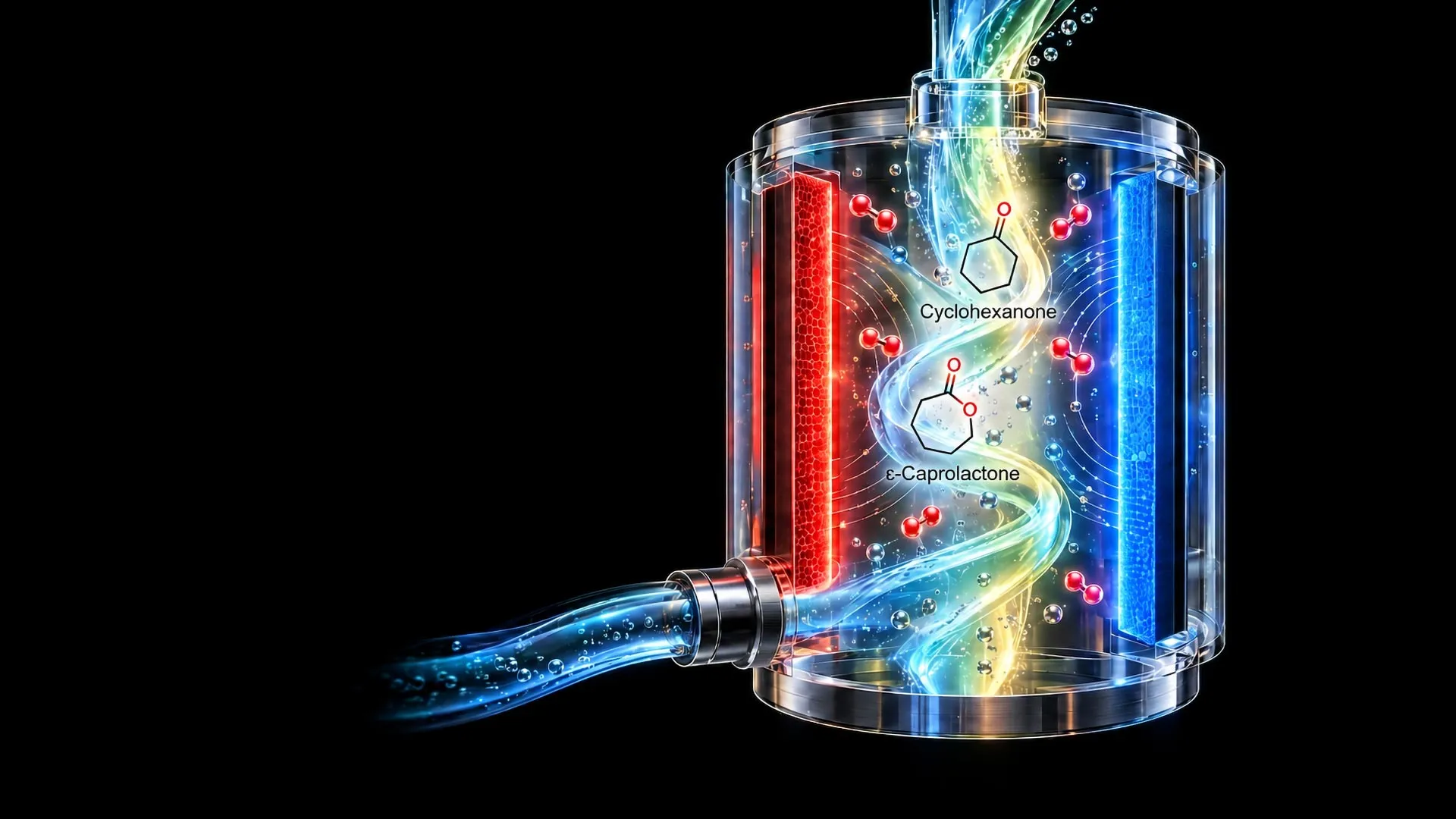
To solve this, the research team engineered B. subtilis to produce a synergistic duo of enzymes. The first enzyme acts as an "endopeptidase," which cuts the long, tangled polymer chains at random internal points. This rapidly reduces the structural integrity of the plastic, turning a solid film into shorter fragments. The second enzyme then acts as an "exopeptidase," systematically nibbling away at the ends of these fragments to release individual monomers.
This sequential process is vital for environmental safety. By ensuring that the material is broken down into its fundamental building blocks, the researchers prevented the formation of microplastics—tiny particles less than five millimeters in size that have been detected in everything from deep-ocean trenches to human blood and lung tissue.
Experimental Results: Six Days to Total Dissolution
The study focused on polycaprolactone (PCL), a biodegradable polyester widely used in 3D printing, medical devices, and surgical sutures. The researchers mixed dormant B. subtilis spores with PCL during the manufacturing process. Despite the presence of biological matter, the resulting "living plastic" maintained mechanical properties—such as tensile strength and flexibility—nearly identical to standard PCL. This suggests that the technology could be integrated into existing manufacturing pipelines without compromising product quality.
The true test of the material came during the activation phase. To "wake" the spores, the team submerged the plastic in a nutrient-rich broth heated to 122 degrees Fahrenheit (50 degrees Celsius). This specific temperature serves as a chemical trigger, signaling the spores to germinate and begin enzyme production.
The results were unprecedented:
- Within 24 to 48 hours: The plastic began to lose its structural form as the internal enzymes started cleaving the polymer chains.
- By Day 4: The material had largely liquefied.
- By Day 6: The plastic had completely disappeared, having been reduced to its constituent monomers.
To demonstrate the practical utility of the material, the team fabricated a wearable plastic electrode. Wearable electronics represent a growing sector of "e-waste," often consisting of complex layers of plastic and metal that are difficult to recycle. The living plastic electrode functioned perfectly as a sensor during its use phase. Once the experiment was concluded and the degradation was triggered, the device fully decomposed within two weeks, leaving behind no plastic residue.
Contextualizing the Crisis: Why This Matters Now
The urgency of this research is underscored by the current state of global plastic management. Since the mass production of plastics began in the 1950s, humans have produced an estimated 8.3 billion metric tons of the material. Approximately 6.3 billion tons of that has become waste, with only 9% being recycled and 12% being incinerated. The remaining 79% sits in landfills or litters the natural environment.
Furthermore, the rise of bioplastics—materials derived from renewable sources like corn starch—has not fully solved the problem. Many bioplastics require industrial composting facilities with specific temperature and moisture controls to degrade. If they end up in the ocean or a standard landfill, they can persist almost as long as petroleum-based plastics. The "living plastic" model offers a solution that carries its own degradation kit, potentially reducing the reliance on specialized external infrastructure.
Analysis of Implications and Future Challenges
While the results of the study are promising, the transition from laboratory success to global industrial standard involves several hurdles.
1. The Trigger Mechanism
Currently, the degradation is triggered by a combination of high temperature (50°C) and a nutrient broth. While this is effective for controlled disposal, the researchers are now looking toward more "natural" triggers. "The team now hopes to develop a method that activates the bacterial spores in water," the study noted. If the spores could be programmed to activate upon prolonged exposure to seawater or soil moisture, it would provide a fail-safe for plastics that accidentally enter the environment.
2. Polymer Versatility
The study utilized PCL, which is already somewhat susceptible to degradation. The greater challenge lies in applying this technology to high-volume plastics like Polyethylene (PE), Polypropylene (PP), and Polyethylene Terephthalate (PET), which make up the vast majority of single-use packaging. These polymers have more stable carbon-carbon bonds that are significantly harder for enzymes to break. However, the researchers believe the general strategy of spore embedding is a platform technology that can be adapted as new enzyme-producing microbes are discovered or engineered.
3. Economic Viability
Integrating biological agents into the plastic manufacturing process will inevitably increase production costs in the short term. However, proponents argue that these costs should be weighed against the "hidden costs" of plastic pollution, which include multi-billion-dollar cleanup efforts, damage to fisheries, and potential long-term healthcare costs associated with microplastic ingestion.
Industry and Regulatory Outlook
The development of living plastics aligns with a shifting regulatory landscape. The United Nations is currently negotiating a legally binding global treaty to end plastic pollution, with many nations pushing for "circularity by design." If living plastics can be scaled, they would provide manufacturers with a way to meet stringent new requirements for "extended producer responsibility."
Environmental advocates have reacted with cautious optimism. While the technology offers a path to zero-waste packaging, some experts warn that it should not be seen as a "silver bullet" that encourages continued over-consumption of single-use items. Instead, they suggest it should be used for essential items that are difficult to recover and recycle, such as agricultural films, food-contaminated packaging, and medical disposables.
Conclusion and Funding
The study, titled "Living Plastics with Programmable Self-Destruction," represents a fusion of disciplines that could redefine our relationship with synthetic materials. By treating plastic not as a dead, inert substance but as a host for biological activity, the researchers have opened a door to a future where waste is an obsolete concept.
The research was supported by a robust network of scientific institutions, acknowledging funding from the National Key Research and Development Program of China, the Shenzhen Medical Research Fund, the National Natural Science Foundation of China, the Guangdong Natural Science Funds for Distinguished Young Scholars, and the Shenzhen Science and Technology Program. As the team moves toward testing the technology in real-world environmental conditions, the focus will remain on ensuring that the "life" inside the plastic remains a controlled, beneficial force for ecological restoration.