Researchers at the Helmholtz-Zentrum Dresden-Rossendorf (HZDR) have initiated a series of groundbreaking trials aimed at neutralizing per- and polyfluoroalkyl substances (PFAS), a category of over 10,000 synthetic chemicals notorious for their environmental persistence and resistance to conventional degradation. Utilizing two distinct yet complementary technologies—hydrodynamic cavitation and cold atmospheric plasma—the research team is seeking to provide a scalable solution to a global contamination crisis that has seen these "forever chemicals" infiltrate water supplies, soil, and human biological systems.
The research, conducted in collaboration with specialists at the Helmholtz Centre for Environmental Research (UFZ), has already yielded promising results. Preliminary analyses confirm that both methods are capable of breaking the formidable carbon-fluorine bonds that characterize PFAS, resulting in the measurable release of fluoride ions—a process known as mineralization. This distinction is critical; while traditional filtration methods like activated carbon or ion exchange merely sequester PFAS for later disposal, the HZDR approach aims for the total chemical destruction of the pollutants at the source.
The Global Challenge of Forever Chemicals
PFAS have been used globally since the 1940s in a staggering array of industrial and consumer products, ranging from non-stick cookware and water-repellent clothing to firefighting foams and semi-conductor manufacturing. Their utility stems from the carbon-fluorine bond, which is among the strongest and most stable in organic chemistry. This same stability, however, ensures that the chemicals do not break down in the environment, leading to their accumulation in the food chain and the human body.
The health implications of long-term PFAS exposure are a subject of intense scientific scrutiny. Research suggests that certain compounds within this family are linked to developmental delays in children, hormonal disruptions, decreased fertility, and an increased risk of several types of cancer, including kidney and testicular cancer. Despite these risks, the sheer variety of PFAS—estimated at over 10,000 distinct compounds—makes comprehensive regulation and remediation a monumental task.
In Germany, the urgency of this research is underscored by recent findings in the Elbe River. High concentrations of PFAS have been detected in the waterway, posing a direct threat to local ecosystems and the long-term safety of drinking water supplies. This environmental pressure has aligned with Germany’s "National Water Strategy," a federal initiative designed to secure water resources against the dual threats of chemical pollution and climate change.
Hydrodynamic Cavitation: Harnessing Micro-Explosions
The first technology under investigation at HZDR is hydrodynamic cavitation, a process led by postdoctoral researcher Dr. Ysabel Huaccallo-Aguilar and overseen by Dr. Sebastian Reinecke, head of the Department of Water and Environmental Technologies. The process involves forcing contaminated water through a specialized constriction at high velocity. As the water passes through this narrow point, the local pressure drops below the vapor pressure, causing the formation of millions of microscopic vapor bubbles.
As these bubbles move downstream into areas of higher pressure, they collapse violently. This collapse, or implosion, generates localized "hot spots" with extreme physical conditions. Temperatures during these collapses can reach several thousand degrees Celsius, and the resulting pressure spikes are immense.
"When the bubbles burst under the rising ambient pressure in the water downstream of the constriction, the PFAS that are attached to the bubbles are exposed to local temperature spikes," explains Dr. Reinecke. Because long-chain PFAS molecules are surface-active—meaning they naturally migrate to the interface between the water and the vapor bubble—they are perfectly positioned to be torn apart by the energy released during the bubble’s collapse.
Furthermore, the cavitation process triggers a secondary chemical reaction: the formation of highly reactive hydroxyl radicals (·OH). these radicals are powerful oxidizing agents that attack the intermediate products created during the initial breakdown of the PFAS molecules. Initial tests focusing on perfluorooctane sulfonate (PFOS)—one of the most persistent and regulated PFAS compounds—showed a degradation rate of approximately 37 percent in tap water, with a corresponding increase in fluoride levels, indicating successful mineralization.
Cold Atmospheric Plasma: A High-Energy Alternative
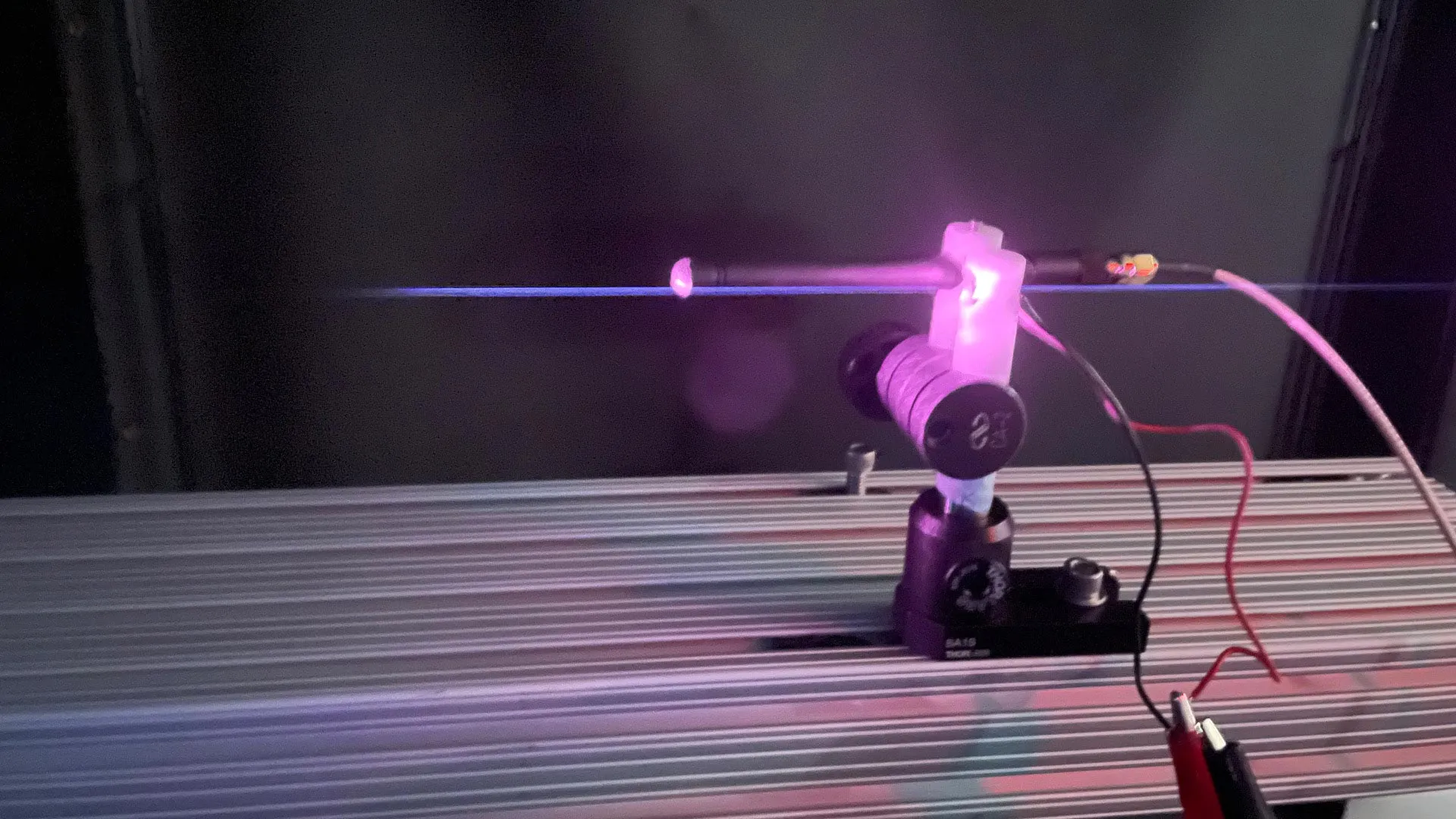
While cavitation relies on physical pressure changes, the second method employs cold atmospheric plasma combined with gas dispersion. Developed by environmental engineer Dr. Amit Kumar, this technique operates under ambient conditions without the need for chemical catalysts.
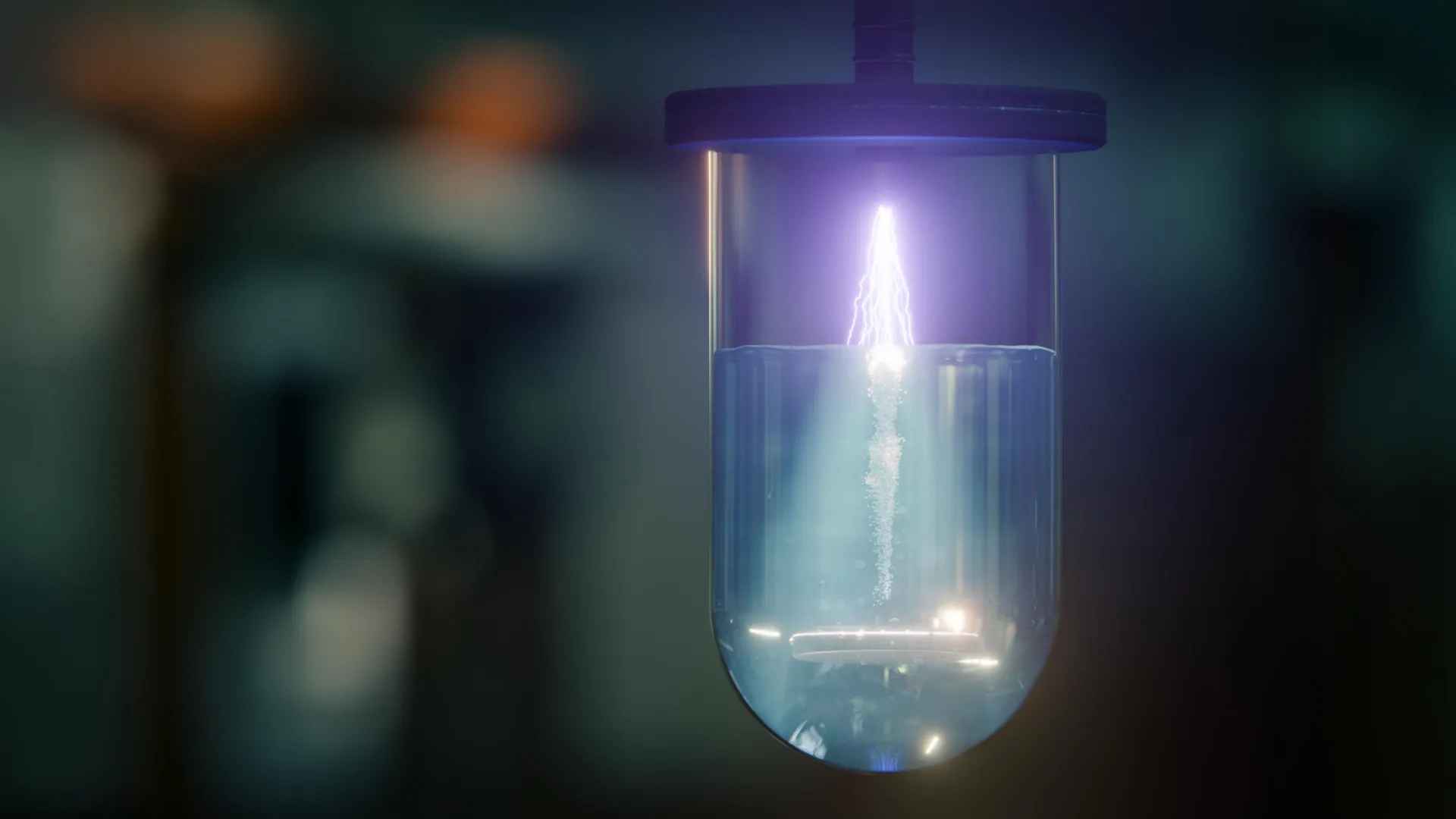
In this setup, plasma is generated at the water’s surface while gas is simultaneously bubbled through the contaminated liquid. The PFAS molecules attach themselves to the rising gas bubbles and are transported to the surface. Once they reach the surface, they are bombarded by the reactive chemical species within the plasma.
The results from the plasma experiments have been remarkably rapid. The process has demonstrated the ability to almost completely degrade both long-chain and short-chain PFAS. Short-chain PFAS are notoriously difficult to remove via traditional filtration, making this a significant breakthrough. In Kumar’s experiments, the plasma treatment released approximately 35 percent of the fluorine atoms, converting them into stable fluoride salts.
However, the speed of the plasma method comes with trade-offs. Dr. Reinecke notes that while the reaction kinetics are significantly faster than those of cavitation, the energy consumption per unit of water treated is substantially higher. Additionally, the plasma process produces a variety of transformation products, including gaseous compounds, which require further investigation to ensure they do not pose secondary health or environmental risks.
Timeline of Development and Future Scaling
The research journey began in earnest in 2022 with the launch of the preliminary cavitation study. Following the successful proof-of-concept for both cavitation and plasma, the team is now moving into a critical phase of optimization and scaling.
The current timeline for the project includes several key milestones:
- 2022–2023: Validation of PFAS degradation in tap water using laboratory-scale cavitation and plasma reactors (50ml capacity).
- 2024: Scaling the plasma system from 50 milliliters to a five-liter capacity using multiple electrodes and advanced gas injectors.
- 2025–2026: Integration of the two technologies into a single hybrid system designed to maximize the degradation rate while minimizing energy costs.
- 2027 and Beyond: Potential transition to industrial pilot programs for treating high-concentration wastewater at point-source locations, such as chemical manufacturing plants or airports.
The researchers have set ambitious targets for the next phase of the project. They aim to increase the PFAS degradation rate to over 80 percent and achieve a mineralization rate of more than 50 percent for the organically bound fluorine.
Comparative Analysis: Efficiency vs. Energy
The dual-track approach at HZDR allows for a nuanced comparison of the two technologies. Hydrodynamic cavitation is viewed as a highly efficient "workhorse" for large volumes of water. Its energy requirements are relatively low, making it an attractive option for pre-treating industrial wastewater before it enters the municipal sewer system. However, its slower reaction speed and lower initial degradation rates mean it may not be sufficient as a standalone solution for highly concentrated or complex PFAS mixtures.
Conversely, cold atmospheric plasma offers a "surgical" level of precision and speed. Its ability to tackle short-chain PFAS—which are increasingly used as "safer" alternatives to long-chain compounds but are proving to be just as persistent—is a major advantage. The challenge for the HZDR team lies in mitigating the energy costs and ensuring that the gaseous byproducts of the plasma reaction are safely captured or neutralized.
The proposed hybrid system aims to leverage the strengths of both. By using cavitation to break down the bulk of the long-chain molecules and plasma to "polish" the water and eliminate the more resistant short-chain fractions and intermediate products, the researchers hope to create a comprehensive treatment cycle.
Implications for Industry and Environmental Policy
The successful commercialization of these technologies would represent a paradigm shift in environmental management. Currently, industries facing PFAS regulations often resort to "pump and treat" methods that create a secondary waste problem: contaminated filter media that must be incinerated at extremely high temperatures or buried in specialized landfills.
If HZDR’s methods can be integrated into industrial infrastructure, companies could treat their wastewater on-site. This "point-source" treatment prevents the chemicals from ever entering the wider environment, significantly reducing the cost and complexity of environmental remediation.
From a policy perspective, this research supports the European Union’s broader goal of a "Zero Pollution" environment. As the EU considers a near-total ban on the production and use of PFAS, the existence of viable destruction technologies will be essential for managing the legacy of these chemicals already in circulation.
Funding and Collaborative Framework
This research is supported by a robust framework of national and international funding. The Helmholtz Association’s Impulse and Networking Fund provides primary support through the Clean Water Technology Lab (CLEWATEC). Additional funding for the specific projects "HyKaPro" and "Plasma4PFAS" is provided by the European Union’s European Regional Development Fund (ERDF) and the Saxon Parliament.
The interdisciplinary nature of the project—combining fluid mechanics, plasma physics, and analytical chemistry—highlights the collaborative model of the Helmholtz Association. By bringing together the engineering expertise of HZDR and the analytical capabilities of the UFZ, the project is uniquely positioned to transition from fundamental laboratory science to practical industrial application.
As the global community grapples with the "forever" legacy of PFAS, the work in Dresden-Rossendorf offers a tangible path forward. By moving beyond sequestration and toward total chemical destruction, HZDR scientists are providing the tools necessary to protect the world’s most vital resource: clean water.