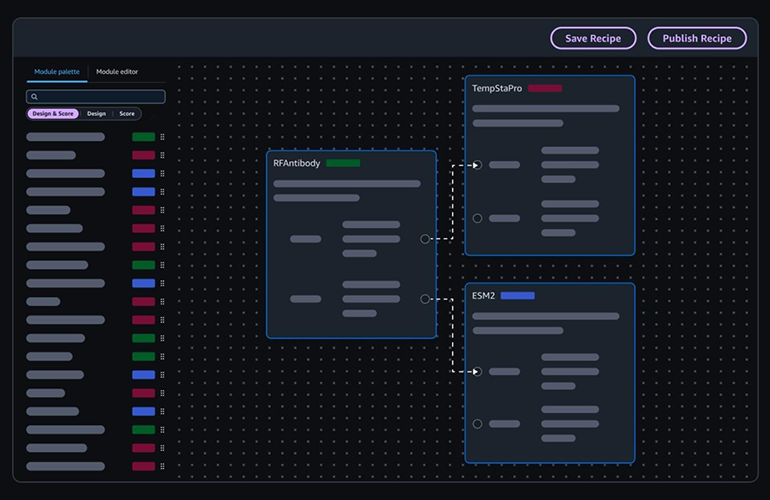
The core of Amazon Bio Discovery lies in its ability to route AI-designed antibody candidates directly to leading DNA Synthesis firm Twist Bioscience and techbio giant Ginkgo Bioworks. This direct pipeline eliminates traditional bottlenecks, allowing for rapid synthesis and rigorous testing of promising candidates. Crucially, the feedback loop ensures that experimental results inform and refine subsequent AI-driven design iterations, creating a highly agile and iterative discovery cycle. This launch underscores AWS’s deepening commitment to transforming the life sciences sector through cloud computing, machine learning, and integrated data solutions.
Transforming Antibody Design: The MSK Case Study
One of the most compelling early success stories highlighted by AWS comes from Memorial Sloan Kettering Cancer Center (MSK). In a collaborative project, researchers, led by Dr. Nai-Kong Cheung, M.D., Ph.D., Enid A. Haupt Chair in Pediatric Oncology at MSK, leveraged Amazon Bio Discovery to dramatically accelerate antibody design. Dr. Cheung’s team utilized the platform to orchestrate multiple advanced biological foundation models (bioFMs), large AI models trained on vast biological datasets, to generate an unprecedented nearly 300,000 novel antibody molecules. From this extensive pool, the top 100,000 candidates were selected and dispatched to Twist Bioscience for rapid synthesis and subsequent testing.
AWS reports that this integrated, AI-powered approach compressed a process that historically could take up to a year into a mere matter of weeks. The profound impact of this acceleration was eloquently captured by Dr. Cheung, who emphasized the urgency inherent in cancer research: "Patients come here with a clock. We need results sooner." This powerful statement resonates with the critical need for speed in developing life-saving therapies, particularly in fields like oncology where timely intervention can dramatically alter patient outcomes. The antibody design project at MSK is a direct outgrowth of a broader strategic collaboration between AWS and MSK, initially announced in February 2025, which aimed to accelerate AI-driven cancer innovation across various research fronts. This prior agreement laid the groundwork for integrating AWS’s cloud capabilities and AI expertise with MSK’s pioneering cancer research.
The Architecture of Acceleration: BioFMs and Natural-Language Agents
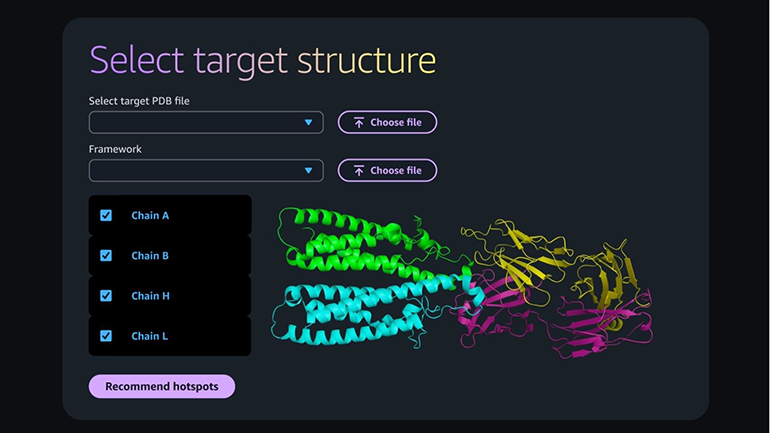
Amazon Bio Discovery’s capabilities are rooted in its sophisticated technological architecture. The application pairs its integrated wet-lab handoff with a comprehensive catalog of biological foundation models (bioFMs). These bioFMs represent a paradigm shift in computational biology. Unlike traditional, narrowly focused AI models, bioFMs are pre-trained on massive and diverse biological datasets, encompassing everything from protein structures and genetic sequences to molecular interactions. This broad training allows them to understand complex biological principles and generate novel molecules with specific desired properties, such as enhanced binding affinity or reduced immunogenicity for antibodies. They can predict molecular behavior, evaluate potential drug candidates, and identify promising avenues for research with unprecedented accuracy and speed.
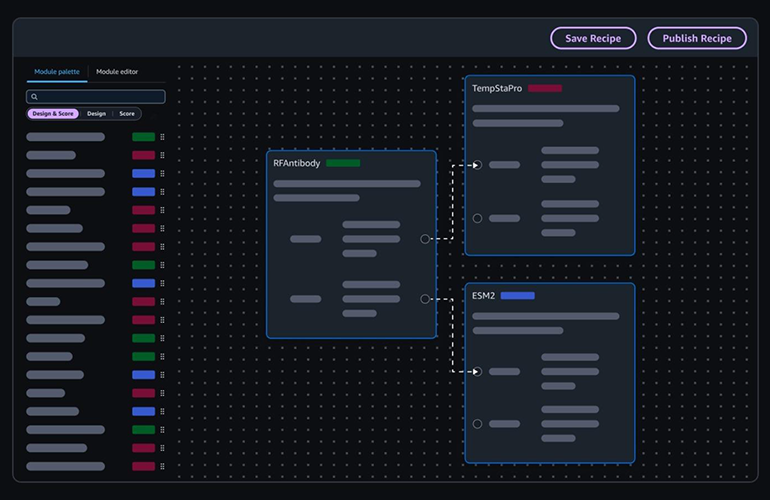
Complementing the bioFMs is a natural-language agent designed for experiment design and fine-tuning on proprietary lab data. This agent acts as an intelligent assistant, allowing researchers to interact with the platform using intuitive language, specifying experimental parameters, desired molecular characteristics, and research goals. The agent then translates these inputs into executable commands for the bioFMs, orchestrates the generation of candidates, and facilitates their submission to the physical lab partners. Furthermore, its ability to fine-tune models using proprietary, real-world lab data ensures that the AI continuously learns and adapts, becoming increasingly precise and relevant to specific research programs. This iterative learning loop between in silico design and in vitro validation is crucial for optimizing drug discovery pipelines.
Broadening Impact: Early Adopters and Strategic Partnerships
The launch of Amazon Bio Discovery is not an isolated event but part of a wider strategic push by AWS into the life sciences. The platform is already gaining traction with several prominent institutions and pharmaceutical companies, including Bayer, the Broad Institute, and Voyager Therapeutics, alongside Memorial Sloan Kettering. These early adopters represent a diverse cross-section of the biomedical ecosystem, from pharmaceutical giants seeking to accelerate drug development to leading academic research institutions pushing the boundaries of scientific discovery. Their participation underscores the broad applicability and perceived value of Amazon Bio Discovery across different research and development contexts.
Beyond Bio Discovery, AWS is also actively engaged in several other high-profile collaborations aimed at leveraging AI and cloud technologies to address critical challenges in healthcare and drug development. In symposium materials shared with media, AWS outlined several key initiatives:
-
AI-Powered Real-World Data Platform for Alzheimer’s Disease: A significant collaboration with Labcorp and Datavant is focused on creating an AI-powered real-world data (RWD) platform specifically for Alzheimer’s disease research. This platform draws from Labcorp’s extensive blood-based biomarker testing data, which the company asserts is the broadest portfolio for Alzheimer’s and dementia. The proprietary lab data serves as the key differentiator, providing rich longitudinal diagnostic records. AWS contributes its Bedrock agents and SageMaker analytics capabilities, while Datavant ensures privacy-preserving data linkage, tying lab results to de-identified medical claims data.
- Addressing Clinical Trial Bottlenecks: Early use cases for this platform center on identifying precise patient cohorts for clinical trial recruitment, a persistent and costly bottleneck in Alzheimer’s drug development. Traditional recruitment methods are often slow, expensive, and yield insufficient numbers of eligible patients. By leveraging AI to analyze vast RWD, researchers can more efficiently pinpoint individuals who meet specific trial criteria, significantly accelerating the pace of clinical research.
- Expansion and Future Vision: The Alzheimer’s version of the platform is expected to complete its initial validation this spring, with ambitious plans for expansion in 2026 into other critical disease areas, including inflammatory diseases, cardiometabolic conditions, women’s health, and oncology. Labcorp, a major player in clinical diagnostics and drug development, highlights its substantial industry footprint, stating it supported over 85% of FDA drug approvals in 2025, positioning this RWD platform as a crucial tool for future pharmaceutical innovation.
-
AI-Enabled Clinical Trial Site Selection: AWS is also collaborating with pharmaceutical giant Merck and management consulting firm BCG on utilizing AI to optimize clinical trial site selection. Identifying the most suitable clinical trial sites is a complex process involving numerous factors, including patient demographics, physician expertise, infrastructure, and regulatory considerations. AI can analyze vast datasets to identify sites with the highest probability of successful patient enrollment and trial execution, thereby reducing trial timelines and costs.
-
Verily Workbench General Availability: Furthermore, AWS announced that Verily Workbench, a comprehensive platform for biomedical research and development from Alphabet’s life sciences organization Verily, is now generally available for AWS users. This integration provides researchers with powerful tools for data analysis, collaboration, and project management within the AWS ecosystem, fostering a more connected and efficient research environment.
The Rise of AI Agents in Drug Discovery: A Competitive Landscape
The emphasis on "agents" within Amazon Bio Discovery reflects a broader trend sweeping through the pharmaceutical and biotechnology industries. AI agents, capable of autonomous task execution, complex problem-solving, and iterative learning, are rapidly becoming the preferred framework for deploying artificial intelligence in drug discovery. This shift is driven by the need to automate intricate processes, integrate disparate data sources, and accelerate decision-making in an increasingly complex R&D landscape.
Several key players are leading this charge, demonstrating the immense potential and the intense competition in this evolving field:
- Isomorphic Labs: A spinout from Google DeepMind, Isomorphic Labs has made significant waves, signing high-value drug-design partnerships with pharmaceutical giants Eli Lilly, Novartis, and Johnson & Johnson. These deals, announced in 2024, have a potential aggregate value exceeding $3 billion, underscoring the industry’s confidence in AI-driven drug discovery. Isomorphic Labs utilizes advanced AI to predict protein structures and model drug-target interactions, accelerating the identification of novel therapeutic candidates.
- Insilico Medicine: This Hong Kong-based company has pioneered its proprietary Pharma.AI platform, which leverages generative AI and deep learning to identify novel targets, generate small molecules, and predict clinical trial outcomes. A notable success is Rentosertib, an anti-fibrotic compound developed on their platform. Rentosertib reached the preclinical candidate stage in an impressive 18 months and subsequently completed a Phase IIa trial for idiopathic pulmonary fibrosis, with promising results published in Nature Medicine in 2025. This rapid progression from in silico discovery to clinical validation serves as a powerful testament to the efficacy of AI-driven approaches.
- NVIDIA’s BioNeMo: Graphics processing unit (GPU) giant NVIDIA, through its healthcare division, is also pitching a similar "co-scientist architecture" via its BioNeMo platform. BioNeMo provides a framework for training, fine-tuning, and deploying large language models for biology and chemistry, enabling researchers to simulate molecular interactions and accelerate drug design using NVIDIA’s powerful computing infrastructure.
- Anthropic’s Strategic Acquisition: In early April, reports emerged that Anthropic, a leading AI safety and research company, acquired Coefficient Bio, an eight-month-old drug design startup, for an estimated $400 million in stock. Coefficient Bio was staffed by former computational biologists from prominent firms like Evozyne, Genentech, and Prescient Design, indicating a strategic move by a general AI powerhouse into the specialized domain of drug discovery. This acquisition highlights the growing convergence of general AI capabilities with specific life science applications.
These examples underscore a fundamental shift in drug development, where AI is no longer merely a supporting tool but an integral, often leading, component of the discovery process. The ability of AI agents to autonomously generate, evaluate, and optimize molecular structures, coupled with seamless integration into experimental workflows, promises to redefine the timelines and costs associated with bringing new medicines to patients.
Implications and Future Outlook
The launch of Amazon Bio Discovery and the broader trend of AI integration into drug discovery carries profound implications for the pharmaceutical industry, healthcare systems, and ultimately, patients worldwide.
- Accelerated R&D and Cost Reduction: The compression of a year-long antibody design process into weeks, as demonstrated by MSK, is not an isolated metric but a harbinger of a future where drug development cycles are dramatically shortened. This acceleration can translate into billions of dollars saved in R&D costs, which typically hover around $2 billion per successful drug, and significantly reduce the time patients wait for life-saving treatments.
- Increased Innovation and Novel Therapies: By enabling the rapid generation and testing of hundreds of thousands of molecular candidates, AI platforms unlock an unprecedented scope for exploration. This vast computational power allows researchers to explore novel chemical spaces and biological pathways that would be impractical or impossible with traditional methods, potentially leading to truly breakthrough therapies for previously untreatable diseases.
- Precision Medicine and Personalized Treatments: The ability to rapidly design and test molecules can pave the way for more personalized medicine. Tailoring therapies to an individual’s unique genetic makeup and disease profile requires the capacity to quickly iterate on drug candidates. Platforms like Amazon Bio Discovery, especially when combined with real-world data insights, bring this vision closer to reality.
- Data Integration and Interoperability: The success of these AI-driven platforms hinges on seamless data flow and integration across in silico models, in vitro experiments, and in vivo clinical data. AWS’s approach, connecting computational design with physical synthesis and testing, addresses a critical challenge in drug discovery: breaking down silos between different stages of research.
- Ethical Considerations and Regulatory Frameworks: As AI plays an increasingly central role, discussions around ethical AI development, data privacy, algorithmic bias, and the need for robust regulatory frameworks will intensify. Ensuring the transparency, explainability, and safety of AI-generated drug candidates will be paramount for widespread adoption and public trust.
- Competitive Landscape and Strategic Investments: The intense competition among tech giants, specialized AI biotechs, and traditional pharmaceutical companies highlights the strategic importance of this domain. Companies that successfully integrate AI into their R&D pipelines stand to gain a significant competitive advantage in the race to develop the next generation of medicines.
In conclusion, Amazon Bio Discovery represents a pivotal step in the ongoing digital transformation of life sciences. By integrating cutting-edge AI, cloud computing, and a seamless connection to wet-lab capabilities, AWS is empowering researchers to overcome long-standing barriers in drug discovery. The demonstrated ability to reduce antibody design timelines from years to weeks, coupled with broader initiatives in real-world data and clinical trial optimization, paints a clear picture of a future where AI-driven innovation accelerates the delivery of much-needed therapies to patients, ultimately redefining the landscape of modern medicine.