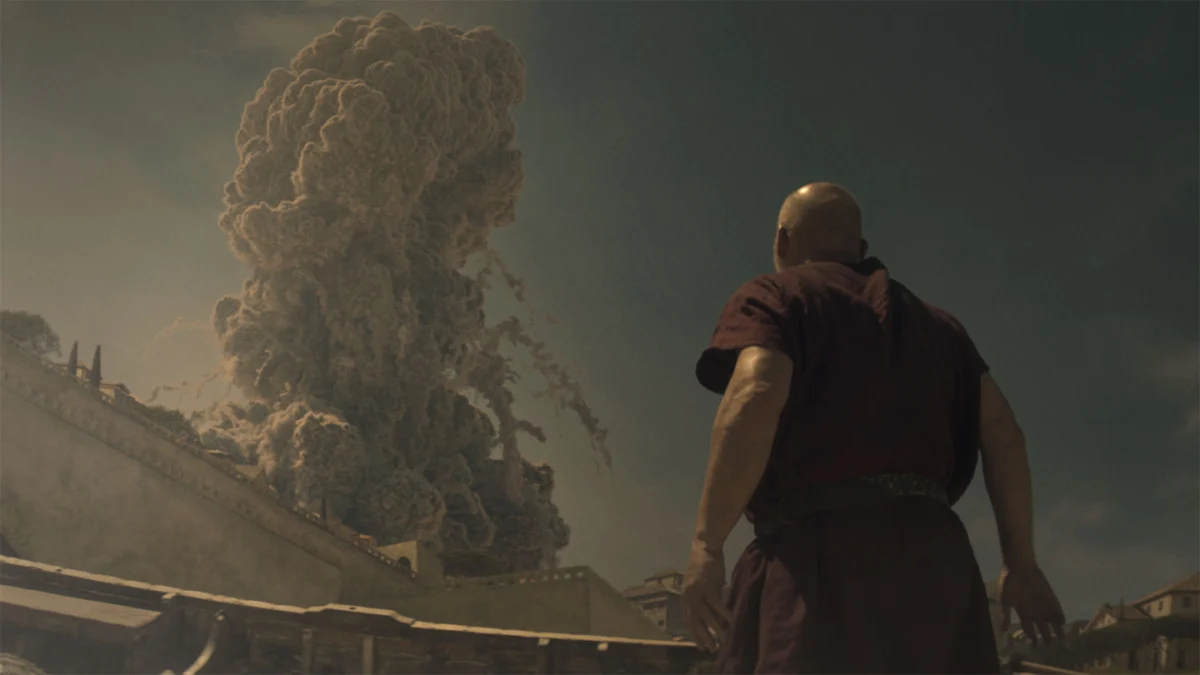
The ancient Roman city of Pompeii, forever etched in history as a catastrophic tomb, is being re-examined through a new lens. While the devastating eruption of Mount Vesuvius in A.D. 79 is renowned for instantly encasing its inhabitants in ash, suspending their final moments in time, a groundbreaking documentary series, Pompeii: Out of Time, offers a compelling narrative of survival. This ambitious project, hosted by actor Tom Hiddleston, ventures beyond the grim finality of the eruption to explore the stories of individuals who navigated the terrifying final hours and, in some cases, escaped the inferno.
Premiering on National Geographic and subsequently on Disney+ and Hulu, the three-part series meticulously reconstructs the last day of Pompeii and its neighboring city, Herculaneum. Through a compelling fusion of rigorous historical and archaeological evidence with informed imaginative reconstruction, the documentary breathes life into three individuals: Avianius, a teenage bronzesmith apprentice; Julia Felix, a prominent bathhouse owner; and an unnamed Praetorian guard. Their documented existence and eventual fates have been pieced together through inscriptions, archaeological finds, and historical records, providing a solid foundation for the series’ narrative.
Hiddleston, whose academic background includes studying Classics at the University of Cambridge, explains the profound connection between history and storytelling, noting that the Latin words for both concepts are identical. This insight underpins the documentary’s innovative approach. "We decided somewhat rebelliously that we wanted to invent a new form of documentary," Hiddleston stated in an interview with Science News. Director and showrunner Tom Barbor-Might further elaborated on this vision, telling Science News, "This is a different way of telling a true story." This philosophy allows the series to move beyond a purely factual recounting and delve into the emotional and psychological realities of a catastrophic event.
A Novel Documentary Approach
Pompeii: Out of Time employs a unique visual and narrative technique. Hiddleston seamlessly transitions between the present-day ruins of Pompeii and meticulously recreated sets in Malta, representing the ancient city in its final hours. The series employs a visual metaphor of "rewinding time" to explore various hypothetical scenarios, allowing viewers to witness potential decisions and reactions of the protagonists. Crucially, the documentary maintains a clear distinction between established historical and archaeological facts and the dramatized elements used to fill narrative gaps. This transparency ensures that while imagination is a key tool, it is always anchored in credible evidence.
The series’ commitment to grounding its narrative in fact is evident in the selection of its protagonists. Each individual’s story is built upon tangible evidence, providing a rich tapestry for imaginative exploration.
Avianius: The Teenage Apprentice’s Ordeal
The first character introduced is Avianius, a young bronzesmith apprentice. His presence in Pompeii shortly before the eruption is confirmed by historical inscriptions. The series portrays him grappling with typical teenage angst, including arguments with his single mother and moments of youthful petulance. These relatable human elements serve to underscore the tragedy of his situation: a scared boy thrust into a nightmarish scenario. The narrative explores his potential reactions to the escalating tremors and the terrifying sights and sounds of the unfolding disaster, highlighting the universal fear and confusion that would have gripped the populace.
Julia Felix: A Woman of Means and Mystery
Next, the series turns its attention to Julia Felix, a woman whose substantial estate was among the earliest houses excavated in Pompeii. Archaeologist Caitie Barrett of Cornell University assists Hiddleston in contextualizing Felix’s story. In Roman society, it was unusual for a woman to be an independent business owner, making Julia Felix a figure of particular historical interest. Archaeological findings at her estate, including the absence of horses, carts, or significant hoards of treasure—save for a single necklace—suggest that her wealthy property was likely evacuated. The documentary poignantly explores the agonizing decisions Felix, her guests, and her employees may have faced: to remain in their increasingly perilous surroundings or attempt an escape as the volcanic threat intensified. The narrative delves into the human dilemma of weighing personal safety against the potential loss of home and livelihood.
The Unnamed Praetorian Guard: A Symbol of Chaos and Courage
The third central figure is an unnamed Praetorian guard, depicted as a seasoned veteran. His story is imagined to involve aiding in the evacuation of Herculaneum, a city that suffered a different but equally devastating fate from Pompeii. The guard’s narrative serves to illustrate the widespread panic that would have characterized the disaster, while also highlighting instances of resilience and leadership. His experiences are used to explore how cooler heads might have prevailed, potentially enabling a greater number of Herculaneum’s residents to flee before the city was engulfed by pyroclastic flows. The series touches on the immense psychological pressure and the difficult choices faced by those in positions of authority or responsibility during such a crisis.
The Eruption of Mount Vesuvius: A Chronology of Destruction
The eruption of Mount Vesuvius was not a singular, instantaneous event but a cataclysm that unfolded over approximately 24 hours, beginning on August 24, A.D. 79 (though recent findings suggest a possible October date). Understanding the timeline is crucial to appreciating the survival narratives presented in the documentary.
- Initial Tremors: Weeks and months prior to the main eruption, the region experienced increasing seismic activity. This served as an ominous precursor, though its true significance was likely not understood by the populace at the time.
- Plinian Phase (First Stage): The eruption began with a powerful explosion that propelled volcanic ash, pumice, and gases high into the atmosphere, forming a towering eruption column that reached tens of kilometers into the sky. This phase would have been characterized by falling ash and pumice stones, causing roof collapses and making visibility extremely difficult. This is the stage where Pompeii was primarily buried under layers of volcanic debris.
- Pyroclastic Flows (Later Stages): As the eruption continued, more devastating pyroclastic flows—superheated, fast-moving avalanches of gas, ash, and rock—began to surge down the slopes of Vesuvius. These flows were the primary cause of death for many inhabitants of Pompeii and were particularly destructive to Herculaneum, which was buried by multiple flows reaching speeds of up to 160 kilometers per hour and temperatures exceeding 500 degrees Celsius. The speed and intensity of these flows offered little to no chance of escape for those caught in their path.
The documentary effectively uses this destructive timeline as a ticking clock, intensifying the urgency and drama of each scene as the protagonists navigate their final day.
Broader Implications and Historical Context
The series’ exploration of plausible scenarios for survival is not merely dramatic license; it reflects a common practice in historical and archaeological research. "I think there’s no way to avoid using some amount of hypothesis testing in the stories we tell about the past," notes archaeologist Caitie Barrett. She commends the documentary for its ability to "use informed reconstruction of people’s biographies as a way to emotionally engage with the past, because these were real people. They did have real lives."
The implications of Pompeii: Out of Time extend beyond entertainment. By humanizing the victims and survivors of this ancient tragedy, the series fosters a deeper connection to history. It reminds us that behind the ruins and the archaeological finds were individuals with hopes, fears, and relationships, much like ourselves. The documentary’s focus on survivors, even with the poignant revelation that not all protagonists make it, shifts the narrative from one of passive victimhood to one of human resilience in the face of unimaginable adversity.
The project also highlights the ongoing evolution of historical documentary filmmaking. The blend of factual reporting with dramatic reenactment, when executed with the transparency and rigor demonstrated here, can offer a more immersive and emotionally resonant understanding of past events. The creators’ deliberate choice to "invent a new form of documentary" challenges traditional formats and opens avenues for more engaging and accessible historical storytelling.
In an era where understanding our past is crucial for navigating the present, Pompeii: Out of Time serves as a powerful reminder of the human stories that lie beneath the surface of historical events. It encourages a more nuanced understanding of ancient life, moving beyond the monolithic image of Pompeii as merely a site of destruction to one that acknowledges the agency, struggles, and resilience of its people. The series ultimately enriches our perception of these ancient Romans, transforming them from historical footnotes into relatable individuals whose experiences, though separated by millennia, continue to resonate with universal human truths.