A groundbreaking discovery on the remote Swedish island of Stora Karlsö is compelling scientists to fundamentally rethink the complex and often misunderstood relationship between early humans and wolves. The identification of wolf remains, meticulously dated between 3,000 and 5,000 years old, on an island devoid of native terrestrial mammals, presents a profound puzzle. The only logical explanation for their presence is human intervention, suggesting a level of interaction with wolves far more sophisticated and nuanced than previously theorized. This revelation, detailed in a recent publication in the prestigious journal Proceedings of the National Academy of Sciences, is the culmination of extensive research by a collaborative team from the Francis Crick Institute, Stockholm University, the University of Aberdeen, and the University of East Anglia. Their findings challenge long-held assumptions about prehistoric human-animal dynamics, hinting at intentional management and even care of wolves by ancient communities, a possibility that was rarely considered in scientific discourse until now.
Unearthing a Prehistoric Enigma on Stora Karlsö
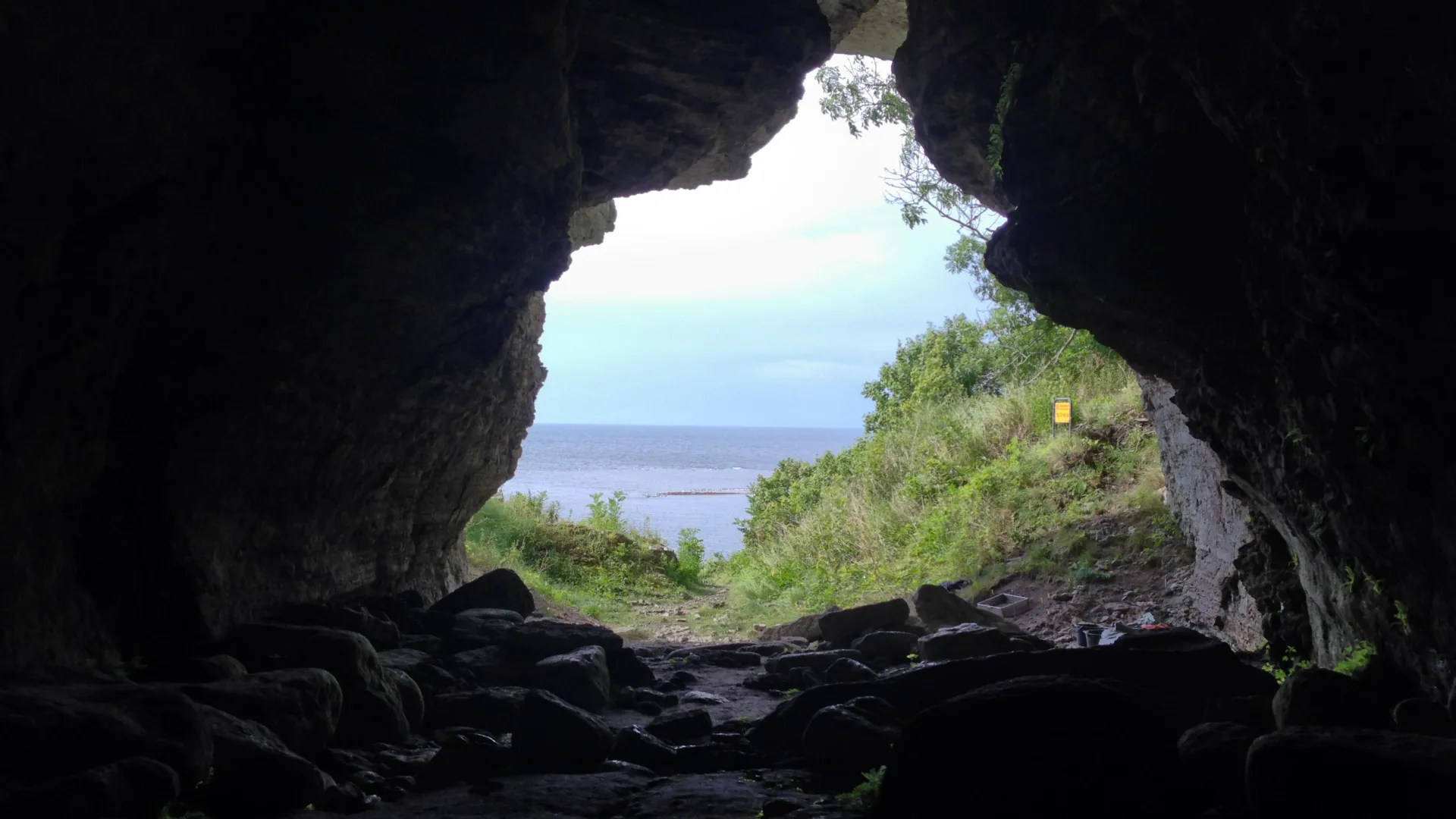
The archaeological site of Stora Färvar cave on Stora Karlsö, a small island covering a mere 2.5 square kilometers in the Baltic Sea, has long been recognized for its significance as a hub for Neolithic and Bronze Age seal hunters and fishers. These periods, spanning thousands of years before the advent of modern civilization, represent crucial transitional phases in human history, marked by the development of stone tools and early metalworking. It was within the sediment layers of this cave that researchers unearthed the skeletal remains of two canids. The isolation of Stora Karlsö, its complete lack of indigenous land mammals, and the inherent limitations of wolves in crossing open stretches of sea, immediately pointed to human agency as the sole means of their arrival. The prevailing scientific consensus suggests that these wolves were almost certainly transported to the island by boat, a testament to the maritime capabilities and perhaps the adventurous spirit of these ancient peoples.
Genetic and Isotopic Evidence: A Glimpse into Ancient Diets and Lifestyles
Initial analysis of the skeletal remains, combined with advanced genetic sequencing, confirmed that both specimens were unequivocally wolves, with no discernible traces of dog ancestry. This finding alone was significant, as it excluded the possibility that these were early domesticated dogs. However, further investigation revealed characteristics that strongly suggested a life lived in close proximity to humans.
Isotope analysis, a powerful scientific tool that deciphers an animal’s diet by examining the chemical signatures in its bones, provided compelling evidence of human involvement. The isotopic profiles of the Stora Karlsö wolves indicated a significant consumption of marine protein, including seals and fish. This dietary pattern closely mirrored that of the human inhabitants of the island, leading researchers to infer that the wolves were likely being provisioned by humans. This suggests a level of dependency and integration into human food systems that goes beyond simple coexistence.
Further genetic examination unveiled additional clues. The wolves were notably smaller than their mainland counterparts, a characteristic that can sometimes be associated with captive or managed populations. More strikingly, one of the wolf specimens exhibited exceptionally low genetic diversity. Genetic diversity is a measure of the range of genetic variations within an individual or a population. Low diversity is often observed in populations that have undergone a significant reduction in size, a phenomenon known as a population bottleneck, or in animals that have been subjected to selective breeding or intense management. While natural factors could contribute to low genetic diversity, its presence in this context, coupled with other evidence, strongly implies human influence.
Dr. Linus Girdland-Flink from the University of Aberdeen, a lead author of the study, expressed his astonishment at the findings. "The discovery of these wolves on a remote island is completely unexpected," he stated. "Not only did they have ancestry indistinguishable from other Eurasian wolves, but they seemed to be living alongside humans, eating their food, and in a place they could have only have reached by boat. This paints a complex picture of the relationship between humans and wolves in the past."
Challenging the Narrative of Domestication
The implications of this discovery are profound, as they directly challenge the prevailing scientific model of wolf domestication. For decades, the prevailing narrative has depicted the transition of wolves into dogs as a gradual process of adaptation to human environments, driven by opportunistic scavenging and eventual mutual benefit. This new evidence, however, suggests a more active and deliberate engagement between humans and wolves.
The wolves on Stora Karlsö do not fit neatly into this traditional evolutionary pathway. While the precise nature of their relationship with humans remains open to interpretation – they may have been tame, kept in enclosures, or managed in other forms of controlled settings – their sustained presence on an inhabited island strongly points towards an intentional and ongoing human-wolf association.
Pontus Skoglund of the Ancient Genomics Laboratory at the Francis Crick Institute and senior author of the study, highlighted the significance of this departure from expectation. "It was a complete surprise to see that it was a wolf and not a dog," he commented. "This is a provocative case that raises the possibility that in certain environments, humans were able to keep wolves in their settlements, and found value in doing so."
Genetic Footprints of Human Influence
The genetic data offers a particularly compelling argument for human intervention. Anders Bergström from the University of East Anglia, a co-lead author, elaborated on the findings regarding genetic diversity. "The genetic data is fascinating," he explained. "We found that the wolf with the most complete genome had low genetic diversity, lower than any other ancient wolf we’ve seen. This is similar to what you see in isolated or bottlenecked populations, or in domesticated organisms. While we can’t rule out that these wolves had low genetic diversity for natural reasons, it suggests that humans were interacting with and managing wolves in ways we hadn’t previously considered."
A population bottleneck, as previously mentioned, is a sharp reduction in the genetic variation of a population. While these can occur naturally due to environmental pressures or random chance, they can also be a direct consequence of human activities, such as selective breeding or the isolation of a small group of individuals for specific purposes. The low genetic diversity observed in the Stora Karlsö wolves, therefore, serves as a strong genetic signature of human management.
A Wolf That May Have Been Cared For
Perhaps one of the most poignant discoveries relates to a Bronze Age wolf that displayed evidence of severe injury to a limb bone. The nature of the damage suggests that this injury would have significantly impaired the animal’s ability to move and hunt effectively. Crucially, the wolf survived long enough for the injury to leave a clear and discernible mark on its skeleton. Researchers interpret this as strong evidence that the animal received some level of care or lived in an environment where it was not reliant on its own hunting prowess for survival. This suggests a compassionate or utilitarian approach to managing these wolves, moving beyond mere containment.
Interdisciplinary Insights: Combining Osteology and Genomics
The success of this research hinges on the powerful synergy between osteology, the scientific study of bones, and advanced genetic analysis. This interdisciplinary approach allowed researchers to glean insights that neither method could have provided in isolation. Osteological examination revealed the physical characteristics and evidence of injury, while genetic analysis unlocked the secrets of ancestry, population dynamics, and dietary habits.
Professor Jan Storå, Professor of Osteoarchaeology at Stockholm University, emphasized the collaborative nature of the study. "The combination of data has revealed new and very unexpected perspectives on Stone Age and Bronze Age human-animal interactions in general and specifically concerning wolves and also dogs," he stated.
Broader Implications: A New Chapter in Human-Animal History
The findings from Stora Karlsö suggest that the historical relationship between humans and wolves was far more diverse and complex than previously understood. Instead of a simple dichotomy of hunting and avoidance, or the singular path of domestication leading to dogs, this discovery points to a spectrum of interactions. Prehistoric communities may have engaged in various forms of long-term relationships with wolves, involving management, provisioning, and possibly even care, without necessarily leading to full domestication.
This research opens a new and fascinating chapter in the history of human-animal relationships, hinting at experimental phases of coexistence and cohabitation that ultimately did not lead to the evolution of modern dogs but represent a distinct and intriguing facet of our shared past. The implications extend beyond our understanding of wolves, prompting a re-examination of human interactions with other wild species in prehistoric times, and suggesting that our ancestors possessed a greater capacity for nuanced relationships with the animal kingdom than we have historically acknowledged. The island of Stora Karlsö, once a silent observer, now stands as a testament to a forgotten era of interspecies engagement, urging us to reconsider the intricate tapestry of our ancestral past.