Scientists have uncovered why some amphibian populations rebound after being devastated by a deadly fungal disease that has wiped out frogs and toads around the world. This groundbreaking research, a collaborative effort spearheaded by University College London (UCL), the Zoological Society of London (ZSL), and Imperial College London, pinpoints the critical role of the timing of an amphibian’s immune development in its ability to survive infection by the chytrid fungus. The findings, published in the prestigious journal Nature Chemical Biology, offer a beacon of hope for conservation efforts and may even pave the way for novel human health applications.
The Global Amphibian Crisis: A Fungal Scourge
For decades, the scientific community and conservationists have been grappling with an unprecedented decline in amphibian populations worldwide. The primary culprit identified is Batrachochytrium dendrobatidis (commonly known as Bd), a devastating fungal pathogen responsible for chytridiomycosis. This insidious disease targets the skin of amphibians, compromising their ability to regulate vital bodily functions such as water, salt, and mineral balance. The impact has been catastrophic, leading to the extinction of numerous species and pushing many more to the brink of collapse.
The life cycle of amphibians plays a significant role in their vulnerability. While tadpoles and larvae, in their aquatic phase, are largely protected from Bd due to their smooth, keratin-poor skin – the fungus’s primary food source – their vulnerability skyrockets upon metamorphosis. As they transform into adult frogs and toads, their skin becomes keratinized, providing the fungus with an ideal environment for proliferation. This transition period is often when mass die-offs occur, as newly adult amphibians are ill-equipped to combat the aggressive fungal infection.
Unraveling the Resilience: A Tale of Two Lakesides
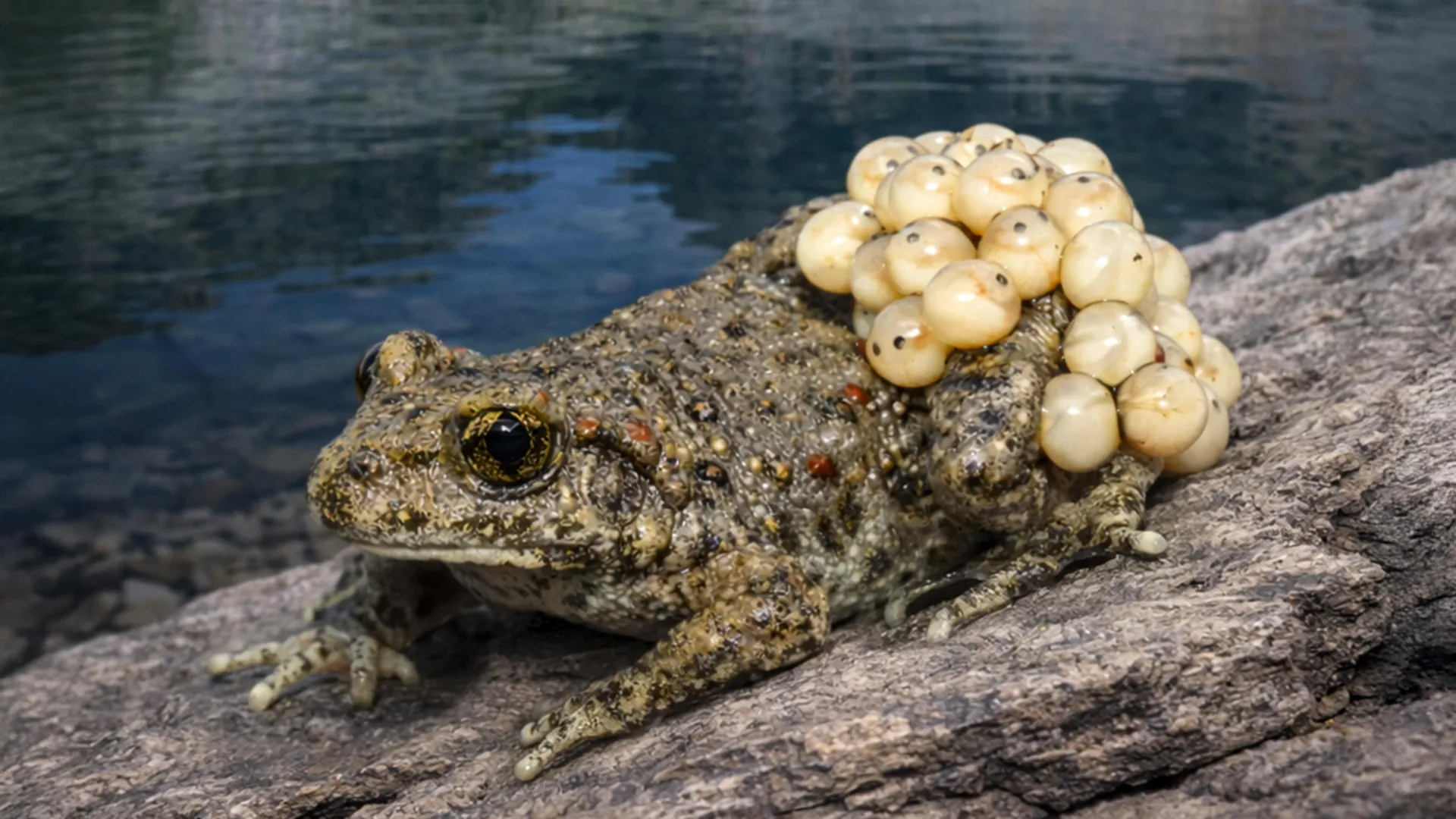
To decipher the enigma of amphibian recovery, researchers focused their attention on a poignant natural experiment: common midwife toads (Alytes obstetricans) inhabiting four distinct lakes in the Pyrenees region of France and Spain. Crucially, all four lakes had previously experienced severe outbreaks of the Bd fungus, providing a consistent environmental pressure. The scientists observed a stark divergence in the fate of the toad populations. At one lake, the population continued its precipitous decline, teetering on the edge of local extinction. In contrast, at the other three lakes, the toad populations had demonstrated remarkable resilience, exhibiting significant rebounds and recovery, even with the persistent presence of the Bd fungus in their aquatic environments. This dramatic difference provided the researchers with a unique opportunity to investigate the underlying biological mechanisms driving survival and recovery.
The Secret Weapon: Early Activation of Antimicrobial Peptides
The core of the investigation centered on a key component of the amphibian immune system: antimicrobial peptides. These are naturally occurring chemical compounds secreted from the skin of amphibians, acting as a crucial line of defense against a wide array of pathogens, including bacteria and fungi. The research team hypothesized that differences in the production and timing of these peptides could explain the varying population trajectories.
Their findings were illuminating. Toads from the recovering populations exhibited a significantly earlier development of these vital protective peptides. Crucially, this immune maturation occurred during their tadpole stage. By the time they underwent metamorphosis and entered the susceptible adult phase, their immune systems were already robustly equipped to confront Bd. This early activation provided a critical survival advantage, allowing them to withstand the fungal onslaught that proved fatal to their counterparts.
Conversely, toads from the struggling population displayed a markedly delayed production of these protective peptides during their tadpole phase. Consequently, they entered adulthood with a less developed immune defense, leaving them ill-prepared to combat the pervasive Bd infection and contributing to their continued population decline.
Dr. Phillip Jervis, lead author of the study and affiliated with UCL Chemistry, ZSL Institute of Zoology, and Imperial College London, articulated the significance of this discovery: "Our study shows species that have declined heavily from this disease can still recover. They have the tools to fight off infection — it just depends on timing. The disease kills toads and frogs as they turn from tadpoles to adults. Getting mature immunity at the tadpole stage helps these toads survive and the population to continue."
Unforeseen Genetic and Environmental Influences
Dr. Jervis further elaborated on the potential factors that could influence this critical timing of immune development. He indicated that the next phase of research would delve into the specific factors preventing the immune systems from maturing early. These could be multifaceted, encompassing genetic predispositions within certain toad populations, as well as environmental influences. For instance, factors like water temperature or the presence of predators such as trout could play a role. Trout, being a significant threat to tadpoles, might inadvertently drive them to accelerate their metamorphosis into adults to escape the aquatic environment. This accelerated development, however, could come at the cost of sufficient time for their immune systems to mature fully, leaving them more vulnerable to Bd.
A Hidden Arsenal: The Vast Diversity of Amphibian Peptides
The researchers employed sophisticated analytical techniques, specifically mass spectrometry, to meticulously examine the complex cocktail of peptides released from the skin of the midwife toads. This advanced method allowed them to precisely measure the mass of molecules, providing unparalleled accuracy in identifying and characterizing these compounds.
The results of this deep dive into amphibian chemical defenses were astonishing. The analysis revealed a far more extensive collection of immune peptides than scientists had initially anticipated. Out of an impressive 1,152 identified peptides, a staggering 1,145 were previously undocumented, highlighting a vast, largely unexplored reservoir of natural chemical defenses within amphibians.
Furthermore, the study provided compelling evidence linking peptide diversity to survival rates. Tadpoles that produced a wider array of these antimicrobial peptides – indicating a more mature and diversified immune system prior to adulthood – were significantly more likely to survive the ongoing Bd outbreaks. In stark contrast, populations with a narrower repertoire of peptides during the tadpole stage continued to suffer high mortality rates.
Implications for Human Health and Future Medicines
The discovery of such a diverse and potent array of antimicrobial peptides in amphibians carries profound implications, extending far beyond the realm of conservation. Professor Alethea Tabor, senior author of the study and from UCL Chemistry, expressed her excitement about the potential applications for human health. "We discovered a far greater diversity of peptides than we expected. We now need to understand how they work to control pathogens and which ones are anti-microbial," she stated.
Professor Tabor drew a parallel to historical breakthroughs in medicine, noting, "A lot of medicines for humans were initially found in the natural world — penicillin came from fungi, for example. So these peptides are new leads that could be used to help human health, especially as we have our own problems as a species with the rise of antimicrobial resistance, which is requiring us to find new ways to treat infections." The escalating threat of antibiotic-resistant bacteria presents a global health crisis, and the natural world continues to be a rich source of novel therapeutic compounds. Amphibian antimicrobial peptides could offer a new frontier in the fight against these superbugs.
The application of tandem mass spectrometry at UCL Chemistry was instrumental in achieving this level of detail. By fragmenting peptides into smaller components, measuring these fragments, and then reconstructing the original peptide’s structure, the research team was able to identify and sequence hundreds of previously unknown molecules.
Dr. Kersti Karu, a co-author from UCL Chemistry, emphasized the technological advancements that enabled this research. "The ability to analyze hundreds to thousands of molecules in parallel has only emerged over the past decade," she noted. "This approach is more commonly applied in human health research, for example to distinguish cancer cells from normal tissue, but is increasingly being extended to other areas of biological investigation." This signifies a growing interdisciplinary approach in scientific discovery, where techniques refined in one field can unlock mysteries in another.
A Glimmer of Hope for Amphibian Conservation
The findings of this extensive research project offer a significant glimmer of hope for amphibian conservation efforts worldwide. Understanding the precise mechanisms by which some populations achieve resilience provides critical insights for developing targeted interventions. Future conservation strategies could potentially focus on identifying and supporting populations with robust early immune development or even exploring ways to augment the immune capabilities of vulnerable species.
The research was generously funded by the UK’s Natural Environment Research Council (NERC) and the Leverhulme Trust, underscoring the importance and recognition of this critical area of scientific inquiry. As the world continues to face biodiversity loss, this study serves as a powerful reminder of the intricate biological adaptations that allow life to persist, even in the face of overwhelming challenges, and highlights the potential for nature itself to hold the keys to solving some of humanity’s most pressing problems. The ongoing exploration of amphibian chemical defenses promises to yield further discoveries, potentially reshaping our understanding of immunity and inspiring the next generation of medical breakthroughs.