The biopharmaceutical industry is grappling with a profound challenge: the silent erosion of critical process knowledge, particularly "tacit knowledge," during technology transfer. This issue, exacerbated by the increasing reliance on outsourcing, an aging workforce nearing retirement, and recent industry layoffs, poses significant risks to drug development timelines, product quality, and patient safety, especially within the burgeoning field of advanced therapies. Technology transfer, the systematic movement of documented processes and expertise from one operational unit to another—be it from R&D to manufacturing, between internal sites, or to contract manufacturing and development organizations (CMOs/CDMOs)—is a cornerstone of pharmaceutical production. However, the unwritten, experiential knowledge that skilled personnel accumulate over years, often referred to as tacit knowledge, frequently fails to make this critical journey, leaving crucial gaps in the operational understanding of complex processes.
The Silent Erosion of Expertise: Understanding Tacit Knowledge in Biopharma
Tacit knowledge encompasses the deeply ingrained skills, intuitions, and insights that individuals gain through experience and practice. Unlike explicit knowledge, which can be easily documented in standard operating procedures (SOPs), batch records, and scientific publications, tacit knowledge is difficult to articulate, codify, and transmit. It resides in the minds and hands of experts, manifesting as an intuitive understanding of process nuances, problem-solving abilities, and an acute awareness of critical parameters that often defy simple written description. In the highly regulated and complex world of biopharmaceutical manufacturing, where reproducibility and consistency are paramount, the loss of this unspoken expertise can have devastating consequences.
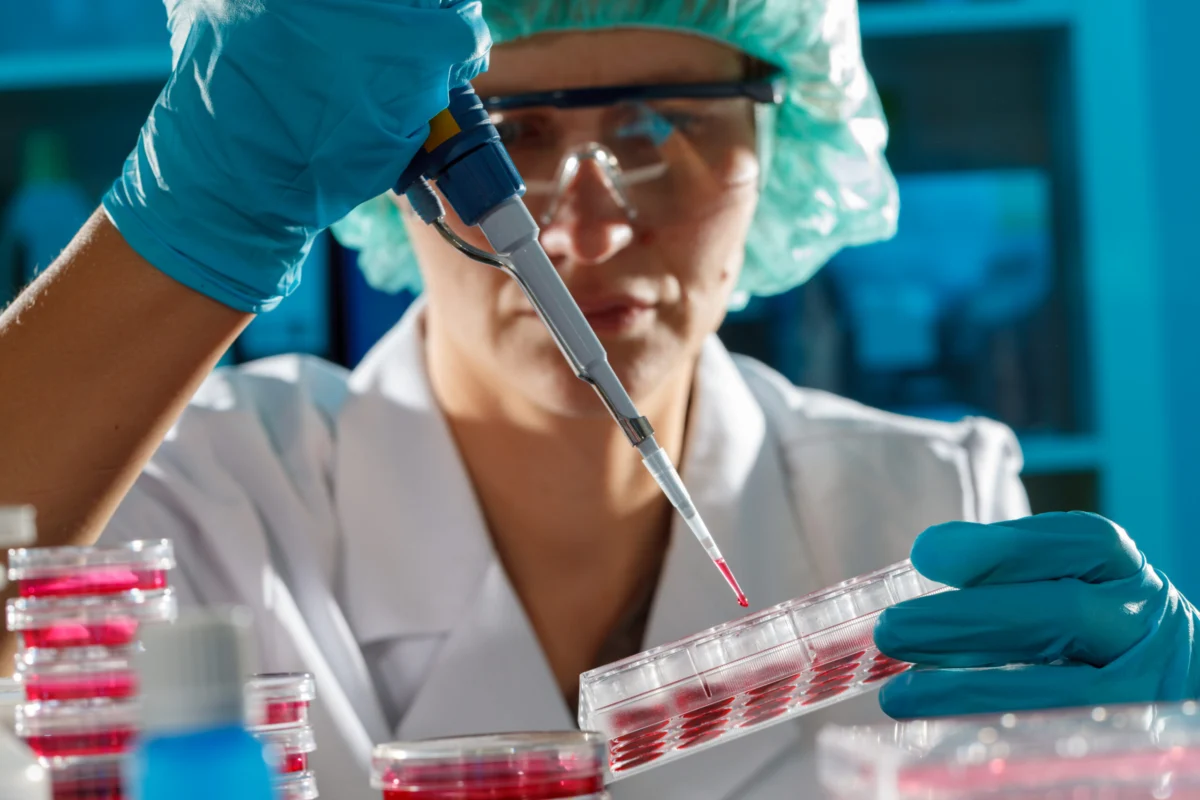
For instance, an experienced scientist might instinctively know the precise pressure to apply when manually pipetting a sensitive cell culture to prevent shear stress, or a manufacturing technician might recognize subtle visual cues indicating an impending deviation in a bioreactor batch. These "tricks of the trade" or "gut feelings," honed over years of trial and error, are invaluable. When these experts leave, their unique insights often depart with them, creating a void that formal documentation alone cannot fill. The PDA’s Technical Report No. 65 specifically highlights the importance of capturing tacit knowledge as a best practice, underscoring the severe impact that poor knowledge transfer can have on patients. Similarly, the ISPE Good Practice Guide on Knowledge Management in the Pharmaceutical Industry acknowledges that tacit knowledge is "arguably underappreciated" in an industry known for its document-centric approach. Yet, despite these recommendations, no robust regulatory framework mandates specific methodologies for its effective capture and transfer.
The Shifting Landscape of Biopharma Manufacturing and Outsourcing
The biopharmaceutical industry’s increasing reliance on outsourcing has amplified the challenges associated with tacit knowledge transfer. As of 2022, a substantial majority—over 86% of biopharma companies—outsource at least some of their activities, according to reports like those from Outsourced Pharma. This trend is driven by several factors, including the desire to mitigate risks, accelerate development timelines, access specialized expertise, and manage capital expenditures. The global CDMO market, projected to exceed $300 billion by the end of the decade, reflects this massive shift, with companies increasingly relying on external partners for everything from early-stage development to commercial manufacturing.
While outsourcing offers undeniable strategic advantages, it inherently necessitates multiple technology transfers across the product lifecycle. As Ryan Chen, director of Product Marketing at ValGenesis, explains, "Technology transfer occurs repeatedly across the lifecycle: from CMC development to first GMP clinical supply, and further down to commercial scale, between manufacturing sites and even post-approval when capacity, network or process/method changes are required, with appropriate comparability and regulatory support." Each of these transitions represents a potential point of failure for tacit knowledge. The handoff between an innovator company and a CDMO, for example, involves not just the transfer of explicit documents like master batch records and analytical methods, but also the nuanced operational understanding that makes those processes work efficiently and consistently. Without a deliberate strategy to capture and transmit tacit knowledge, the receiving organization may struggle to replicate processes effectively, leading to delays, quality issues, and increased costs.
A Looming Workforce Crisis: Retirements and Layoffs
Compounding the inherent difficulties of tacit knowledge transfer are two significant demographic and economic trends: a wave of retirements and recent industry layoffs. The United States alone sees approximately 11,000 baby boomers reaching retirement age each day, a demographic shift that is profoundly impacting industries reliant on highly skilled and experienced workforces. In biopharma, this translates to a substantial loss of institutional memory and deep operational expertise. Long-serving scientists, engineers, and manufacturing specialists who have developed processes from the ground up and fine-tuned them over decades are taking with them an invaluable reservoir of tacit knowledge.
Adding to this brain drain, the biopharma sector experienced a 16% rise in layoffs in 2025, with manufacturing and CDMO functions frequently among those affected. These layoffs, often driven by shifts in funding, pipeline reprioritization, market consolidation, or economic pressures, lead to an abrupt departure of personnel. Unlike planned retirements where some knowledge transfer might be facilitated, layoffs often provide little opportunity for systematic knowledge capture, exacerbating the loss of critical expertise. A report by Limra Consumer highlighted the scale of the baby boomer retirement wave, indicating its broad impact across various sectors, with biopharma being particularly vulnerable due to its specialized nature and long development cycles. The combined effect of these workforce changes creates a "perfect storm" where the demand for robust knowledge transfer mechanisms is higher than ever, even as the traditional channels for informal knowledge sharing (mentorship, long-term collaboration) are being disrupted.
The Financial and Operational Toll of Knowledge Gaps
The loss of tacit knowledge is not merely an academic concern; it represents a tangible financial and operational burden for biopharmaceutical companies. Merck, for example, publicly reported an impressive $125 million in value attributable to effective knowledge management over a ten-year period. This figure underscores the immense economic benefits of systematically capturing and leveraging organizational expertise. Conversely, the absence of such practices can lead to significant financial penalties.
When tacit knowledge is lost, companies face a cascade of negative consequences:
- Extended Timelines and Increased Costs: Rework, troubleshooting, and process optimization efforts consume valuable time and resources. Each failed batch or extended development phase adds millions to the cost of bringing a drug to market.
- Quality Deviations and Regulatory Scrutiny: Inconsistent product quality, out-of-specification results, and deviations from established protocols can lead to regulatory observations, warning letters, and even product recalls. These not only damage reputation but can also halt production and delay patient access to vital medicines.
- Reduced Efficiency and Productivity: Without the collective experience to guide operations, new teams or external partners may operate inefficiently, leading to lower yields, higher waste, and increased operational expenditure.
- Compromised Innovation: The informal exchange of ideas and lessons learned, often rooted in tacit knowledge, is crucial for fostering innovation. Its loss can stifle future drug discovery and process improvements.
The financial ramifications extend beyond direct manufacturing costs. Delays in regulatory approval or market launch can result in significant lost revenue potential, particularly for blockbuster drugs in competitive therapeutic areas. In a landscape where speed to market is a critical differentiator, inefficiencies stemming from knowledge gaps can be a company’s undoing.
Regulatory Frameworks and Their Limitations
While regulatory bodies recognize the importance of knowledge management, their current frameworks provide guidance rather than strict mandates for capturing tacit knowledge. The International Council for Harmonisation of Technical Requirements for Pharmaceuticals for Human Use (ICH) Q10, for instance, emphasizes pharmaceutical quality systems and includes knowledge management as a critical enabler. It encourages companies to develop and maintain robust knowledge management systems throughout the product lifecycle. Similarly, the PDA’s Technical Report No. 65 offers detailed recommendations for knowledge transfer in biopharmaceutical manufacturing, specifically advocating for the capture of tacit knowledge. These guidelines, however, typically focus on the what and why of knowledge management, rather than dictating the how.
The absence of prescriptive regulatory methods for capturing tacit knowledge leaves companies with considerable latitude, but also with the challenge of devising effective strategies independently. This often leads to varied approaches, some more successful than others. While a prescriptive regulatory approach might seem desirable for consistency, the highly individualized and context-dependent nature of tacit knowledge makes a one-size-fits-all mandate difficult to implement. Instead, the industry relies on a combination of best practices, internal quality systems, and increasingly, innovative technological solutions to bridge this gap. The onus remains on individual companies to demonstrate robust knowledge management as part of their overall quality assurance efforts, often through audits and inspections that assess the effectiveness of their systems rather than specific methodologies.
Where Expertise Fades: Academic-to-Industry Transfers and Beyond
The problem of tacit knowledge loss is particularly acute during academic-to-industry transfers. As Ryan Chen notes, "Academic to industry packages are often associated with immature processes and undocumented tacit knowledge." The inherent differences in operational philosophy and objectives between academic research and industrial production create a significant chasm.
In academia:
- Focus on Discovery: Research is primarily driven by discovery, hypothesis testing, and demonstrating proof-of-concept.
- Small Scale and Flexibility: Processes are often small-scale, highly exploratory, and designed for rapid iteration rather than rigorous standardization. Researchers prioritize flexibility and adaptability to pursue novel findings.
- Informal Knowledge Sharing: Expertise is frequently transmitted through direct mentorship, lab meetings, and informal discussions, rather than through formal documentation designed for industrial scale-up.
- "What Works" vs. "How It Works": Publications and patents typically detail the successful outcomes and the intellectual property generated, but rarely capture the myriad failed attempts, critical experimental conditions, or subtle operator techniques that made the successful outcome possible.
When intellectual property, research data, and early-stage findings move from an academic lab to an industrial setting, these inherent differences become major hurdles. Industry requires standardized, scalable, regulatory-compliant systems capable of consistent, high-quality production. The "bench-side" know-how—the specific way a researcher handles a delicate reagent, calibrates a finicky instrument, or interprets ambiguous results—is rarely codified. Patents protect the innovation, but not the detailed, often intuitive, process knowledge required to reproduce it reliably at scale. When a principal investigator retires, or a lab closes, years of accumulated tacit knowledge, including insights from countless failed experiments, can be permanently lost. This creates a steep learning curve for industrial teams, potentially leading to costly delays as they re-discover critical process parameters.
The New Frontier: Advanced Modalities Amplify the Challenge
The advent and rapid expansion of advanced modalities, particularly cell and gene therapies (CGT), have dramatically raised the stakes for effective knowledge transfer. These therapies represent a paradigm shift from traditional small molecule or protein-based drugs, introducing unprecedented levels of complexity and biological variability.
As Chen explains, "Advanced modalities such as cell and gene therapies introduce greater biological variability, complex potency assays, aseptic processing requirements and sensitivity to operator technique, making transfers more technically demanding." He further adds that "Global manufacturing networks add jurisdictional GMP differences, supply chain variability and cross-site comparability expectations."
The inherent characteristics of CGT manufacturing make it exquisitely vulnerable to tacit knowledge loss:
- Living Products: Unlike conventional drugs, cell and gene therapies involve living cells, which are inherently variable and cannot undergo terminal sterilization. This necessitates highly stringent aseptic processing, where operator technique is paramount in preventing contamination.
- Biological Variability: Patient-derived cells (autologous therapies like CAR-T) or donor cells (allogeneic therapies) exhibit significant biological variability. Successfully navigating this variability often relies on the experienced judgment of operators to adapt protocols within defined parameters, a skill that is largely tacit.
- Complex Assays: Potency, viability, and identity assays for CGT products are often intricate and require highly skilled interpretation. Subtle differences in assay execution or interpretation by different operators can lead to inconsistent results, even with detailed SOPs.
- Operator Technique Sensitivity: This is perhaps where tacit knowledge loss becomes most consequential. In CAR-T manufacturing, for instance, steps like cell isolation, expansion, transduction, and harvesting all involve manual handling. The precise timing, gentle manipulation, and nuanced decision-making by an experienced operator directly impact cell viability, yield, and ultimately, product quality and efficacy. An operator’s ability to visually assess cell health, optimize centrifugation speeds, or precisely control cryopreservation rates are critical skills that defy simple written instructions. Even the interpretation of complex quality control assays, such as flow cytometry, can vary meaningfully between operators based on their training and experience.
The manual and semi-manual steps, combined with the extreme sensitivity of cellular products, mean that standard operating procedures (SOPs) alone are insufficient. While SOPs define the what and when, the how—the skilled execution—is deeply embedded in tacit knowledge. Transferring these therapies across sites or to new personnel without capturing this intricate "know-how" can lead to significant delays, batch failures, and potentially compromise patient outcomes.
Mitigating the Risk: Strategies for Knowledge Preservation
Addressing the crisis of tacit knowledge loss requires a multi-faceted and proactive approach, integrating strategic planning, technological innovation, and cultural shifts within organizations. Ryan Chen offers critical advice for founders and established companies alike: "Founders can mitigate these risks by designing for transfer early, institutionalizing knowledge management, investing heavily in analytical readiness, selecting partners with true modality expertise and embedding strong governance and change-control discipline from the outset rather than treating tech transfer as a late-stage operational task."
Elaborating on these strategies:
- Design for Transfer Early: Knowledge transfer should not be an afterthought. From the earliest stages of R&D, processes should be developed with scalability and transferability in mind. This includes documenting critical decisions, rationales for process parameters, and lessons learned from failed experiments.
- Institutionalize Knowledge Management: Implement robust, integrated knowledge management systems (KMS) that go beyond traditional document management. These systems should be designed to capture not only explicit data but also narratives, decision trees, expert interviews, and even multimedia content (videos of complex manual operations).
- Invest in Analytical Readiness: Develop comprehensive and robust analytical methods that are well-characterized, validated, and readily transferable. This ensures that critical quality attributes can be consistently measured and understood across different sites and teams.
- Select Partners with True Modality Expertise: When outsourcing, choose CDMOs or partners who possess demonstrated, deep experience in the specific advanced modality (e.g., CAR-T, viral vectors). This increases the likelihood that they already possess a foundational level of tacit knowledge and can more readily assimilate new process-specific expertise.
- Embed Strong Governance and Change-Control Discipline: Establish clear governance structures for tech transfer projects, with defined roles, responsibilities, and decision-making processes. A robust change control system ensures that any modifications to processes or methods are thoroughly evaluated for their impact on knowledge transfer and product quality.
- Leverage Digital and Emerging Technologies:
- Augmented Reality (AR) and Virtual Reality (VR): These technologies can be used to create immersive training environments that simulate complex manual tasks, allowing operators to practice and internalize techniques in a virtual setting.
- Artificial Intelligence (AI) and Machine Learning (ML): AI can analyze vast datasets from manufacturing processes, identifying subtle correlations and optimal parameters that might represent codified tacit knowledge. It can also help predict potential deviations.
- Digital Batch Records and Electronic Lab Notebooks (ELN): These platforms facilitate real-time data capture and contextualization, reducing reliance on paper records and improving the traceability of decisions.
- Knowledge-Sharing Platforms: Implement internal social networks, wikis, or dedicated platforms where experts can share insights, troubleshoot problems, and document informal lessons learned.
- Video Documentation: For highly manual and technique-sensitive steps, video recordings with expert narration can be invaluable for capturing the "how-to" nuances that static images or written instructions cannot convey.
- Foster a Culture of Knowledge Sharing: Create an organizational culture that values and rewards knowledge sharing. Implement mentorship programs, cross-functional training initiatives, and communities of practice where experienced personnel can actively transfer their expertise to newer employees. Exit interviews for departing employees can also be structured to extract critical tacit knowledge.
The Path Forward: A Call for Proactive Knowledge Management
The challenges posed by tacit knowledge loss in biopharma technology transfer are significant and multifaceted, touching upon operational efficiency, financial performance, and ultimately, patient safety. The convergence of increasing outsourcing, a retiring expert workforce, and the inherent complexity of advanced modalities like cell and gene therapies necessitates an urgent and strategic response from the industry.
Treating technology transfer not as a mere logistical exercise but as a critical knowledge management endeavor is paramount. Companies must move beyond simply documenting explicit procedures and actively invest in systems and cultural practices that enable the capture, retention, and effective transfer of tacit knowledge. This involves a proactive stance from early development, a commitment to leveraging innovative digital tools, and a sustained effort to build a culture where expertise is shared and valued. By doing so, the biopharmaceutical industry can ensure that the groundbreaking therapies of today and tomorrow reach patients safely, efficiently, and consistently, preventing the invaluable wisdom of its experts from being lost to the winds of change. The future of medicine depends on it.