The fundamental architecture of modern physics rests on a profound, unresolved contradiction. On one side stands quantum mechanics, the brilliantly successful framework that governs the microscopic realm of atoms and subatomic particles, where objects exist in nebulous states of superposition until observed. On the other side sits Albert Einstein’s general theory of relativity, a smooth, deterministic geometry where space and time warp together to dictate the motion of planets, stars, and galaxies. For nearly a century, bridging these two pillars has remained the holy grail of theoretical physics. Now, an international team of researchers has taken a bold step toward resolving this tension by investigating how modifications to quantum mechanics—known as spontaneous collapse models—might imprint a fundamental signature onto the fabric of time itself.
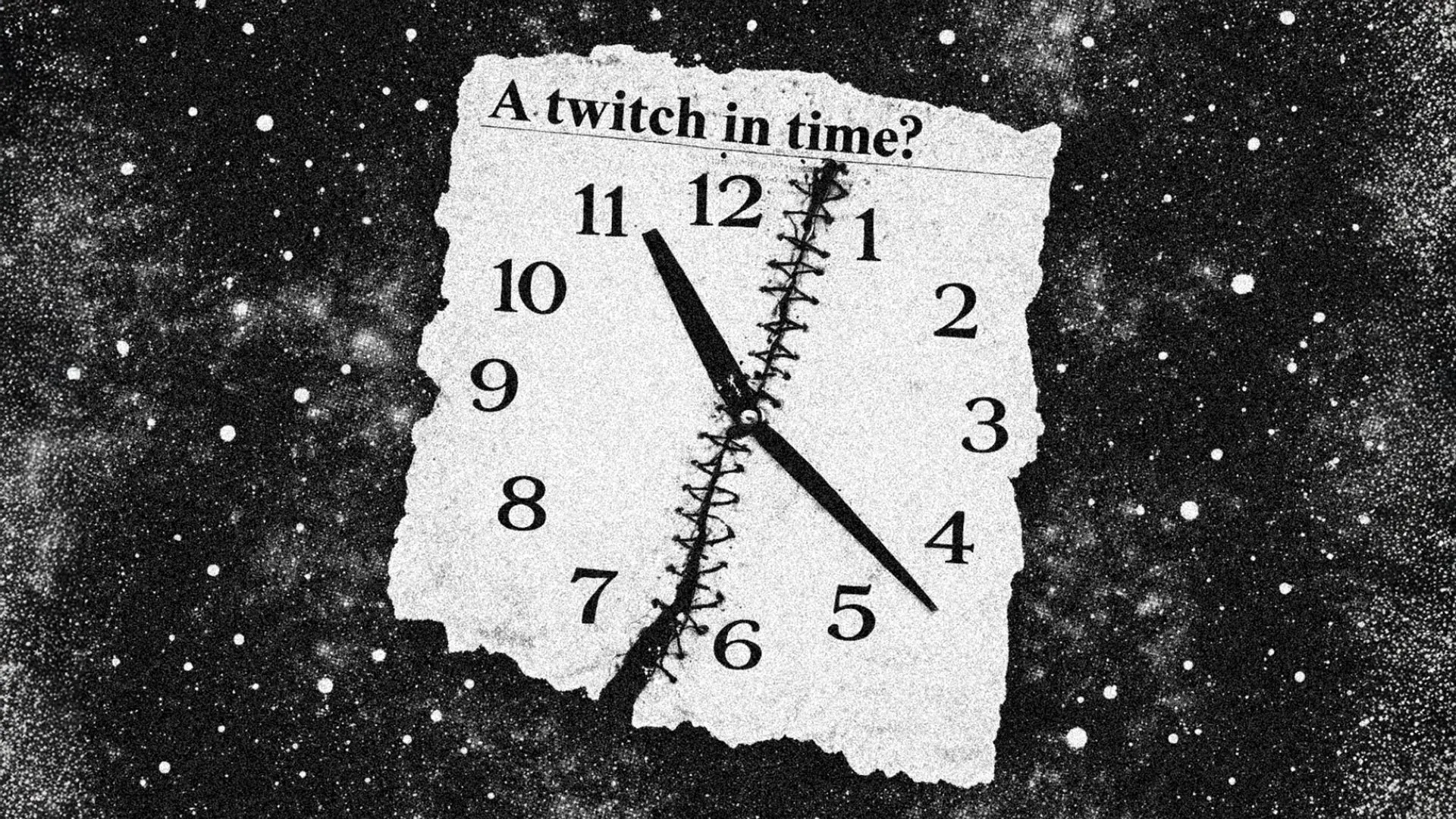
Published recently in the peer-reviewed journal Physical Review Research, the new study explores the theoretical intersections between quantum state reduction, gravity, and temporal precision. Supported by the Foundational Questions Institute (FQxI) through its Consciousness in the Physical World program, the research suggests that if certain objective collapse theories are correct, time itself possesses an intrinsic, irreducible blurriness. While this quantum uncertainty is far too faint to disrupt atomic clocks or modern navigation systems, it provides a crucial conceptual bridge and a prospective experimental roadmap for unifying quantum theory with gravitational physics.
The Historical Schism: Quantum Superposition Versus Relativistic Spacetime
To understand the magnitude of the new study, one must examine the deep philosophical and mathematical chasm separating quantum mechanics from general relativity. In everyday life, macroscopic objects possess definite attributes: a baseball is located in a specific glove, and a clock ticks forward at a steady, uninterrupted rate. In the standard Copenhagen interpretation of quantum mechanics, however, microscopic systems behave entirely differently. Particles can occupy a superposition of multiple positions, momenta, or energy states simultaneously, a reality described mathematically by a wavefunction.
Crucially, standard quantum mechanics dictates that a wavefunction remains in this probabilistic superposition until an external measurement or observation takes place. At that exact moment, the wavefunction abruptly "collapses" into a single, definite outcome. Yet, this framework introduces a major conceptual anomaly: time in standard quantum mechanics is treated as an external, absolute, and classical background parameter. It is a ticking clock that ticks away independently of the quantum systems it measures.
General relativity paints a vastly different portrait of the cosmos. Formulated by Einstein in 1915, relativity discards the notion of a static background stage. Instead, space and time are fused into a dynamic, flexible four-dimensional continuum known as spacetime. Mass and energy tell spacetime how to curve, and spacetime tells mass and energy how to move. Because gravity alters the flow of time—a phenomenon routinely verified by GPS satellites orbiting Earth—treating time as an unyielding, classical parameter in quantum mechanics creates an irreconcilable conflict when physicists attempt to apply quantum principles to the cosmos as a whole, such as during the Big Bang or inside black holes.
The Rise of Objective Collapse Models
For decades, many physicists treated the wavefunction collapse as a mere mathematical tool or a consequence of environmental interaction, a process known as decoherence. However, starting in the 1980s, a vanguard of theorists began exploring objective collapse models. Unlike standard interpretations that rely on human observers or measuring apparatuses to trigger a collapse, these models propose that wavefunctions collapse spontaneously on their own accord once they reach a certain physical threshold.
Importantly, objective collapse models transcend mere philosophical debate. Because they predict physical, observable deviations from standard quantum mechanics—albeit extremely subtle ones—they can, in principle, be tested in laboratories.
In the newly published study, a collaborative team led by Nicola Bortolotti, a PhD student at the Enrico Fermi Museum and Research Centre (CREF) in Rome, scrutinized two prominent frameworks within this category. The research group included Catalina Curceanu, research director at the Laboratori Nazionali di Frascati of the National Institute for Nuclear Physics (INFN-LNF) in Italy and an FQxI member; Kristian Piscicchia of CREF and INFN-LNF; Lajos Diósi of the Wigner Research Center for Physics and Eötvös Loránd University in Budapest; and Simone Manti of INFN-LNF.
The first framework examined was the Diósi-Penrose model, named after FQxI members Lajos Diósi and Nobel laureate Sir Roger Penrose. This hypothesis posits that gravity itself is the fundamental agent responsible for forcing quantum systems to abandon superpositions and localize into definite states. The second framework investigated was Continuous Spontaneous Localization (CSL), a mathematical model that introduces a continuous, stochastic background noise field responsible for gently nudging particles into localized states. For the first time in the history of these theories, Bortolotti and his colleagues established a rigorous quantitative connection between the CSL model and gravitational fluctuations within spacetime.
A Built-In Uncertainty: Redefining the Limits of Time
By performing rigorous mathematical calculations combining these collapse models with gravitational principles, the research team arrived at a striking deduction: if spontaneous collapse models accurately reflect physical reality, time itself must feature a minute, inescapable level of intrinsic uncertainty.
This theoretical revelation implies that there is a strict, fundamental ceiling on how precisely time can ever be measured in our universe, entirely independent of technological imperfections or thermal noise. Nevertheless, the researchers emphasize that this discovery poses no threat to humanity’s current timekeeping infrastructure. The predicted temporal fuzziness is extraordinarily minute, lurking many orders of magnitude beneath the sensitivity limits of even the most advanced optical lattice clocks currently operating in research institutions worldwide.
"Once you do the calculation, the answer is clear and surprisingly reassuring," remarked Bortolotti, reflecting on the magnitude of the predicted effect.
Echoing this sentiment, Curceanu noted that the implications for technology are entirely negligible in the short and medium term. "The uncertainty is many orders of magnitude below anything we can currently measure, so it has no practical consequences for everyday timekeeping. Our results explicitly show that modern timekeeping technologies are entirely unaffected," she stated. Piscicchia reiterated this perspective, underscoring that our most precise atomic clocks will continue to function as reliable arbiters of time without any discernible interference from quantum-gravitational fluctuations.
Implications for Experimental Physics and Quantum Gravity
Beyond theoretical elegance, the study offers a tangible pathway forward for experimental physicists. Because objective collapse models diverge in their predictions from standard quantum mechanics, they invite empirical falsification. As experimental sensitivities in optomechanics, matter-wave interferometry, and ultra-precise clock synchronization continue to advance incrementally over the coming decades, scientists may eventually reach the threshold required to test these fringe parameters directly.
If future experiments detect deviations consistent with collapse models, it would provide the first empirical clues toward a theory of quantum gravity. It would confirm that gravity plays an active role in shaping quantum realities, validating decades of speculation regarding the deep interconnection between mass, space, and the progression of time. Conversely, ruling out these specific parameter spaces will help physicists constrain the boundaries of viable quantum-gravitational theories, narrowing the field of search.
Curceanu used the occasion to highlight the vital importance of funding blue-sky foundational research, which often struggles to secure conventional grants compared to applied sciences. "There are not many foundations in the world which are supporting research on these types of fundamental questions about the universe, space, time, and matter," she observed. "Our work shows that even radical ideas about quantum mechanics can be tested against precise physical measurements, and that, reassuringly, timekeeping remains one of the most stable pillars of modern physics."
As the scientific community continues to probe the deepest layers of reality, interdisciplinary collaborations bridging quantum theory and gravitational physics will remain paramount. While the ultimate unification of physics remains elusive, studies like this demonstrate that the answers may not be hidden solely in the colossal energies of the early universe or the centers of black holes, but quietly embedded in the steady, measured ticking of time itself.