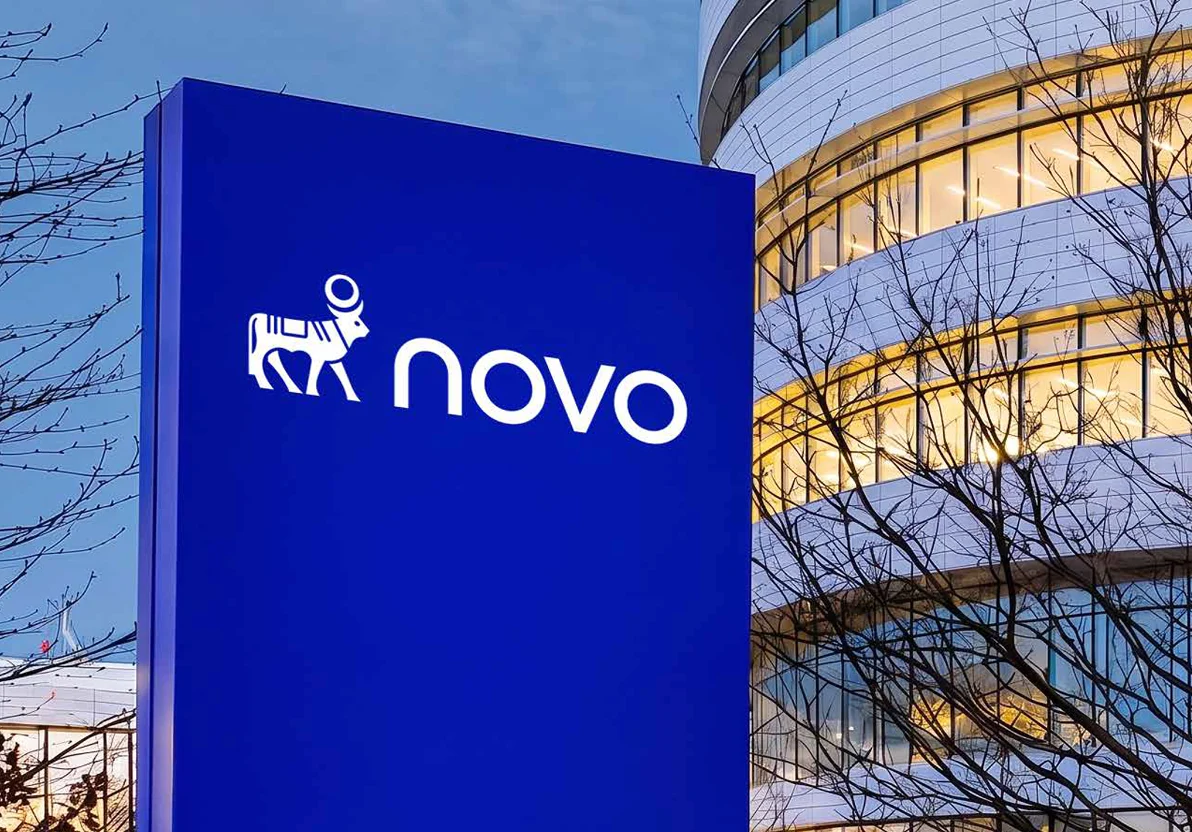
The pharmaceutical landscape is undergoing a quiet yet profound visual and strategic evolution, and one of its most prominent titans is the latest to join the movement. Novo Nordisk, the Danish pharmaceutical giant globally renowned for its pioneering work in metabolic disorders, has officially announced a sweeping corporate rebrand that drops half of its iconic moniker from all front-facing consumer and industry communications. Moving forward, the enterprise will simply be known as Novo.
While Novo Nordisk will remain the corporation’s official legal name for regulatory, financial, and statutory purposes, the abbreviated identifier will now anchor all public-facing operations, marketing collateral, stakeholder engagements, and corporate branding. The update is accompanied by a subtle yet meaningful redesign of the company’s visual assets. The newly streamlined name will sit alongside the brand’s historic and trusted Apis bull emblem—a symbol that has represented the company’s heritage in insulin and diabetes care for nearly a century.
This corporate makeover, which rolled out globally today, arrives exactly one year after CEO Mike Doustdar assumed leadership with an explicit mandate to drive organisational evolution. Faced with shifting consumer expectations, rapid technological advancements, and an increasingly crowded and cutthroat metabolic disease market, the leadership team has decided that a minimalist, agile brand identity is essential to maintaining global relevance.
A Strategic Response to Evolving Healthcare Expectations
The decision to transition to a more concise public identity is rooted in a desire to foster deeper, more immediate connections with patients, healthcare providers, and industry partners. According to company executives, the modern healthcare ecosystem demands greater responsiveness, simplicity, and accessibility.
Reflecting on the strategic motivations behind the transition, CEO Mike Doustdar emphasised that while the company’s fundamental mission remains unchanged, the wrapper in which it delivers its message must adapt to the times.
"We have transformed major areas of healthcare, such as obesity and diabetes, by bringing innovation to conditions that affect millions of lives," Doustdar noted. "But the unmet need remains vast, and at the same time, people’s expectations of healthcare are changing. Healthcare must become more responsive, relevant, and easier to fit into everyday life. Our brand and culture are strategically important and will enhance how we operate and compete, but the reason we exist will not change."
The rebrand is underpinned by a new corporate philosophy and engagement framework titled Lasting Health Starts Now. This initiative is designed to position Novo as a more dynamic participant in modern health engagement, pivoting away from traditional, institutional pharma marketing toward a punchier, consumer-centric approach.
To support this outward-facing identity shift, the company has instituted a modernized set of internal cultural principles. Built around four core tenets—customer obsession, competitiveness, clarity, and patient care—these values are intended to orient the workforce toward greater agility and responsiveness.
Tania Sabroe, Novo’s executive vice-president of people, organisation, and corporate affairs, elaborated on the dual strategy of cultural reform and visual rebranding. "Our updated culture will enable us to move with focus and speed, and our rebrand ensures we show up with relevance and distinctiveness across medicines, partnerships, marketing, and stakeholder engagement," Sabroe stated. "Together, these will sharpen our competitive edge and strengthen our role as a trusted partner in healthcare."
The Shadow of Market Pressure: Chasing Eli Lilly
While the corporate communications team frames the rebrand as an alignment with modern design trends and consumer expectations, industry analysts note that the timing is far from coincidental. The overhaul occurs against a backdrop of intense, high-stakes competition in the global market for type 2 diabetes (T2D) treatments and blockbuster weight-loss therapeutics.
For years, Novo enjoyed a commanding, first-mover advantage in the GLP-1 receptor agonist space, dominating the conversation around diabetes management and weight reduction with products like Ozempic and Wegovy. However, fierce rival Eli Lilly has rapidly closed the gap and, in recent quarters, surged into a position of market dominance.
The financial divergence between the two pharmaceutical giants has become increasingly stark. In its most recent financial reporting, Eli Lilly announced a staggering $23bn in revenue for the second quarter alone, fueled by unprecedented demand for its own portfolio of incretin-based T2D and obesity medications. Lilly’s eye-catching 48% year-over-year revenue growth trajectory has comfortably outpaced Novo’s growth margins, leaving the Danish drugmaker under mounting pressure to aggressively defend its market share, optimize its operational agility, and revitalize its commercial footprint.
By streamlining its name to Novo, the company is attempting to shed some of its historical institutional weight, adopting a sleeker, more nimble persona that resonates more directly with modern consumers navigating the digital health and wellness ecosystem.
Part of a Broader Pharmaceutical Trend
Novo’s decision to drop a portion of its traditional name places it firmly within a broader, industry-wide minimalistic wave that has swept through big pharma over recent years. Companies across the sector have increasingly recognized that complex, multi-word corporate names can create friction in digital environments, social media platforms, and direct-to-consumer health campaigns.
A notable precedent was set in 2022 when British pharmaceutical titan GlaxoSmithKline officially shortened its public-facing identity to GSK. The change was designed to simplify communications following the spin-off of its consumer healthcare division, Haleon. In the same year, French multinational Sanofi unveiled a comprehensive rebranding effort, ditching its traditional corporate logo in favor of a minimalist, tech-inspired purple design intended to reflect its growing focus on digital innovation and immunology.
Similarly, US-based Bristol Myers Squibb, while retaining its full legal title for corporate compliance, relies heavily on the acronym BMS across its global marketing and communications frameworks. Even Novo’s chief rival, Eli Lilly, has leaned into this minimalist shift, increasingly dropping the "Eli" in marketing materials, investor communications, and public campaigns to present itself simply as "Lilly."
Industry observers note that this minimalist trend reflects a wider convergence between the pharmaceutical industry and consumer tech sector. As digital health applications, wearable integrations, and direct-to-consumer telehealth platforms become central to modern medicine, drugmakers are recognizing the commercial necessity of clean, highly memorable, and easily digestible brand identities.
Chronology of Corporate Evolution: From Laboratory to Global Powerhouse
To fully appreciate the significance of Novo’s current rebrand, it is helpful to examine the historical trajectory that forged the company into a global healthcare titan. The corporate roots of the enterprise stretch back nearly a century to Denmark, where scientific innovation and entrepreneurial vision laid the foundation for modern diabetes care.
- 1923: Shortly after the groundbreaking discovery of insulin by Canadian researchers Frederick Banting and Charles Best, Danish scientist August Krogh and Hans Christian Hagedorn secured permission to bring insulin production to Scandinavia. They founded the Nordisk Insulinlaboratorium, which successfully produced its first commercial insulin batch later that year.
- 1925: Internal divisions led to the formation of a rival enterprise, Novo Terapeutisk Laboratorium, established by Harald and Thorvald Pedersen. For decades, Novo and Nordisk operated as fierce competitors in the burgeoning field of protein chemistry and diabetes therapeutics.
- 1989: Recognizing the strategic advantages of scale and consolidated research capabilities, the two historic rivals agreed to merge, creating Novo Nordisk A/S. The consolidation cemented the company’s status as a global powerhouse in diabetes care.
- 2000s–2010s: The company expanded its therapeutic footprint beyond diabetes, establishing a dominant position in biopharmaceuticals, specifically in haemophilia care, growth hormone therapy, and hormone replacement therapy.
- 2010s–2020s: Novo Nordisk achieved its most significant commercial breakthrough of the modern era with the development of GLP-1 receptor agonists. Drugs such as liraglutide (Victoza/Saxenda) and semaglutide (Ozempic/Wegovy) revolutionized the treatment landscape for type 2 diabetes and chronic weight management, triggering an unprecedented surge in global demand and corporate valuation.
- 2023: Mike Doustdar takes the helm as CEO, initiating a strategic review focused on organizational efficiency, digital transformation, and cultural agility to prepare the company for a hyper-competitive future.
- 2026: The company officially unveils its streamlined brand identity, transitioning its public-facing name to Novo while introducing the "Lasting Health Starts Now" framework to better compete against rivals like Eli Lilly in the rapidly expanding metabolic health market.
Fact-Based Analysis of Implications
The financial, operational, and market implications of Novo’s rebrand extend far beyond a mere cosmetic refresh. While changing a logo and shortening a trade name do not inherently alter a company’s clinical pipeline or manufacturing capacity, they signal strategic intent and cultural realignment that can profoundly influence stakeholder perception.
From a brand equity perspective, the shift to "Novo" addresses modern digital constraints. In an era where healthcare information is predominantly consumed via mobile devices, social media platforms, and digital search engines, concise nomenclature provides a distinct competitive advantage. A shorter name is easier to remember, quicker to read, and more adaptable across emerging digital health interfaces.
Operationally, the integration of the new corporate principles—customer obsession, competitiveness, clarity, and patient care—points toward an internal restructuring aimed at reducing bureaucratic inertia. In the metabolic disease sector, speed to market and supply chain resilience are paramount. By fostering a more agile corporate culture, Novo aims to accelerate its clinical development timelines and improve its ability to scale manufacturing capabilities in response to skyrocketing global demand for weight-loss and diabetes medications.
However, challenges remain. Rebranding a century-old institutional name carries inherent risks, particularly among conservative clinical audiences, regulatory bodies, and institutional investors who value tradition and stability. The company must carefully manage the transition to ensure that the legal continuity of Novo Nordisk A/S is preserved while the fresh, consumer-friendly persona of "Novo" takes root in the public consciousness.
Ultimately, while the sleek new aesthetic and streamlined moniker will undoubtedly modernize the company’s marketing presence, the ultimate measure of the rebrand’s success will be determined in the clinic and the marketplace. To recapture its dominant momentum against Eli Lilly and maintain its leadership in metabolic health, Novo will need to back its bold new image with continued scientific innovation, reliable supply chain execution, and superior clinical outcomes for millions of patients worldwide.