Engineers at the University of Toronto have successfully engineered a novel class of dye-sensitized nanoparticles capable of detecting chemical substances at exceptionally low concentrations while concurrently discerning molecules with nearly identical structural configurations. Published in the Journal of the American Chemical Society, this scientific advancement introduces a luminescent technology that overcomes historical hurdles in optical sensing, offering profound implications for pharmaceutical manufacturing, environmental safety monitoring, and biomedical diagnostics.
The newly developed microscopic particles generate a distinct, highly measurable light signal upon successfully binding to their targeted chemical agents. By absorbing low-energy photons and efficiently converting them into higher-energy photons—a phenomenon known as upconversion—the nanoparticles bypass traditional optical limitations. This breakthrough addresses long-standing challenges in analytical chemistry, providing unprecedented sensitivity and precision that could soon redefine industry standards for impurity detection and chemical analysis.
The Evolution of Optical Sensing and the Physics of Upconversion
For decades, the field of analytical chemistry has relied on organic molecules called fluorophores to absorb light and subsequently convert it into colorful emissions. However, conventional fluorophore technology operates strictly in a single direction. Standard fluorescent processes demand that the excitation frequency surpass the emission frequency, meaning they inherently convert high-energy photons into lower-energy ones.
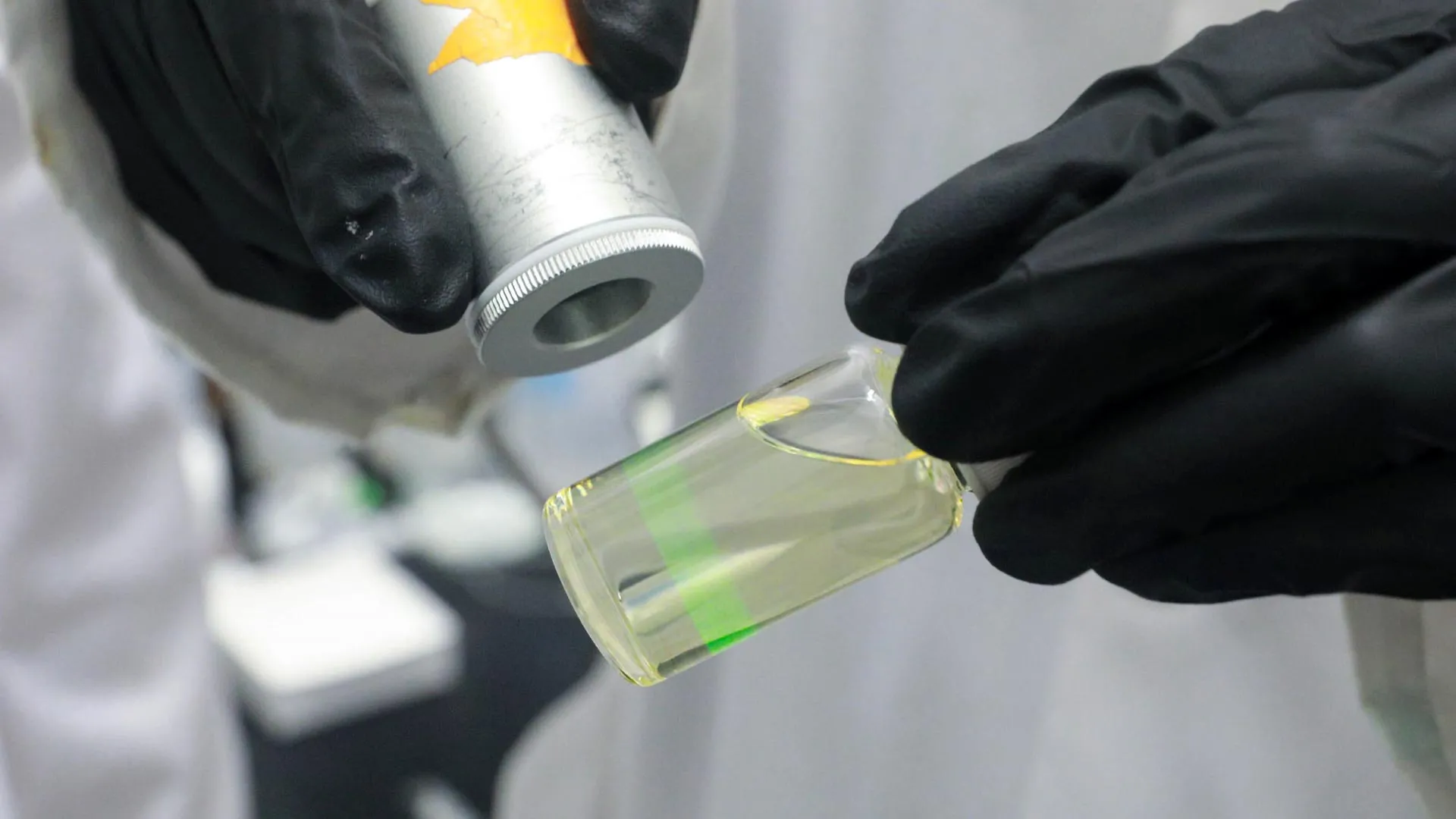
The dye-sensitized nanoparticles developed by the University of Toronto research team fundamentally rewrite this rule through advanced upconversion mechanics. By utilizing near-infrared light—which can be easily and economically generated using low-cost lasers—the nanoparticles absorb low-energy photons and successfully emit a brilliant green signal.
This inverse relationship between excitation and emission frequencies grants the nanoparticles a decisive operational advantage: background autofluorescence is effectively eliminated. Professor Kai Huang, senior author of the study, likens the phenomenon to the stark contrast between daytime and nighttime stargazing.
During daylight hours, the overwhelming power of the sun obscures celestial bodies, rendering them invisible despite their constant illumination. In a similar fashion, traditional fluorescent assays often struggle with background noise generated by the sample matrices themselves. By shifting the excitation frequency lower, the research team engineered a system that produces zero-autofluorescence in analyzed samples. The resulting nanoprobes shine unobstructed, effectively turning off the thermal and optical "sun" of background interference to reveal faint molecular signals with absolute clarity.
Overcoming the Barrier of Back-Energy Transfer
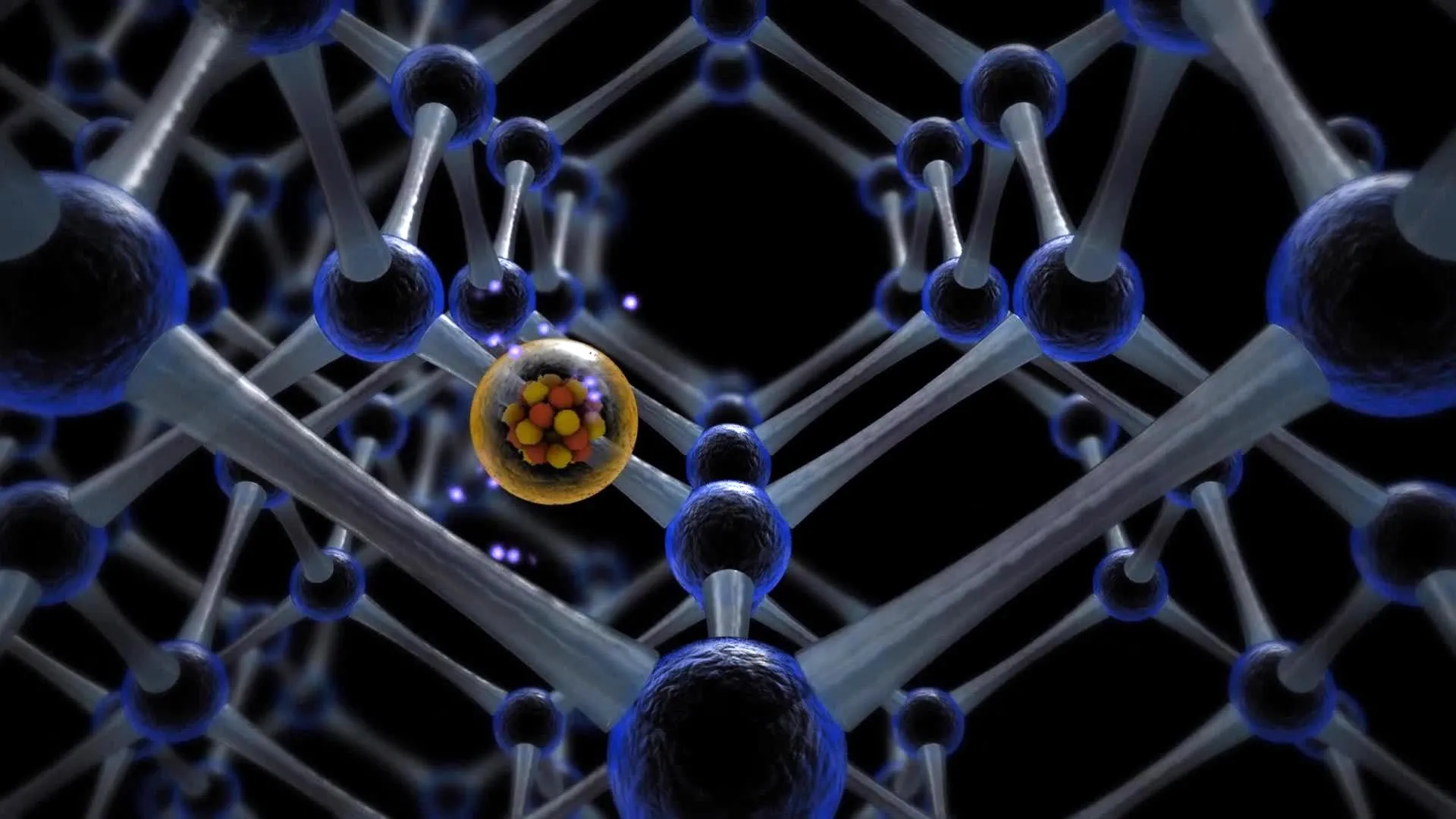
At the microscopic core of these advanced sensors lie rare-earth lanthanide elements, specifically ions of ytterbium and erbium. In earlier iterations of upconversion nanoparticles, these ions were typically embedded within flat, hexagonal host materials composed of sodium, yttrium, and fluorine. The organic dye molecules covering the exterior acted as a collection antenna.
When infrared light illuminated the particles, the external dyes captured the incoming photonic energy. This energy was subsequently transferred to the ytterbium ions acting as relays, which then passed the charge to the erbium ions to perform the upconversion step, ultimately releasing stored energy as visible green light.
Yet, scaling up the brightness of these systems introduced a severe physical contradiction. Jiaze Wu, a PhD student in Huang’s laboratory and lead author of the study, notes that packing ytterbium atoms too densely caused a counterproductive phenomenon known as back-energy transfer. Instead of merely absorbing incoming energy, overly concentrated ytterbium atoms began absorbing the outgoing energy as well. This trapped the photonic output, bouncing it backward toward the relay ions and preventing it from ever reaching the surface of the nanoparticle.
To resolve this limitation, the research team undertook a comprehensive redesign of both the chemical composition and the physical architecture of the nanoparticles. The conventional host matrix of sodium, yttrium, and fluorine was abandoned in favor of an optimized formulation utilizing lithium, lutetium, and fluorine.
Simultaneously, the geometry of the particles was transformed from simple flat hexagons into complex, three-dimensional, diamond-shaped structures featuring distinct architectural zones: a dense central core encapsulated by an inner shell and a protective outer shell.
Computational Modeling and the One-Way Energy Tunnel
Rather than relying strictly on trial-and-error laboratory experimentation, the research team leveraged advanced computer simulations to design the architecture of the nanoparticles at the atomic and subatomic levels. Under the guidance of undergraduate researcher Weixiang Ben, the team employed Monte Carlo simulations and density functional theory to model how photonic energy would behave across various chemical formulations and spatial geometries.
These simulations enabled the team to engineer a precise concentration gradient. As energy moves inward through the sequential layers of the core-shell-shell structure, the concentration of embedded ytterbium ions increases progressively, with the absolute density concentrated at the core.
This gradient functions as a sophisticated, one-way energy tunnel. Incoming light energy flows almost exclusively inward toward the erbium ions, completely circumventing the destructive back-energy transfer that plagued earlier designs. Consequently, the engineered particles achieve a quantum leap in luminescence. According to empirical data from the laboratory, the newly developed nanoparticles yield a signal roughly 150 times brighter than standard upconversion nanoparticles lacking dye-sensitization. Under identical excitation parameters, they register approximately 50 times brighter than the most highly optimized conventional structures documented in scientific literature.
Precision Separation of Structural Isomers in Pharmaceuticals
The practical implications of this amplified brightness are vast, particularly in scenarios requiring extreme molecular discrimination. A primary achievement of the University of Toronto breakthrough is the nanoparticles’ ability to accurately distinguish between structural isomers—molecules that share identical elemental compositions and atomic counts but possess distinct spatial arrangements.
In industrial chemistry and pharmaceutical manufacturing, such minute structural variations carry immense operational and safety consequences. Manufacturing processes frequently produce secondary isomeric compounds alongside the primary medical compound. For instance, if a drug production batch contains even a ten percent fraction of an unwanted structural isomer, the therapeutic efficacy of the medication can be severely compromised. Worse yet, such impurities can inadvertently trigger adverse physiological side effects.
Historically, identifying and quantifying these subtle molecular impurities has necessitated complex, time-consuming, and exceptionally expensive analytical testing protocols, such as high-performance liquid chromatography and mass spectrometry. The newly developed nanoparticles present a streamlined alternative. By binding specifically to target molecules, a remarkably small sample size combined with low-cost near-infrared lasers is sufficient to detect and quantify minute isomeric impurities with high fidelity.
Broader Applications in Environmental Monitoring and Beyond
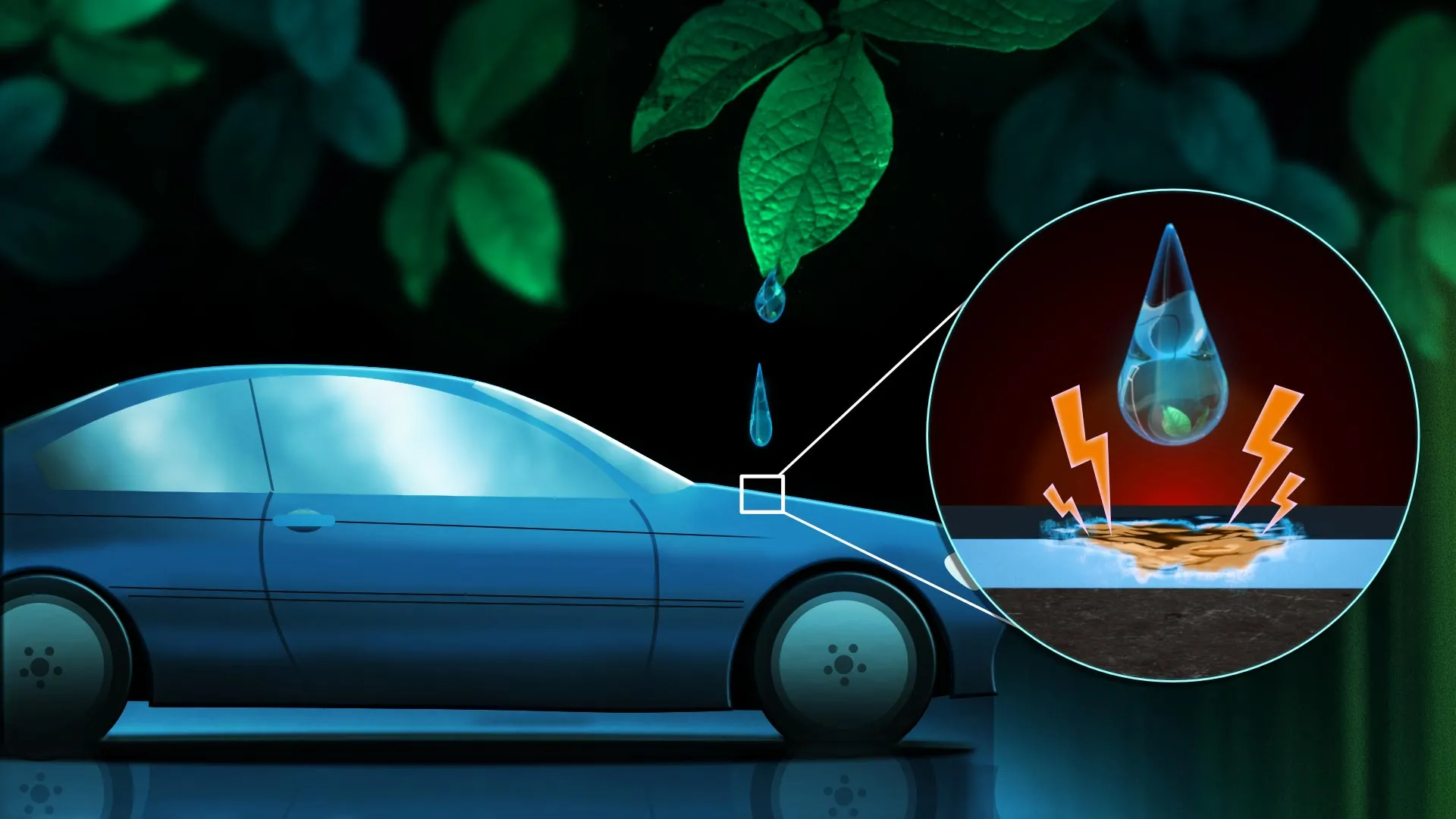
Beyond the pharmaceutical cleanroom, the technology holds substantial promise for environmental science and ecology. Researchers frequently face the challenge of detecting microscopic concentrations of chemical pollutants—such as persistent organic compounds, heavy metals, or industrial runoff—dispersed across vast hydrological systems like groundwater aquifers, rivers, and lakes.
Because each individual nanoparticle generates an intensely strong optical signal, even a minuscule number of particles capturing target pollutants can produce enough measurable light to confirm contamination. This high-sensitivity threshold allows for early detection paradigms that bypass the limitations of bulk water sampling and protracted laboratory assays.
Commercialization Roadmap and Future Outlook
Despite the promising performance demonstrated in laboratory environments, the technology remains at the proof-of-concept stage. Transitioning these advanced nanoprobes from an academic setting to widespread commercial availability requires overcoming significant manufacturing hurdles, most notably the development of scalable synthesis methods capable of producing uniform nanoparticles in industrial quantities.
Addressing these logistical requirements is already a primary focus for the University of Toronto research group. Professor Huang emphasizes that while establishing a mass-production pipeline represents a prolonged developmental roadmap, the fundamental viability of the model is already established.
The success of the core-shell-shell architecture demonstrates that high-performance upconversion nanoparticles can be chemically tuned and customized to detect virtually any targeted molecule of interest. As the research team refines scalable production techniques, this fusion of nanoscale engineering, computational modeling, and optical physics paves the way for a new generation of analytical tools capable of identifying microscopic chemical signatures with unprecedented speed, accuracy, and cost-efficiency.