The global transition toward clean-energy technologies, advanced electronics, and electric mobility relies heavily on an uninterrupted supply of critical minerals and rare earth elements. However, the conventional extraction and processing of these materials remain profoundly carbon-intensive, environmentally disruptive, and geopolitically fraught. At the same time, heavy industries generate hundreds of millions of tons of solid byproducts annually—such as coal combustion residuals, red mud from aluminum production, mine tailings, and construction debris—that are traditionally treated as disposal burdens.
Addressing this dual environmental challenge, a multidisciplinary research consortium led by Worcester Polytechnic Institute (WPI) has secured a $3.3 million grant from the National Science Foundation’s prestigious Growing Convergence Research program. Over a planned five-year timeline spanning two distinct operational phases, the academic team will investigate whether biological mechanisms perfected by marine organisms and terrestrial plants over millions of years can be harnessed to extract high-value metals and functional silicon compounds from industrial waste with minimal energy inputs and drastically reduced chemical reagents.
The multi-institutional initiative reflects a growing paradigm shift in environmental engineering and materials science: viewing industrial waste not as a liability to be sequestered in landfills and slurry ponds, but as an alternative, above-ground mine. By leveraging low-temperature biological strategies and advanced computational tools, the project seeks to establish a zero-waste framework that simultaneously secures domestic supply chains for critical technology minerals and mitigates the environmental footprint of heavy manufacturing.
The Economic and Geopolitical Weight of Industrial Residues
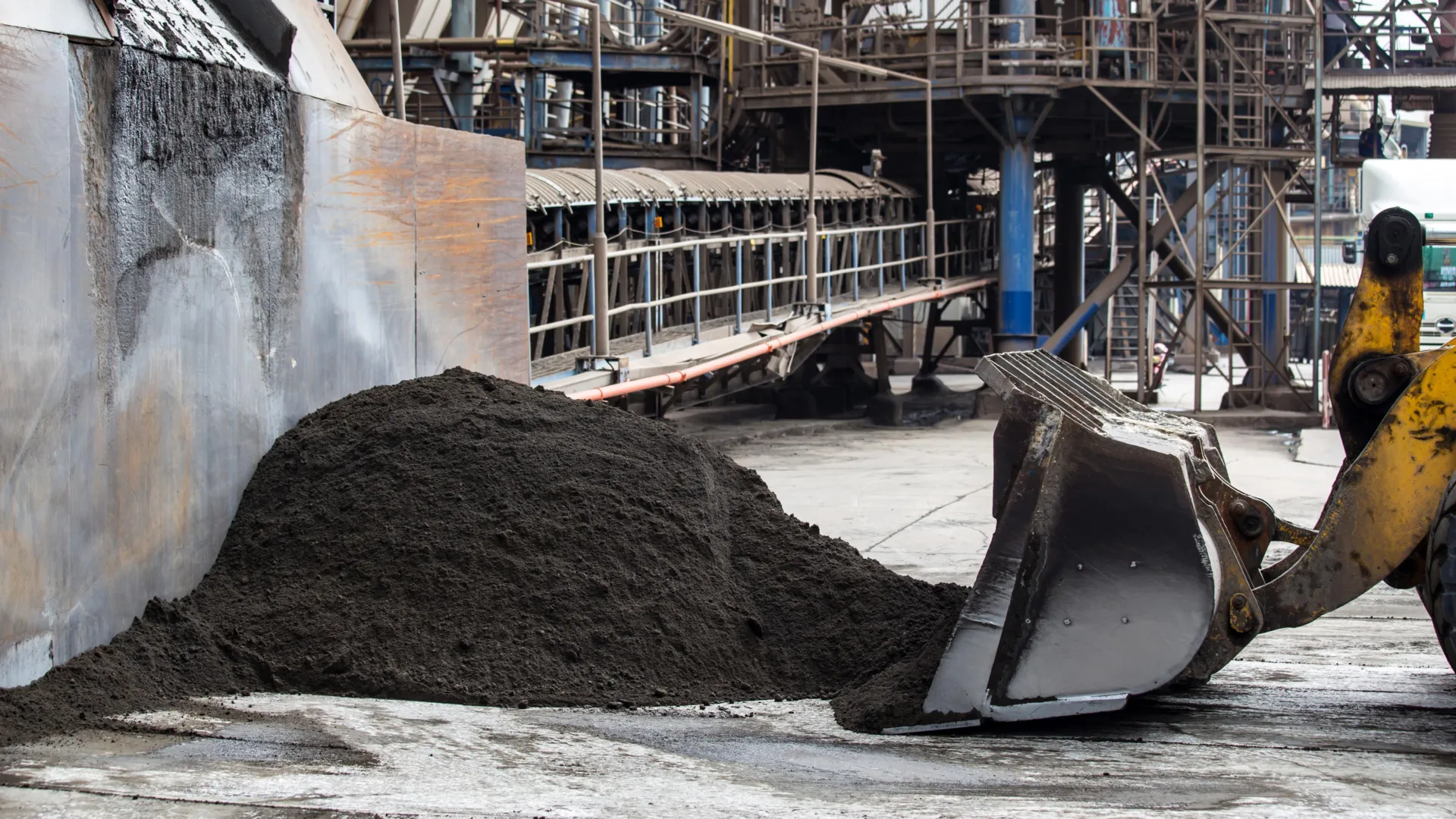
For decades, industrial residues like coal fly ash, metallurgical slag, and bauxite processing waste—widely known as red mud—have posed significant storage and ecological challenges. Millions of tons of these materials are relegated to surface impoundments and landfills worldwide, occupying vast tracts of land and occasionally threatening local watersheds through structural containment failures or leaching. Yet, within these mineralogical matrices lie significant concentrations of silica, iron, aluminum, and a suite of strategic rare earth elements (REEs) including neodymium, dysprosium, and yttrium.
Economic evaluations underscore the untapped potential residing within these discarded matrices. Geological surveys and academic assessments indicate that an estimated 11 million tons of rare earth elements are currently trapped within U.S. coal ash landfills alone. Based on prevailing market valuations, this localized stockpile represents an economic asset worth approximately $8.4 billion—a figure nearly eight times greater than the nation’s total certified raw domestic reserves.
Beyond rare earths, these waste streams are exceptionally rich in silicon-derived materials. Silicon is an indispensable component in foundational modern industries, underpinning the manufacturing of structural concrete, high-performance glass, ceramics, advanced silicones, and semiconductors. However, conventional industrial methods for producing high-purity silicon and silicates demand extreme thermal thresholds, massive energy consumption, and aggressive chemical treatments that generate substantial greenhouse gas emissions.
By simultaneously recovering rare earth elements and transforming waste-derived silica into marketable commercial products, the WPI-led project aims to capture the full economic value of these neglected streams. According to project leadership, this whole-material utilization approach could fundamentally redefine how heavy industries manage production residuals and source essential raw materials.
A Multidisciplinary Research Framework and Chronology
The five-year initiative is structured to proceed across multiple collaborative phases, bringing together leading researchers from diverse scientific domains, including civil and environmental engineering, geochemistry, materials science, metallurgy, computational chemistry, and artificial intelligence.
The project is directed by Mingjiang Tao, an associate professor in the WPI Department of Civil, Environmental, and Architectural Engineering, who serves as the principal investigator. Tao oversees the overarching administrative and research coordination, while directly managing investigations into biosilicification and bio-enabled metallurgy. Assisting as co-principal investigators are Carrick Eggleston, an expert in geochemistry within WPI’s Department of Civil, Environmental, and Architectural Engineering, and Yan Wang, the William B. Smith Professor of Mechanical and Materials Engineering at WPI, widely recognized for his pioneering contributions to battery recycling and sustainable manufacturing.
The core research team also includes specialized investigators from George Mason University, the University of California San Diego, the University of Massachusetts Amherst, and the University at Buffalo.
The multiyear timeline of the grant is designed around a rigorous operational chronology:
- Phase One (Years 1–2): Focuses on fundamental discovery, biological screening, and computational modeling. Researchers will analyze the biochemical pathways used by nature to precipitate silica, synthesize initial artificial intelligence models to predict biomolecular interactions with industrial silicates, and isolate target peptides and proteins capable of selectively binding to specific minerals.
- Phase Two (Years 3–5): Shifts toward bench-scale integration, reaction optimization, and techno-economic scalability assessments. The consortium will test bio-leaching and bio-precipitation processes on actual waste samples—such as coal ash and red mud—to evaluate recovery efficiencies, purity levels of extracted rare earths, and the commercial viability of the regenerated silicate products.
Emulating Nature: Biological Mechanisms for Mineral Recovery
To bypass the energy-intensive thermal and chemical processes traditionally required to break down silicate minerals and liberate trapped metals, the research team is looking to evolutionary biology for inspiration.
Certain aquatic and terrestrial organisms possess the remarkable ability to precipitate minerals and construct intricate inorganic structures under ambient temperature and pressure conditions. Diatoms—single-celled algae—extract dissolved silicic acid from aquatic environments to build delicate, highly ordered glass shells known as frustules. Similarly, marine sea sponges utilize specialized organic molecules, enzymes, and protein scaffolds to harvest silica from seawater and assemble complex skeletal architectures. Certain terrestrial plants similarly accumulate silicon to enhance structural rigidity and pest resistance.
The WPI-led consortium hypothesizes that these natural processes, collectively known as biosilicification, can be adapted for industrial applications. By isolating and modifying the specific biomolecules and organic templates that organisms use to manipulate silica, the researchers aim to engineer biological agents capable of selectively dissolving or restructuring silicon-rich industrial waste.
Once the biological agents disrupt the silicate matrix under mild, aqueous conditions, two major benefits are expected to emerge. First, the structural breakdown will expose and release trapped rare earth elements and critical minerals, allowing them to be separated and purified using targeted bio-metallurgical techniques. Second, the dissolved silica can be repolymerized, carbonated, or synthesized into functional precursors suitable for glass production, concrete additives, or silicone manufacturing.
Integrating Artificial Intelligence and Advanced Geochemistry
Given the vast combinatorial space of potential biomolecules, reaction conditions, and mineral compositions, manual trial-and-error experimentation would be prohibitively slow. To accelerate discovery, the project integrates advanced computational modeling and artificial intelligence directly into the experimental workflow.
Researchers will deploy machine learning algorithms to design custom biomolecules and predict their binding affinities toward various silicate and metallic surfaces. These computational tools will enable the team to rapidly screen thousands of potential protein variants and reaction parameters in silico, narrowing the experimental focus down to the most promising candidates before physical laboratory synthesis begins.
Concurrently, the geochemical expertise led by Carrick Eggleston will examine the fundamental physical chemistry governing these interactions. Eggleston’s team is tasked with mapping the precise reaction pathways and kinetic rates associated with silicate dissolution, repolymerization, carbonation, glass formation, and silicone synthesis under bio-mediated conditions. Understanding these molecular-level mechanics is essential for scaling the reactions from micro-liter laboratory setups to industrial volumes.
Complementing this, Yan Wang’s team focuses on translating the fundamental bio-metallurgical findings into scalable recovery protocols for rare earth elements and critical minerals. Drawing upon his extensive background in sustainable manufacturing and battery recycling, Wang aims to design separation processes that are not only chemically effective but also economically viable and environmentally benign.
Broader Implications and Socioeconomic Impact
The successful realization of this bio-inspired recovery paradigm could yield far-reaching implications for domestic manufacturing, supply chain security, and environmental stewardship.
By establishing domestic secondary sources for rare earth elements and critical minerals, the United States and other industrial economies could significantly reduce their vulnerability to foreign supply chain disruptions and volatile commodity markets. This localized sourcing is particularly critical for the rapid scaling of renewable energy infrastructure, electric vehicle battery production, and advanced defense systems, all of which depend heavily on a steady supply of specialty metals.
Furthermore, converting massive volumes of legacy industrial waste into high-value commercial commodities offers a compelling financial incentive for heavy industries to remediate historical disposal sites. Rather than incurring perpetual maintenance and environmental liability costs for landfills and slurry impoundments, facility operators could monetize their waste streams, transforming environmental liabilities into revenue-generating assets.
Beyond its technical and economic objectives, the initiative emphasizes educational integration and workforce development. Throughout the multiyear project, graduate and undergraduate students from WPI and partnering institutions will be actively engaged through immersive STEM experiences, gaining hands-on training at the intersection of biotechnology, materials science, data science, and environmental engineering.
Ultimately, the National Science Foundation-backed project seeks to lay the foundational architecture for a broader bioengineered, silicon-based materials ecosystem. By bridging the traditionally siloed disciplines of biology, geochemistry, computation, and metallurgy, the consortium hopes to foster collaborative networks among academic researchers, industrial stakeholders, policymakers, and future innovators—paving the way for a more circular, resource-efficient industrial economy.