For nearly a century, quantum mechanics has challenged our most intuitive perceptions of reality. In the subatomic realm, particles do not behave like billiard balls traversing predictable trajectories; instead, they exist in a mathematical superposition of states, simultaneously occupying multiple positions and configurations. Physicists capture these probabilities using the wavefunction, a cornerstone framework of modern quantum theory.
In contrast, our macroscopic everyday life appears definitively singular: an object exists in one specific place and state at any given moment. To bridge the chasm between the ghostly probabilities of the quantum domain and the tangible certainty of the everyday world, standard quantum mechanics relies on the concept of wavefunction collapse. Traditionally, this framework dictates that the act of measurement or observation forces a quantum system to abandon its multiplicity of states and snap into a single, definite outcome.
Now, an international collaboration of physicists supported by the Foundational Questions Institute (FQxI) has pushed past standard boundaries to explore a more radical alternative. Their recent study investigates "quantum collapse models," suggesting that the spontaneous collapse of wavefunctions could yield profound and previously unanticipated consequences for the fundamental nature of time itself, while simultaneously establishing ultimate physical boundaries on the precision of atomic clocks.
The findings, which have been published in the peer-reviewed journal Physical Review Research, do more than merely theorize. They outline a concrete, testable roadmap that could allow researchers to empirically differentiate these unconventional theories from standard quantum mechanics in future laboratory settings.
Rethinking Wavefunction Collapse: Spontaneous Rather Than Observed
The historical development of quantum collapse models represents a departure from traditional interpretations of quantum mechanics. While standard interpretations—such as the Copenhagen interpretation or the many-worlds interpretation—primarily offer different philosophical frameworks to explain what quantum math means while yielding identical experimental predictions, collapse models are distinctively testable.
Beginning in the 1980s, pioneering physicists began developing frameworks in which wavefunction collapse does not rely upon external human intervention, laboratory measuring devices, or conscious observers. Instead, these models propose that collapse happens spontaneously, driven by internal physical mechanisms native to the system itself.
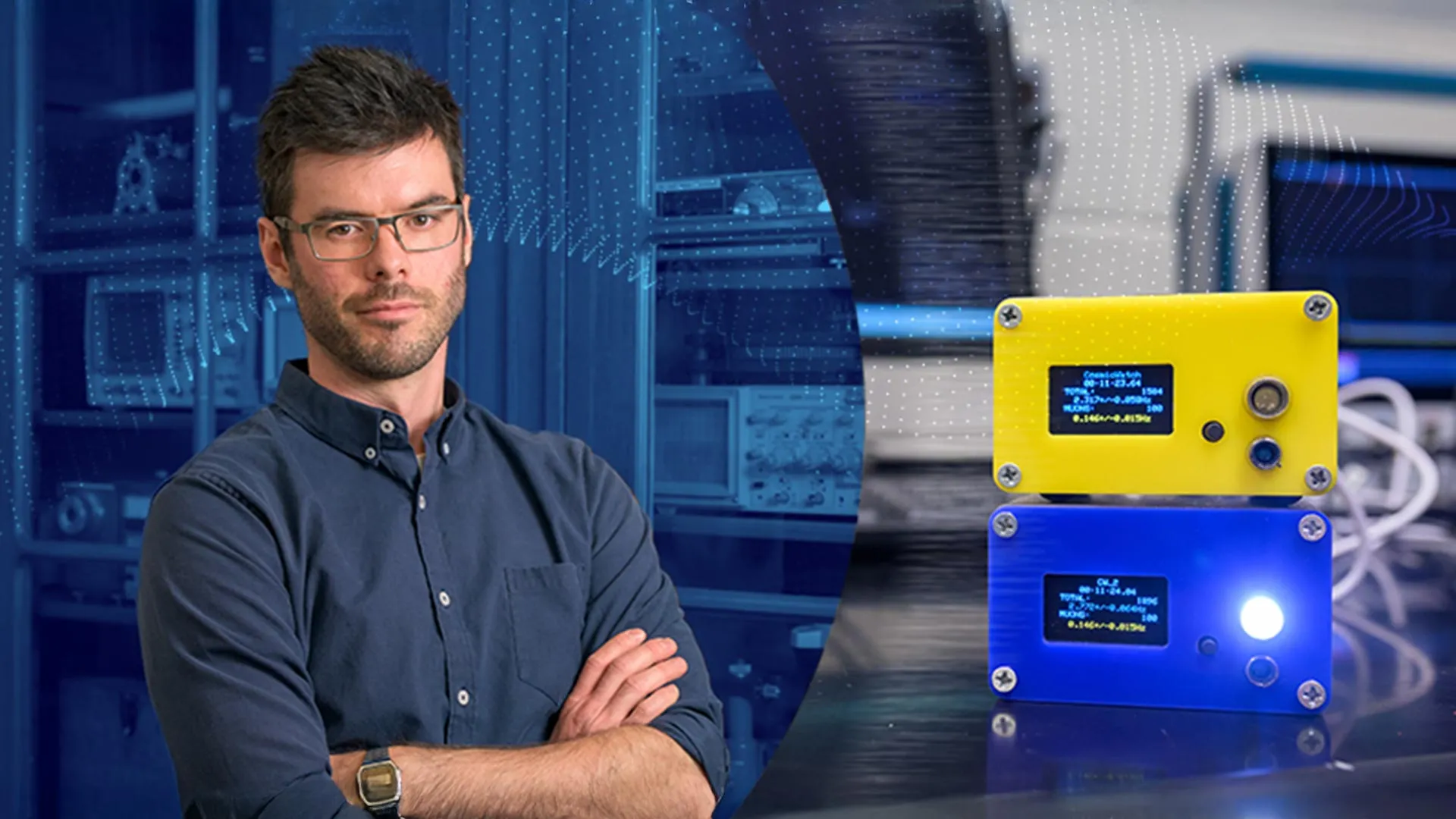
In their groundbreaking study, lead author Nicola Bortolotti—a PhD student at the Enrico Fermi Museum and Research Centre (CREF) in Rome, Italy—and his colleagues examined two prominent collapse frameworks. The research team brought together a diverse group of experts, including Catalina Curceanu, an FQxI member and research director at the Laboratori Nazionali di Frascati of the National Institute for Nuclear Physics (INFN-LNF) in Italy; Kristian Piscicchia of CREF and INFN-LNF; Lajos Diósi of the Wigner Research Center for Physics and Eötvös Loránd University in Budapest, Hungary; and Simone Manti of INFN-LNF.
One of the models under scrutiny was the celebrated Diósi-Penrose model, named after FQxI members Lajos Diósi and Nobel laureate Sir Roger Penrose. This hypothesis has long argued that gravity is the primary catalyst forcing quantum systems to abandon superposition and resolve into definite states. Alongside this, the researchers evaluated a second major approach known as Continuous Spontaneous Localization (CSL). Crucially, for the first time in the history of these theoretical frameworks, the team successfully established a direct quantitative connection between the CSL model and gravitational fluctuations inherent to spacetime.
"What we did was to take seriously the idea that collapse models may be linked to gravity," Bortolotti explained. "And then we asked a very concrete question: What does this imply for time itself?"
A Chronology of Conflict: Quantum Mechanics Versus General Relativity
To appreciate the gravity of the team’s findings, one must examine the deep historical and structural divide that plagues modern theoretical physics. For decades, the discipline has remained fundamentally fractured between two overwhelmingly successful, yet mutually incompatible, pillars of thought.
On one side stands quantum mechanics, which has achieved unprecedented predictive accuracy in describing atoms, subatomic particles, and microscopic systems. On the other side stands Albert Einstein’s general theory of relativity, which governs the macro-cosmos, brilliantly describing gravity, space, and time across planets, stars, galaxies, and the large-scale geometry of the universe.
The core crisis lies in how these two pillars treat time:
- Quantum Mechanics: Treats time as a rigid, external, and classical background parameter. In standard quantum equations, time ticks forward uniformly and remains entirely unaffected by the quantum systems operating within it.
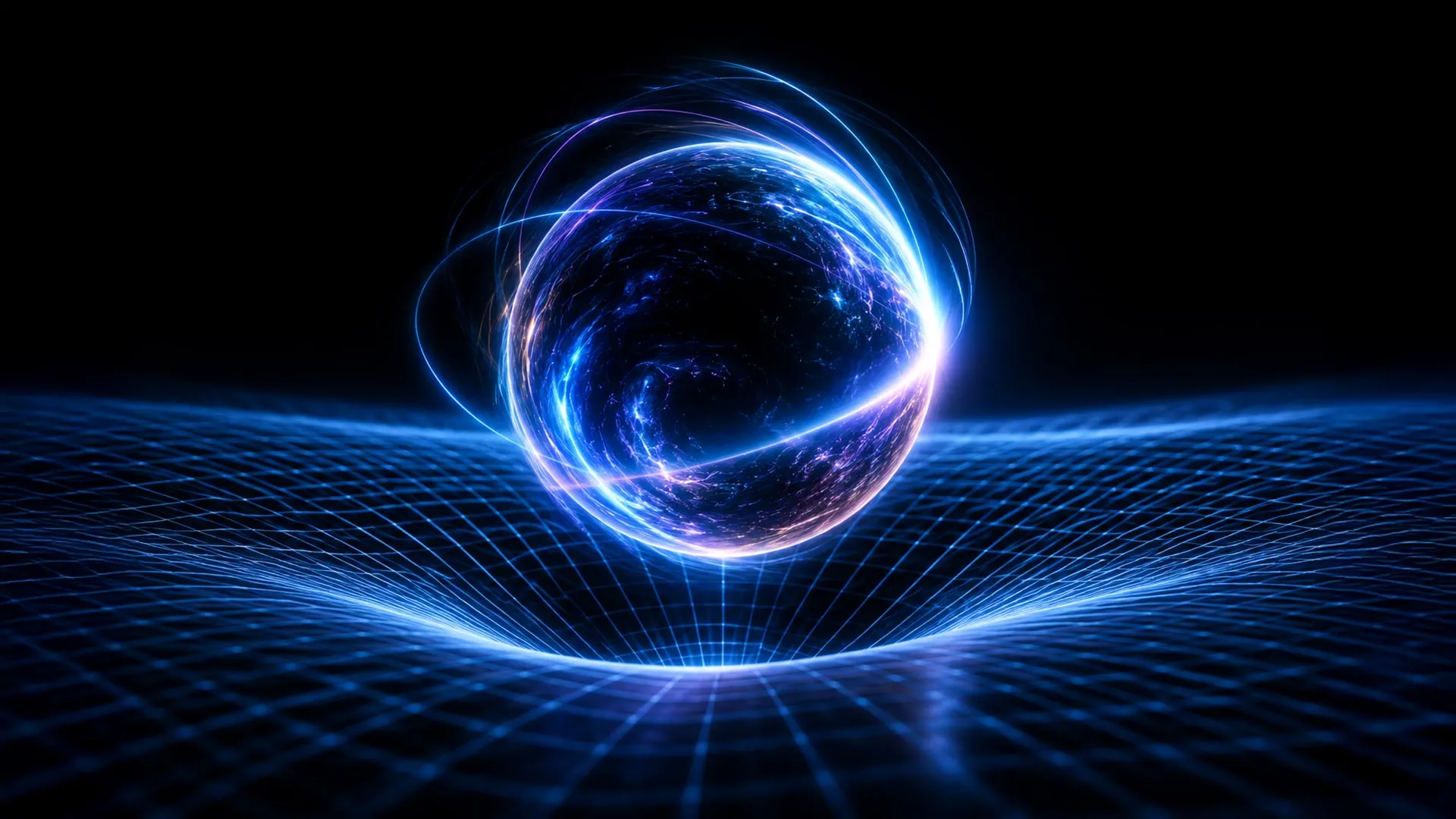
- General Relativity: Rejects the notion of a static background. Instead, space and time are fused into a dynamic, flexible four-dimensional fabric known as spacetime, which continuously warps, bends, and responds to the presence of mass and energy.
Because these foundational assumptions are fundamentally irreconcilable, generations of physicists have sought a unifying theory of "quantum gravity." The new work by Bortolotti and his collaborators suggests that quantum collapse models may hold vital, overlooked clues regarding how quantum mechanics, gravity, and time ultimately intertwine.
Intrinsic Uncertainty: The Microscopic Limits of Time
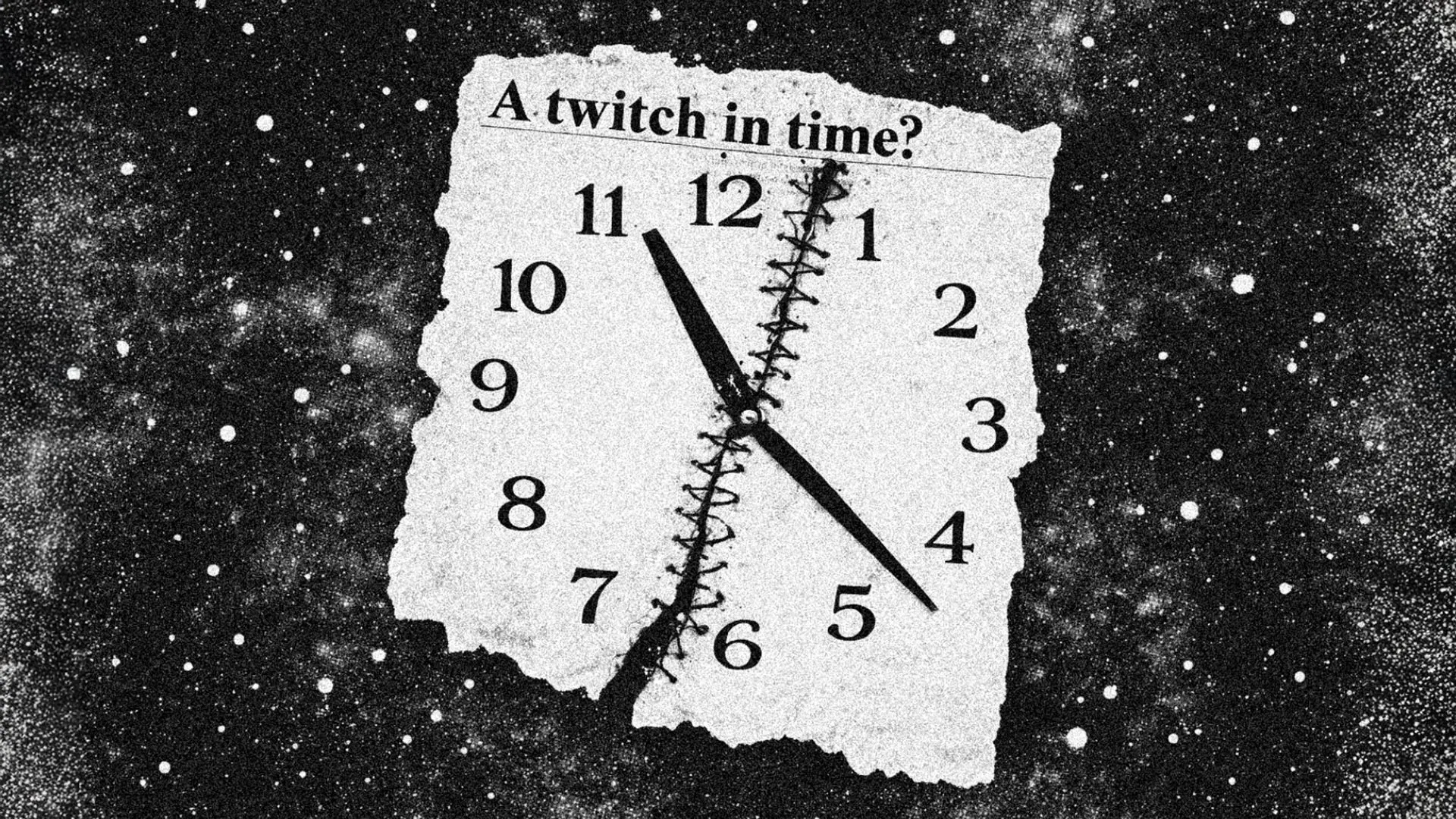
By running rigorous mathematical calculations that bridged spontaneous collapse models with gravitational fluctuations, the research team arrived at a striking and counterintuitive conclusion: if quantum collapse models accurately reflect physical reality, time itself must possess a minute, built-in layer of intrinsic uncertainty.
In practical terms, this implies that there is a strict, fundamental limit to the ultimate precision with which time can ever be measured in our universe. However, the researchers emphasize that this discovery poses no immediate threat to modern technology or our conventional understanding of chronology.
"Once you do the calculation, the answer is clear and surprisingly reassuring," Bortolotti noted.
The predicted temporal uncertainty is extraordinarily faint—sitting many orders of magnitude below the detection threshold of even the most sophisticated atomic clocks operating in laboratories today, or those projected for development in the foreseeable future.
"The uncertainty is many orders of magnitude below anything we can currently measure, so it has no practical consequences for everyday timekeeping," stated Curceanu. Reinforcing this sentiment, Piscicchia added, "Our results explicitly show that modern timekeeping technologies are entirely unaffected."
Implications and the Path to Empirical Testing
Beyond the philosophical revelation that time may be inherently fuzzy at its most fundamental level, the study offers an immediate and practical benefit to experimental physics.
Because quantum collapse models predict distinct physical deviations from standard quantum mechanics—deviations that scale with the mass and complexity of systems—they open the door to empirical validation. If spontaneous collapse is a real feature of the universe, sufficiently advanced, ultra-precise future experiments could eventually detect these tiny signatures, confirming or ruling out these models once and for all.
Curceanu highlighted the broader importance of funding and pursuing speculative research addressing the deepest foundations of physics. She noted that very few institutions worldwide actively support inquiries into foundational questions regarding space, time, matter, and consciousness.
"Our work shows that even radical ideas about quantum mechanics can be tested against precise physical measurements, and that, reassuringly, timekeeping remains one of the most stable pillars of modern physics," Curceanu concluded.
As the scientific community continues its protracted search for a unified theory of quantum gravity, studies of this caliber demonstrate that the answers may not lie solely in building larger particle accelerators or peering deeper into the cosmic web. Instead, the ultimate secrets of the cosmos—and the true nature of time itself—may be hidden within the subtle, microscopic interactions where quantum mechanics and gravity quietly intersect.
Funding for this foundational research was provided, in part, through the FQxI Consciousness in the Physical World program.