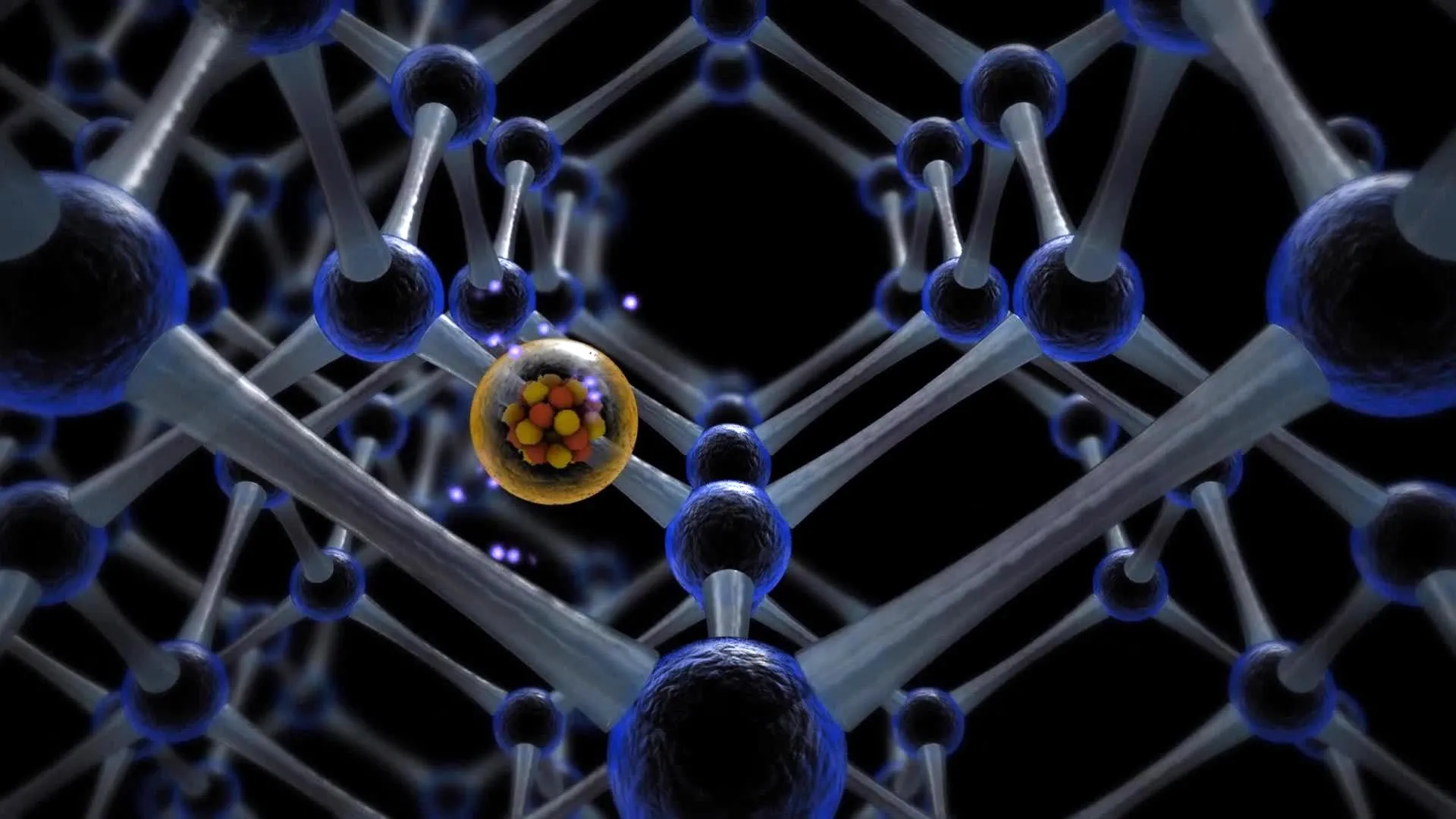
Researchers at the Harvard John A. Paulson School of Engineering and Applied Sciences (SEAS) have achieved a significant breakthrough in the field of quantum information science by successfully demonstrating a novel method to protect delicate quantum states using mechanical vibrations, or microscopic sound waves. Developed within the laboratory of Marko Lončar, the Tiantsai Lin Professor of Electrical Engineering at Harvard, this technological advancement addresses one of the most persistent hurdles in quantum computing and networking: the preservation of quantum memory while maintaining strong communication pathways between qubits.
The findings, which represent a collaborative effort across multiple academic and research institutions, were officially published in the journal Nature Physics. The experiments were spearheaded by Eliza Cornell, a recent Ph.D. graduate from the Lončar laboratory who is now a postdoctoral researcher at Boston University, alongside Zhujing Xu, a former postdoctoral scholar within Lončar’s research group. This multidisciplinary achievement positions phononics—the study and manipulation of acoustic phonons—as a foundational pillar for the next generation of ultra-compact, chip-scale quantum networks and hybrid quantum systems.
The Mechanics of Sound-Based Quantum Transport
To understand the magnitude of this breakthrough, one must examine the fundamental architecture of modern quantum networks. A primary approach to quantum communication utilizes the spin states of electrons, often associated with atomic-scale impurities or defects found within diamond lattices, to store and process quantum information. To transmit this data between stationary quantum nodes across a network, researchers rely on information carriers. Traditionally, light—specifically infrared and optical photons—has served as the standard medium for moving quantum data across chip-scale architectures.
However, photons present distinct scaling challenges. Because of their relatively long wavelengths, optical components must maintain a certain physical size, limiting how densely components can be packed onto a single semiconductor chip. Furthermore, interfacing light efficiently with solid-state spin qubits requires complex optical setups that can be difficult to miniaturize.
In contrast, acoustic phonons—quantized packets of mechanical vibration—offer compelling physical advantages. At equivalent frequencies, phonons possess substantially shorter wavelengths than light. This stark difference in scale allows engineers to design remarkably smaller components, paving the way for ultra-dense integration where numerous quantum nodes and routing channels can coexist within a microscopic footprint on a single silicon or diamond chip. Additionally, phonons exhibit a natural versatility: they interact readily with both solid-state spins and electromagnetic fields. This dual compatibility makes them exceptionally attractive for the realization of hybrid quantum technologies, which seek to bridge disparate types of quantum bits—such as superconducting circuits and optical systems—into a unified, cohesive network.
The Chronic Dilemma of Quantum Decoherence
Despite the inherent promise of phonons, harnessing them for quantum networking introduced a severe operational paradox that has vexed physicists for years: the conflict between strong interaction and prolonged memory preservation.
Quantum bits are notoriously fragile entities. Their computational power relies on superposition and entanglement, states that are exquisitely sensitive to external disturbances from their surrounding thermal, magnetic, and electric environments. The duration for which a qubit can maintain its quantum state without succumbing to environmental noise—a metric known as coherence time—dictates the complexity of the calculations it can perform and the reliability with which information can be transmitted.
To safeguard quantum memories against environmental interference, physicists typically employ active decoupling techniques. Most commonly, this involves bombarding the system with precise microwave pulses that dynamically decouple the memory element from ambient noise sources. While effective in certain isolated setups, these conventional microwave techniques break down when applied to qubits integrated directly inside phononic cavities—specialized physical structures designed to trap mechanical vibrations so they can interact forcefully with the electron spin of a qubit.
Consequently, researchers faced a frustrating engineering trade-off: a device optimized for strong phonon-spin interactions inevitably suffered from severely degraded coherence times, losing its quantum information before it could be reliably processed or read out.
Continuous-Wave Mechanical Dressed States
To resolve this long-standing impasse, the SEAS research team introduced an innovative technique termed "all-mechanical coherence protection," specifically tailored for a silicon-vacancy spin center embedded in diamond.
Rather than attempting to shield the qubit from the outside world using intermittent, external microwave pulses—which interfere with the delicate acoustic environment—the researchers deployed a continuous mechanical driving field composed of phonons. By continuously pumping the system with this acoustic driving field, the team transformed the qubit into a fundamentally different operational regime known as a "dressed" quantum state.
In quantum mechanics, a "dressed" state describes a scenario where a quantum system is strongly coupled to an external field, effectively causing the qubit to "wear" the acoustic field as an intrinsic property of its operation. Within this continuous mechanical framework, the silicon-vacancy spin becomes substantially less vulnerable to low-frequency background noise originating from its immediate solid-state surroundings.
Crucially, because this protective mechanism is driven entirely by a continuous mechanical field—one that is fully compatible with the architecture of phononic cavities—it operates seamlessly inside the exact structures required to link stationary nodes within a quantum network. This endows phonons with a powerful, dual-purpose capability: they can serve simultaneously as the transport medium moving quantum information across a chip and as the active shield protecting that information from environmental degradation.
"We are solving two problems," noted Eliza Cornell, co-lead author of the study. "We want the spin to have strong interaction with phonons, and we want the spin to have a long coherence time. Our paper demonstrates a method of extending the coherence time that is compatible with the silicon-vacancy center being in a cavity."
Measurable Performance Gains: Tripling Coherence Time
In rigorous empirical testing, the Harvard-led team demonstrated that this all-mechanical coherence protection method successfully extended the coherence time of the silicon-vacancy spin by approximately a factor of three.
While a threefold extension represents a major milestone in laboratory settings, the broader implication extends far beyond the immediate numerical gain. The experiment provides definitive proof-of-concept that continuous-wave mechanical noise suppression can be effectively integrated into functional, real-world quantum hardware. It signals that microscopic sound waves can transition from theoretical transport alternatives into practical, highly reliable tools for managing quantum noise in advanced computational architectures.
Chronology and Collaborative Effort
The success of this research is the culmination of years of targeted investigation within the Lončar Laboratory at Harvard SEAS, which has long been at the forefront of exploring nanoscale phononic and photonic systems. The experimental work was led by Eliza Cornell and Zhujing Xu, drawing upon a broad coalition of theoretical and experimental expertise.
The published study, titled "All-mechanical coherence protection and fast control of a spin qubit," reflects significant contributions from an extended roster of co-authors, including Zhaoyou Wang, Hana K. Warner, Eliana Mann, Michael Haas, Smarak Maity, Graham Joe, Liang Jiang, Peter Rabl, and Benjamin Pingault.
The project relied heavily on state-of-the-art nanofabrication facilities. Much of the practical device fabrication and testing was performed at the Harvard Center for Nanoscale Systems (CNS), a member of the National Nanotechnology Infrastructure Network, which receives foundational support from the National Science Foundation under award ECS-0335765.
Substantial financial backing for the research was provided by several major U.S. federal and scientific organizations. Primary support came from the National Science Foundation (grant EEC-1941583), the Air Force Office of Scientific Research (awards FA9550-23-1-0333 and FA9550-23-1-0338), and Q-NEXT, a U.S. Department of Energy Office of Science National Quantum Information Science Research Center (award DE-FOA-0002253).
Broader Implications and Commercial Outlook
As the global scientific community races to build scalable, fault-tolerant quantum computers and secure quantum communication networks, the ability to pack components densely onto a single chip while preserving signal integrity remains paramount. Traditional approaches dependent on bulky optical benches or discrete microwave lines face severe scaling limitations when expanding from a handful of qubits to millions.
By demonstrating that mechanical sound waves can both route information and suppress environmental decoherence on chip-scale platforms, the Harvard SEAS team has opened a viable pathway toward dense, highly integrated quantum processors. Hybrid quantum systems—those integrating solid-state spins, superconducting elements, and mechanical oscillators—stand to benefit immensely from techniques that eliminate the need for complex, cross-purpose shielding electronics.
Recognizing the commercial potential of these foundational innovations, the Harvard Office of Technology Development (OTD) is actively pursuing comprehensive patent protection and exploring commercialization partnerships with industry stakeholders. As these acoustic-based quantum technologies transition from academic laboratories to commercial development, microscopic sound waves may soon form the invisible backbone of the next computing revolution.