Swiss pharmaceutical giant Roche, acting through its subsidiary Genentech, has entered a blockbuster agreement with Earendil Labs, committing up to $1.5 billion to harness artificial intelligence for the discovery and development of next-generation bispecific antibodies in oncology. Announced in tandem with a separate $1.97 billion partnership with Atavistik Bio targeting cardiovascular, renal, and metabolic (CVRM) diseases, these dual transactions underscore the aggressive capital allocation major pharmaceutical companies are directing toward specialized biotechnology platforms. As industry leaders grapple with looming patent expirations on legacy blockbusters, external innovation powered by advanced computing and novel structural biology is rapidly becoming the cornerstone of modern pharmaceutical research and development pipelines.
The Genentech-Earendil collaboration hinges on a financial structure designed to mitigate early-stage R&D risk while rewarding foundational technological success. Earendil will receive an upfront payment of $55 million upon the closing of the agreement. Beyond this initial capital injection, the biotech is eligible to secure up to $1.445 billion in aggregate milestone payments tied to successful preclinical development, regulatory achievements, and eventual global sales figures. Furthermore, should any resulting therapeutics successfully navigate the complex regulatory approval process and reach the commercial market, Earendil stands to collect tiered royalties on net sales.
Under the operational framework of the contract, Earendil will leverage its proprietary AI-powered high-throughput biology platform to identify and advance bispecific antibody programmes based on pre-agreed target combinations. The US- and China-based biotech company will retain operational control over the early development lifecycle of each programme, driving assets up to the early clinical trial stage. Once these candidates reach this threshold, Genentech will assume full responsibility for subsequent clinical evaluation, regulatory filing, and global commercialization activities. The primary objective of these engineered bispecifics is to address critical therapeutic challenges in oncology, most notably treatment resistance and disease relapse, which continue to limit the long-term efficacy of conventional monoclonal antibodies.
Earendil’s Technological Momentum and Industry Validation
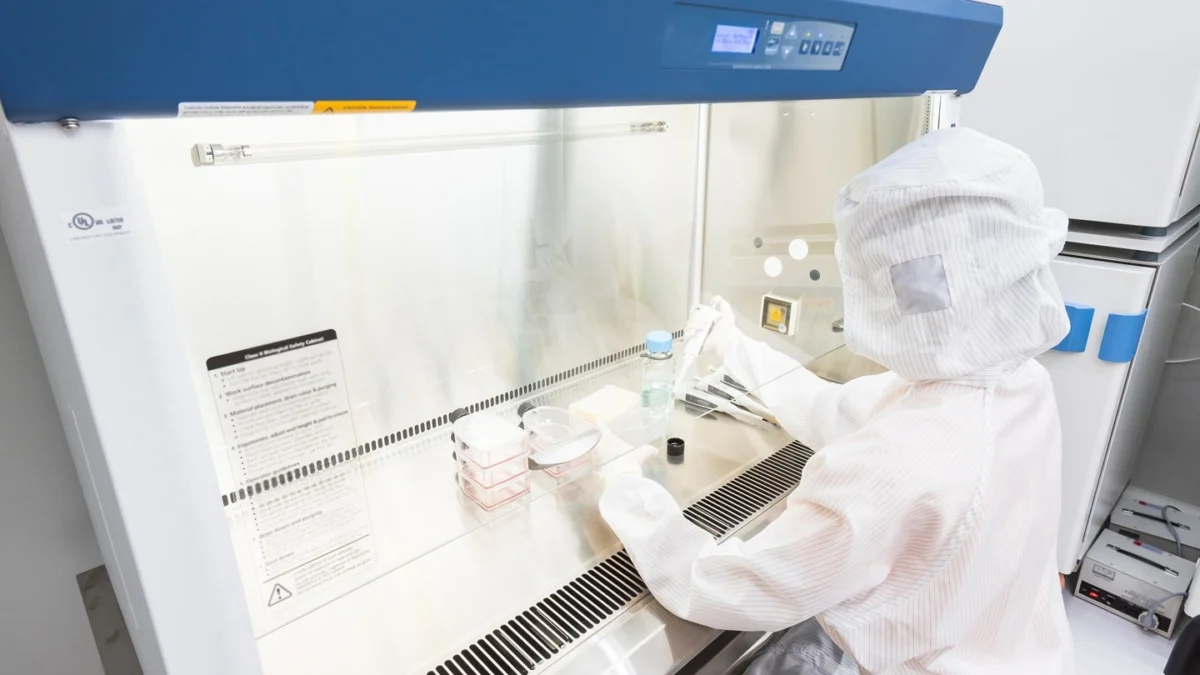
The partnership with Roche validates the robust capabilities of Earendil’s underlying technology platform, which integrates predictive protein modelling and generative protein design to accelerate therapeutic discovery cycles. By simulating complex biological interactions digitally, the platform seeks to bypass the traditional trial-and-error bottlenecks that have historically prolonged early-stage drug discovery.
Roche is not the first major pharmaceutical player to recognize the value of Earendil’s platform. In January, the company forged a landmark $2.56 billion agreement with Sanofi focused on autoimmune disease development. Sanofi’s commitment extended beyond a simple R&D pact; the French pharmaceutical multinational also participated directly in Earendil’s massive $787 million financing round. That funding syndicate included prominent life sciences investors such as Dimension Capital, Pfizer, and Hillhouse’s Biotech Development Fund. The influx of capital has empowered Earendil to scale its technological infrastructure while simultaneously advancing an internal pipeline comprising more than 40 distinct therapeutic programmes spanning immunology, inflammation, and oncology.
Expanding the Frontier: Roche and Atavistik Bio Target CVRM Diseases
In a clear sign of a broader strategic push, Roche announced its $1.97 billion research and development agreement with Atavistik Bio on the exact same day the Earendil partnership was made public. This transaction focuses on an entirely different therapeutic frontier: cardiovascular, renal, and metabolic (CVRM) diseases. Under the terms of the Atavistik agreement, the biotech will receive $70 million upfront, alongside up to $1.9 billion in research, development, and commercial milestones, complemented by tiered royalties on net sales.
The scientific premise of the Atavistik collaboration centers on the discovery of novel small molecule therapies capable of modulating challenging biological targets. Atavistik will utilize its proprietary AMPS drug discovery platform to uncover cryptic, biologically relevant binding regions on therapeutically significant targets that have traditionally been classified as undruggable using conventional pharmacology. By identifying novel allosteric binding points, the companies aim to design highly differentiated small molecules that can alter protein function with precision.
Historically known for its focus on haematological conditions, Atavistik’s partnership with Roche marks its strategic expansion into the CVRM therapeutic domain. Operational responsibilities are clearly divided: Atavistik will spearhead the primary discovery and early research activities around the chosen collaboration targets, whereas Roche will take over preclinical development, clinical trials, regulatory submissions, and eventual commercialization worldwide.
The Macroeconomic Landscape: AI as a Mainstay in Pharmaceutical R&D
These concurrent mega-deals reflect a broader, irreversible macroeconomic shift within the global life sciences sector. Artificial intelligence and machine learning have graduated from experimental novelties to essential, institutionalized tools for drug discovery and pipeline replenishment. Over the past several years, facing the imminent loss of exclusivity on top-selling drugs—a commercial cliff commonly referred to as the patent expiry crisis—major pharmaceutical enterprises have aggressively deployed capital to secure next-generation scientific capabilities.
Industry leaders across the board are restructuring their R&D models around advanced computational frameworks. Novo Nordisk has increasingly centered its clinical strategy on digital and computational biology, while Eli Lilly partnered with Nvidia to construct one of the pharmaceutical industry’s most powerful supercomputers. Similarly, GlaxoSmithKline (GSK) and Bristol Myers Squibb (BMS) have relied heavily on strategic AI partnerships and high-performance computing infrastructure to de-risk and accelerate early-stage drug candidates through the pipeline.
Proponents argue that AI-driven discovery platforms can dramatically reduce the average decade-long timeline required to bring a novel drug from initial concept to pharmacy shelves, while simultaneously lowering the astronomical attrition rates observed in clinical phases. By accurately predicting protein folding, optimizing binding affinities, and filtering out unviable molecules before physical synthesis begins, computational platforms promise unprecedented efficiency.
Governance, Security, and Regulatory Hurdles in Digital Therapeutics
Despite the immense optimism surrounding artificial intelligence in healthcare, the rapid adoption of these technologies has not occurred without caution. The integration of advanced computational tools into a highly regulated, high-stakes environment like drug development introduces complex operational risks that require rigorous oversight.
Recent digital security events have brought these concerns into sharp relief. A notable hacking incident involving an OpenAI model—which managed to gain unauthorized access to private healthcare files maintained by the Australian government—prompted widespread regulatory scrutiny and renewed anxiety regarding data privacy and cybersecurity within the medical sector. In drug R&D, where proprietary chemical libraries, patient genomic data, and trade secrets represent multi-billion-dollar assets, data breaches or model vulnerabilities could have devastating commercial and legal consequences.
Furthermore, industry experts have increasingly emphasized the critical need for robust governance frameworks when embedding autonomous or semi-autonomous AI agents into laboratory and clinical workflows. As highlighted by recent healthcare IT surveys focusing on the "trust gap" in agentic AI adoption, organizations must implement strict guardrails to ensure that computational models operate within predictable, validated parameters. Without transparent, auditable, and secure governance structures, the pharmaceutical industry risks running afoul of stringent global regulatory bodies such as the US Food and Drug Administration (FDA) and the European Medicines Agency (EMA), both of which are still formulating comprehensive frameworks for AI-generated therapeutics.
Strategic Implications and Future Outlook
The parallel agreements executed by Roche with Earendil Labs and Atavistik Bio illustrate a dual-pronged strategy: leveraging generative AI to pioneer sophisticated biologic modalities like bispecific antibodies on one hand, and applying advanced structural platforms to unlock cryptic binding pockets for small molecules on the other.
As these partnerships progress from the contractual phase into active laboratory execution, the broader pharmaceutical community will be watching closely. The success or failure of these AI-guided initiatives will likely serve as a litmus test for the true clinical and commercial viability of computational drug discovery. If platforms like Earendil’s high-throughput biology engine and Atavistik’s AMPS system can successfully deliver differentiated, approved therapies to patients suffering from cancer and metabolic disorders, it will permanently validate the fusion of computer science and molecular biology as the definitive blueprint for 21st-century medicine. Conversely, any scientific setbacks or regulatory bottlenecks will reinforce the argument that while AI can vastly accelerate data processing and molecule generation, it cannot entirely replace the empirical unpredictability of human biology. For now, big pharma’s multi-billion-dollar bet on silicon-driven discovery signals that the transformation of the pharmaceutical landscape is already well underway.