Since its inception in 1921, Science News has functioned as a cornerstone of public scientific engagement, providing an objective, independent lens through which the global community can interpret the rapid advancements in medicine, technology, and the fundamental sciences. Operating under the umbrella of the Society for Science—a 501(c)(3) nonprofit organization—the publication has maintained a rigorous standard of editorial integrity that remains increasingly vital in an era characterized by the rapid dissemination of unverified information. By bridging the gap between complex research and the public interest, Science News continues to fulfill a mission defined by the necessity of an informed citizenry capable of evaluating the world around them through the framework of empirical evidence.
The Historical Genesis of a Scientific Mission
The founding of Science News in 1921 was not a localized event but a response to the burgeoning need for accessible science reporting in the wake of the First World War. At the time, the scientific community was undergoing a paradigm shift, with advancements in quantum mechanics, relativity, and public health initiatives beginning to reshape the societal landscape. The founders recognized that for democracy to function effectively, the public required a reliable, nonprofit source of information that remained insulated from the commercial pressures of mainstream news syndicates.
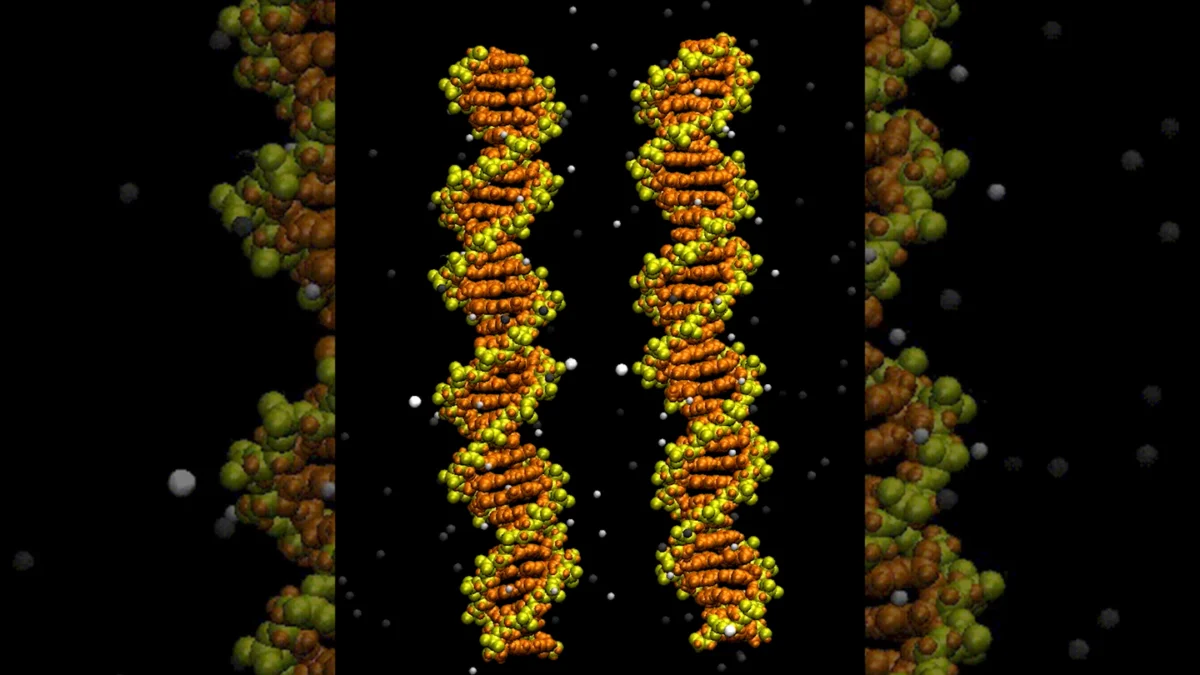
Throughout the 20th century, the publication solidified its role as a chronicler of discovery. From the unveiling of the structure of DNA to the lunar landings and the birth of the internet, Science News provided a consistent, fact-based narrative. This commitment to accuracy was bolstered by the Society for Science’s broader mandate: to advocate for scientific education and to foster a culture of inquiry that extends from the classroom to the laboratory.
Chronology of Institutional Development
The trajectory of Science News is marked by several pivotal milestones that reflect the evolution of media and scientific inquiry:
- 1921: The publication is established as the Science Service, with the specific intent of providing accurate, non-sensationalized reporting on scientific developments.
- 1920s–1940s: The service expands its reach, becoming a primary wire service for newspapers across the United States, effectively setting the standard for science journalism in print media.
- 1966: The publication is rebranded as Science News, shifting its focus toward a more direct reader engagement model while maintaining its nonprofit status.
- 1990s–Present: The transition into the digital era marks a significant expansion in the publication’s audience, utilizing web platforms to reach a global readership while adhering to the core tenets of 501(c)(3) educational mandates.
Supporting Data: The Impact of Nonprofit Journalism
The efficacy of Science News is best measured by its longevity and its adherence to the standards set by the Society for Science. As a nonprofit entity, the organization operates under a unique financial model that prioritizes institutional stability over short-term revenue gains. According to data provided by the Society for Science, the organization annually supports thousands of students through its research competitions—such as the Regeneron Science Talent Search—and reaches millions of readers through its digital and print platforms.
In an environment where digital misinformation can proliferate at an unprecedented rate, the value of nonprofit journalism has been empirically documented. Studies in media sociology indicate that nonprofit science outlets possess a higher degree of trust among readers compared to ad-supported entities. By eliminating the necessity for click-driven revenue, Science News can afford to prioritize long-form, investigative, and context-heavy journalism that requires time and deep expertise.
Official Stance and Organizational Philosophy
The Society for Science maintains that its mission is not merely to report on science, but to cultivate a public that is scientifically literate. In official statements, the organization highlights that its role as a 501(c)(3) entity is critical to its independence. Unlike commercial media outlets that may be subject to the interests of corporate sponsors or political stakeholders, Science News is governed by a board of trustees and a mission statement that explicitly mandates accuracy, objectivity, and the public good.
The organization’s leadership has consistently argued that scientific research is a public resource. Therefore, the reporting of such research must be accessible to the general public, rather than sequestered behind paywalls or distorted by political agendas. This philosophy dictates the publication’s editorial policy: prioritizing the peer-reviewed consensus and providing context for controversial topics to prevent the misinterpretation of raw data.
The Broader Implications of Scientific Literacy
The impact of Science News extends beyond the dissemination of facts; it serves as an educational instrument that empowers the public to engage with policy-related scientific issues. Whether the subject is climate change, genomic editing, or the development of new energy technologies, the ability to synthesize information is a prerequisite for informed civic participation.
Analytical Framework: Journalism in the Age of Misinformation
A brief analysis of the contemporary media landscape reveals a growing deficit in technical literacy. As science becomes increasingly specialized, the "translation" of research into public discourse becomes a high-stakes endeavor. Science News acts as a buffer against the erosion of truth by applying a rigorous peer-review-like process to its own reporting. By cross-referencing expert testimony and academic literature, the publication mitigates the risk of false equivalency—a common flaw in mainstream media where fringe theories are often granted equal weight to established scientific evidence.
Economic and Educational Impact
The intersection of the Society for Science’s educational outreach and its journalistic output creates a feedback loop of discovery. By providing students with high-quality, readable news, the organization inspires the next generation of researchers. Furthermore, the publication serves as a resource for educators who require up-to-date information that can be integrated into curricula. This dual-track approach—reporting the news while fostering the scientists of the future—distinguishes Science News from general-interest publications.
Challenges and Future Outlook
Despite its long history, Science News faces significant challenges in the 21st century. The fragmentation of the news ecosystem, the rise of algorithmic content distribution, and the decreasing attention spans of the digital audience require constant adaptation. However, the publication’s commitment to its founding principles remains a competitive advantage.
The reliance on a membership-based and donor-supported model ensures that the publication remains insulated from the volatility of the advertising market. This financial stability allows for the long-term planning necessary to cover complex, multi-year scientific stories. As the pace of innovation in fields like artificial intelligence and biotechnology accelerates, the demand for clear, objective analysis will only increase.
Conclusion: A Mandate for the Future
As Science News looks toward the next century of operation, its foundational purpose remains as relevant as it was in 1921. The necessity for an objective arbiter of scientific reality is a prerequisite for a functioning, democratic society. By remaining a nonprofit entity, the publication ensures that its primary objective—to inform and empower the public—is never compromised. Through its commitment to high-fidelity reporting, the Society for Science continues to uphold the promise that an informed world is a more capable, resilient, and rational one.
The ongoing success of this model serves as a blueprint for the future of journalism in the scientific age. By placing the reader’s need for clarity and truth at the center of the editorial mission, Science News provides more than just the latest headlines; it provides the tools for the public to navigate an increasingly complex world. As the boundaries of science continue to expand, the requirement for a trusted, independent guide to those frontiers remains the primary mission of Science News, ensuring that the legacy of 1921 is preserved for generations to come.