Earth’s atmosphere is a paradoxical ocean of abundance, composed of approximately 78 percent nitrogen gas, yet virtually all complex plant and animal life starves for want of it. While nitrogen is a fundamental building block of life—critical for the synthesis of amino acids, proteins, and nucleic acids—atmospheric nitrogen ($N_2$) is locked away in a molecular fortress. The two nitrogen atoms are joined by an exceptionally robust chemical triple bond, one of the most stable covalent bonds known in chemistry. Under normal biological and environmental conditions, this triple bond is virtually unbreakable by standard metabolic machinery, leaving atmospheric nitrogen inert and biologically inaccessible to the vast majority of living organisms.
For decades, biologists and geochemists have sought to understand how certain specialized microorganisms bypass this geochemical roadblock. These nitrogen-fixing organisms possess a biochemical toolkit capable of splitting the stubborn $N_2$ triple bond and reducing it into bioavailable ammonia ($NH_3$). While nitrogen fixation is well-documented in terrestrial and shallow-water bacteria, unlocking the mechanics of this reaction at extreme temperatures has long remained a significant hurdle. Now, a team of researchers led by Tristan Wagner at the Max Planck Institute for Marine Microbiology in Bremen, Germany, has successfully isolated and analyzed a hyper-stable nitrogenase enzyme from a deep-sea archaeon. Their findings offer unprecedented insights into the structural evolution of nitrogen fixation and point toward potential breakthroughs in sustainable agriculture and green biotechnology.
The Organism at the Edge of Life: Methanocaldococcus infernus
The focal point of this scientific endeavor is Methanocaldococcus infernus, an extreme deep-sea archaeon discovered in volatile marine hydrothermal environments. In its natural habitat—pitch-black hydrothermal vent systems located thousands of meters below the ocean surface—temperatures can easily exceed the boiling point of water. Operating under extreme pressure and intense heat, M. infernus thrives where conventional biological processes would instantly collapse.
To study how this organism manages nitrogen fixation in such inhospitable conditions, Wagner’s research team undertook the formidable task of cultivating and "taming" the microbe within a specialized laboratory setting. Maintaining an anaerobic, high-pressure, and high-temperature environment capable of supporting M. infernus required meticulous engineering. Ultimately, the researchers successfully coaxed the organism into fixing atmospheric nitrogen at sustained temperatures exceeding 90 degrees Celsius.
This experimental milestone set the stage for a deeper investigation into the core machinery driving the reaction: the enzyme nitrogenase.
Anatomy of an Ancient Enzyme
Nitrogenase is widely regarded as one of the most complex metalloenzymes known in biology. Its catalytic activity relies on metallocofactors—intricate, metal-containing helper molecules embedded within the protein structure that serve as the active site for breaking the $N_2$ triple bond. Historically, biochemists have classified nitrogenases into three distinct families based on the primary metal utilized in their metallocofactor: molybdenum-based systems, vanadium-based systems, and iron-only systems.
Among these, molybdenum-based nitrogenases are the most thoroughly studied and generally exhibit the highest catalytic efficiency. However, the precise evolutionary relationships between these three enzyme variants, as well as the exact mechanics by which their respective metal centers cleave the $N_2$ bond, have remained subjects of intense academic debate.
The nitrogenase extracted from M. infernus upends traditional classifications. Upon isolating the enzyme directly from the archaeon, the Max Planck team discovered that it exhibits structural and functional characteristics bridging all three major nitrogenase families.
"The nitrogenase found in Methanocaldococcus infernus is remarkable because it seems to share traits of the molybdenum, vanadium, and iron forms," explains Tristan Wagner. "This type of nitrogenase could be similar to a common nitrogenase ancestor, the ancient system all of them evolved from. Thus, it could deliver common principles in the nitrogenase reaction."
Biochemical Resilience Under Extreme Heat
To evaluate the physical properties of the archaeal enzyme, the research team subjected the isolated protein to rigorous thermal stability testing. Biochemical assays revealed that the protein matrix is exceptionally heat-resistant, initiating structural degradation only when temperatures reached 90 degrees Celsius, with fractions of the enzyme remaining completely intact at an astonishing 98 degrees Celsius.
First author Nevena Maslać emphasizes the physiological significance of these thermal thresholds. "This proves that this enzyme is designed to function under conditions in which most proteins would rapidly decay, like egg white cooked in hot water," Maslać notes. "It is not active at room temperature. Rather, we show that it only produces ammonia at high temperatures. Its extreme stability allowed us to study states of the nitrogenase that are usually difficult to capture."
Because typical nitrogenases from mesophilic (moderate-temperature) organisms degrade quickly or operate through transient intermediates that are notoriously difficult to isolate, studying them at near-atomic resolution has historically presented immense technical hurdles. The extreme thermal stability of the M. infernus enzyme effectively acts as a thermal lock, freezing unstable reaction intermediates in place and allowing structural biologists to capture states of the enzyme that have long eluded observation.
Chronology of Discovery: From the Abyssal Plain to the Synchrotron
The breakthrough was not achieved overnight; it required a rigorous, multi-year multidisciplinary pipeline combining microbial physiology, native enzyme purification, advanced biochemistry, and high-resolution structural biology.
Because nitrogenase metallocofactors are permanently and irreversibly deactivated upon exposure to atmospheric oxygen, every phase of extraction, purification, and crystallization had to be performed under strictly anoxic (oxygen-free) conditions. The research team maintained an unbroken chain of anaerobic protocols from the initial cultivation of the biomass in Bremen to the final structural analysis.
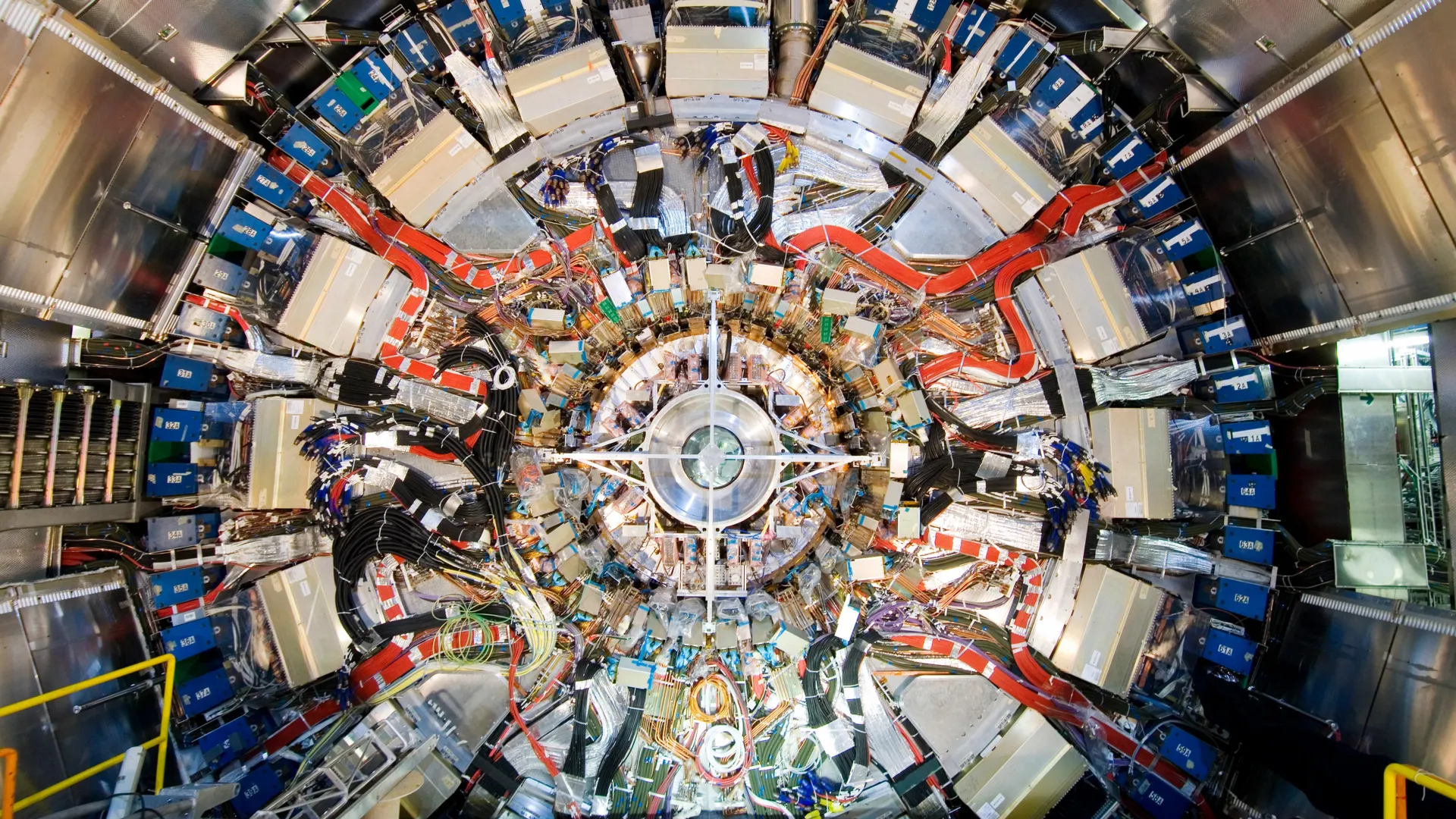
Once purified, the enzyme was successfully crystallized. The structural analysis was carried out in collaboration with the Institut de Biologie Structurale in Grenoble, France, where researchers utilized the facility’s state-of-the-art synchrotron—a circular particle accelerator capable of generating exceptionally powerful X-ray beams.
By bombarding the nitrogenase crystals with high-flux X-rays, the international research team resolved the molecular architecture of the enzyme at near-atomic resolution. The resulting structural data confirmed that the M. infernus nitrogenase is the structurally simplest example of the enzyme characterized to date, while simultaneously incorporating structural hallmarks of the molybdenum, vanadium, and iron-only lineages. This unique structural convergence strongly supports the hypothesis that ancestral nitrogenases closely mirrored this hyperthermophilic archaeal enzyme before branching into modern bacterial variants.
Uncovering an Unexpected Molecular State
Following the structural mapping, the researchers sought to verify the presence of the anticipated molybdenum-based metallocofactor within the archaeal enzyme. This phase of the investigation pushed analytical instrumentation to its absolute limit.
"Our search for the molybdenum was technically extremely challenging and required the experts at the synchrotron to push their instrument to its absolute limits," Wagner states.
While the measurements successfully confirmed the presence of the molybdenum signal, they also yielded an entirely unexpected discovery. The high-resolution diffraction data revealed a distinct "turnover" state within the molybdenum-containing enzyme that had never been observed before in standard molybdenum nitrogenases.
Previously, this specific intermediate state had only been documented in vanadium- and iron-only nitrogenase systems during active catalysis. Capturing this state in a molybdenum nitrogenase suggests that it may represent a universal, highly conserved intermediate stage in the reaction pathway responsible for cleaving the $N_2$ triple bond. Consequently, the finding implies that despite evolutionary divergence across different metal lineages, all biological nitrogenases likely rely on a unified fundamental chemical mechanism.
Broader Implications for Biogeochemistry and Industry
The implications of mapping this ancient, hyper-stable nitrogenase extend far beyond the specialized field of deep-sea microbiology. Nitrogen-fixing microorganisms play a foundational role in global biogeochemical cycles, driving not only the availability of reactive nitrogen in marine ecosystems but also influencing the global carbon cycle. Microorganisms related to these metabolic groups are responsible for generating approximately half of the atmospheric methane found on Earth, linking nitrogen fixation directly to broader climatic feedback loops.
Looking forward, industrial biotechnologists are monitoring these findings with considerable interest. Understanding how hyperthermophilic enzymes stabilize volatile gas-conversion reactions could pave the way for engineered biological systems capable of synthesizing valuable chemical feedstocks—such as ammonia and methane—using green hydrogen as an energy source.
On an agricultural front, the discovery fuels long-term speculative horizons regarding crop engineering. The industrial production of synthetic fertilizers currently relies on the Haber-Bosch process, a century-old chemical synthesis method that demands immense inputs of fossil-fuel-derived energy and accounts for a significant share of global greenhouse gas emissions. Furthermore, agricultural runoff loaded with excess synthetic nitrogen contributes heavily to aquatic eutrophication and coastal dead zones.
While plant biologists have long dreamed of engineering cereal crops capable of fixing their own atmospheric nitrogen—thereby eliminating the need for industrial fertilizers—such technological feats remain distant.
"And what if crops could one day obtain nitrogen directly from atmospheric $N_2$?" Wagner speculates, acknowledging the long-term, transformative potential of decoding nature’s most efficient nitrogen-fixing catalysts.
For the scientific community, however, the immediate value of the research lies in fundamental comprehension rather than immediate industrial application. By capturing a rare molecular snapshot of nitrogenase operating at the thermal limits of life, the research team has updated our foundational molecular view of one of biology’s most complex and vital chemical reactions, closing a critical gap in our understanding of how life harnesses the most stubborn elements on Earth.