The pursuit of next-generation electronic devices has long been bifurcated into two primary fields of study: the movement of charge through conductive materials and the manipulation of magnetic states within solid-state systems. For decades, these two domains—electronics and magnetism—were treated as distinct physical phenomena, governed by different rules and applied to different technological challenges. However, a groundbreaking study from researchers at the Grainger College of Engineering at the University of Illinois Urbana-Champaign has fundamentally challenged this separation. By demonstrating that specially engineered two-dimensional magnetic systems obey the same mathematical equations as mobile electrons in graphene, the team has established a profound link between these two pillars of condensed matter physics. This discovery, published in the journal Physical Review X, provides a new theoretical framework that could revolutionize the design of radiofrequency devices and miniaturized communication technologies.
The Convergence of Magnetism and Electronics
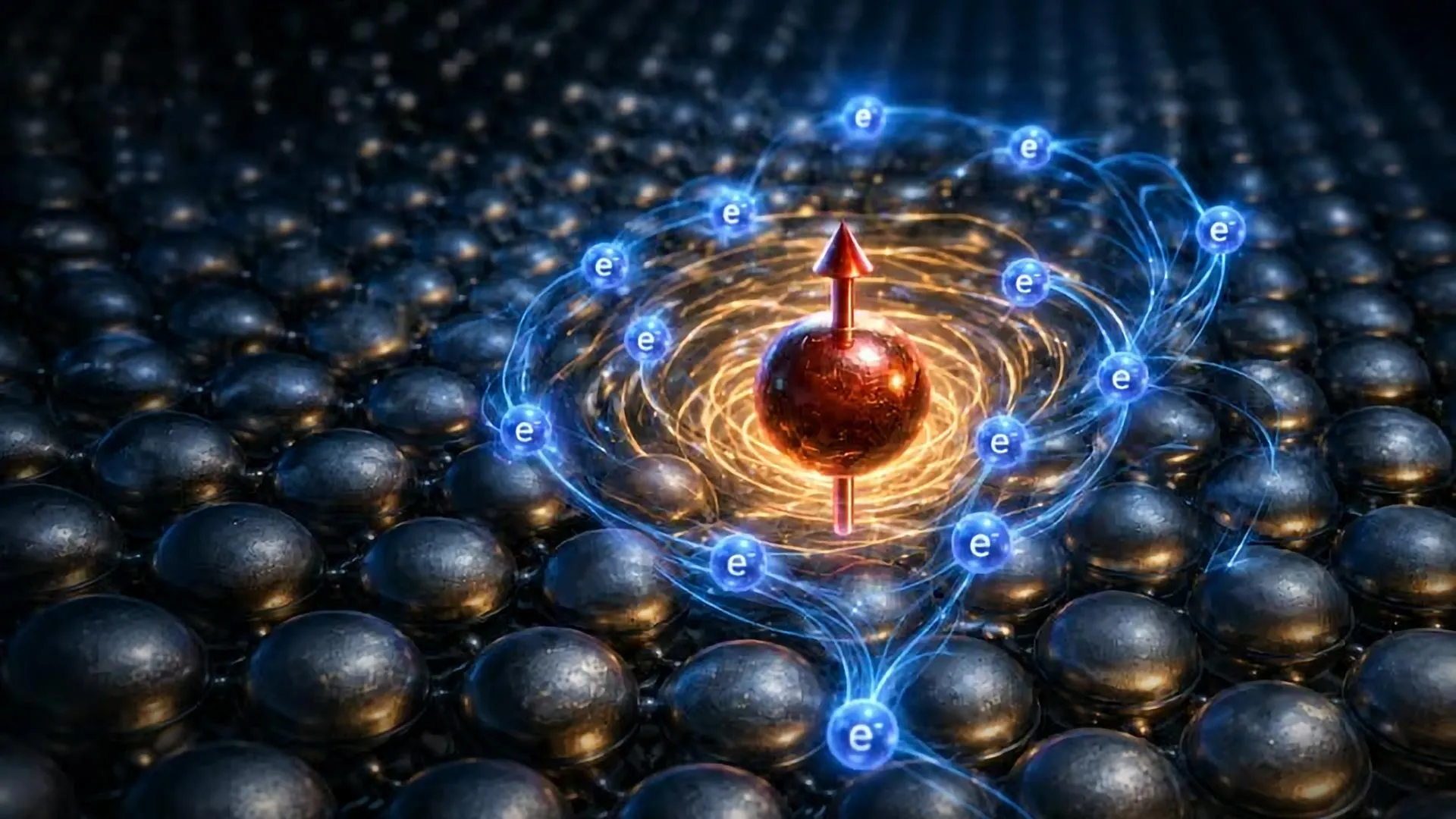
The study, led by Bobby Kaman, a graduate student in materials science and engineering, and Professor Axel Hoffmann, a renowned expert in magnetism and spintronics, centers on the behavior of spin waves within a structured magnetic film. While electronics relies on the flow of electrons to carry information, magnonics—a subfield of magnetism—uses spin waves, which are collective excitations of the magnetic moments (spins) in a material. The Illinois team’s work reveals that when these magnetic systems are organized into specific geometric patterns, their behavior mirrors the "massless" behavior of electrons in graphene.
Graphene, a single layer of carbon atoms arranged in a hexagonal lattice, became a scientific sensation following its isolation in 2004. Its unique properties stem from its electronic structure, where electrons behave as if they have no mass, moving at constant speeds regardless of their energy. This allows graphene to conduct electricity with incredible efficiency. By proving that magnetic systems can be engineered to mimic this mathematical signature, the Illinois researchers have opened the door to applying the vast library of knowledge regarding graphene electronics to the field of magnetism.
The Mathematical Framework: From Metamaterials to Magnonics
The inspiration for this discovery was rooted in the study of metamaterials—engineered structures designed to exhibit properties not found in nature. Lead author Bobby Kaman’s background in metamaterials allowed him to view magnetic films not just as static materials, but as platforms for wave manipulation. He recognized a fundamental parallel: both the electrons in graphene and the microscopic magnetic excitations (magnons) in thin films behave as waves.
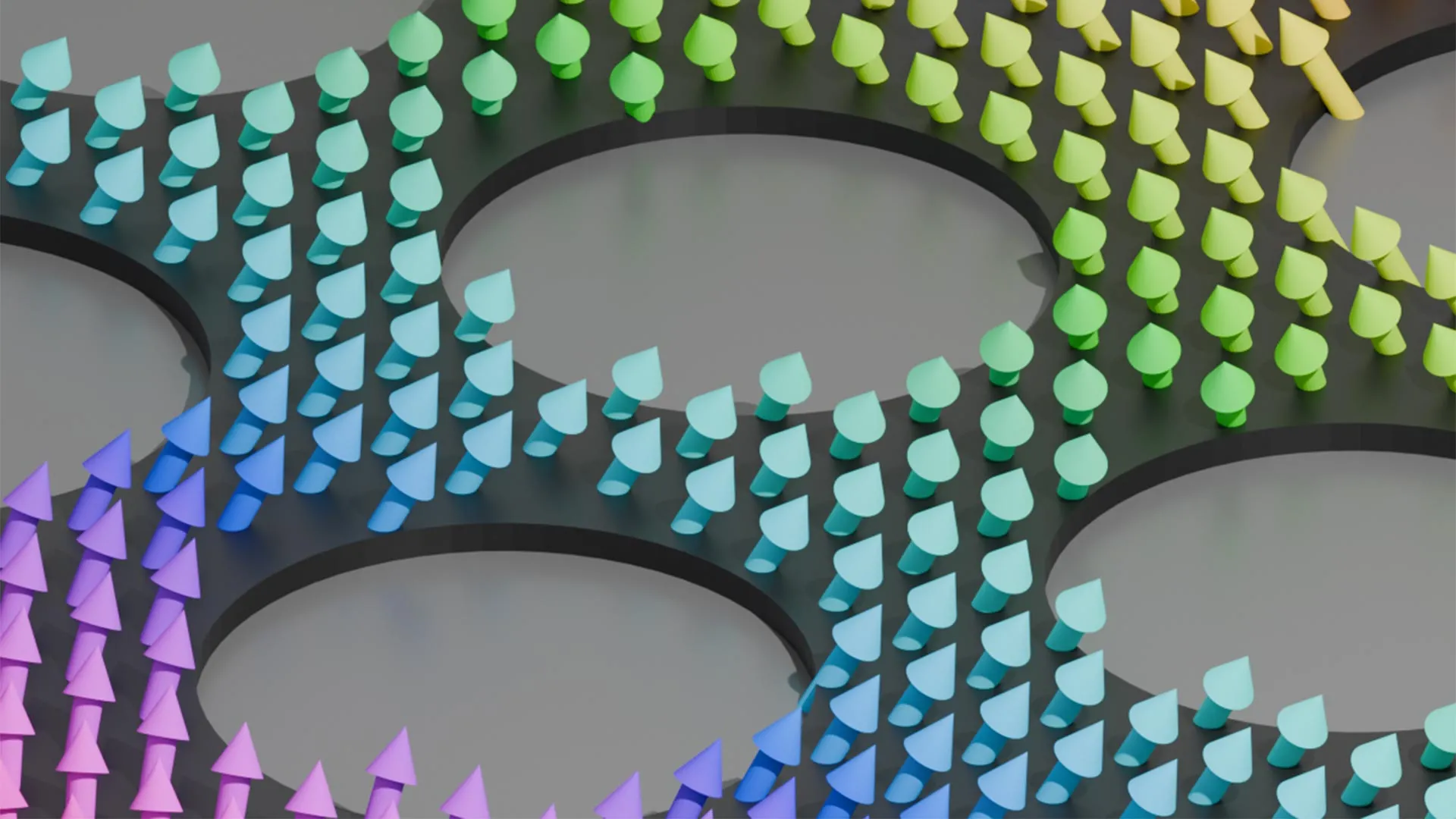
To test the hypothesis that a magnetic system could act like graphene, the research team utilized computational modeling to design a "magnonic crystal." This involved a thin magnetic film featuring a series of microscopic holes arranged in a precise hexagonal (honeycomb) lattice, identical to the atomic arrangement of carbon in graphene. They then analyzed how "spins"—the intrinsic angular momentum of electrons that creates magnetism—interacted within this perforated landscape.
When the team calculated the energy levels of the resulting spin waves, the results were startling. The mathematical behavior of the spins did not merely resemble graphene; it was functionally identical in several key aspects. Specifically, the researchers found "Dirac points"—singularities where the energy bands touch and the waves behave as if they are massless. This mathematical symmetry is what gives graphene its extraordinary conductive properties, and finding it in a magnetic system suggests that spin waves can be controlled with the same level of precision as graphene’s electrons.
Unveiling a Complex Energy Spectrum
The study’s findings went beyond a simple one-to-one imitation of graphene. The researchers identified a sophisticated energy landscape consisting of nine distinct energy bands. In the world of quantum mechanics and solid-state physics, energy bands determine how particles or waves move through a material. The presence of nine bands indicates a much richer variety of behaviors than originally anticipated.
- Massless Spin Waves: Similar to the Dirac fermions in graphene, these waves travel through the material with high mobility and linear dispersion, meaning their velocity is independent of their wavelength.
- Localized States: The researchers observed low-dispersion bands, where the spin waves become "trapped" or localized in specific areas of the hexagonal lattice. This is a critical feature for storing information or creating "on-off" states in magnetic logic gates.
- Topological Effects: Perhaps most significantly, the study identified topological characteristics that span multiple bands. Topology in physics refers to properties that remain unchanged even when a system is deformed. Topological spin waves are highly resistant to defects and impurities, making them ideal candidates for robust, interference-free signal transmission.
Professor Axel Hoffmann noted that this discovery provides a unifying theory for a field that has historically been fragmented. "Magnonic crystals are notorious for producing an overwhelming variety of structure- and geometry-dependent phenomena, most of which are cataloged without really being understood," Hoffmann said. "The graphene analogy in this system provides a clear explanation for the observed behaviors."
A Chronology of Discovery: From Graphene to Magnonic Crystals
To understand the weight of this breakthrough, one must look at the timeline of 2D materials and magnetism:
- 1928: Felix Bloch first describes "spin waves" (magnons) as the collective excitation of magnetic spins in a lattice.
- 2004: Andre Geim and Konstantin Novoselov isolate graphene at the University of Manchester, proving that stable 2D materials can exist and possess unique electronic "massless" properties.
- 2010s: The field of magnonics gains momentum as researchers seek ways to transmit data without the heat dissipation issues associated with moving electric charges.
- 2020-2023: The Illinois team begins experimenting with hexagonal patterns in magnetic films, moving from theoretical wave mechanics to specific materials science simulations.
- 2024: The publication of the study in Physical Review X establishes the formal mathematical bridge between the two fields.
This chronology highlights how the Illinois research serves as a culminating point, bringing together nearly a century of magnetic theory with the modern revolution in two-dimensional materials.
Technical Implications for Microwave and Radiofrequency Technology
The most immediate practical application of this research lies in the field of telecommunications, specifically in the development of microwave and radiofrequency (RF) devices. Modern wireless communication, including 5G and satellite signals, relies on components that can filter, direct, and isolate high-frequency signals.
One such critical component is the "microwave circulator." In a standard circuit, signals can travel in any direction, but a circulator forces microwave radio signals to propagate in only one direction. This prevents interference and protects sensitive transmitters from reflected signals. Traditionally, these devices are bulky, often measuring several centimeters in size, and rely on large permanent magnets.
The magnonic system designed by Kaman and Hoffmann offers a path toward extreme miniaturization. Because the spin waves in their hexagonal magnetic film behave with the efficiency of graphene electrons, the team believes these microwave devices can be scaled down to the micrometer level. This would allow for the integration of circulators and filters directly onto microchips, drastically reducing the size of cellular base stations, satellite transceivers, and even consumer smartphones.
Official Responses and Commercial Prospects
The research has already moved beyond the halls of academia. Recognizing the commercial potential of miniaturized RF components, Professor Hoffmann’s research group has filed a patent application for the microwave device concepts derived from this study. This proactive step suggests that the transition from a mathematical analogy to a physical product may happen sooner than typical for such fundamental research.
Industry analysts suggest that the demand for "on-chip" magnetic solutions is at an all-time high. As the world moves toward 6G technology, which will operate at even higher frequencies, the limitations of traditional electronic filters become more pronounced. Magnonic systems, with their ability to handle high frequencies with low power consumption and high topological stability, are seen as a frontrunner for the next generation of RF infrastructure.
The research also received significant institutional backing. The work was supported by the Illinois Materials Research Science and Engineering Center (MRSEC), a program funded by the National Science Foundation (NSF). This support underscores the strategic importance of the research in maintaining American leadership in semiconductor and materials science.
Analysis of Broader Scientific Impacts
The implications of this study extend into the realm of fundamental physics. By showing that a magnetic system can "masquerade" as an electronic system, the researchers have validated the idea of "universal physics"—the concept that different physical systems can be governed by the same underlying equations.
This allows scientists to use magnetic systems as "simulators" for complex electronic behaviors that are difficult to observe in actual graphene. For example, because the hexagonal holes in the magnetic film are much larger than the atoms in graphene, they are easier to manipulate and observe under a microscope. Researchers can introduce "defects" into the magnetic lattice and watch how the waves respond, gaining insights that can then be applied back to electronic materials.
Furthermore, the discovery of topological bands in this system aligns with the growing field of topological insulators. These are materials that are insulators on the inside but conduct electricity (or in this case, spin waves) on their surface. The ability to engineer these states in a magnetic film could lead to "spintronic" computers that process information with almost zero energy loss, potentially solving the heat problems that currently limit the speed of modern processors.
Conclusion: A New Era for Two-Dimensional Systems
The work of Kaman, Hoffmann, and their colleagues Jinho Lim and Yingkai Liu marks a significant milestone in the study of condensed matter. By proving that the "massless" physics of graphene is not a unique quirk of carbon atoms, but rather a mathematical consequence of hexagonal symmetry that can be replicated in magnetic systems, they have bridged a gap that has existed for decades.
As the electronics industry reaches the physical limits of silicon-based technology, the ability to engineer materials based on their mathematical properties rather than their chemical ones offers a new frontier. The transition from bulky microwave components to micrometer-scale magnonic devices is just the beginning. In the long term, this "mathematical bridge" may lead to an entirely new class of hybrid devices where magnetism and electronics are no longer treated as separate entities, but as two sides of the same computational coin. With a patent already in process and the scientific community taking note of the nine-band complexity of these systems, the Grainger College of Engineering has set the stage for a revolution in how we communicate, calculate, and understand the physical world.