In a significant breakthrough for analytical chemistry and molecular detection, a multidisciplinary research team at the University of Toronto has engineered a novel class of dye-sensitized nanoparticles. These advanced nanoscale structures possess the rare ability to detect chemical substances at exceptionally low concentrations while concurrently discriminating between nearly identical molecular geometries. Published in the Journal of the American Chemical Society, the innovation bridges a long-standing technological gap in optical sensing, offering profound implications for pharmaceutical manufacturing, environmental safety, and advanced diagnostics.
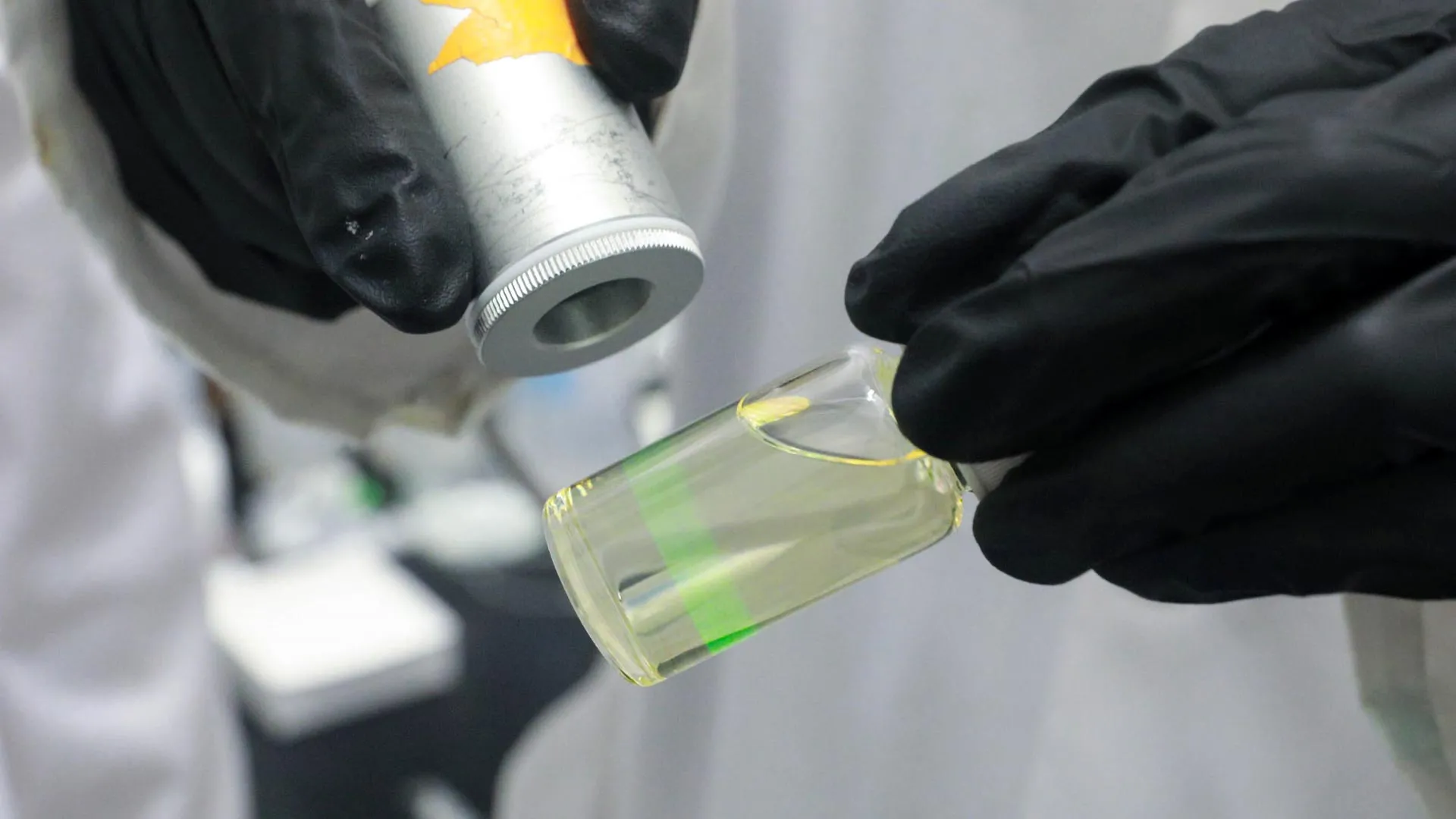
The core mechanism of the newly developed nanoparticle relies on an optical phenomenon known as photon upconversion. When exposed to low-energy near-infrared light—which is easily and affordably generated by standard diode lasers—the nanoparticles absorb these photons and successfully convert them into much higher-energy emissions, typically glowing in a vibrant green hue. This upward shift in energy frequency provides an enormous operational advantage over traditional fluorescent markers by virtually eliminating background optical noise, thereby revolutionizing how scientists observe microscopic molecular interactions.
The Chronology of Innovation: Overcoming the Back-Energy Bottleneck
The path toward developing these ultra-bright nanoparticles required years of theoretical modeling, materials testing, and structural redesign. For decades, scientists have utilized organic molecules called fluorophores to absorb light and emit lower-energy colorful displays. However, conventional fluorophores operate strictly in a downward direction, converting high-frequency excitation light into lower-frequency emissions. This traditional dynamic has persistently struggled with autofluorescence, a phenomenon where the sample matrix itself generates background glow that obscures the target signal.
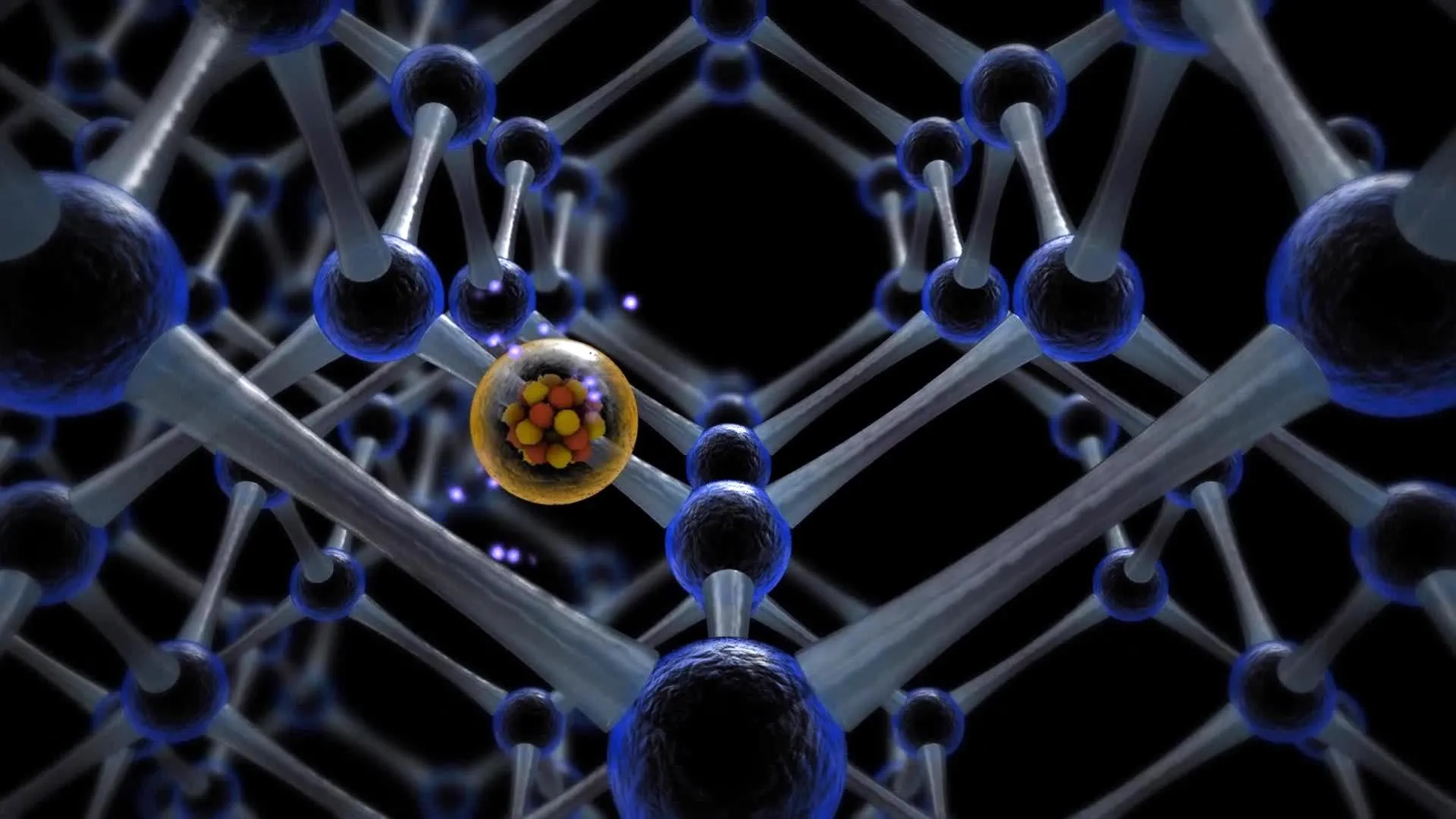
To circumvent this limitation, materials scientists turned to lanthanide-doped upconversion nanoparticles (UCNPs), utilizing rare-earth ions such as ytterbium and erbium embedded within a crystalline host matrix. In these legacy designs, organic dye molecules coated the exterior of flat, hexagonal structures, capturing incoming infrared light and transferring the energy through ytterbium relays to erbium ions, which ultimately produced the visible green output.
Despite their theoretical promise, these earlier generations of nanoparticles suffered from a severe physical limitation known as concentration quenching, or back-energy transfer. As researchers attempted to increase luminescence by packing more ytterbium atoms into the matrix, the dense concentration of ions began inadvertently reabsorbing the outgoing green energy. Instead of escaping to form a measurable signal, the light energy bounced backward into the relay ions and dissipated, rendering the nanoparticles frustratingly dim.
By the early 2020s, the research team led by Professor Kai Huang recognized that incremental adjustments to standard formulas would not resolve the back-energy bottleneck. The breakthrough required a fundamental reinvention of the nanoparticle’s internal architecture, shifting the research approach from physical trial-and-error toward advanced computational materials science.
Advanced Computational Modeling and Structural Redesign
To design a system capable of bypassing back-energy transfer, the University of Toronto team utilized sophisticated computational tools long before synthesizing materials in the laboratory. Undergraduate researcher Weixiang Ben spearheaded the computational phase, employing Monte Carlo simulations and density functional theory (DFT) to model atomic and subatomic energy exchanges across various structural configurations.
These computer-driven simulations allowed the team to virtually test dozens of chemical formulations and geometric shapes. The computational modeling ultimately revealed that altering both the host matrix material and the spatial distribution of dopant ions could establish a functional one-directional energy tunnel.
Moving away from traditional sodium, yttrium, and fluorine matrices, the researchers engineered a novel host composition utilizing lithium, lutetium, and fluorine. Simultaneously, they discarded the flat hexagonal geometry in favor of a three-dimensional, diamond-shaped core-shell-shell architecture.
Led by PhD student and primary paper author Jiaze Wu, the laboratory successfully manufactured particles featuring a distinct atomic concentration gradient. The interior core of the nanoparticle maintained the highest density of embedded ytterbium ions, stepping down progressively through an inner shell to an outer shell covered in sensitizing dye molecules. This deliberate structural gradient ensured that incoming light energy flowed almost entirely in a single inward direction toward the central erbium emitters, effectively blocking any return path and stopping energy loss at the atomic scale.
Quantitative Performance Data and Unprecedented Brightness
The empirical validation of the newly modeled nanoparticles exceeded initial expectations, yielding dramatic performance metrics that distinguish the Toronto research from prior optical sensor technologies.
Laboratory measurements confirmed that the newly engineered dye-sensitized nanoparticles generate an optical signal roughly 150 times brighter than standard upconversion nanoparticles lacking dye sensitization. Furthermore, under identical near-infrared excitation parameters, the core-shell-shell structures proved to be approximately 50 times brighter than the most highly optimized conventional upconversion structures documented in scientific literature to date.
This extraordinary leap in luminescence directly translates to hyper-sensitivity. Because each individual nanoparticle emits a substantially stronger optical signal, analytical instruments can register the presence of extremely scarce target molecules. A minuscule quantity of nanoparticles bound to a contaminant or pharmaceutical byproduct is sufficient to produce a readable, unambiguous optical confirmation.
Beyond sheer detection thresholds, the nanoparticles excel in molecular selectivity, successfully differentiating between structural isomers. Isomers are molecules that share an identical chemical formula and atomic composition, yet possess distinct spatial arrangements. In industrial and chemical applications, failing to distinguish between two isomers can alter substance efficacy or introduce toxicity.
Industrial Implications: Pharmaceutical Quality Control and Environmental Monitoring
The practical applications of this high-brightness, high-selectivity technology span several critical industries, with pharmaceutical manufacturing standing as an immediate beneficiary.
During the synthesis of complex pharmaceutical compounds, manufacturing processes occasionally yield unintended structural isomers alongside the desired active pharmaceutical ingredient. In modern drug production, even a minor percentage of an incorrect isomer can reduce therapeutic efficacy or trigger adverse physiological side effects. Historically, identifying and quantifying such minute isomeric impurities has required complex, time-consuming, and expensive analytical procedures, such as high-performance liquid chromatography or mass spectrometry.
The University of Toronto nanoparticles offer a streamlined alternative. As Wu notes, manufacturers could theoretically screen batch samples for unwanted isomers utilizing low-cost near-infrared lasers and small sample volumes, drastically reducing operational overhead while accelerating quality assurance pipelines.
Beyond pharmaceutical laboratories, the technology holds significant potential for environmental science. Environmental researchers continually face the challenge of detecting trace chemical pollutants—such as persistent organic compounds, heavy metals, or endocrine disruptors—dispersed across vast volumes of groundwater, rivers, or industrial runoff. Conventional sensing mechanisms often struggle with background interference in complex natural water matrices. By shifting excitation wavelengths into the near-infrared spectrum and utilizing zero-autofluorescence background detection, the new luminescent nanoprobes can illuminate trace contaminants that would otherwise remain undetected against environmental noise.
Expert Perspectives and Strategic Roadmaps
The academic and industrial communities have closely monitored the development, viewing the research as a foundational milestone in optical physics and chemical sensing. Professor Kai Huang emphasizes that the conceptual leap achieved by his team redefines the boundaries of what upconversion nanoparticles can accomplish.
"It’s like the difference between stargazing at night versus the daytime," Huang explains, illustrating the optical advantage of the system. "The stars shine the same brightness all the time, but during the day the sun is so powerful that it overwhelms them. Shifting the excitation frequency lower produces zero-autofluorescence background in the samples you are analyzing, while the luminescent nanoprobes keep shining; it is like turning off the sun, so you can see the stars better."
Despite the breakthrough, the technology remains at the proof-of-concept stage. Transitioning the nanoparticles from a university research lab to commercial manufacturing lines presents distinct logistical hurdles. Scalability, long-term biocompatibility testing for in vivo diagnostics, and standardization of mass-production protocols represent the next logical phases of development.
Recognizing these challenges, the research team has already initiated engineering efforts aimed at large-scale synthesis. According to Huang, the roadmap toward commercial viability is long but feasible. The current iteration serves as a versatile blueprint demonstrating that high-performance upconversion nanoparticles can be custom-tailored to bind with and detect virtually any designated molecular target.
As the scientific community reviews these findings, the University of Toronto innovation underscores the power of combining deep computational modeling with advanced materials engineering. By turning infrared light into a bright, noise-free beacon of molecular data, these engineered nanoparticles bring researchers one step closer to absolute precision in chemical detection.