The global plastic waste crisis has long challenged municipal governments, environmental scientists, and industrial engineers alike. For decades, traditional recycling methods have struggled with economic viability, high energy costs, and the degradation of plastic polymers during processing. However, a major technological breakthrough achieved by researchers at the Department of Energy’s Oak Ridge National Laboratory (ORNL) may fundamentally alter how society approaches polymer waste. By utilizing aluminum-chloride-containing molten salts, scientists have successfully transformed polyethylene—one of the world’s most ubiquitous and durable plastics—into valuable gasoline- and diesel-like fuels at temperatures well below those required by conventional pyrolysis techniques.
The newly developed technology operates through a remarkably streamlined chemical pathway that bypasses many of the traditional hurdles plaguing the plastic-to-fuel industry. By combining waste polyethylene with inorganic molten salts that simultaneously serve as the reaction medium and the active catalyst, the research team achieved a gasoline yield of approximately 60 percent. This innovation has already been documented in the Journal of the American Chemical Society, and the team has officially applied for a patent to protect the intellectual property, paving the way for potential future industrial integration.
A Historical Foundation in Molten Salt Research
The journey toward this modern chemical achievement is rooted in decades of institutional expertise at Oak Ridge National Laboratory. The laboratory’s history with molten salts dates back to the 1960s, a period when ORNL scientists pioneered the Molten Salt Reactor Experiment. That landmark project demonstrated that specific mixtures of molten salts could effectively function simultaneously as both nuclear fuel and reactor coolant, establishing a legacy of expertise in handling these demanding inorganic compounds.
Building upon this long-standing institutional knowledge, ORNL Corporate Fellow and section head for separations and polymer chemistry Sheng Dai proposed a novel departure from historical applications. Recognizing that molten salts remain chemically stable under intensely demanding reaction conditions, Dai theorized that these compounds could be redirected to tackle an entirely different global challenge: the upcycling of discarded consumer polymers. This historical continuity highlights how foundational basic science investments made decades ago continue to yield unexpected dividends for modern environmental and energy challenges.
The collaborative effort brought together multidisciplinary expertise across ORNL and the University of Tennessee, Knoxville (UTK). Managed by Tomonori Saito, whose background lies in polymer science, the project drew upon specialists in neutron scattering, quantum chemistry, spectroscopy, and advanced imaging to dissect and optimize the chemical conversion process at the atomic level.
The Chemistry of Low-Temperature Conversion
To transform stable, long-chain polymers like polyethylene—commonly found in single-use shopping bags, packaging films, and kitchen cutting boards—into shorter-chain hydrocarbons, conventional methods have historically relied on pyrolysis. Pyrolysis is an energy-intensive thermal decomposition process that breaks massive polymer molecules into smaller hydrocarbon fractions, typically requiring furnace temperatures ranging from 450 to 500 degrees Celsius. These extreme thermal requirements make traditional systems costly, complex, and energy-negative in many operational scenarios.
In stark contrast, the ORNL method operates at temperatures below 200 degrees Celsius, roughly equivalent to the ambient operating temperature of a standard domestic kitchen oven. This dramatic reduction in thermal energy requirements is enabled by the unique properties of the aluminum-chloride molten salts.
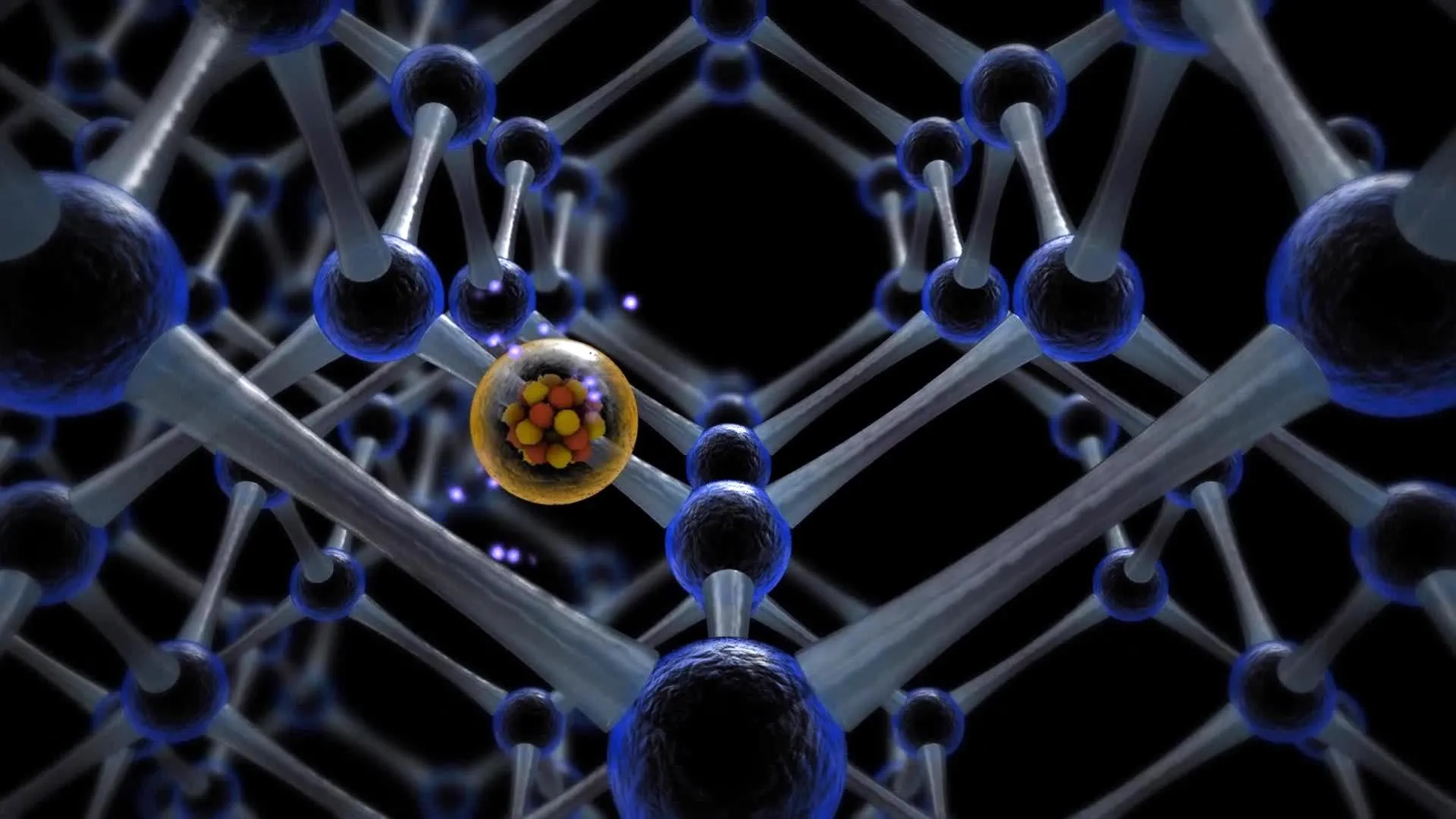
Through advanced analytical techniques, the research team mapped the reaction mechanism atom by atom. Soft X-ray spectroscopy conducted at Lawrence Berkeley National Laboratory’s Advanced Light Source revealed that charged aluminum atoms within the salt bind with three other atoms, generating highly acidic catalytic sites. These active sites directly attack the robust molecular bonds of the polyethylene chains, splitting them into manageable hydrocarbon fragments.
Furthermore, experiments utilizing isotopic labeling—specifically tagging carbon ions with deuterium, an isotope of hydrogen—allowed postdoctoral researcher Liqi Qiu and co-corresponding author Zhenzhen Yang to track the precise evolution of the carbon ions as the reaction unfolded. Researchers at ORNL’s Spallation Neutron Source utilized the VISION beamline to leverage neutron scattering, an ideal method for detecting lightweight elements like hydrogen within complex chemical matrices.
The structural characteristics of the input material directly dictate the output fuel profile. Simpler initial polymer chains preferentially yield gasoline-like compounds, while more structurally complex starting materials generate diesel-like hydrocarbons. This selectivity provides operators with a degree of control previously unseen in bulk plastic conversion methods.
Unprecedented Process Simplification
Beyond the reduction in operating temperatures, the ORNL molten salt system offers significant operational advantages by eliminating several costly inputs traditionally required in chemical upcycling.
According to Zhenzhen Yang, an ORNL staff scientist and co-corresponding author of the study, the new technique completely removes the need for noble-metal catalysts, external hydrogen gas supplies, organic solvents, and external chemical initiators. Traditional catalytic systems invariably require an initiator molecule to kick off the reaction sequence, adding both financial cost and process complexity. The ORNL molten salt system initiates and sustains the catalytic conversion autonomously once the polymer is introduced to the molten salt medium.
"We converted polymer waste to value-added fuels by using commercially available inorganic salts as the reaction media to provide the catalytic sites," Yang noted. "Unlike traditional techniques for converting polymer to fuel, the new process did not require noble-metal catalysts, organic solvents or external hydrogen. This is the first time molten salts were used as media to produce high-value-added chemicals from waste without any catalytic initiator or solvent and at a temperature below 200 degrees Celsius."
This elimination of expensive reagents and severe operating conditions addresses two fundamental engineering bottlenecks that have historically hindered the commercial scalability of plastic-to-fuel technologies: system stability and input cost.
Analytical Validation and Multidisciplinary Collaboration
Unraveling the complex atomic transformations occurring within the molten salt mixture required a coordinated suite of advanced scientific instruments and computational modeling. The depth of the investigation reflects modern materials science approaches, combining empirical observation with theoretical validation.
At ORNL’s Center for Nanophase Materials Sciences, computational scientist Bobby Sumpter deployed advanced computer simulations to model energy shifts throughout the reaction cycle. These simulations clarified how stable carbon ions formed and subsequently transferred into hydrocarbon products. Concurrently, Michael Koehler at UTK utilized in situ X-ray diffraction to monitor phase changes within the reaction mixture in real time, while Carlos Alberto Steren applied nuclear magnetic resonance spectroscopy to characterize the local chemical environment of the aluminum catalytic sites.
Additional contributions came from Luke Daemen, who employed neutron scattering to categorize the resulting hydrocarbon products, and Felipe Polo-Garzon, who analyzed chemical output using gas chromatography-mass spectrometry. Tao Wang provided vital expertise in molten salt chemistry, and Logan Kearney supplied high-density polymer samples while advising on industrial downstream processing pathways.
This synthesis of physical experimentation, neutron analysis, synchrotron spectroscopy, and quantum chemical modeling provided undeniable confirmation that the aluminum sites were actively coordinating with aromatic ring intermediates to drive the catalytic cleavage of the polymer chains.
Current Limitations and Path to Commercialization
Despite the technical triumphs of the laboratory-scale experiments, the research team remains candid regarding the remaining hurdles standing between current academic success and commercial industrial implementation.
The primary technological challenge involves the inherent properties of the aluminum-based catalytic system itself. The molten salt mixture is hygroscopic, meaning it has a strong chemical affinity for absorbing moisture from the surrounding environment. Exposure to water can compromise the stability and long-term catalytic activity of the salts, presenting a durability challenge for continuous industrial operations.
To address this limitation, the research team is actively investigating containment strategies. Future work will explore confining the molten salts within supporting matrices, such as carbon-based nanomaterials or halogenated structures. Such confinement could stabilize the active sites against moisture degradation while simultaneously simplifying the separation and recovery of the salt media following fuel extraction.
If these engineering challenges can be successfully resolved, the implications for domestic energy security and industrial manufacturing are substantial. Plastic waste represents an abundant, globally distributed carbon resource that currently imposes severe economic and environmental burdens on municipalities. By establishing a low-temperature, highly selective conversion pathway utilizing inexpensive inorganic precursors, the ORNL process transforms a liability into a strategic asset.
While the technology is not yet ready for immediate commercial deployment, the fundamental scientific insights generated by the Oak Ridge team establish a robust foundation for future scale-up efforts. As Liqi Qiu emphasized, the ready availability of consumer plastic waste paired with inexpensive aluminum molten salts provides a compelling economic rationale for continued development.
The research was primarily supported by the U.S. Department of Energy Office of Science, specifically through the Materials Sciences and Engineering Division and the Chemical Sciences, Geosciences and Biosciences Division’s Catalysis Science program. By continuing to leverage DOE user facilities—including the Spallation Neutron Source, the Center for Nanophase Materials Sciences, and Lawrence Berkeley National Laboratory’s Advanced Light Source—the researchers aim to refine the technology, overcome stability barriers, and bring this innovative upcycling strategy closer to commercial reality.