Physicists at the University of Oxford, working in close collaboration with the international ATLAS collaboration at CERN, have successfully demonstrated that quantum entanglement—one of the most bizarre and counterintuitive phenomena in modern physics—can survive even among some of the heaviest and most ephemeral elementary particles ever produced. Published recently in the prestigious journal Physical Review Letters under the title Measurements of Z-boson pair entanglement in decays of Higgs bosons at the ATLAS experiment, this groundbreaking finding pushes the boundaries of quantum mechanics into the realm of high-energy particle physics, proving that nature’s strangest rules remain robust even under conditions of unimaginable violence and temperature.
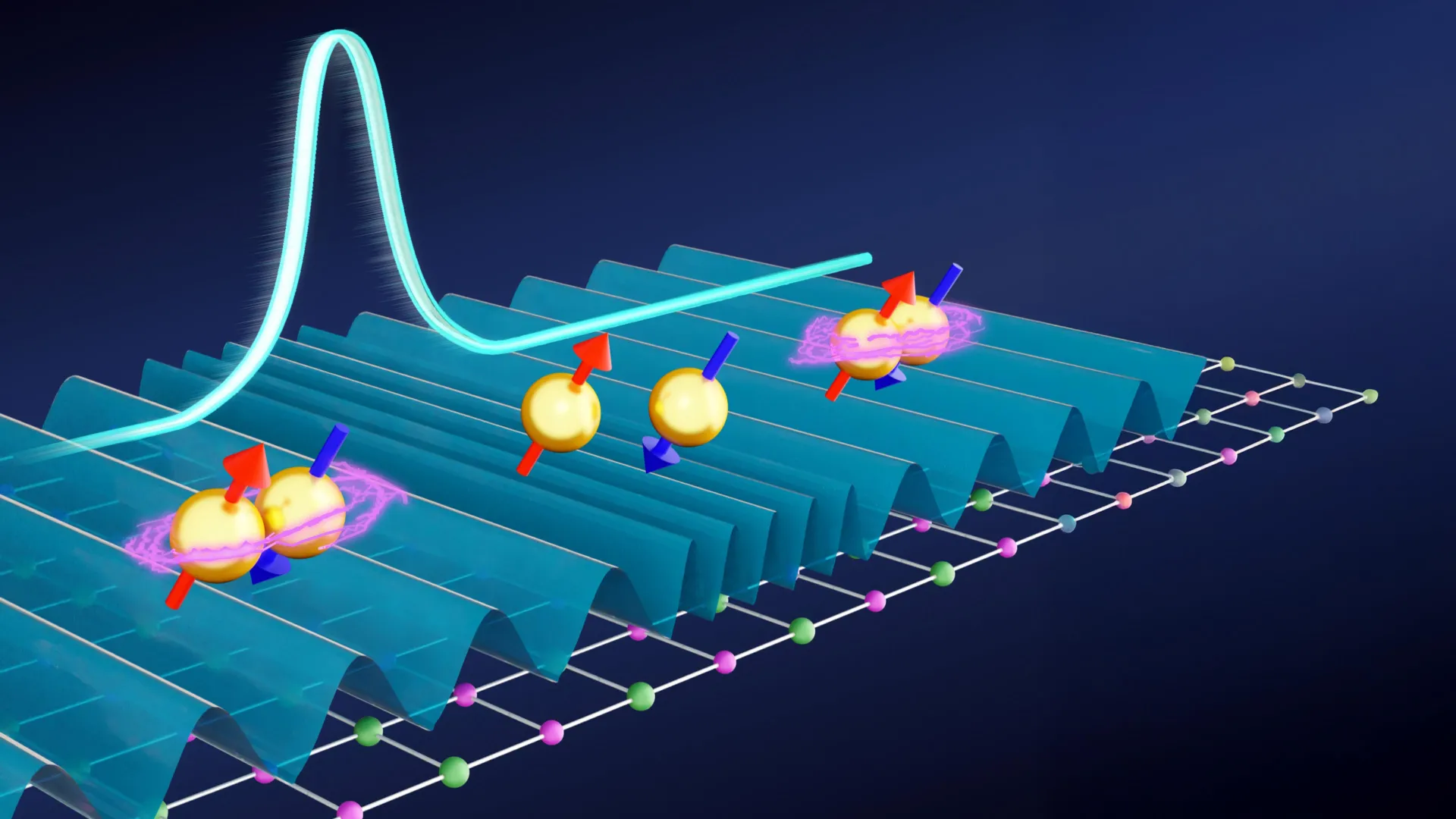
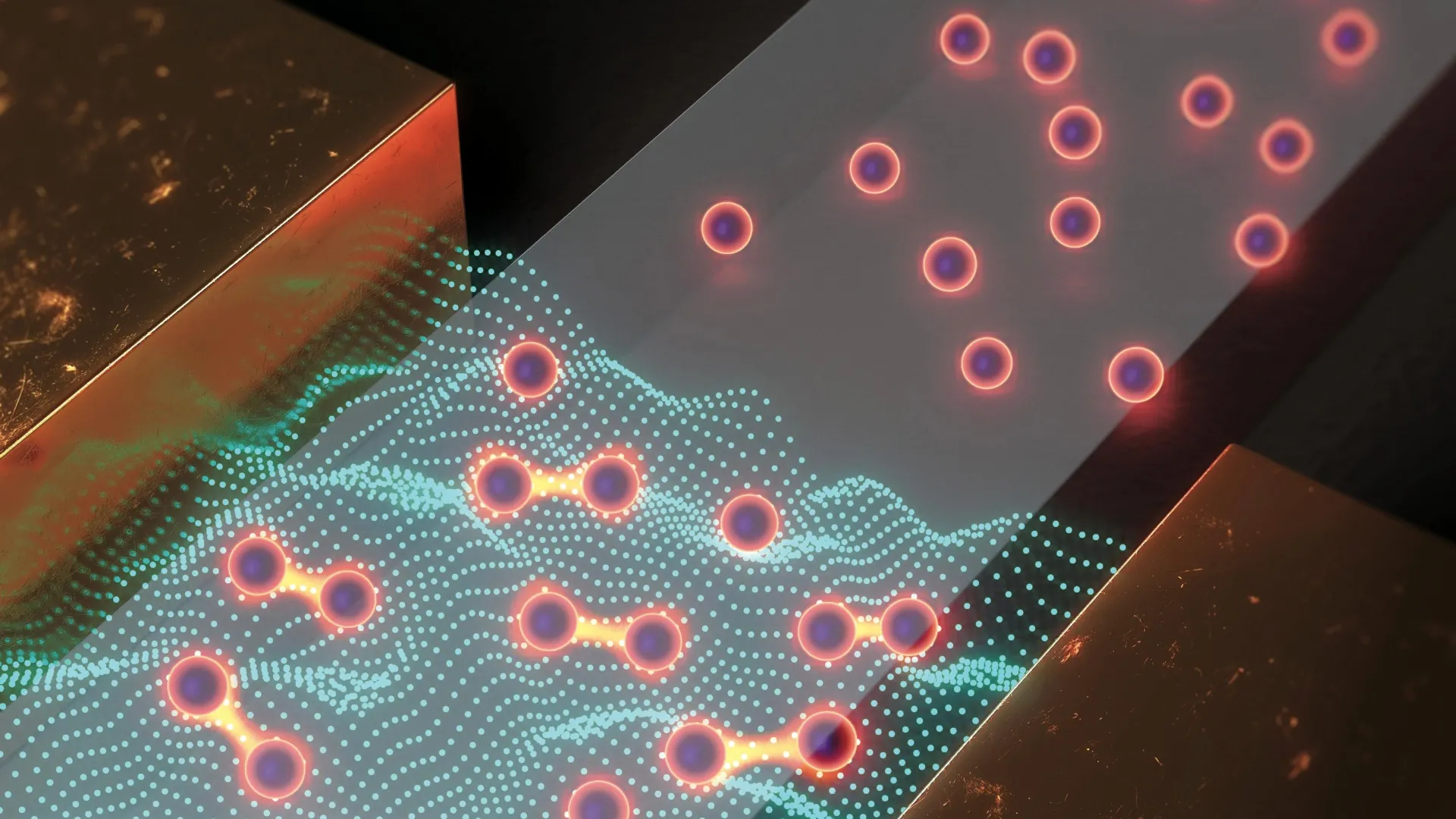
For nearly a century, quantum entanglement has captivated and baffled the scientific community. First popularized and critically scrutinized by Albert Einstein, who famously dismissed the phenomenon as "spooky action at a distance," entanglement occurs when a pair or group of particles interact in such a way that the physical state of each particle cannot be described independently of the state of the others, even when the particles are separated by vast distances. When a measurement is performed on one entangled particle, the state of its counterpart is instantaneously determined. While this concept has been exhaustively demonstrated in controlled laboratory environments using relatively fragile, low-energy systems such as photons, electrons, and trapped ions, verifying its existence in high-energy regimes has long remained an elusive goal.
The practical applications of entanglement have expanded exponentially in recent years, serving as the foundational bedrock for the burgeoning fields of quantum computing, ultra-secure quantum communication networks, and advanced quantum sensing. In the architecture of a quantum computer, entanglement enables multiple qubits to exist and be manipulated in superpositions, allowing computational algorithms to process vast arrays of data simultaneously rather than sequentially. However, transitioning these delicate quantum states from quiet, isolated optics laboratories to the chaotic, high-energy crucible of a particle collider required a radical paradigm shift in experimental methodology.
Tracing the Chronology of High-Energy Quantum Investigations
The journey toward verifying quantum entanglement at CERN’s Large Hadron Collider (LHC) has evolved over the past decade through a steady convergence of quantum information science and high-energy particle physics. The conceptual groundwork was laid years ago when theorists began questioning whether the fragile correlations of entanglement could endure the cataclysmic energy densities generated when protons are smashed together at velocities approaching the speed of light.
A pivotal milestone in this chronological progression occurred in 2023, when the ATLAS collaboration successfully demonstrated quantum entanglement between pairs of top quarks. As the heaviest known elementary particles in the Standard Model, top quarks provided a compelling testbed, but researchers were eager to push the boundaries further by examining different particle species and decay channels. The logical next step involved the Z boson, a massive gauge boson responsible for mediating the weak nuclear force, which exists for only an infinitesimal fraction of a second before decaying into lighter leptons.
The specific Z boson pairs investigated in the latest study originated from a remarkably rare cosmic choreography: the decay of a Higgs boson. Discovered at the LHC in 2012, the Higgs boson is renowned for giving other fundamental particles their mass. In this particular experimental scenario, protons traveling at 99.999999% the speed of light collide within the 27-kilometer ring of the LHC near Geneva, Switzerland, generating center-of-mass energies reaching thirteen trillion electron volts ($13text TeV$). These high-energy collisions occasionally produce a Higgs boson, which then rapidly decays into a pair of Z bosons, which subsequently decay into secondary leptons, specifically electrons and muons.
Decoding Fleeting Particles Through Advanced Detectors
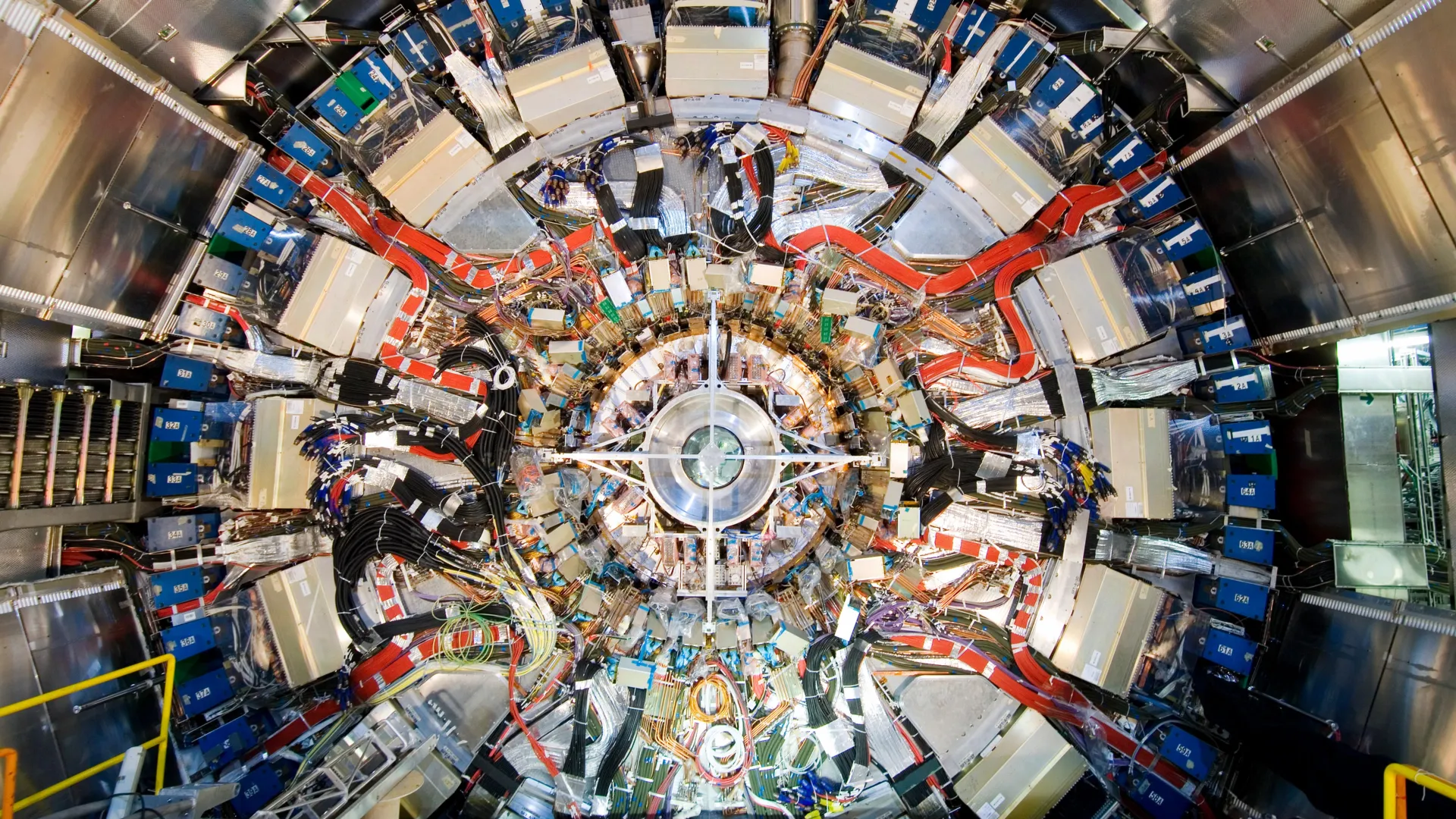
Because Z bosons possess an extraordinarily short lifetime—vanishing in roughly $3 times 10^-25$ seconds—direct observation of their entangled states is fundamentally impossible. To circumvent this limitation, researchers relied upon the immense precision and sophistication of the ATLAS detector, a multi-purpose particle detector designed to record the trajectories, momenta, and energies of particles emerging from LHC collisions.
Although the Z bosons themselves disappeared almost instantaneously, they left behind clear and measurable signatures in the form of electrons and muons. By analyzing the precise angular distributions and momentum correlations of these decay products, the ATLAS research team was able to mathematically reconstruct the quantum spin states of the parent Z bosons. This advanced reconstruction technique allowed scientists to test for Bell inequality violations and other statistical markers of quantum entanglement, ultimately revealing undeniable correlations between the particles that could not be explained by classical physics.
The resulting data provided robust, statistically significant evidence of quantum entanglement at energy scales millions of times greater than those typically utilized in traditional quantum optics experiments. This achievement firmly establishes that entanglement is not merely a delicate artifact of ultra-cold laboratory setups, but an intrinsic, universal property of quantum fields operating across all energy spectrums.
Perspectives from Leading Physicists and Interdisciplinary Pioneers
The success of the ATLAS measurement is the culmination of years of theoretical foresight and experimental engineering spearheaded by interdisciplinary teams. Professor Alan Barr of Oxford’s Department of Physics, who was among the original architects of the LHC instrumentation, recognized early on that colossal particle colliders could be repurposed to explore the foundations of quantum mechanics.
Reflecting on the magnitude of the discovery, Professor Barr noted that humanity is culturally conditioned to view entanglement as a fragile phenomenon requiring absolute isolation from thermal and environmental disturbances. "We’re used to thinking of entanglement as something delicate, seen in laboratory experiments with single photons," Professor Barr remarked. "Finding it alive and well among particles as heavy and short-lived as Z bosons, created in some of the most violent collisions we can produce on Earth, shows just how fundamental and robust this quantum effect really is. It’s a nice reminder that the same strange rules of quantum mechanics that may one day power quantum computers are at work everywhere in nature, even at the extreme energies of the Large Hadron Collider."
The implications of this research extend far beyond particle physics, fostering a vibrant intellectual bridge between empirical physics and the philosophy of science. At the University of Oxford, Professor Barr co-leads a major interdisciplinary initiative dedicated to examining the foundational mechanics of quantum systems at high energies. This project explicitly addresses the deep philosophical questions raised by quantum non-locality and entanglement, probing what these empirical observations reveal about the fundamental architecture of physical reality.
Weighing in on the philosophical dimensions of the study, Professor Chris Timpson of Oxford’s Faculty of Philosophy emphasized the paradigm-shifting nature of the collaboration. "Entanglement is both the most promising and the most puzzling aspect of quantum reality," stated Professor Timpson. "These collider experiments detecting entanglement present a new frontier in investigations of the foundations of quantum mechanics."
The Broader Implications for Fundamental Physics and Beyond
The integration of quantum information techniques into high-energy particle physics represents a transformative methodological shift. Traditionally, particle physicists have analyzed collider data by searching for localized mass peaks or deviations in cross-section measurements. By introducing quantum-information-based observables—such as entanglement monotones and spin-density matrix reconstructions—researchers can now probe subtle quantum correlations that are otherwise invisible to standard analytical methods.
This enhanced sensitivity could prove crucial in the ongoing quest to uncover physics beyond the Standard Model. Despite its monumental success in describing subatomic interactions, the Standard Model remains incomplete; it fails to account for gravity, dark matter, dark energy, or the asymmetry between matter and antimatter in the universe. By deploying quantum entanglement as a diagnostic tool, physicists gain a novel lens through which to interrogate the vacuum structure of space-time and search for undiscovered supersymmetric particles, extra dimensions, or anomalous coupling constants.
Looking toward the future, the international scientific community is already preparing for the next generation of experimental hardware. Scientists at Oxford University and partner institutions across the globe are actively contributing to the ongoing technical upgrades of the ATLAS detector. These hardware enhancements are being executed in tandem with preparations for the High-Luminosity Large Hadron Collider (HL-LHC), an ambitious upgrade scheduled to come online later this decade.
The HL-LHC is projected to increase the integrated luminosity of the collider by an order of magnitude, yielding vast petabyte-scale datasets that will allow researchers to apply increasingly sophisticated quantum information algorithms to particle collisions. This exponential increase in statistical power will enable physicists to test quantum entanglement with unprecedented precision across a wider array of Standard Model processes, potentially unlocking new pathways to understanding the universe’s most deeply guarded secrets.
Professor Daniela Bortoletto, Chair of Particle Physics at the University of Oxford and UK coordinator for the production of silicon pixel modules for the upgraded ATLAS detector, underscored the significance of institutional leadership in these global scientific endeavors. "This measurement demonstrates the scientific power of the ATLAS collaboration and the unique capabilities of CERN’s Large Hadron Collider," said Professor Bortoletto. "Oxford researchers have played a leading role in developing these new approaches to studying quantum phenomena at the highest energies, and we are proud to contribute to an international effort that is opening new ways to explore the fundamental laws of nature."
As CERN continues to refine its technological capabilities and theoretical physicists continue to bridge the gap between microscopic quantum information and macroscopic cosmology, humanity moves closer to a unified understanding of reality. What began as Einstein’s philosophical skepticism regarding "spooky action at a distance" has evolved into an empirical cornerstone of modern technology and an active frontier of exploration, proving that even amidst the most violent cataclysms humanity can recreate, the delicate, invisible threads of quantum entanglement hold the subatomic universe together.