The fundamental architecture of the universe rests on a premise so intuitive that it has been taken for granted for centuries: that gravity pulls on all matter equally, regardless of its internal composition. From Galileo Galilei dropping spheres from the Leaning Tower of Pisa to Isaac Newton formulating the laws of classical mechanics, and finally to Albert Einstein weaving this concept into the very fabric of spacetime via his equivalence principle, physics has operated under the assumption that the universality of free fall applies unconditionally. Yet, a glaring blind spot has persisted in modern physics. While researchers have rigorously tested this principle for ordinary, first-generation matter and its corresponding antimatter, an entire realm of heavier, more elusive particles remains untested.
Now, a collaborative team of researchers at ETH Zurich and the Paul Scherrer Institute (PSI) in Villigen, Switzerland, is on the cusp of bridging this historical gap. By turning their attention to the muon—a heavier, second-generation relative of the electron—these scientists are preparing an experiment that could either reaffirm Einstein’s century-old general relativity or point toward revolutionary anomalies in our understanding of fundamental forces, including the hypothetical fifth force of nature.
The Journey of Matter: Understanding Particle Generations
To appreciate the significance of the upcoming PSI experiment, one must first look at the standard blueprint of particle physics. The ordinary matter that constitutes humanity, our planet, and the observable stars is remarkably minimalist. It relies strictly on the first generation of fundamental particles: up-quarks, down-quarks, and electrons, which combine to form protons, neutrons, and atoms.
However, nature harbors a profound and persistent mystery. For reasons that continue to elude theoretical and experimental physicists alike, the universe includes two additional generations of matter. These higher generations consist of particles that are identical to their first-generation counterparts in almost every respect except for one crucial property: they are significantly heavier. The second generation introduces charm and strange quarks, as well as the muon and its associated neutrino, while the third generation brings top and bottom quarks, along with the tau lepton.
The Standard Model of particle physics successfully catalogs these particles and predicts their behaviors with astonishing accuracy, yet it offers zero explanation as to why these redundant generations exist. Why three? And do these heavier, fleeting copies of ordinary matter interact with the fundamental forces of the universe in the exact same manner as their lighter relatives? Specifically, do they obey the universality of free fall, or does mass scale manifest differently under the influence of gravity when scaled up to second-generation particles? Addressing these questions requires pushing experimental physics into realms that were previously considered technologically unreachable.
The Chronology and Engineering Breakthrough of Cold Muonium
Testing gravity on subatomic particles is fraught with extreme experimental hurdles, chief among them being the overwhelming dominance of electromagnetism. Gravity is exceptionally weak—so weak that on the scale of elementary particles, it is practically negligible compared to electromagnetic forces. If a physicist attempts to measure the gravitational pull on a charged particle, any stray electric or magnetic field in the laboratory will completely overshadow the gravitational effect, rendering the measurement impossible.
To circumvent this, researchers must use electrically neutral particles. Enter muonium: an exotic, short-lived atom formed when a positively charged antimuon captures a negatively charged electron. Because muonium is electrically neutral, it serves as an ideal candidate for gravity-free-fall experiments.
Yet, muonium presents two monumental obstacles. First, muons are inherently unstable, boasting a mean lifetime of a mere 2.2 microseconds before decaying into electrons and neutrinos. Second, previous methods of generating muonium yielded atoms traveling at erratic speeds and in random directions, creating a chaotic thermal cloud entirely unsuited for the precise interferometry required to detect minute gravitational shifts.
The turning point arrived when researchers at the Paul Scherrer Institute developed an innovative technique to produce "cold" muonium, a breakthrough recently detailed in the journal Nature Physics. Led by doctoral researcher Jesse Zhang and working under the guidance of ETH Zurich professor Paola Soter, the team devised a cooling and propulsion mechanism leveraging quantum fluids.
The process begins at PSI’s high-intensity particle accelerator, which yields the world’s most intense continuous muon beams. The researchers direct antimuons into a microscopic layer of superfluid helium—helium that has been cooled to absolute zero, resting at minus 273 degrees Celsius. At this extreme temperature, the liquid enters a macroscopic quantum state where individual atoms lose their distinct identities and impurities are forcefully expelled.
As the high-speed antimuons enter the superfluid helium, they rapidly lose kinetic energy. Upon encountering free electrons within the liquid, they bind together to form neutral muonium atoms. Crucially, this formation process possesses a positive chemical potential. Nature abhors an impurity in a superfluid, driving the newly formed muonium atom rapidly toward the liquid’s surface.
Upon reaching the boundary, the chemical potential is instantaneously converted into kinetic energy, acting as a microscopic "atomic cannon" that launches the muonium vertically upward into a vacuum chamber. This elegant thermodynamic mechanism propels the atoms at uniform, predictable speeds and in nearly parallel trajectories. The entire sequence occurs within the microsecond lifespan of the muon, ensuring that a dense, highly controlled beam of cold muonium successfully escapes into the testing apparatus.
Designing the Instrument: Interferometry and Future Timelines
With the production of a controlled cold muonium beam successfully achieved, the research team—supported by the National Centre of Competence in Research (NCCR) Muoniverse—is currently constructing a specialized atomic interferometer.
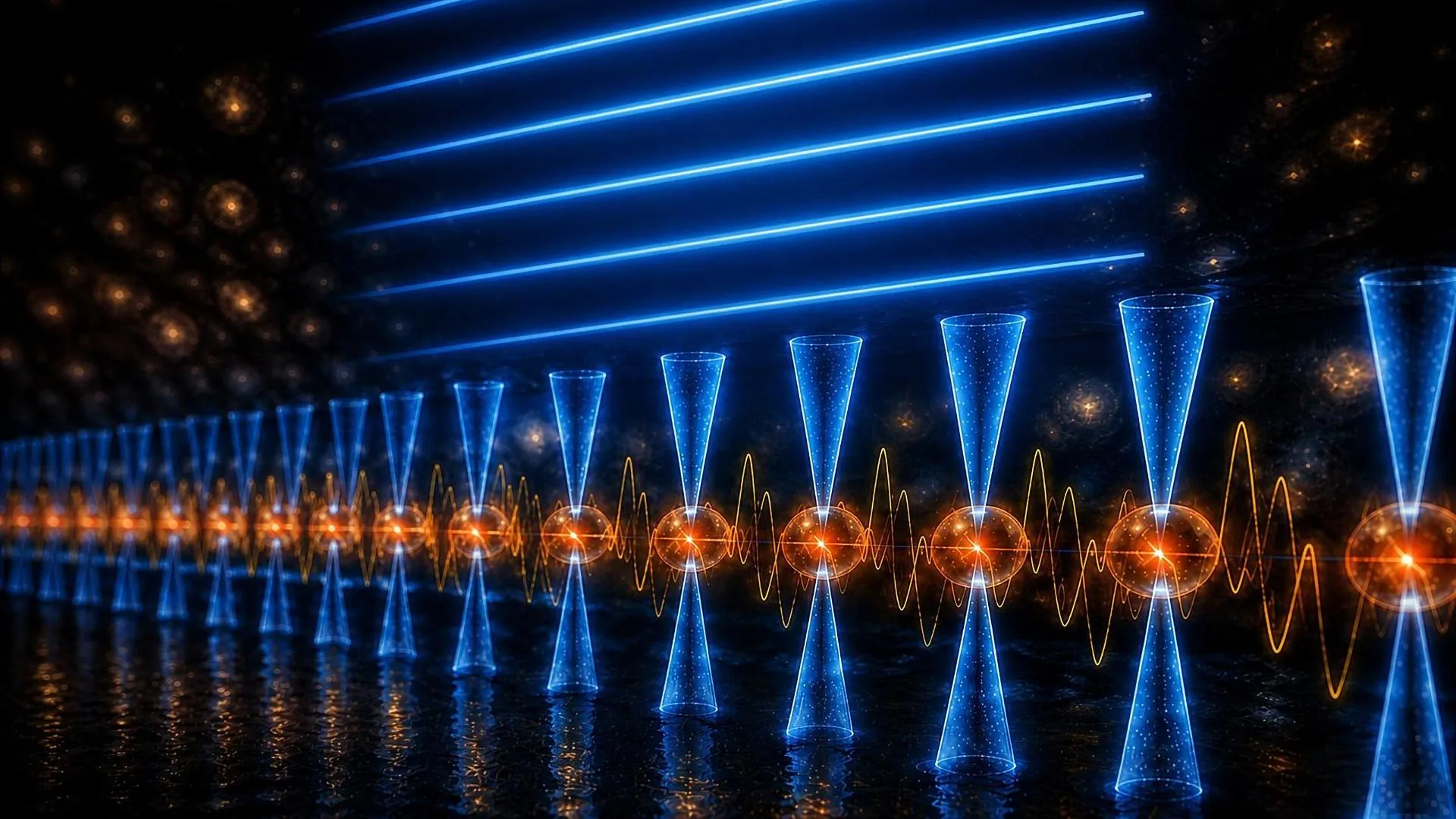
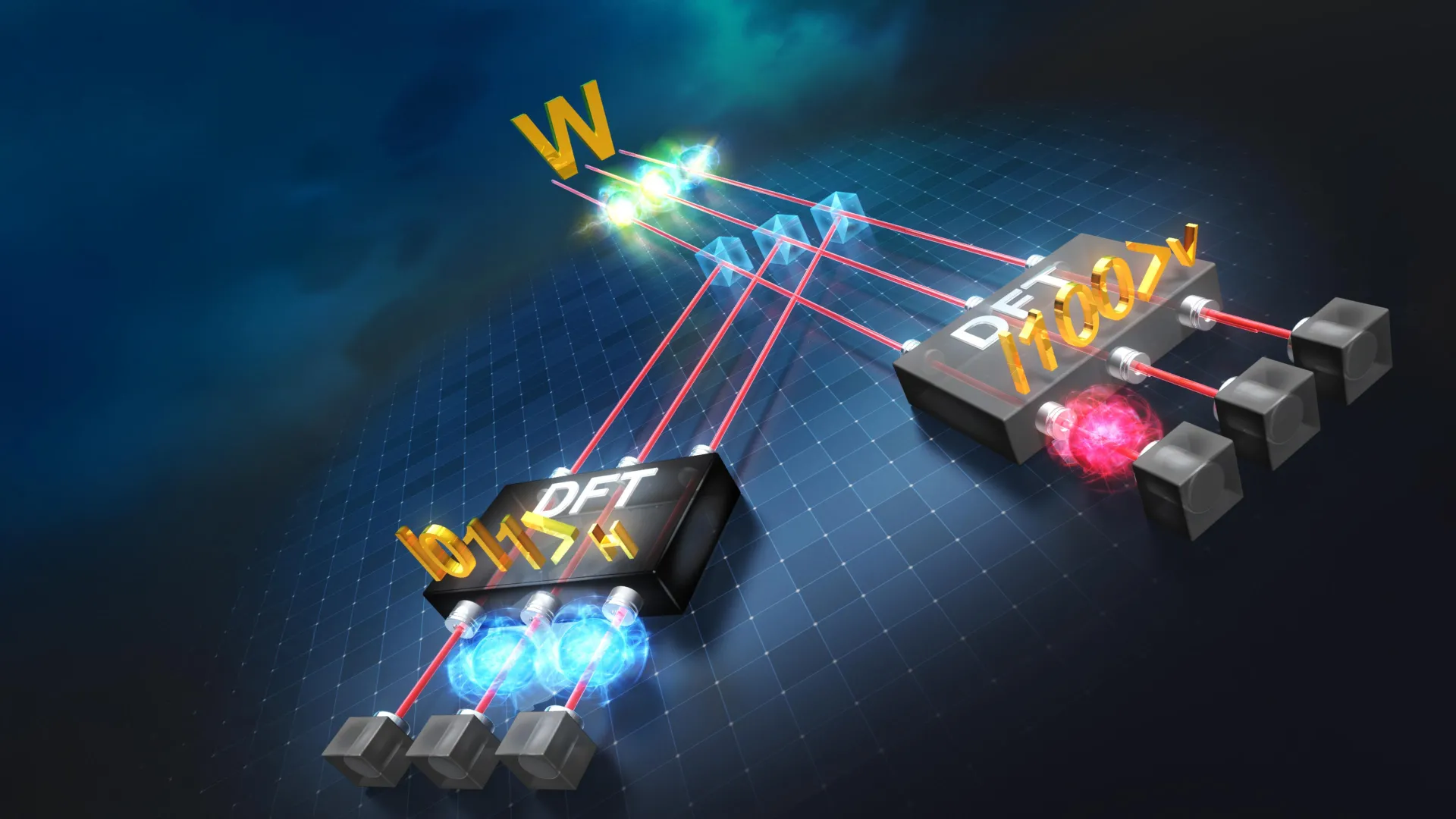
An interferometer exploits the fundamental wave-particle duality of matter. By splitting and recombining the matter waves of the upward-moving muonium beam, the instrument creates a delicate interference pattern. If Earth’s gravitational field exerts a pull on the second-generation mass of the muon, it will induce an infinitesimal, measurable phase shift in the resulting interference pattern. By quantifying this displacement, the researchers can calculate the exact gravitational acceleration experienced by the muonium atom.
According to the project’s current timeline, the research group plans to test the atomic beam setup within the calendar year. If these preliminary diagnostic trials proceed without major complications, the actual gravitational measurement campaign is projected to take place within two to three years. Beyond the gravity experiment, this novel cold muonium beam opens the door for high-precision laser spectroscopy. Such measurements could refine our understanding of the muon’s mass and fundamental coupling constants, providing stringent tests for quantum electrodynamics.
Broader Implications: Testing Einstein and the Search for a Fifth Force
While the immediate objective of the ETH Zurich and PSI collaboration is purely foundational—veraging whether the equivalence principle holds across different generations of matter—the implications of the upcoming results extend far into theoretical physics.
Modern physics rests upon four acknowledged fundamental interactions: gravity, electromagnetism, the strong nuclear force, and the weak nuclear force. For decades, theorists have proposed the potential existence of an additional, undiscovered fifth force that might operate over macroscopic or microscopic distances, potentially mediated by undiscovered exotic particles. However, empirical evidence for a fifth force has remained elusive.
Should the upcoming muonium gravity experiments reveal that second-generation particles respond to gravity differently than first-generation particles—violating the weak equivalence principle—the consequences would be seismic. Such a discovery would not only necessitate a profound revision of general relativity but could also serve as the smoking gun for new physics beyond the Standard Model, potentially pointing directly to the existence of a fifth fundamental force or unexpected quantum couplings between gravity and particle generations.
Despite the monumental nature of these possibilities, Professor Soter maintains a disciplined, objective scientific outlook. The primary goal is not to chase theoretical anomalies, but to push the boundaries of empirical observation into uncharted territory. By measuring, for the first time, whether the equivalence between gravitational and inertial mass holds true for the second generation of matter, the team at ETH Zurich and PSI is poised to answer a question that has remained open since the dawn of modern science.