Modern physics stands upon two monumental pillars, yet these foundational frameworks remain fundamentally incompatible. On one side stands quantum mechanics, a remarkably successful system governing the bizarre, counterintuitive behavior of atoms, subatomic particles, and extremely small objects. On the other side sits Albert Einstein’s general theory of relativity, a geometric masterpiece that explains falling bodies, planetary motion, and the sweeping, large-scale architecture of the universe. For decades, the most brilliant minds in theoretical physics have attempted to weave these two descriptions into a single, cohesive "theory of everything," only to be thwarted by mathematical contradictions and experimental barriers.
Now, an international collaboration of physicists—featuring Nobel Prize-winning laureate Professor Sir Roger Penrose—has achieved a critical milestone in this ongoing quest. Published on September 2 in the journal Science Advances, a new study led by researchers from Ben-Gurion University of the Negev, the University of Ulm, and the University of Oxford has directly observed a long-predicted gravitational effect in a falling quantum object for the first time. By merging sophisticated atom-chip technology with precision quantum manipulation, the research team has demonstrated that a central principle of Einstein’s theory of gravity continues to accurately reflect quantum behavior under the rigorous conditions tested.
Main Facts and the Experimental Breakthrough
At the heart of the newly published research is a fundamental tenet of general relativity known as Einstein’s equivalence principle. Simply stated, this principle posits that the local effects of gravity are indistinguishable from acceleration. For an observer in free fall, gravity effectively vanishes. A classic illustration of this concept involves an unfortunate passenger in a free-falling elevator; within that enclosed, falling frame of reference, the passenger experiences total weightlessness, floating as though deep space had swallowed the gravitational pull of the Earth.
While scientists have rigorously confirmed the equivalence principle across centuries of experimentation with ordinary macroscopic matter—from falling apples to orbiting satellites—testing it directly with quantum objects has proven extraordinarily difficult. Quantum objects do not behave like classical stones or iron balls. Instead, they exhibit wave-particle duality, meaning they can behave like waves and simultaneously follow multiple paths through space. This slippery, probabilistic nature makes isolating gravitational influences on a quantum scale an immense technological challenge.
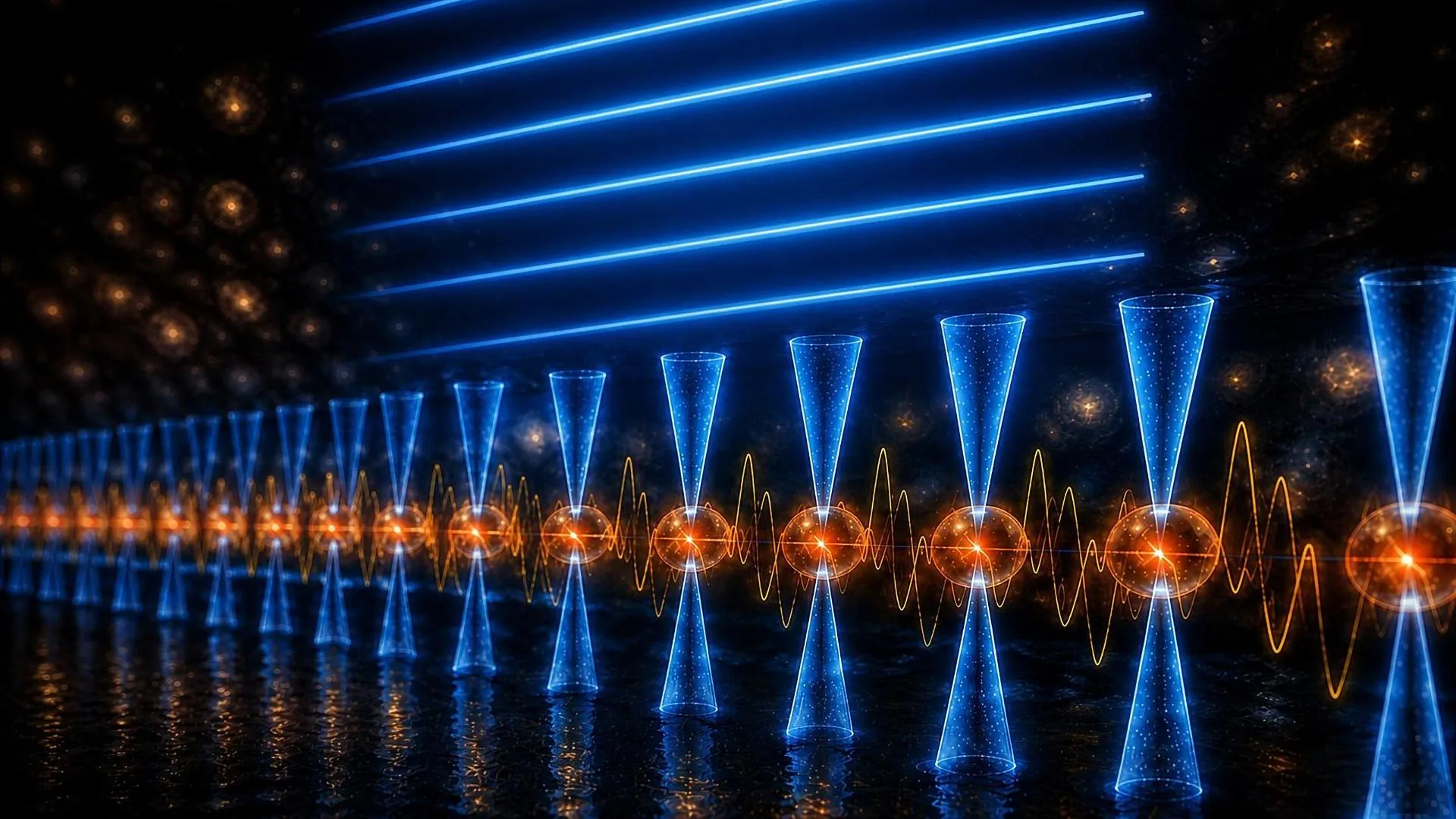
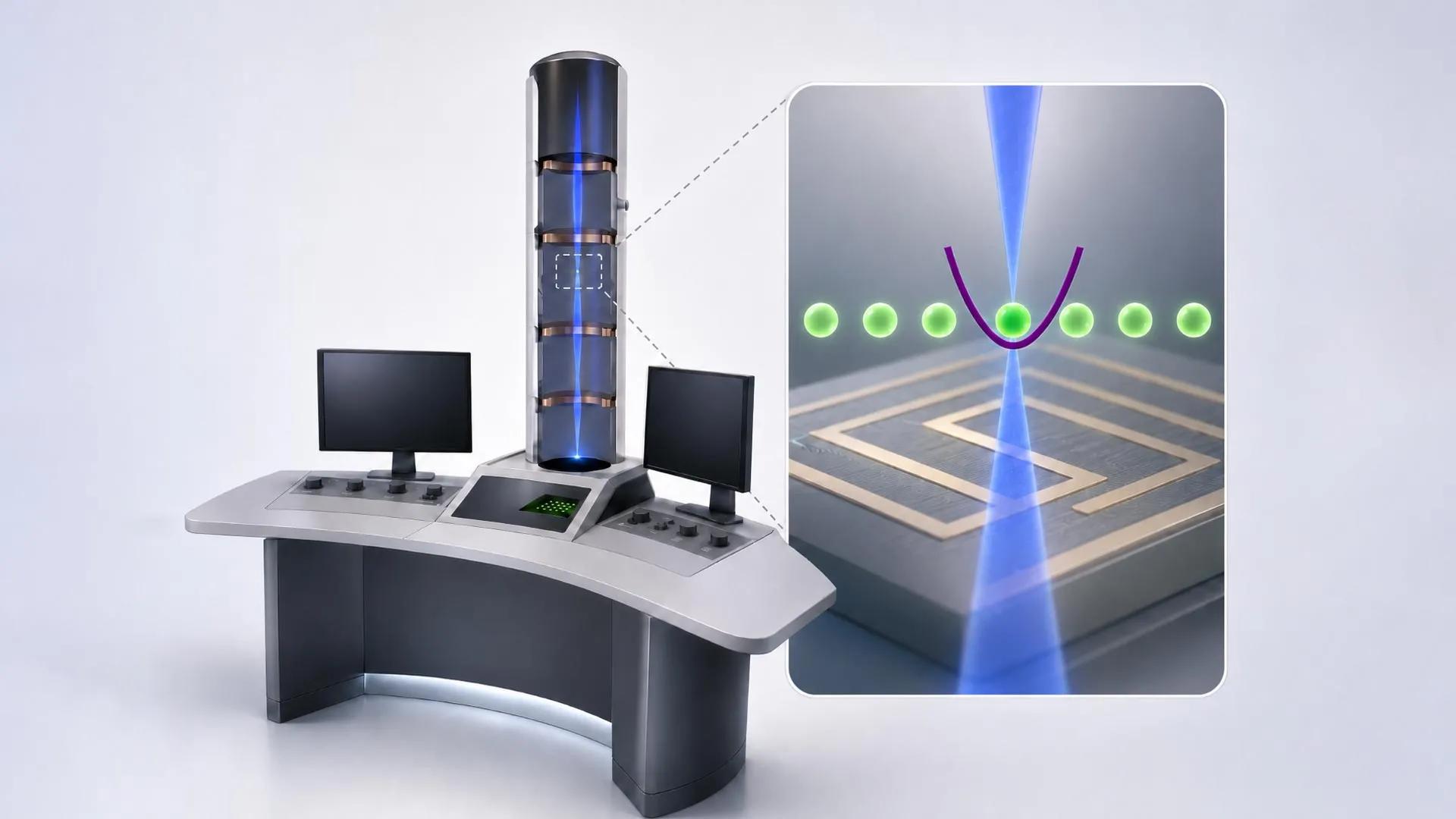
To overcome this hurdle, the international research team constructed an innovative apparatus named the Quantum Galileo Interferometer. Housed at Ben-Gurion University, the device relies on clouds of rubidium atoms cooled to near absolute zero—temperatures hovering just a fraction of a degree above absolute zero. Operating at these ultra-cold temperatures drastically slows the thermal motion of the atoms, allowing physicists to exert precise control over their quantum states. The atoms were manipulated near the surface of a specially engineered atom chip, a microscopic platform embedded with tiny electrical wires designed to generate meticulously controlled magnetic fields.
Chronology and Step-by-Step Methodology
The execution of the experiment required a delicate choreography of quantum state preparation, spatial separation, controlled force balancing, and wave recombination. The investigative process unfolded in distinct phases:
Phase 1: Superposition and Splitting
The experimental team, which included PhD student Or Dobkowski, initiated the process by utilizing precision microwave pulses to place the ultracold rubidium cloud into a quantum superposition state. This effectively forced each atom to occupy two different states and follow two distinct spatial paths simultaneously.
Phase 2: The Battle Between Gravity and Magnetism
Next, the microscopic electrical wires built into the atom chip generated carefully calibrated magnetic gradients. The researchers engineered these fields so that one portion of the split atomic wave interacted with the magnetic force, creating an upward push that precisely counterbalanced the downward pull of gravity. As a direct consequence of this magnetic levitation, that specific portion of the atomic wave remained entirely stationary relative to the laboratory and the rotating surface of the Earth.
Phase 3: The Free Fall
Simultaneously, the other portion of the atomic wave was nudged upward using a tailored magnetic pulse and then transitioned into a quantum state largely immune to magnetic interference. Freed from magnetic influence, this portion of the wave dropped downward, moving exclusively under the influence of gravity along a ballistic trajectory akin to a ball tossed into the air.
Phase 4: Recombination and Measurement
Once the falling portion completed its descent, another precise magnetic pulse guided the two separated parts of the atomic wave back together. When reunited, the two wave components interfered with one another, producing an interference pattern. By analyzing this pattern, the researchers could measure the extraordinarily minute difference in quantum phase that had accumulated during the brief window when one part of the wave was falling freely while the other remained anchored in place.
Supporting Data and Findings
The quantum phase measured by the research team matched the theoretical predictions generated when Einstein’s equivalence principle is rigorously applied to this specific type of quantum wave. Prior experiments had utilized quantum particles to measure gravitational constants or gravitational acceleration in aggregate, but this study marks the definitive first direct measurement of the predicted quantum phase produced by a freely falling object.
While the results validate that Einstein’s framework remains harmonious with quantum mechanics within the tested regime, the researchers are careful to delineate what the experiment does and does not prove. Crucially, the finding does not equate to a unified theory of quantum gravity, nor does it demonstrate that gravity possesses an underlying quantum nature of its own. Instead, it provides empirical reassurance that the foundational assumptions of general relativity do not break down when applied to the strange domain of quantum waves.
Official Responses and Expert Perspectives
The profound implications of the study have drawn commentary from key figures across the international physics community, highlighting both the elegance of the experiment and the lingering mysteries of modern physics.
Lead author Professor Ron Folman of Ben-Gurion University of the Negev emphasized the unique theoretical weight of the investigation. "This is a unique paper, in the sense that it combines a hard experiment with a far-reaching theoretical interpretation, about one of the most fundamental questions in physics: How can gravity (described by Einstein’s theory of relativity) and quantum theory, be unified into one understanding of the universe? These two pillars of modern physics have so far eluded all attempts at a unified theoretical framework, but this complex experiment gives more hints as to how such a unification may be achieved," Professor Folman stated.
Professor Vlatko Vedral, a co-author of the study from the Department of Physics at the University of Oxford, underscored the persistent surprises delivered by quantum mechanics. "We have no consistent theory telling us why quantum physics should fail. This experiment pushes quantum mechanics into one of its most intriguing frontiers, gravity, and shows that, once again, its predictions hold," noted Vedral.
Implications for Theoretical Physics and Penrose’s Hypotheses
Beyond validating the equivalence principle, the experiment intersects with ongoing debates regarding the ultimate limits of quantum mechanics. The study’s findings do not disprove a prominent hypothesis proposed by study co-author Professor Sir Roger Penrose. Penrose has long argued that quantum mechanics may not scale infinitely and could eventually break down when sufficiently massive objects remain in quantum superpositions for extended periods, transitioning instead into classical behavior via a process known as objective reduction.
The current experiment did not feature objects massive enough, nor superpositions sustained for long enough periods, to test Penrose’s hypothesis directly. However, the successful deployment of the Quantum Galileo Interferometer opens a clear pathway toward more extreme investigations. The research team has already initiated follow-up experiments at Ben-Gurion University aimed at scaling up the technique to much heavier objects, potentially including nanodiamonds. Testing quantum superposition and gravitational interactions with macroscopic masses could ultimately help determine whether gravity forces quantum states to collapse, potentially offering the elusive smoking gun needed to formulate a true theory of quantum gravity.
Broader Impact on Global Research
The successful integration of atom chips, magnetic levitation, and matter-wave interferometry represents a technical triumph for the broader scientific community. In addition to Ben-Gurion University and the University of Oxford, the international consortium included researchers from the University of Southampton, the German Aerospace Center (DLR) Institute of Quantum Technologies, Ulm University, and Texas A&M University.
As laboratories worldwide race to probe the boundaries where quantum mechanics meets gravitational physics, techniques pioneered by the Quantum Galileo Interferometer are expected to serve as a vital blueprint. While a complete, unified theory of physics remains on the horizon, each successful empirical bridge across the quantum-gravitational divide brings humanity one step closer to understanding the fundamental language of the cosmos.