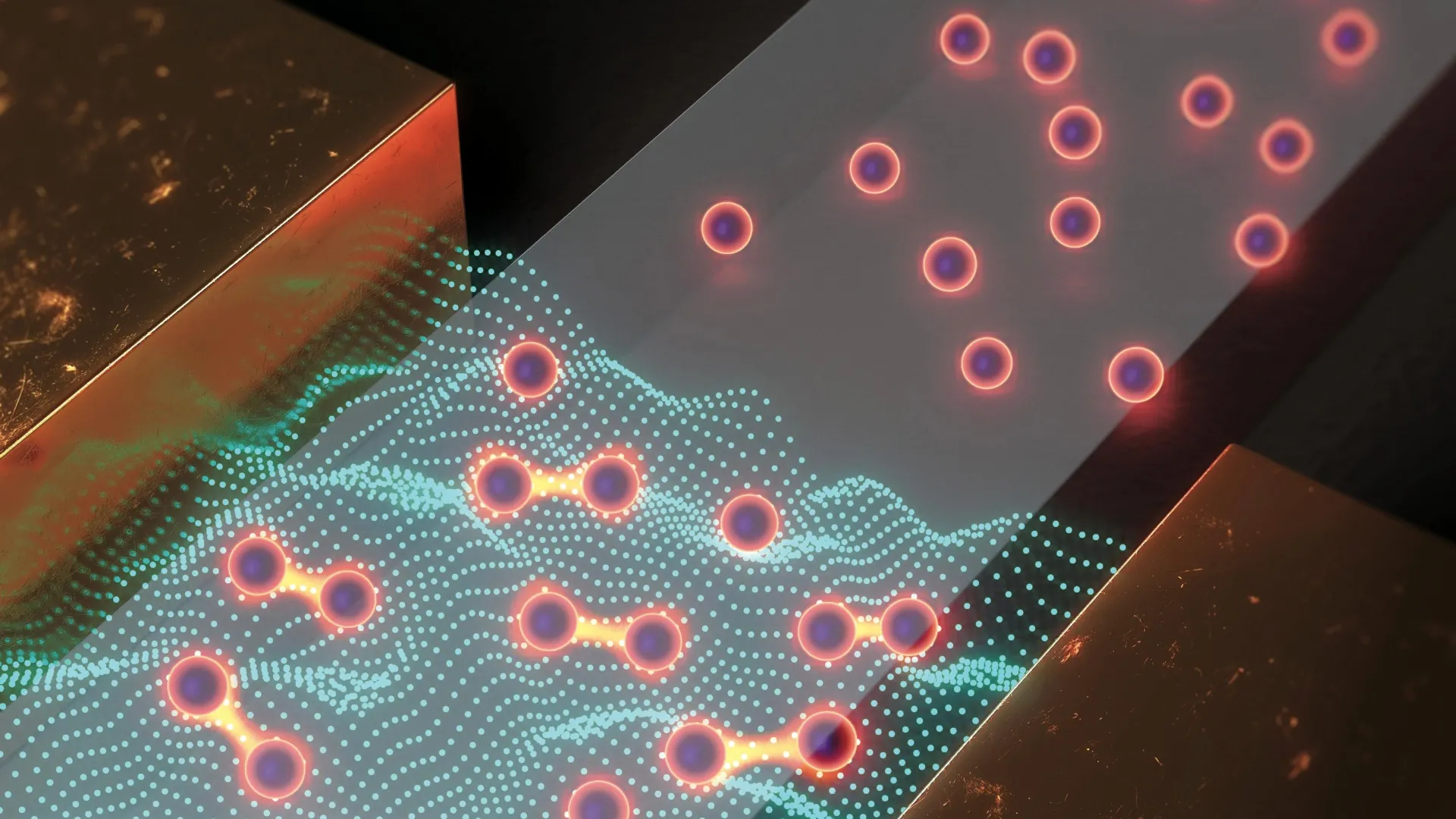
For decades, the study of superconductivity has been bounded by a frustrating physical paradox: the very materials designed to carry electrical currents without energy loss inevitably break down long before reaching their theoretical limits. When cooled below their characteristic transition temperatures, superconductors enter a quantum mechanical state where electrons bind into correlated pairs—known as Cooper pairs—that move collectively without generating resistance. Yet, in practical applications and laboratory experiments alike, introducing an electrical current above a certain threshold abruptly destroys this zero-resistance state.
This premature breakdown has long been attributed to the proliferation and movement of vortices, microscopic conduits through which magnetic flux penetrates type-II superconductors. As electrical current increases, these vortices are set into motion, generating heat and electrical resistance that cripple the superconducting phase. However, a collaborative research team has recently demonstrated a breakthrough technique that bypasses this limitation. By deploying electrical pulses lasting mere picoseconds, the scientists have successfully "outrun" vortex dynamics, driving superconducting materials to their intrinsic depairing current—the fundamental limit where Cooper pairs physically tear apart.
The Implications of Outrunning Quantum Instabilities
The cornerstone of this methodological advance lies in understanding the difference between conventional direct-current (DC) critical thresholds and intrinsic depairing limits. In a typical experimental setup using DC transport measurements, the movement of magnetic vortices occurs at velocities reaching tens of kilometers per second. While this speed sounds immense, over the span of a single picosecond—one trillionth of a second—a vortex travels a mere tens of nanometers.
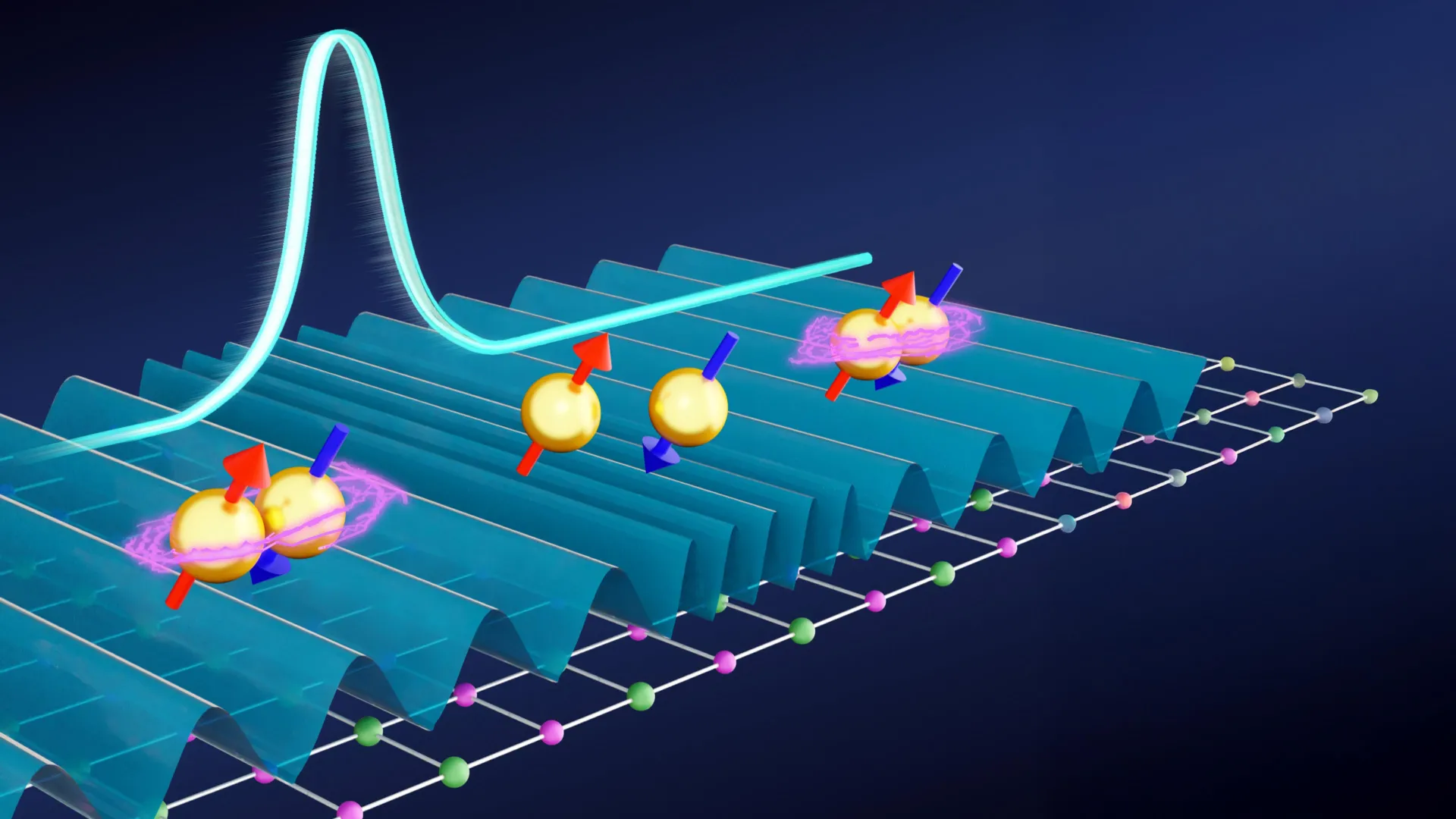
Capitalizing on this temporal disparity, researchers realized that if an electrical current could be applied and removed within a picosecond timescale, the current density could be escalated to extreme heights before the vortices had physical time to mobilize or thermally degrade the material. Eryin Wang, lead author of the study, illustrates the fundamental mechanics through a mechanical metaphor: the applied current essentially twists the phase of the coherent quantum state of the superconductor, behaving much like the winding of a mechanical spring.
If this quantum state is forced past its threshold, the phase twist destabilizes, causing the Cooper pairs to rupture. By utilizing ultrafast electrical pulses, the research team successfully accessed this hidden regime, observing phenomena that standard DC measurements have historically obscured due to thermal interference and vortex drag.
A Chronology of Ultrafast Transport Development
The realization of picosecond-scale superconductor probing did not occur in a vacuum; it represents the culmination of years of targeted technological development in ultrafast electrical-transport platforms. The foundational instrumentation was engineered at the Max Planck Institute for the Structure and Dynamics of Matter (MPSD), where researchers sought ways to bridge the gap between optical physics and condensed matter electronics.
The timeline of this experimental breakthrough highlights the precision engineering required:
- Initial Phase: Development of high-stability photoconductive switches capable of operating under intense optical stimulation without degrading.
- Integration: Coupling these switches with advanced coplanar waveguides designed to transmit high-frequency electrical signals with minimal dispersion.
- Sample Preparation: Fabricating microscopic superconducting samples reduced to mere micrometers in scale to ensure uniform current distribution across the test area.
- Execution: Triggering the photoconductive switches using 300-femtosecond green laser pulses operating at a wavelength of 515 nanometers, thereby generating clean electrical pulses lasting only a few picoseconds.
Guido Meier, a co-author of the research, emphasized the specialized nature of the infrastructure: "To apply current to superconductors for only a few picoseconds, we used the ultrafast electrical-transport platform that we have been developing at our institute." This specialized hardware allowed the team to deliver current densities previously thought experimentally unattainable in solid-state devices.
Contrasting Responses: S-Wave Versus D-Wave Superconductivity
To test the boundaries of their newly minted platform, the researchers selected two distinct superconducting materials: Niobium Nitride (NbN) and Yttrium Barium Copper Oxide (YBCO). These materials were chosen deliberately because they represent two fundamentally different microscopic classes of superconductivity, allowing the team to investigate how internal quantum architecture dictates high-current behavior.
NbN is characterized by a relatively uniform superconducting energy gap, classified as an s-wave superconductor. In stark contrast, YBCO features a d-wave symmetry, meaning its energy gap varies dramatically depending on the crystallographic direction and vanishes entirely along specific axes.
When subjected to the picosecond electrical pulses, the two materials exhibited markedly divergent responses:
- Niobium Nitride (NbN): Remained robustly superconducting under escalating current densities until it hit a sharp, well-defined threshold far exceeding its conventional DC critical current. Past this precise inflection point, the material’s electrical response changed abruptly, signaling the sudden unbinding of its Cooper pairs.
- Yttrium Barium Copper Oxide (YBCO): Exhibited a gradual, progressive weakening of its superconducting state rather than a sudden catastrophic failure.
According to the research team, this divergence stems directly from internal gap symmetry. Because YBCO possesses directional nodes where the superconducting energy gap drops to zero, the material accommodates high currents by incrementally eroding the superconducting condensate along those vulnerable axes, whereas the isotropic gap of NbN maintains stability until uniform pair-breaking is triggered across the board.
Expert Analysis and Official Responses
The implications of these findings extend far beyond fundamental solid-state physics, offering a new diagnostic lens for examining quantum materials. Andrea Cavalleri, head of the research group at MPSD, underscored the diagnostic power of the new methodology.
"Our results suggest that picosecond transport can provide access to microscopic properties of superconductors, including their gap symmetry, that are not directly available from conventional DC transport," Cavalleri stated. By operating on temporal scales that match the natural dynamics of the superconducting state itself, scientists can now probe material properties that were previously washed out by slower, secondary thermodynamic effects like Joule heating and flux creep.
Independent physicists tracking the research note that while the study currently focuses on controlled laboratory conditions using micro-scaled samples, the fundamental principles validated by the MPSD team could reshape how high-performance superconducting components are designed.
Broader Technological Implications and Future Horizons
As the scientific community digests these findings, the path forward involves expanding the technique to a broader catalog of unconventional superconductors, including iron-based compounds and heavy-fermion systems. Determining whether the observed behaviors apply universally across different classes of quantum materials will be a primary objective for subsequent research cycles.
Furthermore, the opening of this ultra-high current regime holds considerable promise for applied engineering fields. Optoelectronics, high-speed switching systems, and sensitive magnetic detection arrays stand to benefit from materials driven to their absolute fundamental limits without suffering thermal degradation. While integrating picosecond transport methodologies into commercial hardware will require significant engineering adaptation, the demonstration that superconductors can be pushed past their conventional limits marks a major milestone in modern quantum physics.