From humble single-celled algae drifting in sunlit ponds to the intricate neural networks of the mammalian brain, the journey of scientific discovery often defies straightforward prediction. True to the old adage that great oaks from little acorns grow, the Nobel Prize in Physiology or Medicine for 2026 has been awarded for a breakthrough rooted in the study of a simple, light-sensitive microorganism. This unassuming alga provided the master key needed to solve a decades-long conundrum originally conceptualized by DNA co-discoverer Francis Crick, ultimately giving rise to the revolutionary field of optogenetics.
Two decades after he and James Watson elucidated the double-helix structure of deoxyribonucleic acid, Crick turned his relentless curiosity toward the complexities of neuroscience. During the 1970s, existing neuroscientific methodologies—primarily electrical stimulation and pharmacological interventions—were capable of mapping broad regions of the brain to specific functions and behaviors. However, these traditional tools lacked the precision required to selectively target and manipulate individual types of neurons within a densely packed, heterogeneous neural circuit. Electrical currents fired every neuron in a given vicinity indiscriminately, while chemical drugs operated on timescales too sluggish to capture the rapid-fire signaling of real-time brain activity. Recognizing these profound limitations, Crick hypothesized that neuroscientists needed a way to control specific neurons with light while leaving others unaffected, yet he left the conceptual challenge unsolved during his lifetime.
Decades later, that theoretical void has been filled, reshaping modern neurology, psychiatry, and biomedical engineering. The 2026 Nobel Prize recognizes the culmination of decades of interdisciplinary research that converted light-reactive microbial proteins into precision switches for brain cells, allowing researchers to activate or silence targeted neurons with millisecond accuracy using pulses of laser light.
The Genesis of Optogenetics: From Microbial Phototaxis to Neurobiology
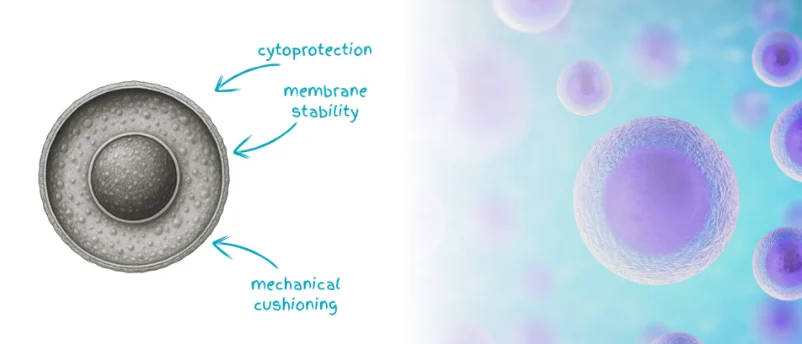
The cornerstone of the optogenetic revolution lies in microbial rhodopsins—naturally occurring proteins found in single-celled organisms that allow them to sense and move toward or away from light, a behavior known as phototaxis. In the early 2000s, a convergence of microbiology, molecular biology, and optics enabled researchers to isolate the genes encoding these light-gated ion channels and pumps, and subsequently express them in mammalian neurons.
When introduced into specific neural populations via viral vectors, these microbial genes instruct the host cells to manufacture light-sensitive proteins and embed them into their cell membranes. Upon illumination with specific wavelengths of light—most famously channelrhodopsin-2, which triggers neuronal excitation in response to blue light—the channels open, allowing ions to flow across the membrane and fire an action potential. Conversely, other proteins, such as halorhodopsins, respond to yellow light by pumping chloride ions into the cell, hyperpolarizing the membrane and instantly silencing neural activity.
This technique bypassed the collateral damage inherent in older methodologies. For the first time, scientists could dissect the causal relationship between specific neural circuits and complex behaviors, moving past mere correlation to direct observation and manipulation.
A Chronology of Discovery: Milestones Leading to the 2026 Prize
The path from Crick’s theoretical musings to a Nobel-caliber paradigm shift spans over half a century, marked by crucial technological and biological milestones:
- 1979: Francis Crick publishes a seminal commentary suggesting that light could theoretically be used to control neuronal activity, though noting the absence of suitable cellular tools.
- 1991–1995: Microbiologists isolate and sequence microbial rhodopsins from various extremophile algae and archaea, revealing their intrinsic capability to function as light-driven ion transport mechanisms.
- 2002–2003: Research groups begin expressing microbial opsins in non-excitable cells, proving that these foreign proteins can retain their light-gated properties when transferred across species.
- 2005: The definitive proof-of-concept paper for optogenetics is published, demonstrating millisecond-timescale optical control of targeted action potentials in mammalian neurons using channelrhodopsin-2.
- 2010–2015: The technology expands globally, with laboratories applying optogenetics to model neurological disorders, map motor and sensory circuits, and investigate the neural substrates of memory, fear, and addiction in rodent models.
- 2020–2025: Early-stage translational applications emerge, including optical gene therapies aimed at restoring vision in patients with degenerative retinal diseases and sophisticated closed-loop neuromodulation systems.
- October 2026: The Nobel Assembly at the Karolinska Institute awards the Nobel Prize in Physiology or Medicine for the foundational discoveries underpinning optogenetics.
Quantitative Impact and Scientific Productivity
The influence of optogenetics on the broader life sciences is reflected in bibliometric and funding data compiled over the past two decades. Since the publication of the breakthrough methodologies in the mid-2000s, tens of thousands of peer-reviewed research articles utilizing optogenetic tools have appeared in scientific literature. According to analyses by major academic publishers, the annual volume of papers incorporating optogenetic keywords has grown exponentially, cementing its status as an indispensable pillar of modern neurobiology.
Furthermore, global research funding agencies, including the United States National Institutes of Health (NIH) and the European Research Council (ERC), have funneled billions of dollars into optogenetic-related initiatives. These investments have not only deepened our fundamental understanding of brain architecture but have also catalyzed a thriving commercial sector dedicated to manufacturing specialized lasers, fiber optics, high-throughput screening platforms, and advanced viral vectors.
Global Reactions and Institutional Responses
The announcement of the 2026 Nobel Prize was met with widespread acclaim across the international scientific community, accompanied by statements from prominent research institutions and academies.
The president of the Society for Neuroscience issued a formal statement highlighting the transformative nature of the award: "By turning light into a scalpel for the mind, this year’s laureates transformed a theoretical dream into an empirical reality. Francis Crick understood the dilemma, but it required an extraordinary synthesis of virology, biophysics, and genetics to realize his vision. Today, our understanding of neurological health and disease is fundamentally unrecognisable compared to the pre-optogenetic era."
Leading university laboratories where the foundational work was conducted echoed these sentiments, emphasizing the collaborative and interdisciplinary nature of the breakthrough. Colleagues noted that the success of optogenetics depended entirely on breaking down traditional silos between physics, chemistry, engineering, and physiology—a philosophy that modern academic institutions increasingly seek to emulate.
Clinical Implications and Therapeutic Horizons
While optogenetics began primarily as a tool for basic neuroscience research, its ultimate promise lies in translational medicine. The ability to precisely control cellular electrical activity opens unprecedented avenues for treating debilitating human disorders that have resisted conventional pharmacological approaches.
-
Restoring Vision: One of the most advanced translational applications of optogenetics targets degenerative retinal conditions such as retinitis pigmentosa and age-related macular degeneration. In these diseases, light-sensing photoreceptor cells in the retina die, but downstream retinal ganglion cells often remain intact. By using viral vectors to deliver microbial opsins to these surviving inner retinal cells, researchers have successfully restored light sensitivity and visual signal transmission to the brain in preclinical models, with early-stage human clinical trials currently underway.
-
Neuromodulation in Parkinson’s Disease and Epilepsy: Traditional deep brain stimulation (DBS) uses electrical probes to suppress tremors in Parkinson’s disease or halt epileptic seizures, but electrical currents often affect surrounding healthy tissue indiscriminately. Optogenetic approaches offer the potential for cell-type-specific DBS, selectively modulating pathological neural circuits while sparing normal physiological functions.
-
Psychiatry and Addiction Research: Psychiatric conditions such as major depressive disorder, anxiety, and substance use disorders involve deeply ingrained, maladaptive neural circuits. Optogenetics has allowed researchers to map the precise synaptic pathways underlying reward, reinforcement, and emotional regulation, providing clear targets for next-generation therapeutic interventions, including refined transcranial magnetic stimulation protocols and targeted pharmacological agents.
Broader Impacts on the Future of Biomedicine
The awarding of the 2026 Nobel Prize for Physiology or Medicine signals more than just a celebration of a single technique; it marks a watershed moment in how humanity interacts with biological systems. By co-opting the evolutionary adaptations of single-celled organisms, scientists have gained unprecedented dominion over the most complex structure known in the universe: the human brain.
As optogenetic toolsets continue to evolve—incorporating red-shifted light for deeper tissue penetration, chemogenetic hybrids, and self-contained wireless implants—the boundaries of neuroscience continue to expand. What began as a philosophical inquiry into the limits of brain mapping by Francis Crick, fueled by the unassuming biological machinery of a microscopic alga, now stands as a testament to the power of cross-disciplinary innovation, illuminating the darkest recesses of the human mind and paving the way for targeted cures to some of medicine’s most stubborn afflictions.